Buying a used Land Rover Defender
The Commercial Land Rover Defender: An Uncompromising Trade Asset
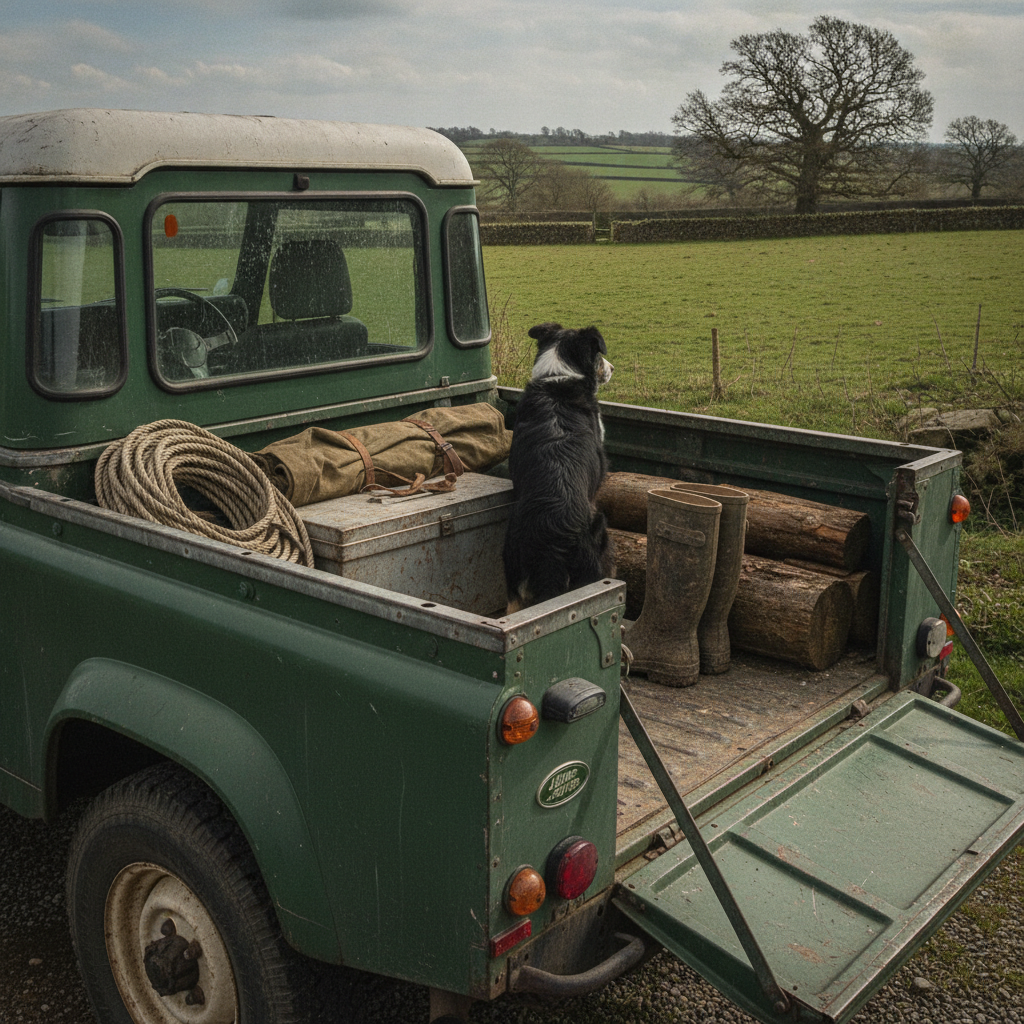
Few working commercial vehicles command the presence, off-road supremacy, and residual strength of the Land Rover Defender. Long recognised across the United Kingdom as the gold standard in all-terrain transport, the Defender bridges the gap between agricultural machinery and road-going utility. While standard front-wheel-drive or rear-wheel-drive panel vans falter the second tarmac turns to deep mud, wet clay, or crushed stone, a used commercial Defender delivers relentless traction and heavy-duty towing capacity. For contractors, tree surgeons, civil engineering teams, and estate managers, it represents a purpose-built business asset engineered to reach inaccessible working sites without hesitation.
Today, the used UK market divides broadly into two distinct propositions: the legendary, mechanical classic Defender produced until early 2016, and the technologically sophisticated modern L663 Defender Hard Top launched in 2020. Developed in-house by Land Rover Special Vehicle Operations, the modern Hard Top 90 and 110 variants are fully homologated N1 commercial vehicles from the factory. This designation allows VAT-registered commercial operators to reclaim input tax and benefit from flat-rate commercial vehicle Benefit-in-Kind taxation, while retaining the passenger model's comfort, highway refinement, and peerless all-wheel-drive systems.
Specifications, Capacities, and Load Volume
Choosing the correct used commercial Defender requires balancing footprint against internal cargo space and legal carrying capacities. Whether inspecting a legacy utility wagon or a contemporary L663 Hard Top, understanding the core dimensions and mechanical configurations ensures your investment matches your daily operational demands.
Defender 90 Hard Top (Short Wheelbase)
The three-door short-wheelbase 90 provides unmatched manoeuvrability in dense forestry, tight farmyards, and urban access lanes. In the modern L663 iteration, the front passenger compartment is divided from the cargo bay by a full-height, powder-coated steel partition. The rear load area features an ultra-tough, flat, hard-wearing composite floor equipped with six heavy-duty lashing points, lockable underfloor storage compartments where the rear footwells previously sat, and opaque exterior aluminium side panels replacing the rear side glass.
- Usable Cargo Volume: 1,355 litres behind the fixed steel bulkhead.
- Maximum Payload: Ranging from approximately 670kg to just over 720kg depending on specific coil or air suspension configurations and wheel choices.
- Internal Load Length: 1,037mm along the flat load floor to the bottom of the security partition.
- Load Bay Width: 1,326mm total width, with 1,124mm between the rear wheel arches.
- Maximum Braked Towing Limit: A full 3,500kg across all engine variants.
Defender 110 Hard Top (Long Wheelbase)
For operations requiring greater internal capacity without sacrificing go-anywhere capability, the five-door long-wheelbase 110 Hard Top is the standard-bearer. The rear side passenger doors remain fully functional, opening onto an expansive underfloor storage vault that provides secure, out-of-sight containment for high-value power tools, testing equipment, and diagnostic units. The primary flat load bed stretches deep into the vehicle, illuminated by overhead LED work lights and fitted with integrated side lashing rails.
- Usable Cargo Volume: An impressive 2,059 litres of secure space.
- Maximum Payload: Ranging from approximately 780kg to over 900kg on heavy-duty coil or electronic air suspension models.
- Internal Load Length: 1,472mm along the load floor to the safety bulkhead.
- Load Bay Width: 1,423mm total width, maintaining 1,160mm clearance between inner arches.
- Maximum Braked Towing Limit: 3,500kg with integrated trailer stability assist systems.
Engine Line-Up and Drivetrain Engineering
Classic Defenders rely on pure mechanical simplicity. Late models feature the durable Ford-derived Duratorq four-cylinder turbodiesels: the 2.4-litre Puma introduced in 2007, superseded in 2012 by the 2.2-litre Euro 5 compliant iteration. Both engines run a six-speed manual MT82 gearbox paired with a mechanical dual-range transfer box and a manually lockable centre differential, providing straightforward mechanical reliability that can be repaired by almost any rural mechanic.
Modern L663 Hard Tops are powered by Land Rover's 3.0-litre straight-six Ingenium turbo-diesel engine with 48-volt mild-hybrid technology. Available in D200, D250, and D300 power outputs, these deliver between 200 and 300 horsepower, mated exclusively to an eight-speed ZF automatic transmission and twin-speed transfer box. These units produce immense low-end pulling power, with torque figures reaching up to 650Nm. Intelligent All-Wheel Drive continually redistributes drive between axles, working alongside Land Rover's Terrain Response software to calibrate throttle response, gear shifts, and differential locking to sand, mud, ruts, or snow automatically.
Commercial Applications: Who Relies on the Defender?
A conventional panel van is bound to paved roads and compacted aggregate. The Defender is engineered for operations where road access terminates miles from the actual job site.
- Arboriculture and Tree Surgery: Towing heavy industrial timber chippers, winches, and tracked plant trailers straight into unmanaged woodland terrain, while securing chainsaws, fuel, and rigging safely in the bulkhead-separated bay.
- Agricultural Contractors and Veterinary Practices: Traversing deep tractor ruts and flooded pastures during emergency callouts, transporting feed blocks, and moving livestock boxes through heavy winter conditions.
- Civil Engineering and Groundworks: Managing site setup and site-boundary management on raw ground development sites before temporary haul roads or infrastructure are laid.
- Renewable Energy and Utility Maintenance: Servicing remote hillside wind turbines, solar arrays, water catchment stations, and off-grid telecommunications masts where severe inclines, snow drifts, and peat bogs defeat standard commercial fleets.
- Specialist Equine and Country Estate Management: Daily estate patrol, fencing delivery, forestry management, and heavy double horsebox towing across estate grounds throughout wet seasons.
What to Inspect When Buying a Used Commercial Defender
Whether evaluating a legacy mechanical utility model or a contemporary high-spec Hard Top, used commercial Defenders frequently endure strenuous duty cycles. Conducting a rigorous, systematic inspection separates dependable workhorses from worn-out liabilities.
Chassis, Outriggers, and Undercarriage Integrity
On classic ladder-chassis Defenders, corrosion is the primary structural threat. Closely inspect the rear crossmember, which regularly rots from the inside out due to trapped road salt and mud. Scrutinise the front chassis outriggers beneath the footwells, the central chassis rails, and the lower door frames. Check the steel bulkhead below the windscreen and inside the pedal footwells for bubbling rust or perforated metal.
On modern L663 Defenders built on the rigid D7x all-aluminium monocoque, rust is not the primary issue; impact damage is. Crawl beneath the vehicle to inspect the structural subframes, heavy-duty aluminium undertrays, and suspension control arms. Severe gouges, dented sills, distorted steering linkages, or heavily compacted dry earth within suspension pockets indicate harsh, unsympathetic off-road use that may have compromised alignment or driveline seals.
Drivetrain, Gearbox, and Differential Checks
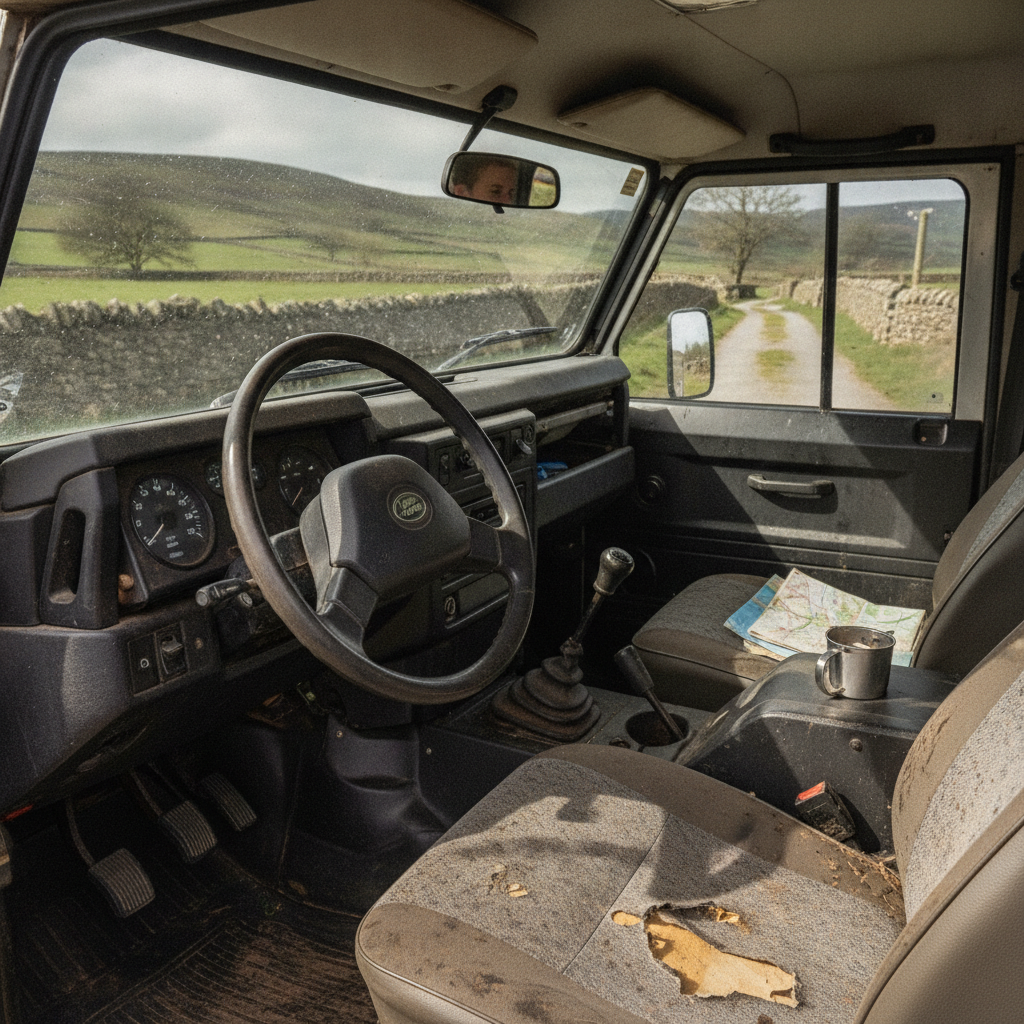
When road-testing a manual classic Defender, cycle through all six forward gears under load to identify synchroniser wear, particularly between first and second. Manually engage low-range via the short lever and confirm the differential lock warning lamp illuminates on the instrument panel. Ensure the lock disengages cleanly without excessive axle binding or mechanical clunking once returned to high range.
On modern L663 variants, ensure the eight-speed ZF transmission shifts imperceptibly. Test the low-range transfer box by shifting the vehicle into neutral and pressing the electronic low-range toggle; engagement should be rapid and silent. Listen intently for high-pitched whining from the front or rear differentials at sustained national speed limits, which points to bearing degradation or water contamination following excessive deep-water wading.
Suspension Configurations: Coils vs Air Suspension
Modern commercial Defenders come with standard heavy-duty steel coil springs or optional electronic air suspension. While coils provide uncomplicated, long-term durability for extreme site duty, air suspension offers exceptional versatility, allowing the ride height to be raised for off-road clearance or lowered to facilitate loading heavy equipment. When inspecting an air-equipped model, cycle through all height modes: access height, standard road height, and off-road height. The vehicle should raise swiftly, evenly, and without excessive compressor noise. Park the vehicle on level ground and confirm that no individual corner sinks over time, which reveals leaking air struts, damaged valve blocks, or degraded air supply lines.
Ingenium Diesel Health: Oil Dilution and Emissions Systems
The straight-six Ingenium diesel engine fitted to recent models is a highly sophisticated, Euro 6d-compliant powerplant. It requires attentive maintenance. Vehicles subjected to short, low-speed stop-start site journeys can experience diesel particulate filter (DPF) clogging and engine oil dilution caused by uncompleted active regeneration cycles.
Always inspect the vehicle's electronic service records on the instrument cluster to confirm oil service intervals have not been routinely stretched. Pull the physical dipstick or check the digital oil-level gauge; an oil level reading noticeably above the maximum fill mark indicates unburnt diesel fuel has bypassed the piston rings and diluted the engine oil. Check the exhaust tailpipes for excessive soot accumulation and verify that the Selective Catalytic Reduction (AdBlue) system is free from persistent dashboard warning faults or countdown timers.
Generations, Specs, and Years to Treat with Caution
Every commercial vehicle lineage has specific configurations that demand heightened scrutiny or are best avoided depending on your technical capabilities.
- Early 2.4-litre Puma TDCi (2007 to 2009): These early Ford-sourced engines suffered from premature factory clutch plate failures, vacuum pump oil leaks, and occasional oil pump failures that caused catastrophic engine starvation. Verify whether the clutch assembly and oil pump have been replaced with updated components.
- Euro 4 Commercial Classics in Clean Air Zones: If your work regularly crosses into London's Ultra Low Emission Zone (ULEZ) or regional Clean Air Zones across Birmingham, Bristol, Bath, Sheffield, or Newcastle, remember that pre-2016 factory diesel Defenders do not meet Euro 6 emissions targets. Daily zone charges will severely impact operating profitability unless the vehicle has undergone expensive specialist emissions retrofits.
- Initial Production Run L663 Commercials (2020 to Early 2021): Early production models frequently suffered from software bugs within the Pivi Pro infotainment system, intermittent battery discharge faults caused by control modules staying awake, and occasional micro-switch failures within the rear door locking mechanism. Ensure that any early L663 you review has had all relevant factory technical service bulletins and over-the-air software updates carried out by an authorised repairer.
- Unregistered or Incomplete Commercial Conversions: Exercise caution when buying passenger-specification Defenders that have had their rear seats removed privately. Legitimate N1 commercial tax advantages only apply if the vehicle was converted and registered correctly with the DVLA as a commercial category vehicle. Incomplete conversions lacking an approved full-height bulkhead and fixed window blanks will not qualify for commercial VAT status or fixed BIK taxation.
Used Land Rover Defender Price Guide in the UK
Values across the used Defender spectrum reflect chassis length, condition, mechanical provenance, and commercial tax eligibility. Commercial buyers should always confirm whether the advertised figure is inclusive or exclusive of VAT.
Sub-£15,000 Bracket: Classic Utility and Project Workhorses
At this entry-level budget, expect to find pre-2007 legacy Defenders (including original 300Tdi and early Td5 utility models) that have spent decades on active farm duty or industrial sites. Mileage will typically exceed one hundred and fifty thousand miles. While mechanically simple to maintain, vehicles in this tier will generally exhibit noticeable body battle scars, chassis corrosion requiring welding or replacement outriggers, worn driveline bushes, and tired interiors. These vehicles suit trade professionals capable of in-house fabrication and mechanical restoration.
£15,000 to £25,000: Late TDCi Pumas and Tidy Classic 90s
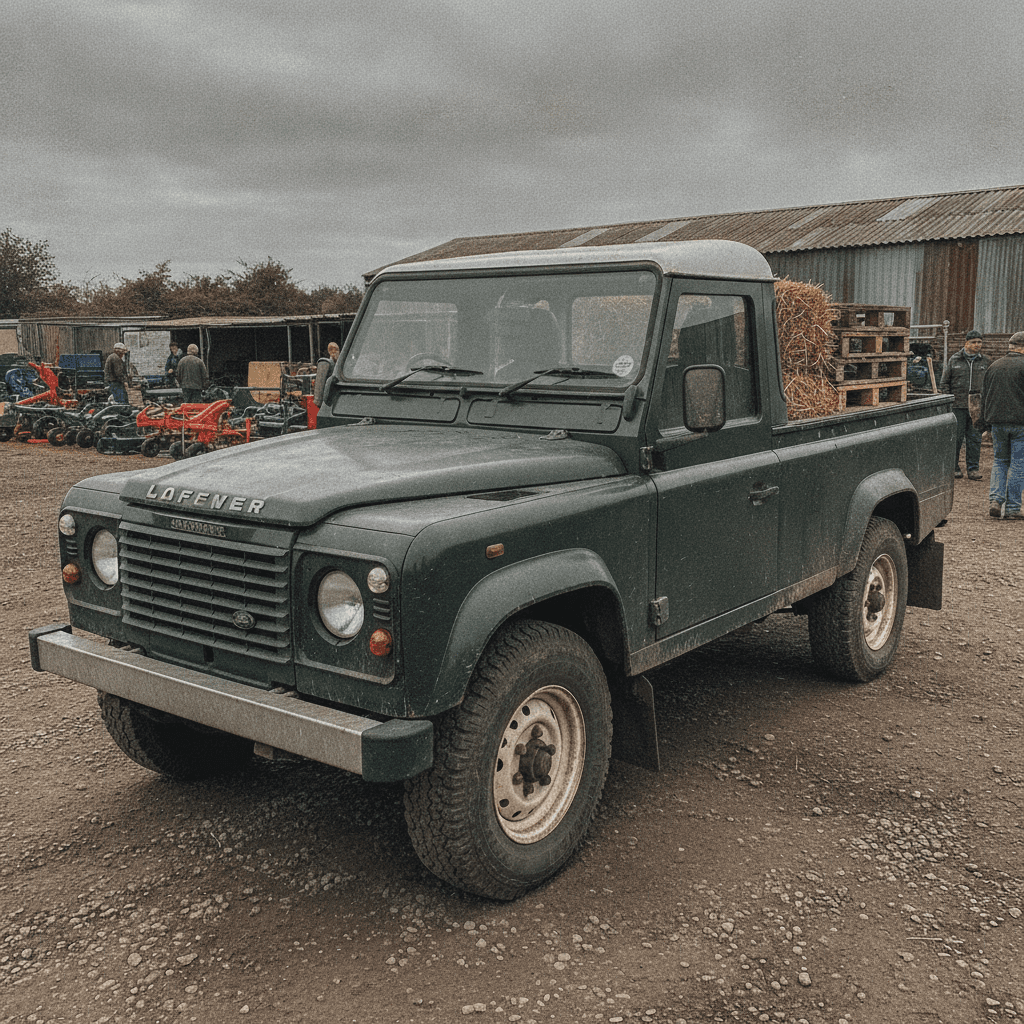
This price band contains the bulk of late-era classic commercial production. Buyers will find solid 2.4-litre and 2.2-litre TDCi Puma Hard Tops and pickup derivatives from late 2007 through 2014. Vehicles at this level should feature sound chassis rails, cleanly operating low-range transfer gearboxes, and thorough maintenance records. Expect reasonable working mileage and genuine commercial condition, though attention should still be paid to minor bulkhead corrosion and worn prop shaft universal joints.
£25,000 to £38,000: Exceptional Classic Commercials and Early L663 Hard Tops
In this upper-middle bracket, buyers cross the threshold into pristine, low-mileage end-of-run classic Defenders (2014 to 2016 Puma models) boasting rust-free chassis and enthusiast care. Crucially, this tier also unlocks high-mileage or entry-specification early L663 Defender 90 Hard Tops equipped with the D200 or D250 Ingenium engine. These modern models bring refined highway cruising, modern active safety suites, Euro 6 compliance, and dramatically lower cabin noise levels directly into the commercial workspace.
£38,000 to £55,000+: Modern Low-Mileage L663 90 and 110 Commercials
The top tier of the commercial market secures pristine, low-mileage L663 Defender 90 and 110 Hard Tops from 2021 onwards. Vehicles in this class frequently feature desirable factory optional packages, such as the Cold Climate Pack, Advanced Off-Road Capability Pack, ClearSight digital interior rear-view mirror, and 3D surround camera systems. You will find higher-output D250 and D300 models with minimal road wear, pristine load bays, full main dealer service records, and remaining factory warranty.
Real-World Running Costs: Fuel, VED, Insurance, and Servicing
Budgeting for a used commercial Defender requires calculating more than just upfront acquisition costs. Commercial operators must account for maintenance, fuel burn, and regulatory expenses.
Fuel Economy and Operating Efficiency
Older classic manual Defenders running 2.2 or 2.4 TDCi engines return between 24 and 28 miles per gallon during average mixed commercial driving, dropping down to roughly 19 to 22 mpg when towing heavy plant trailers or tackling continuous low-range off-road duty.
The modern L663 straight-six Ingenium mild-hybrid diesel engine is significantly more efficient despite its substantial increase in power. Real-world returns for a D250 or D300 110 Hard Top typically sit between 28 and 33 miles per gallon on unladen motorway runs, settling to around 24 to 27 mpg under commercial payload and towing cycles. Heavy footwork or sustained off-road work will naturally reduce these numbers, but overall fuel economy remains remarkably competitive against large conventional commercial vans.
Vehicle Excise Duty (Road Tax) and Company Tax (BIK)
Because the modern Defender Hard Top is categorised as an N1 Light Commercial Vehicle, it qualifies for the standard flat-rate commercial vehicle Vehicle Excise Duty, avoiding the steep tiered emissions rates and luxury vehicle surcharges applied to passenger SUVs. For business owners running a commercial Defender as a company vehicle, the benefit is equally striking: it falls under the fixed-rate commercial vehicle Benefit-in-Kind (BIK) system, saving thousands annually compared to running an equivalent passenger 4x4.
Insurance Groups and Vehicle Security Measures
Due to enduring market appeal and strong residual demand, both classic and modern Defenders represent high-theft-risk vehicles across the UK. Commercial insurance groups typically range from Group 35 up to Group 43 depending on engine specification and trim.
Underwriters frequently mandate additional security installations prior to providing coverage. When operating a classic Defender, mechanical security additions like pedal security boxes, steering wheel locks, and aftermarket Thatcham-approved immobilisers are essential. For modern L663 models, an active Thatcham Category S5 tracking system combined with secure key storage in Faraday pouches is virtually mandatory for commercial policies.
Routine Servicing and Maintenance Schedules
Classic Defenders require routine servicing every six thousand to twelve thousand miles, focusing on engine oil, filter changes, swivel hub lubrication, and frequent driveline grease applications. Modern L663 Defenders operate on variable service schedules of up to twenty-one thousand miles or two years; however, trade professionals running working vehicles on sites, in deep dust, or on continuous short journeys should adopt an aggressive intermediate service schedule every ten thousand miles to preserve engine oil quality, prevent timing chain wear, and ensure emissions hardware longevity.
Securing Your Used Commercial Defender
Acquiring a commercial vehicle of this calibre represents an investment in your business infrastructure, unlocking new contract opportunities across rugged locations that conventional fleets simply cannot service. Structuring your purchase correctly ensures you protect your operational working capital while maximising legitimate commercial tax deductions.
Financing through structured commercial van finance allows you to spread the acquisition cost over tailored terms, matching capital expenditure directly with your business cash flow and invoicing cycles. Alternatively, businesses seeking fixed operational overheads, structured replacement cycles, and predictable commercial outgoings without asset depreciation risks should review our current competitive van lease deals to discover how easily an all-terrain commercial vehicle can be integrated directly into your fleet.