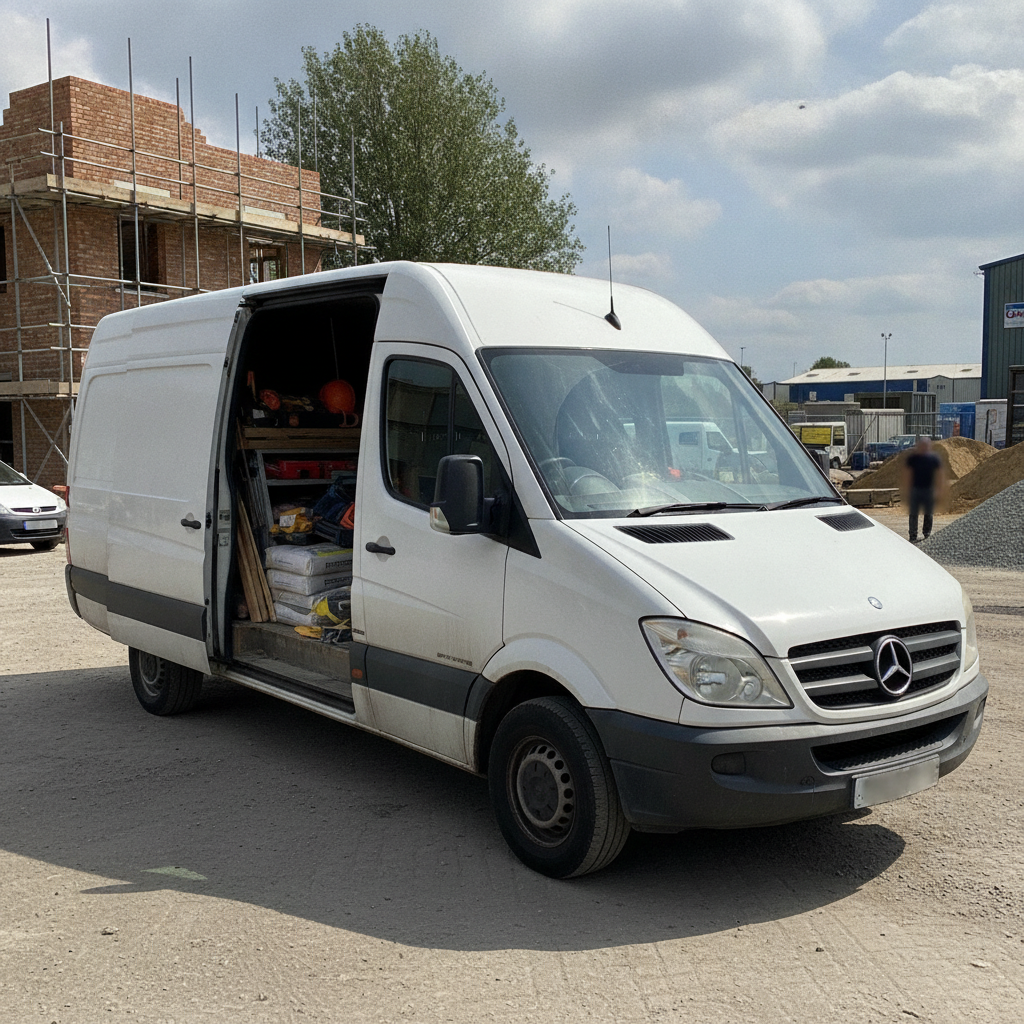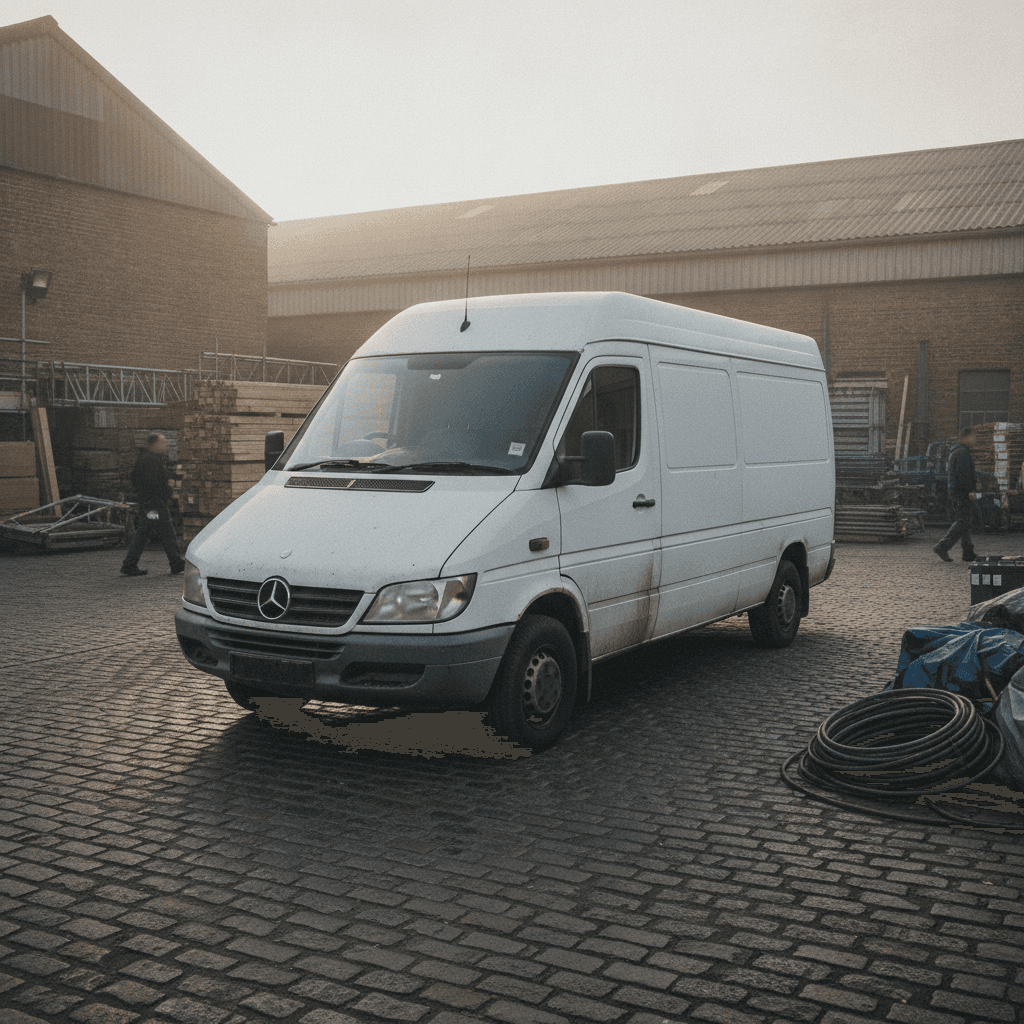
Buying a used Mercedes-Benz Sprinter
Why the Mercedes-Benz Sprinter Remains the Commercial Benchmark
When tradespeople and fleet managers talk about heavy-duty 3.5-tonne panel vans, the Mercedes-Benz Sprinter is inevitably the vehicle against which all others are judged. First introduced to the UK market in 1995 to replace the venerable T1 Transporter, the Sprinter earned an immediate reputation for high-speed cruising ability, build integrity, and modern safety technology. Across three distinct generations, it has developed from a spartan, hard-working panel van into a technologically advanced, ergonomically superior commercial tool capable of covering hundreds of thousands of miles with routine maintenance.
In the used market, the Sprinter commands higher residual values than almost any equivalent rival, including the Ford Transit, Volkswagen Crafter, Renault Master, and Vauxhall Movano. That price premium is rooted in tangible engineering strengths: a galvanised chassis on modern variants, robust longitudinal powertrains, car-grade passive and active safety equipment, and a level of highway stability that makes a day behind the wheel significantly less fatiguing for operators who spend four to six hours daily on British motorways.
Whether you run a sole-trader carpentry business, operate a nationwide courier contract, or manage a fleet of mobile mechanical workshops, a used Sprinter represents a reliable, professional asset. However, commercial vehicles work hard for a living, and the Sprinter is no exception. Understanding the exact mechanical differences across generations, the strengths and weaknesses of various powertrains, and how previous owners treated their service schedules is critical to finding an example that makes money for your business rather than absorbing capital in unexpected repairs.
Generations at a Glance: W906 vs W907/W910
When searching for a pre-owned Sprinter in the UK, you will primarily encounter two generations:
- Second Generation (W906, 2006–2018): Often referred to as the NCV3, this generation established the modern Sprinter profile. It underwent a major facelift in late 2013 for the 2014 model year, introducing a sharper front-end design, improved seat ergonomics, and Euro 6 compliant BlueTEC engines using selective catalytic reduction (AdBlue). Pre-2014 models are predominantly Euro 4 or Euro 5 and carry a significant risk of cosmetic corrosion. The post-2014 facelift models represent a dependable, cost-effective entry point for trades operating outside low-emission zones.
- Third Generation (W907/W910, 2018–present): The W907 (rear-wheel drive and all-wheel drive) and W910 (front-wheel drive) brought comprehensive modern connectivity to the platform. Visually distinguished by narrower, sharper headlights and an upright grille, this generation introduced the Mercedes-Benz User Experience (MBUX) infotainment touchscreen, electric power steering, keyless start, and front-wheel drive configurations. It offers exceptional cab comfort and refined road manners, making it the preferred choice for long-distance owner-drivers and courier subcontractors.
Dimensions, Payload, and Body Configurations
The Mercedes-Benz Sprinter offers one of the most comprehensive model catalogues in the light commercial sector. Navigating the variations in length, roof height, and drive layout ensures you secure the correct load volume and payload for your daily operational requirements.
Body Lengths and Heights
Mercedes-Benz categorises the Sprinter panel van using four vehicle lengths (L1 to L4) and three roof heights (H1 to H3):
- L1 (Compact / Short Wheelbase): Featuring a 3,259mm wheelbase and an overall length of 5,267mm, the L1 is relatively rare on modern UK forecourts. It is best suited to inner-city trades requiring tight turning circles and standard parking space dimensions. Internal cargo floor length is 2,732mm.
- L2 (Medium Wheelbase): Built on a 3,665mm wheelbase with an overall length of 5,932mm, the L2 MWB is the sweet spot for general builders, electricians, and plumbers. It balances urban manoeuvrability with an internal load length of 3,272mm, easily accommodating eight-by-four sheet materials flat on the floor.
- L3 (Long Wheelbase): Using a 4,325mm wheelbase and spanning 6,967mm overall, the L3 LWB is the backbone of the British parcel delivery and logistics sector. With a load bed length of 4,307mm, it allows extensive racking systems alongside substantial central cargo space.
- L4 (Extra-Long Wheelbase / Maxi): Sharing the 4,325mm wheelbase of the L3 but adding an extended rear body overhang, the L4 measures 7,367mm overall. It provides an internal floor length of 4,707mm and up to 17.0 cubic metres of volume in high-roof spec, designed specifically for lightweight, bulky freight.
- Roof Heights: H1 (Standard Roof) offers an internal standing height of roughly 1,719mm; H2 (High Roof) increases this to 2,009mm, allowing six-foot workers to stand fully upright; H3 (Super High Roof), available on long-wheelbase variants, provides an immense 2,242mm of internal clearance.
Payload Capacities and GVW
The vast majority of used Sprinters sold in the UK are rated at 3,500kg Gross Vehicle Weight (designated as 311, 314, 315, 316, or 319 models), allowing them to be driven on a standard Category B car licence. However, the substantial build quality of the Sprinter chassis means that unladen curb weights are relatively high compared to front-wheel-drive competitors.
A bare-chassis medium-wheelbase L2H1 model can provide a payload in excess of 1,300kg. However, a fully racked L3H2 long-wheelbase van with factory ply lining, fuel, and a driver will often see its practical payload reduced to between 900kg and 1,050kg. Heavy-hauling trades carrying sand, aggregate, or heavy access equipment must keep this in mind to avoid vehicle overloading fines. For specialist applications, heavy-duty variants exist at 4,250kg, 5,000kg, and 5,500kg GVW (400-series and 500-series), though these require a Category C1 licence, tachograph compliance, and operator licensing.
Drive Layouts: FWD, RWD, and AWD
Prior to 2018, every Sprinter sold in the UK was either rear-wheel drive or four-wheel drive. The third-generation launch introduced front-wheel drive (W910) to the platform:
- Front-Wheel Drive (FWD): Available exclusively on shorter and medium body configurations, FWD models lower the rear loading sill by 80mm and remove the heavy rear propshaft and differential. This yields an immediate payload advantage of roughly 50kg alongside improved fuel efficiency for light urban multi-drop duties.
- Rear-Wheel Drive (RWD): The industry standard for heavy commercial duty. RWD pushes the load from behind, providing superior traction when the rear cargo area is heavily laden or when towing heavy trailers. It also provides a tighter turning circle because the front steering wheels operate unencumbered by driveshafts.
- All-Wheel Drive (AWD / 4x4): Utilised extensively by utility providers, forestry teams, highway maintenance crews, and premium campervan builders. Factory 4x4 Sprinters sit higher on their suspension, feature selectable low-range transfer cases, and command substantial premiums on the pre-owned market.
Engine Options and Transmission Reliability
Mercedes-Benz commercial engines are engineered for high-mileage endurance, but their mechanical architecture differs significantly depending on the production year.
The 2.1-Litre OM651 Four-Cylinder Diesel
The workhorse of the Sprinter range from 2009 through to late 2021 was the 2,143cc OM651 twin-turbocharged inline-four diesel. In the UK, it was offered in three primary outputs:
- x11 CDI: Producing 114bhp and 300Nm of torque. Adequate for light urban work, but feels strained under heavy loads on motorway gradients.
- x14 / x15 CDI: Producing 140bhp to 143bhp and 330Nm of torque. The most common fleet configuration, delivering an ideal compromise between operational fuel economy and cruising pace.
- x16 CDI: Twin-stage turbocharging producing 163bhp and 360Nm of torque. The choice for owner-drivers carrying maximum payloads or towing heavy trailers up to 2.8 or 3.5 tonnes.
The 3.0-Litre OM642 V6 Diesel
Designated as the 319 or 519 CDI, the legendary 2,987cc V6 turbo-diesel produces 190bhp and a massive 440Nm of torque from just 1,400rpm. Known for supreme smoothness, immediate throttle response, and quiet motorway running, it is the premier choice for long-distance continental haulage, luxury horseboxes, and heavy vehicle recovery. However, it consumes significantly more fuel and requires stringent adherence to oil change schedules to prevent oil cooler degradation.
The 2.0-Litre OM654 Four-Cylinder Diesel
Introduced gradually from 2020 on front-wheel drive variants and adopted universally across the entire Sprinter line-up from late 2021, the OM654 is an all-aluminium 1,950cc engine. Meeting stringent Euro 6d-Final emissions standards, it is noticeably quieter, lighter, and more economical than the older 2.1-litre block, offering outputs from 114bhp up to 190bhp. Its integration with modern electrical systems makes it an exceptionally refined commercial drive.
Transmissions
Manual gearboxes are six-speed Eco Gear units designed specifically for commercial hauling with an ultra-low first gear for hill starts with full payloads. On the automatic side, earlier models used the durable 7G-Tronic seven-speed transmission, while post-2021 OM654 models adopted the seamless 9G-Tronic nine-speed automatic. Both automatics are exceptionally robust provided they receive their scheduled transmission fluid and filter replacements.
Who Buys the Sprinter and Why? (Trade Applications)
The used Mercedes-Benz Sprinter appeals to commercial operators who view their vehicle as an operational workshop rather than simple transport:
- Courier and Express Freight Operators: High-roof L3 and L4 vans dominate this sector. Drivers value the rapid cab-through access, durable seat foam that resists thousands of entry-exit cycles, and advanced safety equipment like Crosswind Assist that maintains lane integrity on exposed bridges during severe weather.
- Carpenters, Plumbers, and Electrical Contractors: L2H2 and L3H2 models are common choices. The internal height allows vertical storage systems and racking against the straight body walls, leaving ample central floor space to transport sheet goods, copper pipe lengths, and cable drums out of sight and secure behind steel deadlocks.
- Groundworkers and Plant Operators: Sprinter chassis cabs equipped with factory Scattolini alloy dropside beds, tipping gear, or beavertail car transporter bodies excel here. The robust rear-wheel-drive suspension handles punishing aggregate drops and plant trailer towing duties that wear out lighter car-derived chassis.
- Refrigerated Food and Pharmaceutical Transport: The Sprinter platform is the conversion vehicle of choice for insulated dual-temperature reefers. Mercedes-Benz provides direct factory integration for engine-driven refrigeration compressors and high-output alternators, ensuring temperature consistency during long transport runs.
- Campervan Converters: The Sprinter is the undisputed gold standard for off-grid campervan transformations. Its interior width allows transverse bed configurations, its galvanised panels guarantee structural longevity, and the availability of factory four-wheel-drive underpinnings supports multi-terrain touring across Europe.
What to Look for When Buying a Used Sprinter
A used Sprinter with high mileage is not necessarily a bad purchase; these vans are built to achieve half a million miles when maintained properly. However, an unloved, poorly maintained Sprinter can quickly become a serious financial liability. Systematically check the following areas before committing to a purchase.
Digital Service Book (DSB) Verification
Mercedes-Benz moved away from traditional paper logbooks years ago, recording all maintenance on an internal central database known as the Digital Service Booklet (DSB). Legitimate sellers must provide printed DSB records or independent garage invoices proving routine service stamps. Verify that the van received its major Service B routines (brake fluid, fuel filter, pollen filter) and, critically, transmission oil changes for 7G-Tronic and 9G-Tronic automatics at regular intervals. A patchy service history on an OM651 or OM642 engine should be treated with extreme caution.
Common Mechanical Faults
- Injector Leakage ("Black Death"): A well-documented issue on the 2.1-litre OM651 engine. Copper sealing washers under the fuel injectors break down over time, allowing unburnt combustion gases and fuel to blow back past the injector seat. Over thousands of miles, this forms a rock-hard black carbon crust around the injectors and wiring harness. Remove the plastic engine top cover and inspect the injector wells with a torch. If you spot bubbling carbon or smell diesel fumes inside the cabin, the repair requires specialist pullers to remove seized injectors, re-cutting the cylinder head seats, and replacing the hardware.
- Timing Chain Tensioner and Rattle: The timing chain on the OM651 engine is located at the back of the engine, adjacent to the gearbox bellhousing. Listen carefully during a cold start. A momentary rattle that lasts more than two seconds indicates a failing hydraulic chain tensioner or a stretched timing chain. Because the chain sits at the rear, replacing it involves removing the engine or transmission, resulting in substantial labour downtime.
- V6 OM642 Oil Cooler Seals: On 3.0-litre V6 models, the engine oil cooler is buried deep in the "V" beneath the intake manifolds and turbocharger. The original orange elastomer seals degrade, leaking engine oil down through the bellhousing weep holes. While the replacement seals are inexpensive, accessing them requires ten to twelve hours of specialist labour to dismantle the top half of the engine.
- Propshaft and Universal Joint Wear: Because rear-wheel-drive Sprinters use two-piece or three-piece steel propshafts, the centre support bearings and universal joints absorb tremendous rotational stress. On a test drive, accelerate through 40mph up to 60mph. Any deep droning noise, floorpan vibration, or metallic "clonk" when engaging first gear points to failing universal joints or worn propshaft centre bearings.
- Rear Differential Whine: Under heavy continuous acceleration and deceleration, listen for a high-pitched whining noise from the rear axle. High-mileage vans driven without rear differential oil changes suffer crown wheel and pinion wear. Rebuilding or replacing a rear commercial axle represents a significant workshop expense.
Emissions System and DPF Vulnerabilities
Euro 6 models rely on a complex exhaust aftertreatment network comprising an oxidation catalyst, a Diesel Particulate Filter (DPF), and an AdBlue Selective Catalytic Reduction (SCR) system with multiple NOx sensors. Vans restricted to urban parcel delivery never achieve the continuous exhaust temperatures necessary for passive DPF regeneration. Look out for:
- Engine management warning lights or AdBlue dash alerts indicating engine start countdowns. Once the countdown reaches zero, the ECU inhibits engine restarts entirely.
- Faulty AdBlue tank heaters or failed NOx sensors (one upstream, one downstream). These sensors fail regularly and must be replaced to pass an MOT emissions test.
- Unusual exhaust smoke or active regeneration smells (hot metal, cooling fans running loudly after the ignition is switched off).
Chassis, Body, and Hardware Checks
- Rust and Corrosion: Second-generation Sprinters built between 2006 and 2013 were susceptible to rapid cosmetic corrosion. Inspect the lower door folds, the seam underneath the windscreen rubber, the sills, and the rear wheel arches. Post-2014 models feature significantly better electro-galvanised dipping processes, but you must still inspect the underside chassis rails, outriggers, and suspension mounting points for heavy structural corrosion, particularly on ex-gritter or coastal vehicles.
- Rear Suspension Leaf Springs: Sprinters use composite or steel single-leaf or multi-leaf parabolic rear springs. Look under the rear wheel arches with a torch to confirm the springs are not cracked or inverted. Ensure the rubber bump stops are intact; battered or missing bump stops confirm the van has been habitually overloaded.
- Sliding Door Runners: Sprinter side loading doors are heavy. The bottom roller guide carries most of the weight and its nylon coating wears through, metal grinding against the lower body channel. Inspect the bottom channel for stripped paint, rust, or sagging alignment that makes the door hard to slide or latch.
Years and Variants to Avoid
To maximise reliability and minimise maintenance downtime, exercise caution when reviewing the following used options:
- Pre-2014 W906 Models for Urban Trades: Unless you operate exclusively in rural areas outside clean air regulations, pre-2014 models are Euro 4 or Euro 5. They do not meet London ULEZ or regional Clean Air Zone (CAZ) criteria, subjecting you to daily operational surcharges. They are also significantly more prone to bodywork rust.
- High-Stop Ex-Delivery Fleet Workhorses: Multi-drop delivery vans covering 40,000 miles a year with 150 delivery stops a day experience severe wear on starters, flywheels, driver seat foam, steering columns, and sliding door mechanisms. A lower-mileage van owned by an independent specialist trade is invariably a sounder mechanical investment than a worn ex-logistics van.
- 2014–2016 Early Euro 6 Models with Incomplete Software Updates: Early BlueTEC AdBlue systems suffered from software bugs that triggered spurious engine fault codes and component lockouts. Confirm that all official Mercedes-Benz technical service bulletins and emissions recall updates have been logged on the Digital Service Booklet.
Typical Used Sprinter Price Ranges
Sprinter values remain exceptionally resilient across the UK commercial sector. Prices reflect mechanical condition, mileage, body configuration, and whether the vehicle carries a Euro 6 classification for clean-air compliance.
Budget Workhorses: Under £8,000
At this entry price tier, you will generally find high-mileage (150,000 to 250,000+ miles) second-generation W906 models built between 2008 and 2014. These are predominantly Euro 5 vehicles, meaning they are non-compliant for London ULEZ or regional clean air zones without paying daily entry fees. Expect cosmetic dents, stone chips, worn cab plastics, and evidence of heavy site use. Vehicles in this price bracket suit local general builders, scrap metal collectors, or DIY conversion projects where low acquisition cost is the primary objective. Always inspect the chassis rails and rear spring hangers for structural rust before purchasing.
The Trade Workhorse Sweet Spot: £8,000 to £16,000
This bracket offers the widest selection for small businesses and self-employed trades. It encompasses late facelift W906 models (2014 to 2018) and higher-mileage early third-generation W907 models (2018 to 2020) with recorded mileages between 70,000 and 130,000 miles. Crucially, post-2016 vans here are fully Euro 6 compliant, allowing you to enter urban clean air zones without penalty. You can expect tidy bodywork, functional air conditioning, genuine service history records, and several years of productive service life remaining.
Late-Plate and Premium Commercials: £16,000 to £30,000+
Occupying the upper tier of the used market are third-generation W907/W910 vans from 2019 onward with fewer than 60,000 miles on the odometer. These examples feature the contemporary MBUX infotainment setup with integrated Apple CarPlay/Android Auto, multifunction steering wheels, keyless ignition, and advanced driver assistance systems. High-specification 316 and 319 V6 models sit comfortably in this category, alongside specialist conversions, pristine dropsides, and factory all-wheel-drive derivatives. Many of these vehicles remain eligible for manufacturer-approved warranties and structured commercial funding.
Real-World Running Costs: Fuel, Insurance, and Maintenance
Factoring full whole-life running costs into your purchase calculation is vital to maintaining healthy operational margins.
Fuel Consumption
The real-world fuel economy of a used Sprinter depends heavily on load weight, roof height, axle ratio, and drive configuration:
- 2.1-Litre / 2.0-Litre (Manual or Automatic, RWD): Expect an average of 28mpg to 34mpg on combined routes. Driven gently on continuous motorway runs at 65mph, an unloaded L2H1 can return up to 36mpg. Fully loaded urban driving typically drops figures to 24mpg to 27mpg.
- Front-Wheel Drive Models: Benefit from reduced drivetrain resistance and lighter curb weights, typically returning a consistent 2mpg to 3mpg improvement over equivalent rear-wheel-drive configurations.
- 3.0-Litre V6 Models: The performance and towing capabilities of the six-cylinder engine come at the pumps. Real-world consumption ranges between 22mpg and 26mpg on mixed runs, dropping below 20mpg when towing heavy plant equipment or working heavily laden in stop-start traffic.
Insurance Groups and Security
Sprinters sit in higher commercial insurance brackets (typically Groups 36 to 44) than mid-sized vans like the Vito or Custom. Their desirability on the second-hand market makes them prime targets for professional thieves targeting high-value tools, exhaust catalytic converters, and front radar sensor units.
To reduce annual insurance premiums and protect your livelihood, invest in accredited physical security upgrades. High-visibility deadlocks or hook locks fitted to the cab doors, sliding door, and rear barn doors are essential. Installing an aftermarket catalytic converter clamp and a Thatcham Category 1 or S5 tracking system with remote engine immobilisation will pay for itself in insurance discounts and peace of mind.
Servicing Schedules and Maintenance Intervals
The Sprinter uses an onboard Assyst maintenance computer that monitors engine operating conditions, hours, and oil quality to calculate dynamic service intervals, typically falling between 18,000 and 24,000 miles or every two years. However, professional mechanics strongly advise against running commercial diesel engines to these maximum thresholds.
For optimum longevity—particularly on OM651 and OM642 units—drop the engine oil and replace the filter every 10,000 to 12,000 miles. Independent Mercedes-Benz commercial specialists offer competitive labour rates that sit well below main dealer workshop figures, giving you access to the official Star Diagnostic system and genuine parts without commercial dealer overheads.
Financing Your Used Mercedes-Benz Sprinter
Managing cash flow is the top priority for any trade business, and purchasing a used van outright with liquid cash is not always the most tax-efficient or practical route. Exploring structured van finance packages allows you to preserve operating capital for materials, trade accounts, and business expansion.
Two primary funding structures dominate the used commercial van market:
- Hire Purchase (HP): The traditional route to ownership. You pay an initial deposit (which commonly covers the VAT element of the purchase price), followed by fixed monthly payments spread over twelve to sixty months. Once the final payment and option-to-purchase fee are cleared, your business owns the vehicle outright. This is popular with trades who run their vans for seven to ten years and want an unencumbered balance sheet asset.
- Finance Lease: Highly favoured by VAT-registered businesses and limited companies. Finance Lease offers lower monthly payments because you are paying for the use and depreciation of the vehicle rather than outright equity. The agreement can include a balloon payment at the end, tailored to the anticipated future residual value of the Sprinter. When the term finishes, you sell the vehicle to an independent third party, settle the balloon payment, and retain any surplus equity to roll into your next vehicle.
If you prefer driving factory-fresh metal every two to four years without worrying about long-term maintenance costs, MOT tests, or used component failures, reviewing competitive van lease deals on late-model or brand-new Sprinters provides predictable monthly overheads and fixed manufacturer warranty coverage throughout the entire operational term.
Summary: Is a Used Sprinter Right for Your Business?
The Mercedes-Benz Sprinter has maintained its place at the summit of the British light commercial vehicle sector for good reason. It offers unmatched ergonomic comfort for long-distance drivers, exceptional engineering integrity, class-leading load volumes up to 17 cubic metres, and high retained residual values that safeguard your capital investment.
While repair bills for complex emissions components and neglectful maintenance can be higher than those of budget competitors, taking the time to verify the Digital Service Booklet, inspecting the fuel injectors and propshaft assemblies, and choosing the correct length and drivetrain configuration will ensure your used Sprinter delivers hundreds of thousands of dependable, profitable working miles.