Buying used minibuses
What is a minibus and how it differs from a panel van
A minibus is a passenger-carrying light commercial vehicle built or converted to transport groups of people safely and comfortably. While standard panel vans are engineered primarily to haul inanimate freight inside an enclosed, windowless steel shell, a minibus is constructed around human safety, interior climate control, and legal passenger transport requirements. Under UK and European vehicle categorisation, factory-built minibuses typically fall into the M1 category (up to eight passenger seats plus the driver) or the M2 category (more than eight passenger seats with a maximum gross vehicle weight not exceeding 5,000kg).
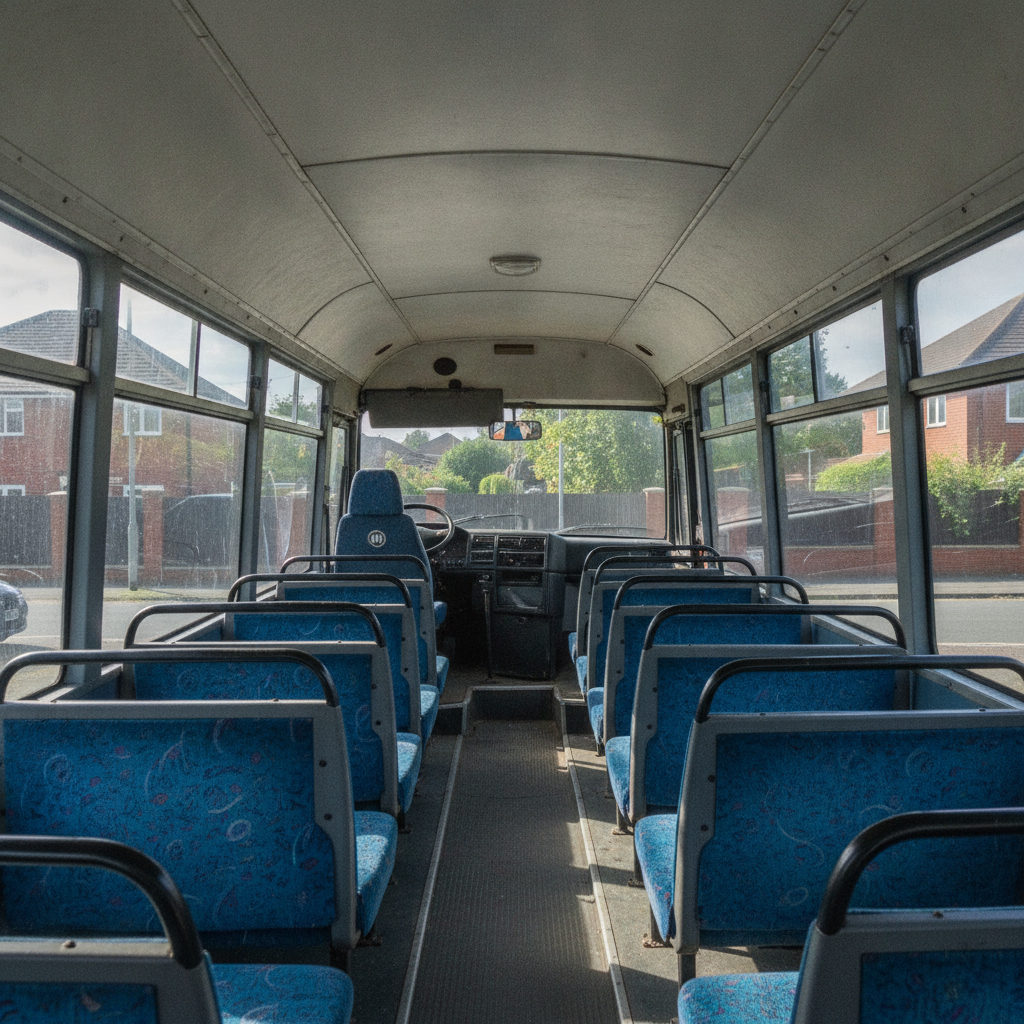
The differences go far beyond simply bolting chairs into the load bed. Minibuses feature full-length glazed side windows, dedicated interior thermal and acoustic insulation, integrated floor tracking systems, and safety-tested anchorage points for every seat. Crucially, each seating position incorporates an individual three-point inertia-reel seatbelt built to withstand deceleration forces specific to occupied vehicles. Minibuses also incorporate passenger amenities rarely seen in basic commercial panel vans, including independent rear passenger heating and ventilation ducts, overhead luggage racks, emergency exit roof hatches, break-glass escape points, interior grab rails, and powered or mechanical side entry steps. Beneath the skin, suspension configurations often employ revised spring rates and anti-roll bars tuned to cushion human occupants rather than absorb heavy industrial goods, delivering a smoother, more stable ride.
Who buys used minibuses and why
Used minibuses represent a high-utility asset for a diverse array of UK businesses, public services, and non-profit organisations. Buying used provides an accessible entry point to transport management without absorbing the heavy initial depreciation associated with brand-new coachbuilt vehicles. Key buyers across the UK market include:
- Schools, colleges, and academies: Educational institutions use 9- to 17-seat minibuses for daily pupil pickup services, inter-school sports fixtures, and educational field trips. Reliable used models help schools maximise tight annual budgets while fulfilling duty of care requirements.
- Charities and community transport operators: Non-profit community schemes depend on accessible, reliable minibuses to provide lifeline transport services to rural populations, elderly groups, and mobility-impaired individuals under Section 19 minibus permits.
- Care homes and day centres: Residential facilities require adapted passenger transport, typically equipped with automated tail lifts or fold-out ramps, to transfer wheelchair users to clinical appointments and social outings comfortably.
- Taxi and private hire operators: Private transport firms utilise executive 8- and 9-seat minibuses for airport transfers, executive corporate travel, wedding parties, and race-day transport where carrying capacities exceed the threshold of an estate car or MPV.
- Sports clubs and community teams: Amateur football, rugby, rowing, and athletics teams purchase mid-sized minibuses to keep team travel costs low and avoid coordinating multiple private cars across regional and national fixture calendars.
- Construction and civils contractors: Large-scale infrastructure projects, utility contractors, and highway maintenance firms frequently use rugged crew-bus configurations to ferry full work gangs, site supervisors, and their personal tools safely from depots to roadside sites.
- Outdoor activity and tour companies: Tour agencies operating in national parks, holiday resorts, and historic cities require dependable multi-seat vehicles with generous rear luggage space to accommodate travellers and equipment such as mountain bikes or hiking gear.
Common used minibus models in the UK market
The UK pre-owned minibus marketplace features a selection of proven platforms developed by major commercial vehicle manufacturers, available in factory-built configurations or specialist coachbuilt conversions.
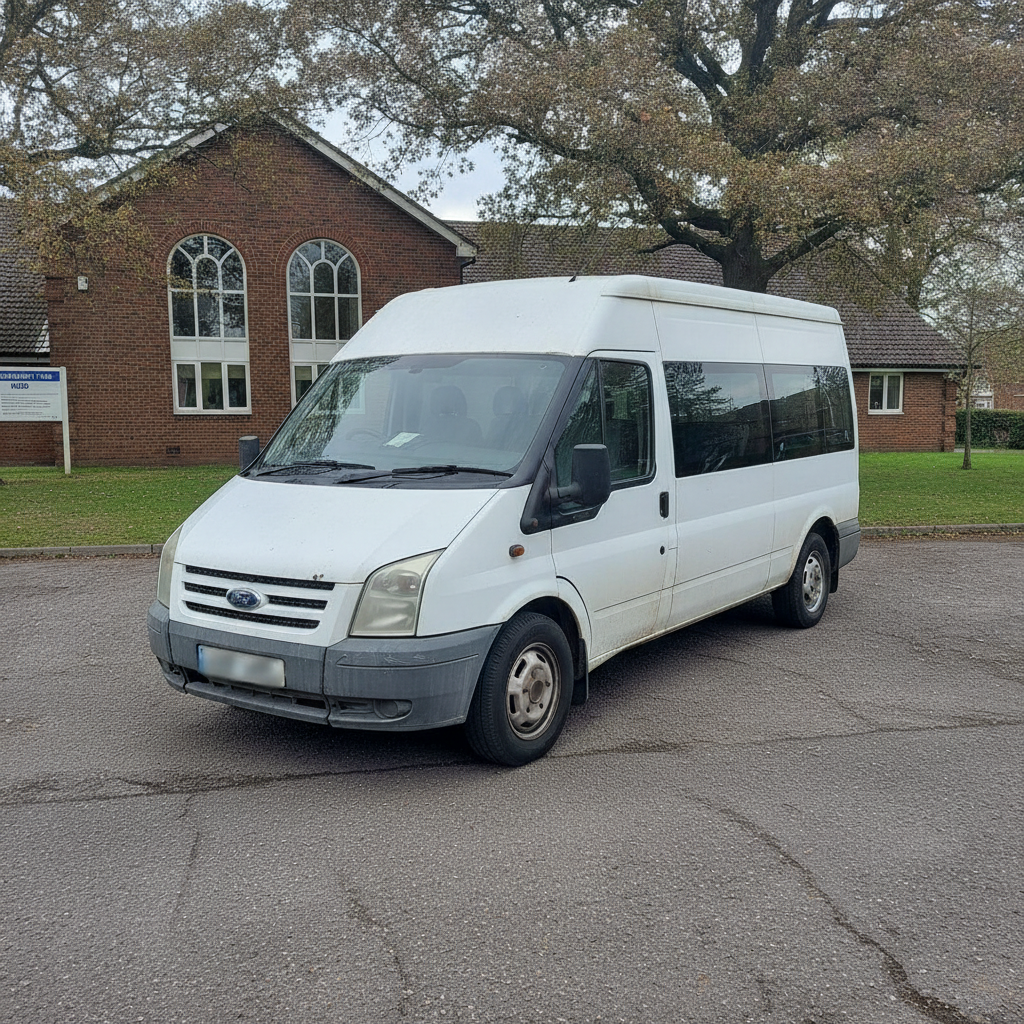
- Ford Transit Minibus: The undisputed market leader in the UK. Available in multiple configurations including 11-, 12-, 14-, 15-, and 17-seat layouts, the rear-wheel-drive Transit is the go-to standard for schools and transport fleets. Its 2.0-litre EcoBlue diesel engine provides strong torque, while replacement parts and knowledgeable service centres are widespread nationwide.
- Mercedes-Benz Sprinter: Renowned for exceptional passenger refinement and long-distance durability. Available in factory Tourer layouts or luxury coachbuilt configurations up to 17 seats, the Sprinter is favoured by executive private hire and corporate travel businesses. Its build quality, high-grade interior plastics, and active safety systems command a premium on the secondary market.
- Volkswagen Transporter Shuttle and Caravelle: Dominating the compact 8- and 9-seat M1 category, the Transporter platform retains some of the highest residual values of any light commercial vehicle. Its car-like driving dynamics, low overall height, and standard car driving licence compatibility make it a staple for taxi firms, high-end private hire, and lifestyle buyers.
- Renault Master and Vauxhall Movano: Offering competitive entry pricing and practical front-wheel-drive layouts, these sister models are particularly common in the 9- to 17-seat accessible sector. The lower floor height of the front-wheel-drive layout provides easier step-in access for elderly passengers and lends itself well to tail-lift conversions.
- Peugeot Boxer and Citroën Relay: Widely recognised for class-leading internal width and low kerb weight. These front-wheel-drive vans are an extremely popular base for specialist lightweight 17-seat conversions that can be driven on a standard car licence under specific UK regulatory frameworks.
Typical payload and body dimension ranges
Body dimensions and usable payloads vary significantly across the minibus sector depending on the wheelbase, roof height, and passenger seating capacity chosen. Unlike standard vans where payload is calculated purely for pallets and materials, a minibus payload must comfortably accommodate the driver, passengers, individual baggage, and any accessibility hardware.
Compact 8- to 9-seat passenger vans built on medium-wheelbase (MWB) platforms typically measure between 4.9 metres and 5.4 metres in length, with overall heights under 2.0 metres. This allows them to enter standard multi-storey car parks and domestic driveways with ease. These models generally operate at a Gross Vehicle Weight (GVW) of 2,800kg to 3,200kg, leaving an effective payload capacity of roughly 800kg to 1,100kg. Once eight adult passengers are seated, remaining payload for heavy luggage must be calculated prudently.
Long-wheelbase (LWB) and extended-frame 14- to 17-seat minibuses span between 6.0 metres and 7.4 metres in length, with high-roof (H2 or H3) profiles reaching 2.6 to 2.8 metres to allow adult passengers to stand upright inside the central aisle. These larger vehicles usually carry GVWs from 3,500kg up to 4,250kg, 4,600kg, or even 5,000kg, depending on manufacturer specifications and rear axle configurations. An onboard passenger capacity of 17 adults (calculated by standard industry conventions at roughly 75kg to 80kg per person) accounts for over 1,300kg before luggage or fuel is added.
Because conversions, aftermarket seating, rear steps, and hydraulic tail lifts subtract directly from the operational payload, you must never rely on generic manufacturer brochures for used vehicles. Always cross-reference the V5C logbook and locate the vehicle's metal chassis identification plate, situated inside the driver door pillar or under the bonnet, to confirm the authentic Gross Vehicle Weight (GVW) and Gross Train Weight (GTW) before completing a purchase.
What to check when buying a used minibus
Purchasing a pre-owned minibus demands thorough inspection of both conventional mechanical components and specialised passenger hardware. A vehicle transporting people must adhere to rigorous safety and roadworthiness benchmarks.
Mechanical and chassis health
- Suspension components and rear springs: Minibuses spend their working lives carrying live passenger weight. Inspect rear leaf springs or parabolic coils for sagging, cracked leaves, or worn spring shackles. Check shock absorbers for fluid misting and verify that the vehicle sits perfectly level on flat ground.
- Braking systems: The stopping distance of a fully laden multi-seat bus requires high-performing brakes. Check front and rear brake discs for scoring or heavy corrosion, ensure brake fluid is fresh, and inspect hydraulic lines for corrosion or leaks. Ensure the handbrake holds firmly on an incline without excessive lever travel.
- Transmission and clutch: Stop-start urban shuttles put heavy strain on clutches and gearboxes. On manual models, test for clutch slip under load in higher gears and feel for dual-mass flywheel vibrations at idle. On automatics, ensure gear changes remain smooth and instantaneous without hesitation or hunting.
- Emissions systems: Ensure modern diesel models run cleanly without DPF (Diesel Particulate Filter) warning lights or AdBlue system faults. Frequent short-distance school runs prevent exhaust systems from reaching the temperatures required for passive DPF regeneration, which can result in clogged filters.
- Tyre specifications and age: Check all tyres for even tread wear across the tread face. Commercial passenger tyres must carry the correct load index for the vehicle's GVW. Ensure tyres on both sides of each axle match, inspect sidewalls for cracking or kerb gouges, and check the manufacture date code, as tyres older than five years degrade internally regardless of remaining tread.
Minibus-specific checks
- Seats and safety restraints: Methodically pull out and inspect every single seatbelt in the cabin. Look for frayed webbing, cuts, seized retractor reels, and damaged buckle receivers. Check that seat frames remain firmly bolted to the subfloor or track system without rocking or loose fixtures.
- Doors, latches, and side steps: Slide open passenger side doors to verify smooth roller operation and secure latching. If equipped with a powered sliding door or an electric fold-out side step, confirm the motor engages reliably and retracts fully when the door closes. Ensure the manual step deployment mechanism is free from rust.
- Accessibility gear and tail lifts: For wheelchair-accessible vehicles (WAVs), deploy the hydraulic tail lift or manual ramp through several full cycles under load. Look for hydraulic hose leaks, bent platform linkages, functioning safety stop gates, and smooth electrical controls. Verify that the lift possesses a valid, documented inspection certificate conforming to LOLER (Lifting Operations and Lifting Equipment Regulations) standards.
- Emergency exits and safety kit: Verify that emergency exit mechanisms function properly. Check that roof escape hatches unlatch freely and rear emergency egress doors unlatch both from inside and outside without binding. Confirm the presence of regulatory safety equipment such as break-glass hammers adjacent to emergency escape windows, a secure dry-powder fire extinguisher, and a stocked first-aid kit bracket.
- Tachograph: If purchasing a vehicle historically operated commercially under domestic or EU drivers' hours rules, inspect the tachograph unit for calibration seals, physical condition, and an up-to-date calibration plaque.
Indicative used minibus prices
Used minibus values reflect overall vehicle condition, recorded mileage, seat count, and whether the vehicle features complex accessible conversions. The figures below are indicative price bands designed to establish baseline expectations; buyers should consult live marketplace listings for real-time market valuations.
- Premium late-model minibuses (1 to 3 years old, under 30,000 miles): Expect prices between £32,000 and £55,000 or more, particularly for 17-seat Ford Transit Trend models or high-specification Mercedes-Benz Sprinter Tourers. Accessible models with internal hydraulic lifts sit at the higher end of this bracket. Most vehicles in this category will be sold subject to VAT.
- Mid-tier fleet minibuses (4 to 7 years old, 35,000 to 75,000 miles): Ranging typically from £16,000 to £30,000. This sector features ex-council, education authority, and community transport fleet stock. These vehicles usually come supported by structured main-dealer or specialist fleet service histories and provide dependable, long-term operational viability.
- Accessible entry-level minibuses (8 to 11 years old, 80,000 to 130,000 miles): Priced roughly from £8,000 to £15,000. Vehicles at this price point demand close mechanical scrutiny, attention to corrosion, and verification of Euro 6 emissions status if operating in regional clean air zones.
- Budget and high-mileage runabouts (12 years and older, over 140,000 miles): Generally trading between £3,500 and £7,500. Often older 9-seat shuttles or high-mileage crew vans suited for private sports clubs or rural transfers where daily mileage demands are modest.
Running costs and operating considerations
Operating a minibus involves several ongoing overheads that require accurate forecasting:
- Fuel consumption: Expect realistic fuel economy figures between 24 mpg and 33 mpg for modern 2.0-litre to 2.2-litre turbo-diesel 14- to 17-seat models when carrying moderate passenger loads. Compact 9-seat M1 shuttles can achieve between 36 mpg and 44 mpg under steady dual-carriageway conditions.
- Insurance overheads: Minibus insurance is specialised. Policies cover public liability, passenger negligence, and carriage of passengers for hire and reward or private community use. Premium calculations depend directly on driver age, annual mileage, seat count, and passenger profile, meaning minibus policies generally cost more than basic commercial goods-in-transit cover.
- Routine servicing and MOT testing: Mechanical maintenance intervals must be adhered to strictly, particularly for vehicles used in safety-critical passenger transport. Inspection costs also depend on the vehicle's class. Minibuses with 9 to 16 passenger seats require an annual Class 5 MOT, whereas smaller 8-passenger-seat models take a standard Class 4 test. Larger commercial passenger-carrying vehicles operated on a Public Service Vehicle (PSV) basis require specialist annual testing at an Authorised Testing Facility (ATF).
- Vehicle Excise Duty (VED): Annual road tax rates depend on the vehicle's age, emissions classification, and legal tax category (such as Bus or Private Light Goods). Charity-run vehicles can qualify for specific exemptions or reduced rates depending on operational criteria.
- Clean Air Zones (CAZ) and London ULEZ: To avoid daily access charges in London's Ultra Low Emission Zone and Clean Air Zones across cities like Birmingham, Bristol, and Bath, diesel minibuses must meet Euro 6 emissions standards (Euro VI for heavy-duty engines). Vehicles failing to comply face substantial daily operating surcharges.
Finance options and VAT rules
Purchasing a used minibus can be funded through standard commercial vehicle finance structures suited to diverse trading circumstances:
- Hire Purchase (HP): A popular route for schools, community clubs, and private firms wanting outright ownership. The buyer pays a deposit upfront, followed by fixed monthly instalments spread over two to five years. Once all payments and the final option-to-purchase fee are cleared, legal title transfers fully to the buyer.
- Finance Lease: Preferred by many VAT-registered commercial operators. The vehicle remains the property of the finance company, while the business rents it over a fixed term with low upfront outlays. At the end of the term, the vehicle is sold to a third party, with the hirer retaining a significant percentage of the net sale proceeds, or refinanced under a secondary peppercorn rental structure.
- Personal Contract Purchase (PCP): Primarily restricted to 8- and 9-seat M1 passenger models purchased by individual private buyers or sole traders. PCP provides lower monthly payments with a balloon payment due at the end if you choose to keep the vehicle.
Value Added Tax (VAT) rules demand clear accounting attention. Most used commercial minibuses sold by dealers are VAT-qualifying commercial vehicles, meaning the headline purchase price excludes 20% VAT. Fully VAT-registered businesses using the vehicle exclusively for taxable commercial activity can reclaim this input VAT through their quarterly VAT return. Conversely, non-VAT-registered community groups, charities, and state schools cannot routinely reclaim VAT unless they hold specific qualifying exemptions or fund the vehicle through targeted local authority grant structures. Always confirm the exact VAT status of the listing with the selling dealer before proceeding.