
Featured
ULEZ ✓Swiss VansBridgend
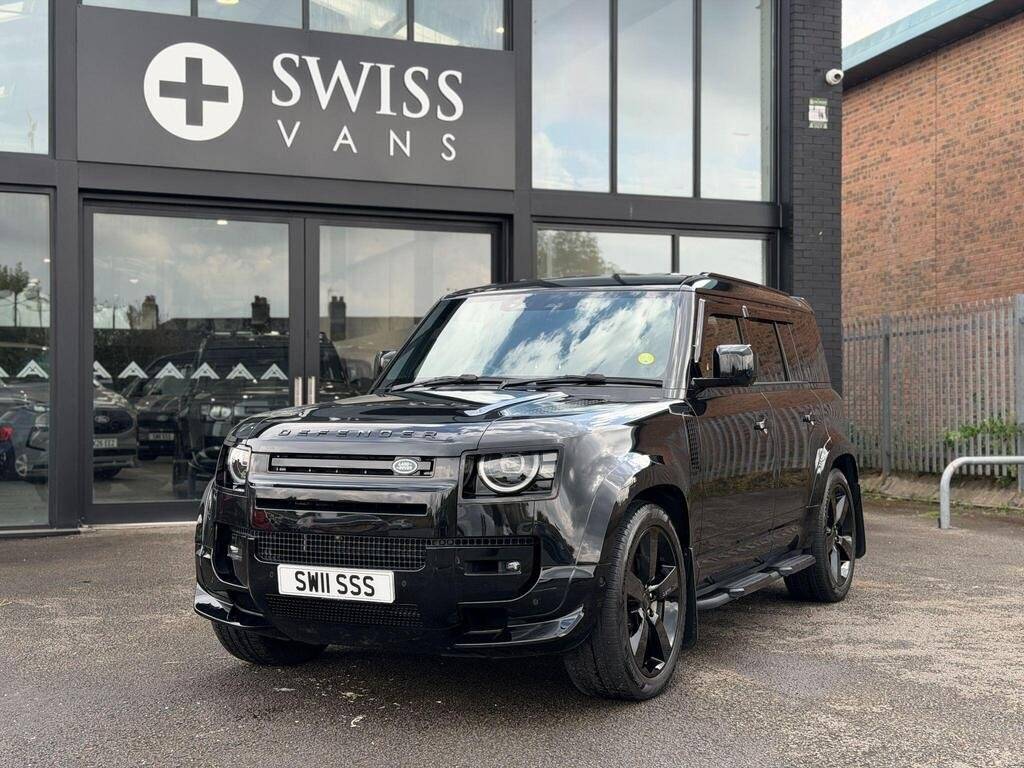
Land Rover Defender Hard Top X-Dynamic HSE D MHEV Automatic
2026 · 5,667 mi · Diesel
Hard Top X-Dynamic HSE D MHEV Automatic
£74,999+ VAT
Auto
Swiss VansBridgend
2026 · 5,667 mi · Diesel
Hard Top X-Dynamic HSE D MHEV Automatic
A pickup truck is built fundamentally differently from an enclosed panel van. Where a conventional panel van uses a monocoque or semi-integral body shell, almost all commercial pickup trucks utilise a rugged ladder-frame chassis. On top of this heavy-duty steel frame, the vehicle mounts an independent passenger cabin at the front and a separate, open cargo bed at the rear. The cargo bed is physically isolated from the passenger compartment, preventing rattles, dirt, smells, and shifting loads from encroaching into the cabin space.
The drivetrain represents another primary operational distinction. While the majority of medium and small panel vans rely on front-wheel or rear-wheel drive configurations designed exclusively for tarmac, standard UK-market pickups are engineered with dedicated four-wheel-drive systems. These setups typically incorporate a selectable transfer box offering rear-wheel drive high-range (2H) for motorway efficiency, four-wheel drive high-range (4H) for slippery or unpaved tracks, and four-wheel drive low-range (4L) with crawler gearing for steep inclines, deep mud, and heavy vehicle recovery. Many models also include a mechanical or electronically locking rear differential.
Ground clearance is substantially higher on a pickup truck, commonly exceeding 200mm to 230mm, accompanied by generous approach, breakover, and departure angles. This profile allows pickups to traverse deeply rutted tracks, construction sites, river fords, and forestry trails that would immediately bottom out or ground a standard van. Suspensions also differ: while panel vans often use independent coil springs or lightweight composite leaf springs tuned for interior volume and cubic load capacity, pickups generally deploy heavy-duty multi-leaf steel springs or sophisticated multi-link coil setups mounted on rigid live rear axles, engineered to withstand rigorous off-road articulation and heavy towing stresses.
However, pickups sacrifice enclosed, weather-sealed cubic volume compared to panel vans. A medium van like a Ford Transit Custom provides over six cubic metres of secure internal cargo capacity. A pickup offers far less covered volume even when fitted with an aftermarket canopy top, but it delivers unmatched off-road capability, robust underbody protection, and superior towing performance over challenging terrain.
The versatility of the pickup truck makes it a staple across numerous UK industries where demanding work environments and changing weather conditions demand dependable all-wheel traction and heavy hauling credentials.
The UK used pickup market is populated by a select group of proven, highly engineered models from Japanese, American, and European manufacturers. Understanding their individual strengths will help you narrow down your search.
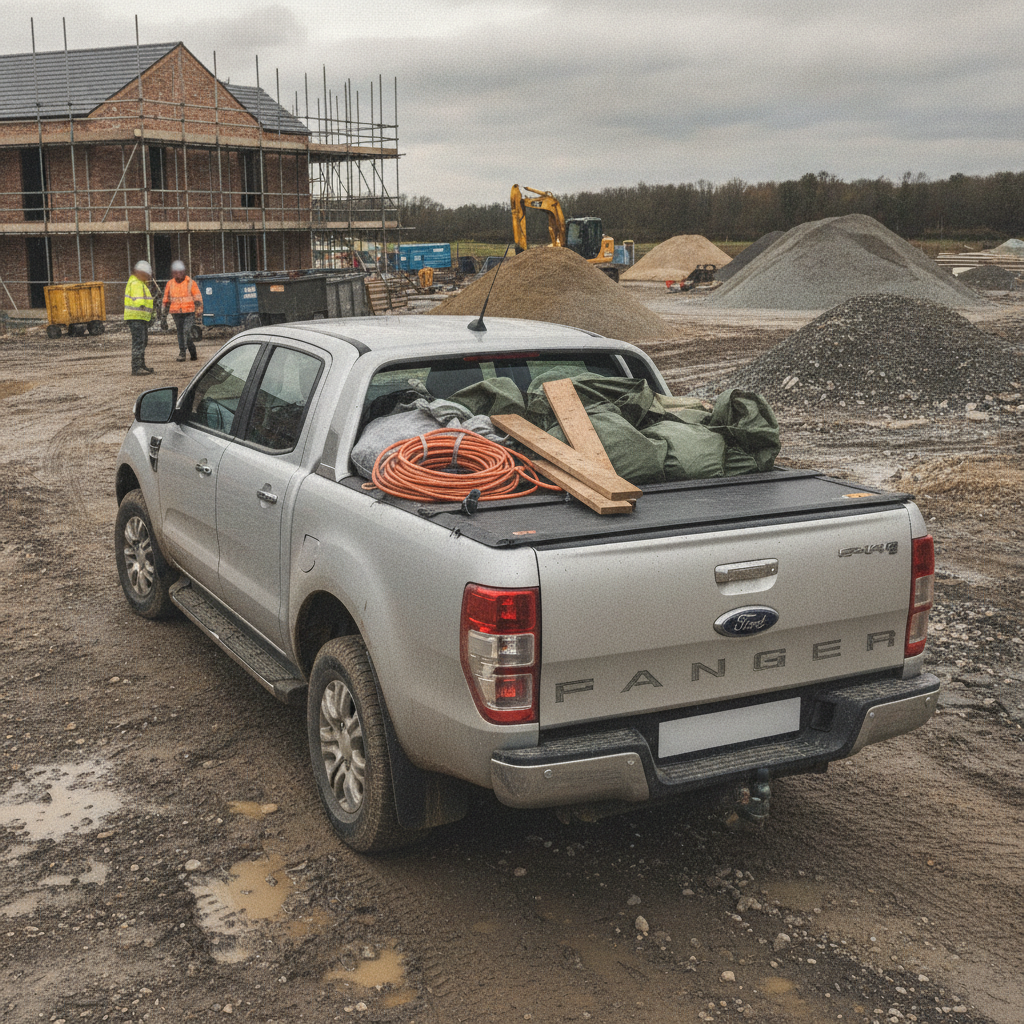
The Ford Ranger has long stood as the UK's best-selling pickup truck. Renowned for its commanding road presence, sharp exterior styling, and car-like interior ergonomics, the Ranger spans several trims. Entry-level XL and XLT models cater to pure workhorse applications, while the Limited and wildly popular Wildtrak trims bring leather upholstery, comprehensive driver assistance systems, and Ford's intuitive SYNC infotainment. Older iterations use the durable 2.2-litre and 3.2-litre five-cylinder TDCi turbo-diesel engines, whereas post-2019 models feature the refined 2.0-litre EcoBlue diesel engine paired with either a six-speed manual or a slick ten-speed automatic transmission.
Globally renowned for legendary durability and mechanical indestructibility, the Toyota Hilux is the default choice for extreme duty cycles. Available in Active, Icon, Invincible, and Invincible X trims, the Hilux delivers utilitarian reliability. Eighth-generation models (2016 onwards) feature a robust 2.4-litre D-4D diesel engine producing 148 bhp, alongside a more muscular 2.8-litre diesel introduced later producing 201 bhp. The Hilux prioritises hard-wearing plastics, thick chassis steel, and dependable off-road mechanics over outright cabin luxury, making it an exceptional long-term investment on the used market.
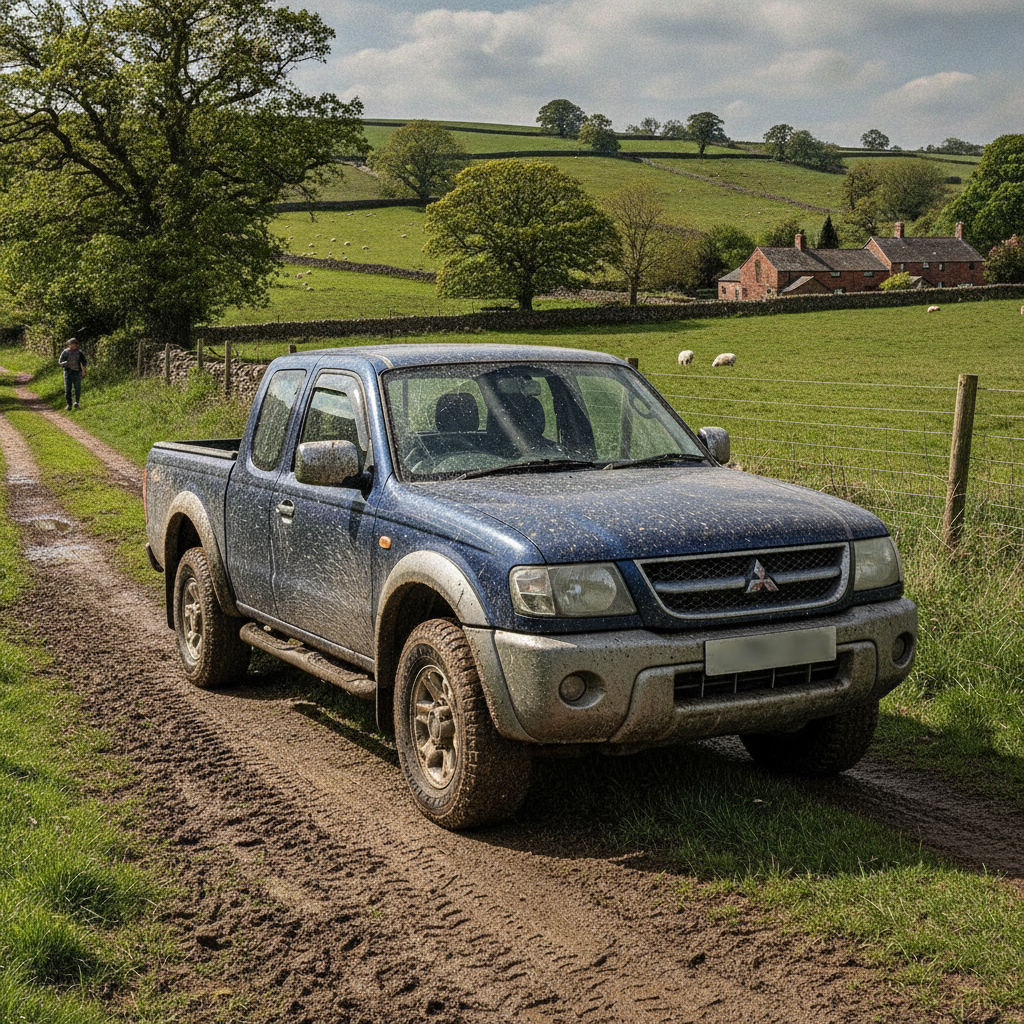
Before Mitsubishi shifted its new vehicle presence in the UK, the L200 was a perpetual fleet favourite. Series 5 (2015–2019) and Series 6 (2019–2021) models remain abundant, affordable, and practical used purchases. Popular trims include the 4Life, Titan, Warrior, and range-topping Barbarian. The L200 features Mitsubishi's clever Super Select 4WD system on higher trims, which allows the vehicle to be driven in four-wheel drive on dry asphalt without suffering transmission wind-up, providing a notable safety advantage on changeable winter tarmac.
The Isuzu D-Max is engineered by a commercial truck manufacturer, and it shows in its rugged, no-nonsense construction. From 2017 onwards, Isuzu adopted an efficient 1.9-litre turbo-diesel engine that meets Euro 6 emissions targets without requiring AdBlue fluid, reducing ongoing running costs and operational complexity. Available in utility configurations alongside higher-spec trims such as the Yukon, Utah, Blade, and V-Cross, the D-Max is respected for its high payload capabilities, 3.5-tonne towing threshold, and sensible ownership costs.
The NP300 generation Nissan Navara (produced up to 2021) brought passenger-car chassis refinement to the commercial sector. Double-cab variants replaced traditional rear leaf springs with a multi-link coil-spring rear suspension setup, delivering a smooth, compliant unladen ride that surpasses most competitors. Powered by a dependable 2.3-litre dCi engine available in single-turbo (160 bhp) and twin-turbo (190 bhp) iterations, the Navara represents excellent value in the used marketplace for drivers who spend extended hours on dual carriageways.
The first-generation Volkswagen Amarok carved out a premium niche in the UK market. While earlier examples utilised a 2.0-litre BiTDI unit, later models (2016–2020) were fitted exclusively with a 3.0-litre V6 TDI diesel pushing between 204 bhp and 258 bhp (with overboost). Paired with permanent 4Motion four-wheel drive and a smooth eight-speed automatic gearbox, the Amarok offers class-leading motorway performance, expansive load bed width between the wheel arches, and premium cabin refinement, commanding robust resale values.
Pickup trucks are manufactured in three distinct cabin configurations, each trading passenger seating against load bed length. Choosing the correct configuration is critical to matching the vehicle to your daily operational requirements.
Width between the wheel arches generally sits around 1,100mm to 1,220mm across most mid-sized pickups, meaning standard 1,200mm x 800mm Euro pallets must either be loaded carefully straight on or placed over the wheel arches, depending on the specific model's arch extrusion. The Volkswagen Amarok stands out as one of the few trucks that can accommodate a Euro pallet sideways between the arches.
Gross Vehicle Weights (GVW) for modern pickups generally sit between 3,000kg and 3,250kg, yielding gross payload capacities from roughly 1,010kg up to 1,180kg. Almost all modern double-cabs from leading manufacturers are engineered to exceed the critical 1,000kg (one-tonne) payload threshold when leaving the factory, which preserves their commercial classification for tax purposes.
However, payload and dimension figures vary considerably based on the precise vehicle trim, engine size, gearbox option, and fitted accessories. Heavy aftermarket additions like steel roller shutters, fibreglass hardtops, winches, and towbars reduce the vehicle's remaining legal payload. Never rely on catalogue estimates: always inspect the manufacturer weight plate attached to the vehicle's B-pillar or engine bay, and confirm the official revenue weight listed on the vehicle's V5C logbook.
Buying a used pickup truck requires rigorous mechanical scrutiny. Many of these vehicles have lived arduous lives towing heavy plant, navigating abrasive construction sites, or wading through corrosive agricultural slurry. Inspect the following areas thoroughly before committing to a purchase.
Values in the used pickup marketplace fluctuate according to age, mileage, condition, and commercial demand. Note that the figures below serve as a broad market overview; you must check live listings on Vansales.com for real-time pricing.
Leave your details and what you need, and we will come back to you.