Buying used large vans
Understanding Large Vans and How They Differ from Standard Panel Vans
When searching for a commercial vehicle, understanding vehicle classifications helps ensure you buy the correct machine for your workload. In the UK commercial vehicle sector, a large van generally refers to a vehicle operating in the 3.5-tonne gross vehicle weight category. This gross vehicle weight, often abbreviated to GVW or MAM (maximum authorised mass), represents the maximum legal weight of the vehicle, including the chassis, fuel, driver, passengers, and cargo.
While standard medium panel vans are engineered around compact footprints suitable for multi-storey car parks and urban streets, large vans are heavy-duty workhorses designed to maximise internal cargo volume, internal standing height, and towing capability. Medium vans typically carry between five and eight cubic metres of cargo. In contrast, large vans provide between nine and more than seventeen cubic metres of load space in panel van guise, and upwards of twenty cubic metres when fitted with a box or Luton body.
Unlike medium vans that rely on unified unibody chassis structures, large vans are engineered in diverse formats. They are available as front-wheel drive, rear-wheel drive, or all-wheel drive platforms. Furthermore, manufacturers produce large vans as bare chassis cabs. These chassis cabs support specialised coachbuilt rear sections, such as Luton bodies with over-cab storage, aluminium dropsides, hydraulic tippers, and curtain-siders. Choosing a large van means prioritising volume, internal height, and heavy load capacity over compact external dimensions.
Who Buys Large Vans and Why
Large commercial vehicles form the backbone of several core UK industries. Buyers range from sole traders needing a mobile workshop to nationwide distribution fleets handling palletised freight. Key buyer categories include:
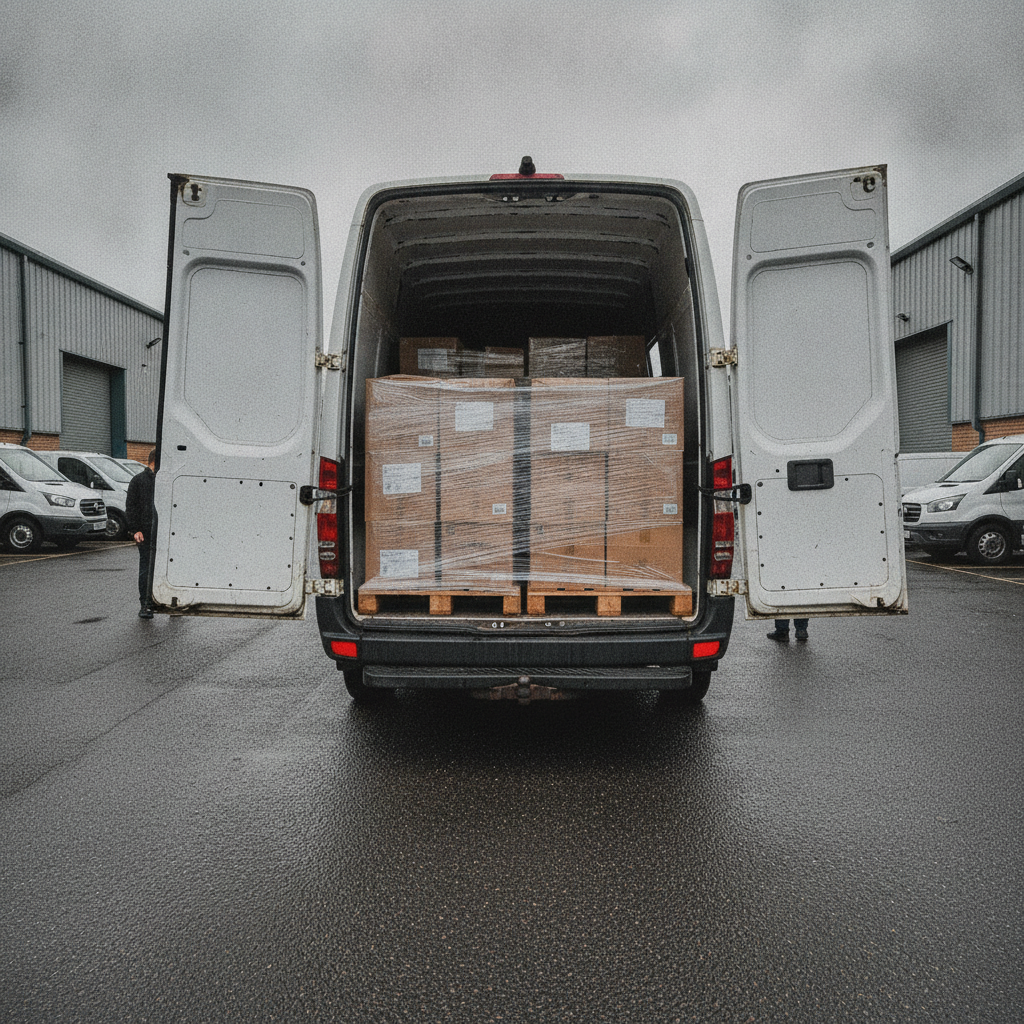
- Couriers and parcel delivery operators: Multi-drop logistics companies and independent owner-drivers require high-roof (H2 and H3) long-wheelbase vans to carry hundreds of parcels per run without crushing delicate packages.
- Removals and house clearance firms: Luton vans fitted with rear tail lifts are essential for moving bulky household furniture, large domestic appliances, and boxed possessions securely.
- Construction contractors and scaffolders: Groundworkers, bricklayers, and civil engineers demand rear-wheel-drive panel vans, tippers, or dropsides capable of carrying heavy materials and towing plant trailers over uneven terrain.
- Carpenters, joiners, and shopfitters: Long-wheelbase panel vans allow tradespeople to transport full eight-by-four-foot sheet materials flat on the load floor or upright along the internal sides, alongside workbenches and power equipment.
- Recovery operators and mobile mechanics: Heavy chassis cabs provide the structural rigidity required for vehicle recovery beds or onboard compressors and heavy diagnostic gear.
- Campervan conversion builders: Private buyers and bespoke converters regularly purchase high-roof, extra-long panel vans due to the straight side panels and sufficient headroom to stand upright inside the living quarters.
Common Used Large Van Models in the UK
The UK pre-owned commercial vehicle market offers several proven large van models, each with distinct engineering strengths:
- Ford Transit (Full-Size): The benchmark of the UK sector, the two-tonne full-size Transit sits above the Transit Custom. It features a modern 2.0-litre EcoBlue diesel engine and is available in front, rear, and all-wheel drive. Its widespread popularity ensures easy access to parts, servicing, and aftermarket shelving.
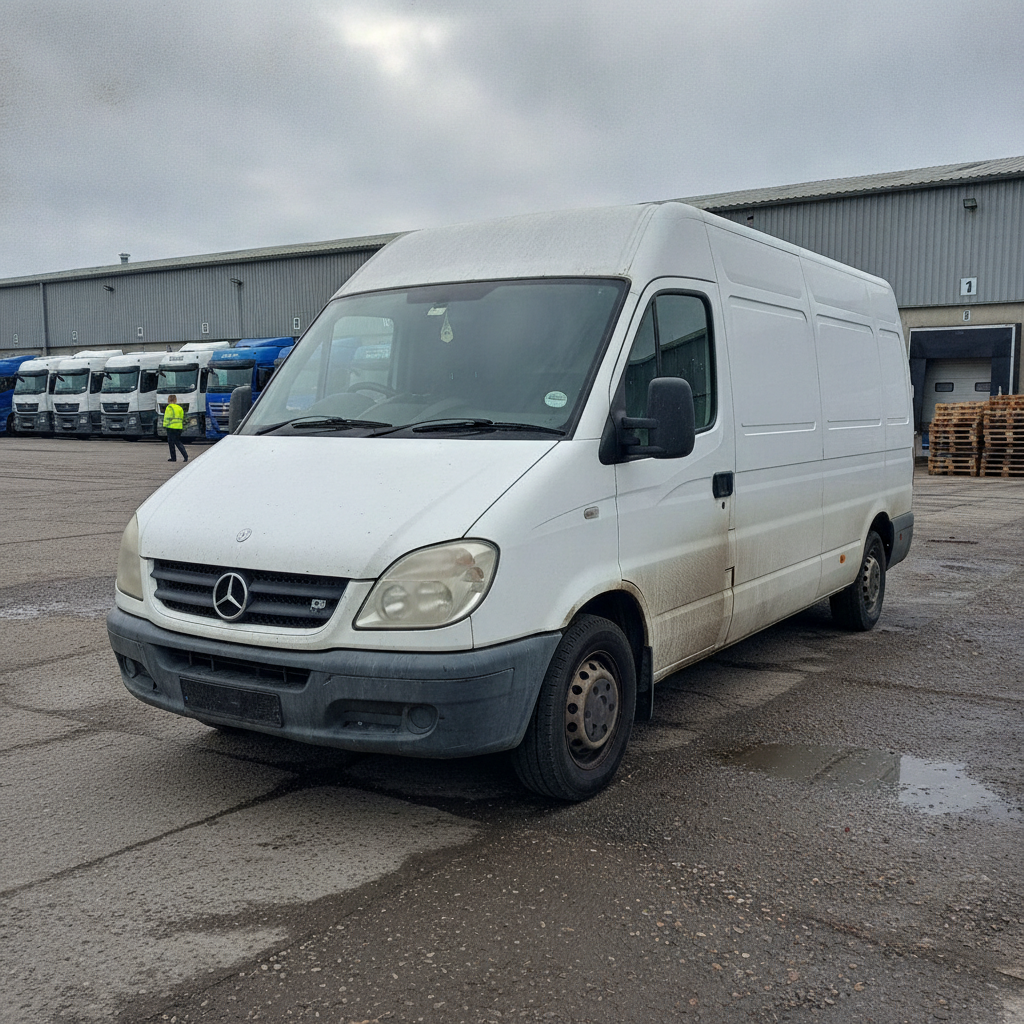
- Mercedes-Benz Sprinter: Renowned for build quality and high-mileage longevity, the Sprinter is a staple among national courier fleets. Older models feature the robust 2.1-litre diesel engine, while newer variants use the refined 2.0-litre OM654 unit. Sprinters feature advanced cab technology and rust protection superior to older iterations.
- Volkswagen Crafter and MAN TGE: Sharing a unified platform developed by the Volkswagen Group, the Crafter and MAN TGE offer car-like ergonomics, sharp steering, and dependable 2.0-litre TDI engines. They are praised for ergonomic cabs and advanced driver assistance systems.
- Vauxhall Movano and Renault Master: Models produced prior to 2021 shared a collaborative platform powered by a twin-turbo 2.3-litre dCi diesel engine. These vans represent exceptional functional value on the used market, with durable drivetrains and practical rectangular cargo areas. Newer Movanos now share a platform with Stellantis group vans.
- Peugeot Boxer, Citroën Relay, and Fiat Ducato: Built on the enduring Sevel platform, these models feature a lightweight front-wheel-drive unibody design. Because the chassis is light, they often provide the highest raw payload capacities in the 3.5-tonne panel van class.
- Iveco Daily: Unique in this class, the Daily is built on a heavy-duty C-section steel truck chassis. Available with a rugged 3.0-litre diesel engine, it is renowned for maximum durability, heavy hauling, and high towing capacities.
Typical Payload and Body Dimension Ranges
Large vans come in numerous wheelbase and roof height combinations, universally labelled from L1 to L4 for length and H1 to H3 for height. A short-wheelbase, standard-roof model (L1H1) may measure under five metres in total length, whereas an extra-long, high-roof van (L4H3) can easily exceed seven metres in length and nearly three metres in external height.
Payload capacities in the 3.5-tonne class generally range between 900 kilograms and 1,500 kilograms. However, payload varies significantly based on vehicle specification:
- Drivetrain weight: Front-wheel-drive vans lack a central prop-shaft and heavy rear differential, making them lighter unladen and yielding payloads often exceeding 1,300 kilograms.
- Heavy-duty running gear: Rear-wheel-drive configurations and twin-rear-wheel axles add dead weight to the vehicle chassis, which directly reduces the remaining payload allowance, sometimes down to 1,000 kilograms or less.
- Coachbuilt conversions: Luton boxes and tail lifts add substantial dead weight compared to standard sheet-metal panel vans.
Never rely on estimated figures when payload compliance is at stake. Overloading a vehicle is illegal in the UK, invalidates insurance, and incurs severe penalties from the Driver and Vehicle Standards Agency (DVSA). Always check the manufacturer weight plate, typically riveted under the bonnet or inside the passenger door shut, alongside the vehicle logbook (V5C), to determine the exact gross vehicle weight and train weight. Remember that aftermarket ply-lining, tool racking, and extra fuel reduce your available payload margin.
What to Check When Buying a Used Large Van
Used commercial vehicles undergo hard working lives. A thorough inspection protects you from unexpected mechanical failures and costly downtime.
Mechanical and Drivetrain Checks
- Engine health and cold start: Inspect the van from a stone-cold start. Ensure the engine starts cleanly without prolonged cranking. Listen for timing chain rattle, excessive valve clatter, or uneven idling. Blue smoke indicates burning oil, black smoke points to fuel injector issues, and persistent white smoke can indicate head gasket failure.
- Emissions hardware: Check that the diesel particulate filter (DPF) and selective catalytic reduction (AdBlue) systems operate correctly. Look for warning lights on the instrument cluster. Frequent short journeys cause DPF blockages, which are expensive to rectify. Ensure the dashboard warning lights illuminate during ignition and extinguish once the engine runs.
- Clutch and transmission: On manual gearboxes, test for dual-mass flywheel judder by depressing the pedal slowly at idle. Ensure gears engage cleanly without crunching, particularly in second and reverse. On automatics, ensure gear shifts are smooth and prompt under load.
- Driveshafts and rear axles: On rear-wheel-drive models, listen for whining noises from the rear differential at speed. Inspect the universal joints and centre support bearings along the prop-shaft for excessive play or vibration.
Chassis, Body, and Interior Checks
- Suspension and load-bearing components: Examine the rear leaf springs. Look for cracked, displaced, or flattened spring leaves caused by chronic overloading. Check shock absorbers for fluid leaks.
- Underbody rust and chassis corrosion: While modern vans feature galvanised panels, chassis outriggers, sills, inner wheel arches, and rear door sills can suffer severe corrosion, especially on vehicles used in marine environments, road salting, or agricultural settings.
- Roof and high-level damage: Inspect the roof panels and top corners for scrape marks or dents caused by low bridges, tree branches, or warehouse roller-shutter doors. Compromised roof seams lead to water ingress that damages cargo.
- Door hardware and cargo area: Slide side loading doors open and shut; worn rollers and warped tracks are common. Check rear door hinges and check-straps for stress fractures. Inside, lift floor mats or ply flooring where possible to check for hidden structural rust or chemical spills.
Frequently asked questions
Can I drive a 3.5-tonne large van on a standard UK car licence?
Yes. If you hold a standard Category B UK car driving licence, you are legally permitted to drive any light goods vehicle with a gross vehicle weight up to 3,500 kilograms (3.5 tonnes). If you passed your driving test before 1 January 1997, you may automatically hold Category C1 entitlement, allowing you to operate larger commercial vehicles up to 7,500 kilograms.
What is the difference between front-wheel drive and rear-wheel drive large vans?
Front-wheel drive vans have no central prop-shaft or rear axle differential. This layout lowers the rear loading sill height, increases interior roof space, and lowers overall unladen weight, creating higher legal cargo payloads. Rear-wheel drive vans position the drivetrain weight over the back axle, which delivers superior traction when carrying heavy loads or pulling trailers, especially on construction sites or wet inclines.
Are all used large vans compliant with the London ULEZ?
No. To comply with the London Ultra Low Emission Zone without paying the daily charge, diesel vans must meet Euro 6 emissions standards. While Euro 6 became mandatory for newly registered vans from September 2016, older Euro 4 and Euro 5 large vans are subject to the daily fee. Always verify a vehicle registration on the official Transport for London compliance checker before purchasing.
What does the L3H2 designation mean on a used van listing?
L3H2 denotes the length and height classification assigned by the vehicle manufacturer. 'L3' stands for long wheelbase, which provides an extended cargo floor length compared to standard (L1) or medium (L2) versions. 'H2' refers to a medium-to-high roof profile, which typically allows an average-height adult to stand fully upright inside the load area. Exact internal dimensions vary between manufacturers.
How does heavy ply-lining affect a van payload?
Every non-factory item added to a commercial van reduces its available payload capacity by that exact weight. Professional nine-millimetre or twelve-millimetre hardwood ply-lining, heavy-duty floorboards, metal racking units, and bulkheads can add between 80 and 200 kilograms of dead unladen weight. You must subtract this figure from the plated payload capacity to avoid running overloaded.
Can I legally tow a heavy trailer behind a 3.5-tonne large van?
Yes, provided you do not exceed the vehicle gross train weight (GTW) stated on the manufacturer VIN plate. The gross train weight is the combined maximum legal weight of the van, everything inside it, the trailer, and the trailer load. You must also hold the appropriate towing entitlement on your UK driving licence, and certain commercial towing operations may require a tachograph.