Buying a used Toyota Proace
Overview of the Used Toyota Proace
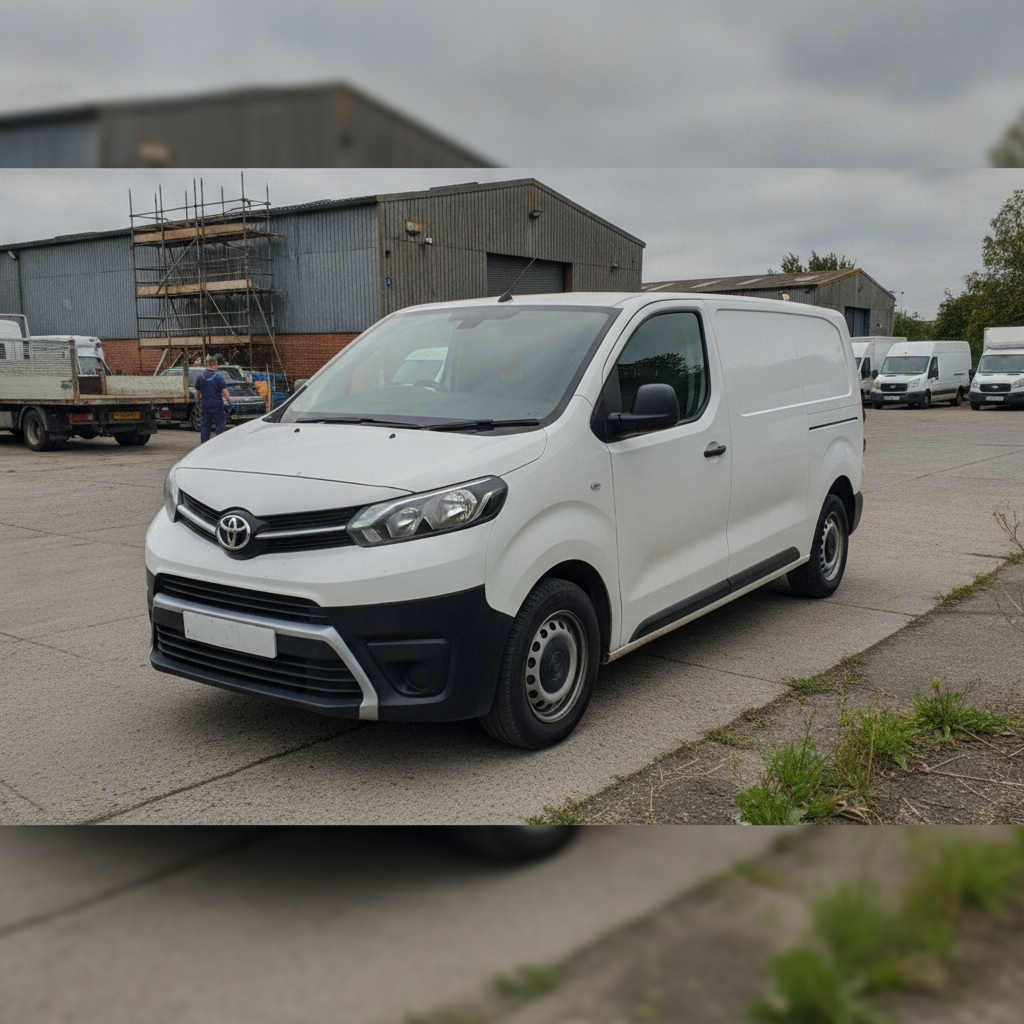
The second-generation Toyota Proace, launched in late 2016, represents one of the most practical medium panel vans on the UK used market. While it shares its core platform, powertrains, and assembly line with the Stellantis medium van quartet—the Citroën Dispatch, Peugeot Expert, Vauxhall Vivaro, and Fiat Scudo—the Proace brings a distinct advantage to trade buyers: Toyota's manufacturer backing. Specifically, qualifying used models can take advantage of the rolling Toyota Relax warranty programme, which can protect the vehicle for up to ten years or one hundred thousand miles, provided it is serviced annually within the franchised network.
Built upon the car-derived EMP2 platform, the Proace delivers significantly better road manners, lower noise vibration and harshness levels, and superior cab ergonomics than the previous boxy generation. Its low overall height of under 1.9 metres allows standard models to clear car park height barriers and access underground commercial loading bays that catch out larger alternatives like the Ford Transit Custom or Volkswagen Transporter. For UK trades, sole traders, and delivery contractors needing a reliable everyday workhorse that behaves like a passenger car in traffic, a pre-owned Proace represents an exceptionally capable choice.
Key Specifications: Engines, Payloads, and Dimensions
Choosing the correct configuration requires matching the body length and engine output to your specific trade application. The Proace was released in three primary lengths—Compact, Medium, and Long—though the Compact version was phased out due to low demand, leaving the Medium and Long variants as the core models on the second-hand market.
Body Dimensions and Cargo Capacities
The Proace Medium measures 4,959mm in overall length with a 3,275mm wheelbase, while the Long version extends to 5,309mm using an extended rear overhang on the identical wheelbase. Interior cargo dimensions break down as follows:
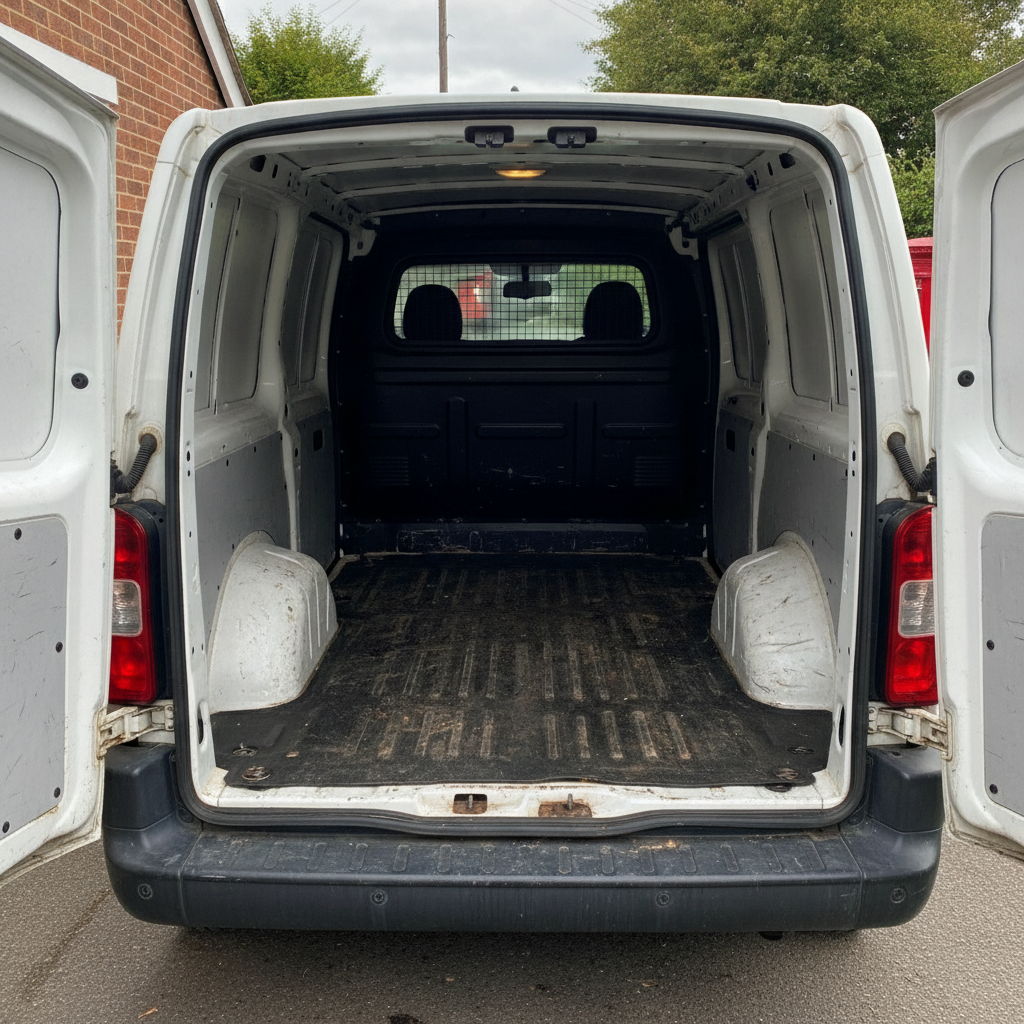
- Medium (L1): Offers an internal load floor length of 2,512mm, an interior width between the wheel arches of 1,258mm (accommodating standard Euro pallets side-by-side), and an internal roof height of 1,397mm. Standard load volume measures 5.3 cubic metres.
- Long (L2): Increases internal load length to 2,862mm, keeping the same interior height and width between wheel arches, pushing overall cargo volume to 6.1 cubic metres.
- Smart Cargo Bulkhead Hatch: Models fitted with the Smart Cargo load-through bulkhead feature a folding outer passenger seat and an opening flap in the metal bulkhead. This extends maximum usable load length to 3,674mm on Medium vans and 4,024mm on Long vans, allowing full lengths of copper pipework, conduit, timber battens, and trade ladders to be locked entirely within the van. It also adds an additional half a cubic metre of internal storage volume.
- Compact (Discontinued): Measures 4,609mm in length with a 2,925mm wheelbase, offering 4.6 cubic metres of volume (up to 5.1 cubic metres with Smart Cargo). While nimble, finding used examples is relatively rare.
Engine Line-Up Across Model Years
All diesel power units are shared with the Stellantis family, carrying Toyota D-4D commercial badging. Depending on the model year, you will encounter the following units:
- 1.6-litre D-4D (2016–2018): Available in outputs of 95hp with a five-speed manual gearbox, or 115hp paired with a six-speed manual. While frugal, the 95hp version is underpowered when carrying heavier equipment or negotiating steep motorway gradients.
- 1.5-litre D-4D (2018 Onwards): Replaced the earlier 1.6-litre to comply with stricter Euro 6d-Temp emissions. Available in 100hp and 120hp variants, both mated to a six-speed manual gearbox. This unit offers responsive low-end torque for urban stop-start driving and light-to-moderate haulage.
- 2.0-litre D-4D (2016 Onwards): Offered in 120hp, 150hp, and top-tier 180hp outputs. The 120hp and 150hp variants use a heavy-duty six-speed manual gearbox, whereas the 180hp variant comes exclusively with an automatic transmission (initially a six-speed, upgraded to an eight-speed EAT8 automatic around 2019). The 2.0-litre is the engine of choice for heavy loads, motorway travel, and towing.
- Proace Electric (2021 Onwards): Powered by an electric motor delivering 136hp, paired with either a 50kWh battery offering up to 142 miles of range or a larger 75kWh pack offering up to 205 miles on the official test cycle. These zero-emission vans do not compromise on internal cargo volume, though payload ratings change slightly compared to their diesel counterparts.
Payload and Towing Capacities
Gross Vehicle Weights typically range from 2,600kg to over 3,100kg. Standard payload capacities sit around 1,000kg, but heavy-duty upgraded suspension variants allow payloads of up to 1,400kg on select 2.0-litre diesel models. Braked towing capacities vary according to engine specification: 1.5-litre models are generally rated between 1,400kg and 1,800kg, while the robust 2.0-litre D-4D pulls between 2,000kg and 2,500kg, making it well-suited for plant trailers, car transporters, or mobile equipment platforms.
Which Trade Professionals Choose the Proace and Why?
The Proace bridges the gap between smaller city delivery vans and full-fat large panel vans. Several professional sectors actively seek out used models for specific trade operational advantages:
- Plumbers and Heating Engineers: The Smart Cargo through-bulkhead allows eight-metre coils or three-metre lengths of copper tube and waste pipe to sit flat along the passenger floor, while the square cargo area allows vertical shelving along the side panels without fouling internal framing ribs.
- Joiners, Carpenters, and Kitchen Fitters: The Medium and Long variants comfortably take standard eight-by-four sheet materials flat between the arches. Low load sill heights ease the back strain associated with shifting heavy worktops, MDF sheets, and tool boxes.
- Electricians: Twin sliding side-loading doors—standard or optional across many trim grades—allow access to racking systems and component drawers from both sides of the van without clambering over bulky cables or step-ladders.
- Multi-Drop Couriers and Parcel Logistics: The tighter turning circle, responsive steering rack, and electric power-assisted setup ease long days behind the wheel. The optional eight-speed torque-converter automatic transmission removes clutch fatigue during inner-city delivery cycles.
- Camper and Day-Van Converters: Because it shares identical structural points with the Citroën Dispatch and Peugeot Expert, there is an enormous aftermarket ecosystem of pop-top roofs, swivel seat bases, insulation kits, and bespoke furniture packages made specifically for this platform.
Used Buying Checklist: Common Faults and What to Inspect
While fundamentally solid, the platform has known weak spots across its engine hardware, suspension systems, and electronic modules. Inspecting the following areas before purchase will help prevent unexpected repair downtime.
AdBlue System and Emissions Hardware
Euro 6 diesel variants rely on an SCR system that is prone to typical modern commercial vehicle problems. The AdBlue tank contains an integrated heater and pump module; if the pump fails or the level sensor gives erratic readouts, standard garage practice often requires replacing the entire tank assembly. Look closely at the instrument panel during startup for permanent emissions warnings, count-down restart inhibitors, or engine management lights. Inspect the AdBlue injector on the exhaust pipe for heavy white crusting, which indicates crystallization and poor dosing.
Timing Belts and Camshaft Drive Chains
The 1.5-litre D-4D (Stellantis DV5 engine) utilizes a timing belt to drive the exhaust camshaft, which in turn drives the inlet camshaft via a small internal chain. On earlier iterations of this 1.5-litre unit, the factory-fitted 7mm camshaft chain was prone to stretching or snapping, resulting in catastrophic engine failure. Toyota and PSA later updated this to an 8mm chain assembly with revised camshaft housings. Listen for a distinct metallic rattling or clicking from the top of the engine near the cambelt cover at idle. Confirm if timing belt and chain kits have been replaced ahead of scheduled intervals by previous fleet operators.
On 2.0-litre D-4D engines, the timing setup relies on a conventional cambelt. Ensure this has been changed within manufacturer guidelines (typically five years or one hundred thousand miles, whichever arrives first), along with the water pump and auxiliary drive assembly.
Suspension, Ball Joints, and Top Mounts
Because the Proace shares chassis components with passenger vehicles, heavy urban payload cycles can shorten the lifespan of the running gear. Listen for dull thuds, knocking, or creaking over speed humps. Front anti-roll bar drop links, lower wishbone bushes, and front suspension top strut mounts are frequent failure points. Premature tyre wear along the inner or outer edges often points to misaligned tracking caused by repeatedly striking kerbs on urban delivery routes.
Sliding Doors and Central Locking
Check both side-loading doors thoroughly. The bottom roller guides and plastic runner wheels can degrade, especially if exposed to building dust, grit, or road salt without regular cleaning. A worn roller causes the door to drop slightly, scoring the body paint along the lower guide track and preventing the electrical contact pins from mating correctly. If the contact pins fail to line up, the central locking system will register an open door, leaving the van unsecured and draining the battery.
Cab Electrics and Air Conditioning
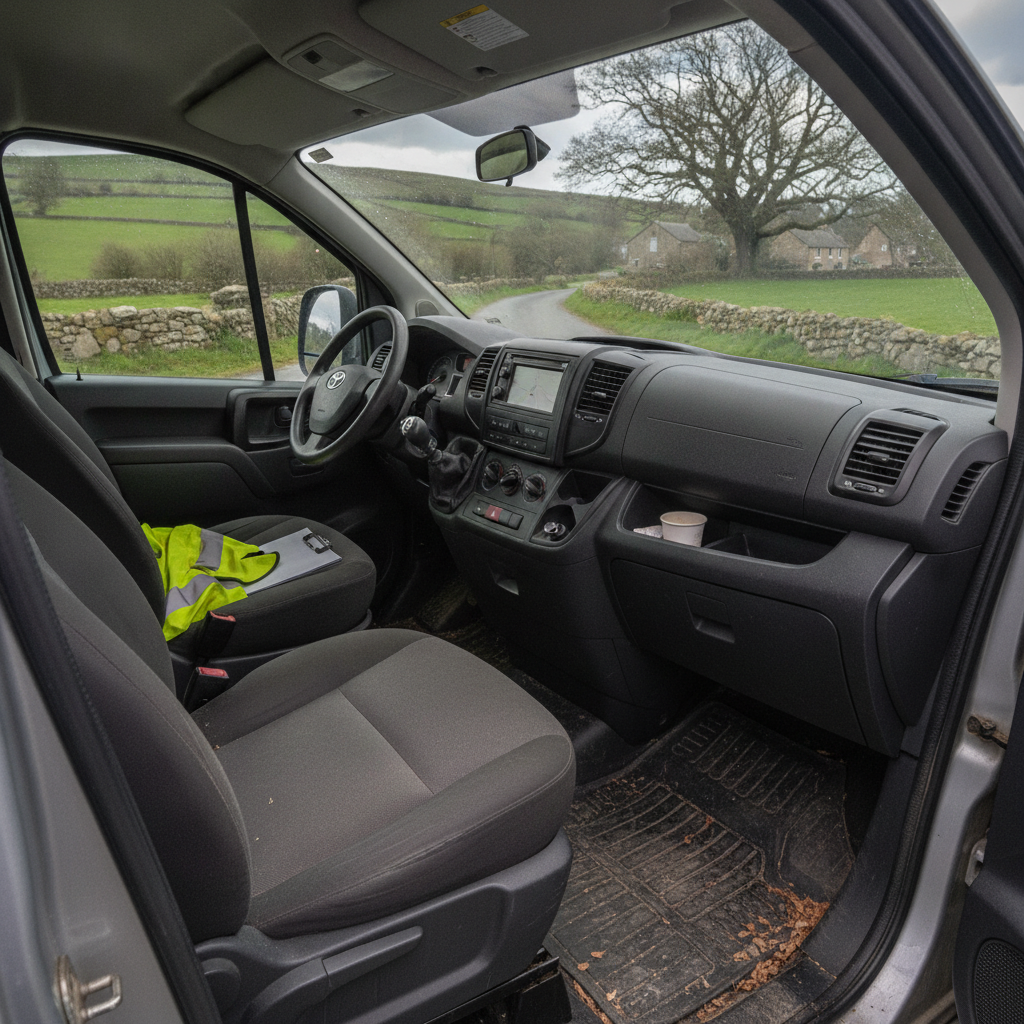
Operate the central infotainment display, Bluetooth hands-free phone integration, steering-wheel-mounted stalks, and reversing cameras where fitted. Software updates are regularly required to fix intermittent touchscreen freezing. Ensure the air conditioning blows ice cold; air conditioning condensers sit low down behind the front bumper grille and frequently suffer puncture damage from flying road debris and stones, requiring complete condenser replacement and regassing.
Which Model Years Should You Prioritise or Avoid?
Knowing which production periods offer the best trade-off between price, durability, and features will streamline your vehicle search:
- 2016 to 2018: Early models feature the older 1.6 D-4D engine. Avoid the base 95hp manual unless your work is strictly low-mileage local running. These earlier production runs experienced more frequent teething problems with door latches, electronic sensors, and AdBlue injection warnings.
- 2019 to 2021: Represents the sweet spot for used reliability and value. The 1.5 D-4D replaced the 1.6-litre, delivering cleaner emissions, superior fuel economy, and better mid-range punch. The 2.0 D-4D models from these years with the eight-speed automatic gearbox are robust, durable motorway haulers. Ensure any 1.5-litre model has documented maintenance records regarding timing component checks.
- 2022 Onwards: Late-plate models offer remaining original manufacturer warranty, along with full access to the rolling Toyota Relax warranty structure when maintained through franchised workshops. These vans feature modern active safety equipment, collision mitigation systems, and improved digital driver displays.
Used Toyota Proace Price Guide
Second-hand valuations vary widely based on mileage, trim level (such as Active, Icon, and Design), mechanical condition, and cosmetic appearance. The market typically divides into three distinct tiers.
Entry-Level Workhorses: Under £8,000
At this price point, expect early production models from 2016 to 2018. Mileage will typically exceed one hundred thousand miles, often showing exterior wear, minor dents, and work-related cosmetic scuffs inside the cargo area. Most will feature the base Active trim with the early 1.6 D-4D engine. At this tier, verify that the dual-mass flywheel does not chatter, check for a clean emissions test history on recent MOT certificates, and confirm that the cambelt has been changed on schedule.
Mid-Range Daily Drivers: £8,000 to £14,000
This bracket secures clean 2018 to 2021 models with between forty thousand and eighty thousand miles on the clock. You will find higher-specification Icon and Design trims equipped with cruise control, twin sliding doors, the Smart Cargo load-through bulkhead, air conditioning, and rear parking sensors. Both the 1.5-litre and robust 2.0-litre D-4D engines are common here. Service history documentation is generally more comprehensive at this level, often originating from single-owner small fleets or light trade operators.
Late-Plate and Premium Models: £14,000 to £22,000 and Above
Vehicles in this price tier consist of late 2021, 2022, and 2023 registrations, as well as low-mileage Proace Electric variants. Odometers usually read under thirty-five thousand miles, and the bodywork is typically clean of heavy work scars. High-output 2.0-litre automatics and fully loaded Design trims dominate this bracket. Many of these vehicles remain eligible for rolling warranty extensions, providing considerable peace of mind for businesses that cannot afford unexpected mechanical downtime.
Real-World Running Costs: Fuel, Road Tax, and Insurance
Understanding ongoing running overheads helps you accurately plan your weekly balance sheet:
- Fuel Economy: Real-world fuel returns for the 1.5 D-4D sit between 42mpg and 48mpg on mixed driving cycles, making it one of the most fuel-efficient medium vans available. The larger 2.0 D-4D returns a realistic 36mpg to 42mpg unladen, dipping down to roughly 32mpg to 35mpg when towing or loaded close to its maximum gross vehicle weight. The electric Proace achieves around 2.2 to 2.8 miles per kilowatt-hour depending on ambient winter temperatures and heating demands.
- Vehicle Excise Duty (Road Tax): As a light commercial vehicle, the diesel Proace falls under the standard flat-rate commercial vehicle tax band. The electric version remains exempt from standard road tax charges, though future legislation will integrate electric commercials into standard bands.
- Insurance Groups: Depending on the engine selection and trim grade, insurance ratings generally sit between Group 31E and Group 39E. Entry-level 1.5-litre models reside at the lower end of the scale, keeping policy premiums manageable for younger tradespeople or newly formed businesses.
- Servicing Intervals: Standard diesel servicing intervals are set at two years or twenty-five thousand miles. However, trades doing heavy towing, high payloads, or severe stop-start urban cycles should adopt an intermediate oil and filter change routine every twelve months or ten thousand miles to protect the turbocharger and camshaft drive mechanisms.
Financing Your Used Toyota Proace
Acquiring a commercial vehicle requires choosing a funding method that protects cash flow while offering tax efficiency. When sourcing a commercial vehicle, explore dedicated van finance options to find packages tailored to sole traders, limited companies, and partnerships.
The most popular routes include Hire Purchase (HP), where you spread the cost of the vehicle across fixed monthly installments and take full ownership once the final payment is cleared. For businesses looking to offset rental costs directly against their taxable profits, a Finance Lease structure offers flexibility with optional balloon payments at the end of the agreement, keeping monthly commitments lower.
If you prefer driving newer commercial vehicles every few years without the responsibilities of disposal or depreciation, reviewing competitive van lease deals allows you to compare contract hire alternatives alongside outright used purchases. Balancing upfront deposits, balloon structures, and ongoing warranty coverage ensures your next Proace remains an asset to your trade rather than a drain on working capital.