Buying a used Nissan Navara
Overview of the Nissan Navara in the UK Commercial Market
The Nissan Navara holds an influential position in the history of the UK light commercial vehicle sector. For decades, standard pickups were viewed purely as agricultural implements: noisy, rough-riding utility tools with unyielding leaf springs and bare-bones interiors. The Navara altered that perception permanently. Spanning multiple generations—most notably the second-generation D40 (built between 2005 and 2015) and the third-generation NP300 or D23 (on sale from late 2015 until Nissan ceased European sales in 2021)—the model demonstrated that a commercial pickup could double as an everyday family car without sacrificing raw workplace capability.
What cemented the Navara's reputation among UK tradespeople was its mechanical ambition. When Nissan unveiled the NP300 generation at the end of 2015, it ditched the traditional rear leaf-spring suspension on all Double Cab variants, replacing it with an innovative five-link coil-sprung rear suspension setup. This single engineering decision transformed unladen ride quality, eliminating the persistent bouncing and skittish rear-axle handling that had historically plagued the pickup segment. At the same time, the chassis retained a genuine one-tonne payload rating and a class-leading 3,500kg braked towing limit. For builders, arborists, plant operators, and civil engineering contractors, the Navara delivered the ultimate blend of long-distance cruising refinement, off-road traction, and severe-duty hauling capacity.
Technical Specifications, Payloads, and Bed Configurations
Understanding the exact specifications of a used Nissan Navara is critical for any commercial buyer, particularly regarding payload thresholds for commercial tax relief and bed functionality for tools and building materials.
Dimensions, Capacity, and Bed Volume
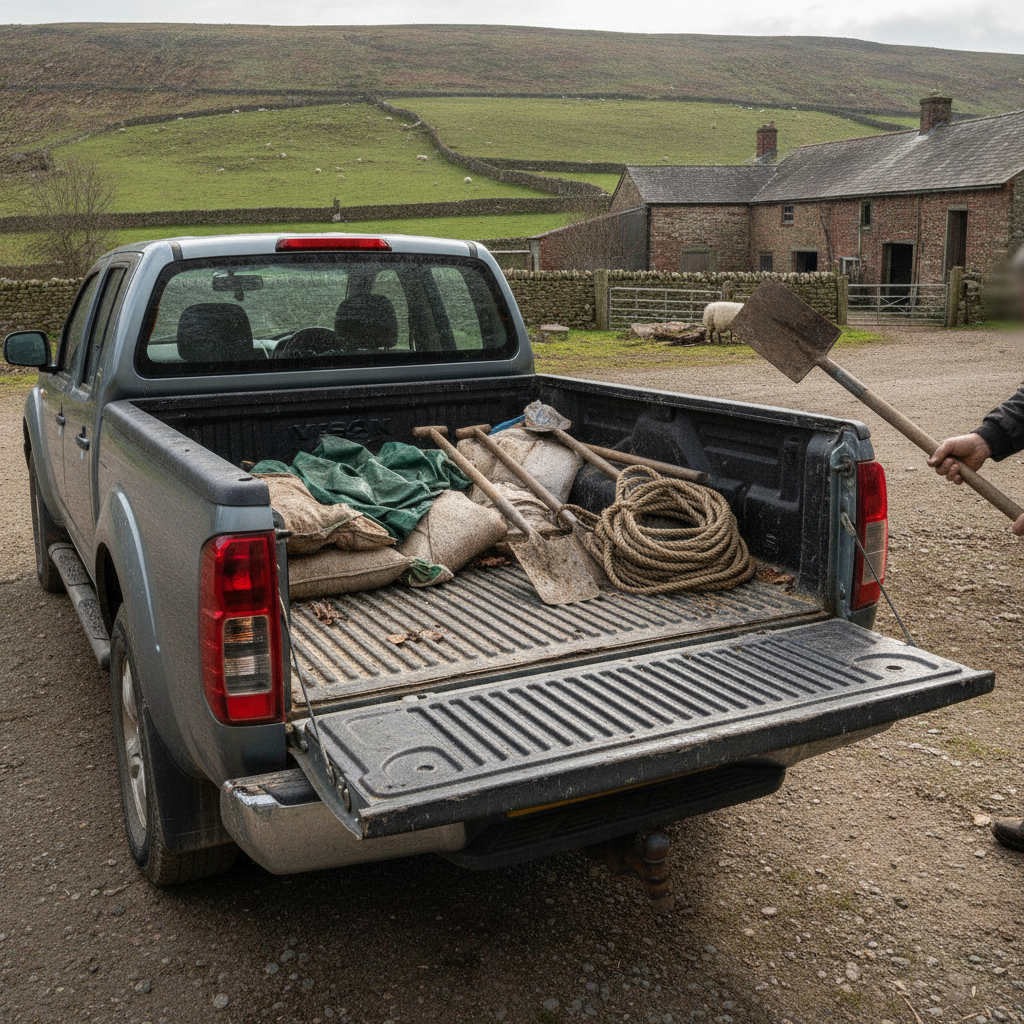
The practical capability of the Navara depends heavily on whether you choose the King Cab or the Double Cab. The Double Cab is the far more common variant on the UK market, featuring four full-size doors and seating for five adults. Its load bed measures 1,578mm in length along the floor, 1,560mm in total width, and 1,130mm between the rear wheel arches. The sidewalls stand at 474mm deep. This provides ample flat space to secure a standard Euro pallet between the wheel wells, with enough vertical depth to prevent aggregate, tool cases, or bagged cement from shifting above the sidewalls when covered.
The less common King Cab variant features reverse-hinged rear half-doors and small occasional jump seats behind the driver and passenger. By reducing passenger space, Nissan extended the cargo bed length to 1,788mm. This makes the King Cab a preferred tool for timber merchants, fencing contractors, and forestry workers who need extra load length for longer poles, sheet materials, and machinery without having to run with the tailgate lowered.
One of the Navara’s standout practical features is the factory-fitted C-Channel tie-down system, known commercially as the Nissan C-Channel or Utili-Track system. Heavy-duty channel tracks are mounted to the front bulkhead and bed sides, housing movable, heavy-gauge aluminium cleats that can be locked into position anywhere along the rails. This system eliminates the frustration of trying to tie down awkward equipment or gas canisters to fixed floor loops located under heavy cargo.
Engine Line-Up: 2.5 dCi vs 2.3 dCi
The power plants fitted to the Navara reflect its shift from industrial machine to refined highway cruiser:
- 2.5 dCi (D40 Generation, 2005–2015): A four-cylinder turbo-diesel engine producing 144PS, 171PS, or 190PS in late-cycle iterations, alongside an exceptional 450Nm of torque. Nissan also offered a niche 3.0-litre V6 dCi producing 231PS and 550Nm, an effortless tow vehicle but notoriously heavy on front tyre wear and fuel. The four-cylinder 2.5-litre unit is a proven workhorse, though it requires meticulous maintenance of its timing gear and cooling systems.
- 2.3 dCi Single Turbo (NP300 Generation, 2015–2021): Sourced from the Renault-Nissan commercial alliance (closely related to the unit found in the Renault Master van), the entry-level 2.3-litre engine features a single variable-geometry turbocharger producing 160PS and 403Nm of torque. It was primarily fitted to basic work-spec Visia and Acenta trims, paired with a six-speed manual gearbox.
- 2.3 dCi Twin Turbo (NP300 Generation, 2015–2021): The dominant engine across the UK used market, found in Acenta+, N-Connecta, Tekna, and N-Guard trims. Utilizing sequential twin turbochargers, it pushes output to 190PS and 450Nm of torque. The smaller turbo delivers rapid throttle response at low revs, while the larger turbo takes over at higher revs to maintain highway momentum. This engine was paired with either a six-speed manual or a robust seven-speed torque-converter automatic transmission sourced from Jatco.
Payload Thresholds and the 1-Tonne Commercial VAT Rule
For VAT-registered businesses and sole traders in the UK, payload figures are not merely operational details; they are vital tax considerations. Her Majesty's Revenue and Customs (HMRC) requires a double-cab pickup to possess an official payload capacity of at least 1,000kg (one tonne) to qualify as a commercial vehicle rather than a passenger car. If a pickup drops below this threshold, HMRC classifies it as a company car for Benefit-in-Kind (BIK) tax calculations, resulting in significantly higher tax bills and preventing the reclamation of purchase VAT.
Nissan specifically engineered every Double Cab NP300 variant to clear this bar comfortably. Standard manual Double Cab models offer payloads between 1,045kg and 1,065kg, while automatic models generally register around 1,050kg to 1,059kg, depending on the trim package. Even the fully equipped Tekna and N-Guard models, which feature heavier accessories such as electric sunroofs, heated leather seats, and side steps, retain an official payload above the one-tonne requirement. However, buyers should remember that installing heavy commercial accessories—such as steel service canopies, hardtop glazed backs, heavy-gauge drawer units, and front winch bumpers—subtracts from the net carrying capacity available before exceeding the vehicle's Gross Vehicle Weight (GVW) of 3,010kg to 3,035kg.
Target Industries and Commercial Trade Applications
The Navara has long been a staple on UK worksites due to its dependable performance across tough environments. Different trades lean on specific strengths of the vehicle:
- Civil Engineering and Groundworks: Groundworkers and plant hire firms rely heavily on the 3,500kg braked towing capacity. The Navara’s heavy kerb weight (roughly two tonnes unladen) provides high lateral stability when pulling heavy mini-diggers, tracked dumpers, and roller trailers down motorways and through greasy work sites.
- Arboriculture and Tree Surgery: Tree surgeons require high ground clearance (223mm on NP300 models), short overhangs, and selectable four-wheel-drive with low range (4LO) to negotiate muddy woodlands and rough logging yards. Navaras fitted with high-sided tipper bodies or heavy hardtop canopies allow crews to lock climbing ropes, chainsaws, and rigging equipment securely in the rear while hauling plant machinery or wood chippers behind.
- Agricultural Operations and Veterinary Services: Farmers and rural vets demand genuine off-road capability. With a wading depth of 600mm, approach angle of 30.4 degrees, departure angle of 25.6 degrees, and an optional electronic rear differential lock, the Navara tackles waterlogged pastures, muddy tracks, and livestock markets with equal composure.
- Electricians, Plumbers, and Mobile Mechanics: Many independent sole traders have switched from traditional panel vans to the Navara Double Cab. Paired with a secure hardtop and custom sliding bed tray, it protects expensive diagnostic tools and inventory while functioning as a clean, professional, five-seat vehicle for family duties on weekends.
Inspection Checklist: Known Faults, Service Checks, and Problem Years
While the Nissan Navara is tough, it is an industrial machine often subjected to severe treatment, overloaded cargo beds, and skipped maintenance schedules. Knowing precisely where to look during an inspection can save you thousands of pounds in future repairs.
D40 Chassis Corrosion and Safety Recalls
If you are looking at an older D40 generation Navara (manufactured from 2005 through early 2015, particularly models built in Spain between 2005 and 2011), the chassis frame must be your primary safety concern. These models used steel that was inadequately rustproofed from the factory, combined with chassis cross-members that trap moisture, salt, and wet mud against the inside of the ladder frame.
The critical structural failure occurs on the chassis rails directly between the back of the cab and the front mounting points of the rear cargo bed. Under heavy towing loads or when carrying weight, severe internal corrosion causes the ladder chassis to crack, buckle, or in extreme cases, snap completely in half. Nissan ran extensive recall and safety inspection campaigns for this defect. During your inspection, do not simply glance underneath. Take a flashlight and an inspection pick, climb underneath the vehicle, and thoroughly probe the chassis rails near the cab join and spring hangers. Look for structural rust, perforation, flaking metal, or amateur patch welding. If the chassis shows structural cracking or severe delamination, walk away immediately.
Engine, Turbochargers, and Emissions Hardware
On the NP300 generation (2.3 dCi), the mechanical package is far more modern, but you must assess several common trouble areas:
- Cold-Start Timing Chain Rattle: The 2.3 dCi uses a timing chain rather than a rubber belt. Start the engine completely cold with the bonnet open. Listen for a loud, metallic clattering or slapping sound lasting more than two seconds after start-up. A stretched chain or failing hydraulic tensioner can jump teeth, causing catastrophic valve-to-piston contact.
- Twin-Turbo Wastegate and Boost Control: On 190PS models, test the acceleration across the entire rev range under load. The transition between the small low-pressure turbo and the larger high-pressure turbo should be completely smooth. Hesitation, flat spots at 2,000 RPM, or sudden drops into limp-home mode often point to sticking electronic wastegate actuators or split boost pressure pipes.
- AdBlue System and Sensors (Euro 6 Models): Euro 6 Navaras (introduced during 2016) incorporate Selective Catalytic Reduction (SCR) requiring AdBlue fluid. The tank, heating element, and NOx sensors are susceptible to failure, particularly if low-quality fluid has crystallised inside the dosing injector. Look for non-clearing dashboard countdown warnings stating that the engine will not restart in a set number of miles.
- DPF Regeneration Issues: Vehicles used exclusively for short, local journeys frequently suffer from blocked Diesel Particulate Filters. Check the oil level on the dipstick; if the oil smells heavily of diesel fuel and sits well above the maximum fill mark, repeated aborted DPF regenerations have dumped unburnt fuel past the piston rings, causing dangerous engine oil dilution.
Gearbox, Transfer Case, and Driveline Components
The Navara uses a selectable four-wheel-drive system designed primarily for low-traction surfaces. It should never be driven in four-wheel-drive high (4H) or low (4LO) on dry asphalt, as the lack of a centre differential causes driveline wind-up, placing immense stress on the transfer box and prop shafts.
Test the rotary drive-selector switch on a loose gravel surface or wet grass. Engage 4H and ensure the dashboard graphic illuminates solidly without blinking. Shift the gearbox into neutral, engage 4LO, and confirm that low-range gearing engages with a mechanical clunk and low-range crawl speeds are functional. Listen for clicking or rhythmic knocking from the front constant velocity (CV) joints during tight turns in 4H on loose ground.
On six-speed manual vehicles, depress the clutch pedal and listen for rattling noises that disappear when the pedal is pressed down. Heavy towing rapidly accelerates wear on the dual-mass flywheel (DMF). Accelerate in fourth gear from 1,800 RPM; any slippage in engine speed without an increase in road speed indicates an imminent clutch replacement. On seven-speed automatic models, shifting should be decisive, swift, and entirely free of shuddering or hunting between gear ratios.
Suspension, Brakes, and Underside Abuse
Inspect the rear suspension setup closely. While the multi-link coil setup on NP300 Double Cabs delivers a supple ride, the rear coil springs are prone to cracking near their lower seat perches if the vehicle has been chronically overloaded or subjected to hard impacts on unpaved construction haul roads. Inspect the trailing arm bushes and the Panhard rod for lateral movement or perished rubber.
Look underneath for off-road impacts. Check the engine skid plate, transfer case cross-member, fuel tank guard, and rear differential housing for severe gouges, heavy indentations, or bent prop shafts. Pay close attention to the rear brake discs (fitted from late 2019 onwards, replacing rear drums) and check front discs for warpage, often felt through pulsing during moderate braking from high speeds.
Used Market Values and Price Tiers
Prices on the used Nissan Navara market cover a broad spectrum based on generation, cosmetic condition, mechanical history, mileage, and whether the seller is charging VAT on top of the asking price.
Market Value Bracket: Under £6,000
Vehicles in this price band consist primarily of older D40 generation models (2005 to 2012) with mileages frequently exceeding 130,000 miles. These are generally entry-level work trucks suited to light agricultural duty, rough site clearance, or local building trades where cosmetic blemishes and minor dings are acceptable. In this tier, checking chassis integrity, mechanical condition, and historical recall work is far more critical than paint condition or interior features. Expect standard manual gearboxes, basic cloth interiors, and visible signs of hard commercial work.
Market Value Bracket: £6,000 to £12,000
This bracket bridges the gap between late, exceptional D40 models (2013–2015) and early, higher-mileage NP300 generation trucks (2015–2017). Expect mileages ranging from 80,000 to 130,000 miles. Double Cab models in Acenta or Acenta+ trim are common here, as well as higher-mileage Tekna models. Look for trucks with verified service records that show strict adherence to oil change schedules. These vehicles make capable daily workhorses for sole traders seeking modern driving dynamics without committing to large capital outlays.
Market Value Bracket: £12,000 to £18,000
The sweet spot for finding clean, mid-life NP300 models with sensible mileage (between 45,000 and 80,000 miles). Vehicles in this bracket are typically late 2016 to 2019 registrations, dominated by high-specification Tekna and N-Connecta trims. At this level, you can realistically expect full Nissan main-dealer or specialist commercial service records, minimal underbody abuse, clean load beds, and desirable accessories like lockable roller shutters or colour-matched hardtop canopies. Automatic gearboxes are prevalent in this price sector.
Market Value Bracket: £18,000 to £25,000+
The top tier of the used Navara market contains the final production runs (2019 to late 2021 registrations) with low mileage figures, often well under 40,000 miles. Here you will find late-plate Tekna, specialized N-Guard special editions with blacked-out exterior trim and yellow interior accent stitching, and rare, fully outfitted Arctic Trucks AT32 conversions with factory lifted suspension, underbody armour, and heavy-duty all-terrain rubber. These trucks often have remaining dealer warranties, pristine bodywork, and luxury interiors, making them prime candidates for businesses demanding executive transport combined with genuine site performance.
Real-World Running Costs: Fuel, Road Tax, Insurance, and Maintenance
Calculating the true cost of ownership requires a clear look at fuel efficiency, commercial taxation, insurance ratings, and scheduled maintenance requirements.
Fuel Consumption and Real-World Returns
The official combined NEDC and later WLTP fuel economy figures for the 2.3 dCi engine claimed returns in the low to mid-40s for miles per gallon. In the real world, carrying tools, racking, or towing, your figures will be lower:
- Unladen Motorway and A-Road Cruising: A manual 190PS NP300 running empty will reliably deliver between 35 and 39 mpg at moderate highway speeds. Automatic variants typically return between 33 and 36 mpg under the same conditions.
- Mixed Site, Urban, and Local Route Work: Stop-start urban driving, negotiating uneven construction sites, and frequent cold starts bring economy down to between 28 and 32 mpg.
- Towing Heavy Plant (2.5t to 3.5t): When pulling heavy plant machinery or fully loaded tri-axle trailers, expect economy figures to settle between 20 and 24 mpg, depending on route topography and headwind exposure.
Commercial Vehicle Taxation and Insurance Bands
One of the major financial advantages of running a used Nissan Navara is its taxation status. Because the vehicle possesses a payload capacity over one tonne, it is taxed for Vehicle Excise Duty (VED) as a Light Goods Vehicle (TC39) rather than on CO2 emissions like a passenger car. This flat-rate commercial tax structure keeps annual vehicle road tax predictable and significantly lower than similarly powered, large diesel passenger SUVs.
From an insurance perspective, pickups occupy higher insurance groups than traditional medium panel vans due to high repair costs, robust chassis structures that can cause substantial third-party damage, and elevated theft appeal. The NP300 Navara generally falls between Insurance Groups 37 and 41, depending on whether it is a working Acenta model or a top-specification Tekna or N-Guard. Businesses running these vehicles should ensure their policies cover tools left in the vehicle overnight, canopy installations, and business use for all designated drivers.
Routine Servicing, Tyres, and Wear Items
Nissan’s official service intervals for the NP300 generation are set at two years or 25,000 miles, whichever arrives first. However, commercial specialists and diesel mechanics strongly advise against following this extended interval if you intend to keep the vehicle long-term. The twin-turbo system relies on clean oil to preserve turbo bearings and maintain hydraulic timing chain tension. For vehicles engaged in heavy towing, short urban journeys, or tough site work, engine oil and filter changes should be completed every 12 months or 10,000 to 12,000 miles.
Tyre consumption is another factor to budget for. The heavy front-end weight of the diesel powertrain, coupled with sharp full-lock steering on coarse asphalt, can wear through front outer tyre edges rapidly if wheel alignment is neglected. Budget for premium all-terrain tyres—such as BFGoodrich All-Terrain T/A KO2 or Michelin Latitude Cross—which deliver extended tread life, tough puncture resistance on construction sites, and strong wet-road grip compared to cheaper commercial rubber.
Commercial Finance and Acquisition Options
Securing the right commercial vehicle relies heavily on pairing the purchase with an efficient funding strategy that protects business cash flow while maximising tax allowances.
Hire Purchase and Ownership Profiles
For sole traders and small business owners who prefer eventual full ownership of the vehicle, finding competitive van finance options such as Hire Purchase (HP) is a practical approach. Under a commercial HP agreement, you pay an initial deposit (frequently equivalent to the full VAT amount, which can then be reclaimed on your next quarterly VAT return if registered), followed by fixed monthly payments spread over two to five years. Once all payments and the small option-to-purchase fee are cleared, the Navara becomes an asset on your business balance sheet, eligible for capital allowances through the Annual Investment Allowance (AIA).
Leasing Alternatives and Fleet Strategy
If you prefer fixed monthly operating costs and want to eliminate the financial risks of depreciation, maintenance bills, and end-of-term vehicle disposal, reviewing commercial van lease deals provides an effective alternative. While Nissan discontinued European sales of the Navara in late 2021, meaning brand-new factory lease allocations are no longer produced, business contract hire and finance leasing structures remain widely available for pre-owned commercial fleets and current market alternatives. Finance lease agreements allow business users to keep the pickup off the balance sheet while writing off monthly payments directly against pre-tax profits, keeping your business agile and working with modern, compliant equipment.
Final Verdict: Is a Used Nissan Navara Right for Your Business?
The Nissan Navara remains a standout option on the UK used commercial market for good reason. Its pioneering coil-sprung rear suspension delivers exceptional comfort on the road, while its proven 3,500kg towing capacity, one-tonne payload rating, and capable four-wheel-drive system ensure it handles tough jobs with confidence. Provided you thoroughly inspect the chassis, confirm full mechanical service records, and check that emissions systems are working properly, a pre-owned Navara is a capable, practical investment for any UK trade business.