
Navigating the Sub-£10,000 Used Commercial Market
Working within this price bracket allows sole traders, contractors, and fleet operators to bypass high-mileage bangers and access reliable, productive commercial transport. In this tier, vehicles are typically between six and ten years old, with mileages ranging from moderate to heavy. Success comes down to selecting a make and model with a documented service history, manageable running costs, and mechanical longevity rather than simply hunting for the lowest number on the odometer.
Prospective buyers must also distinguish between their net and gross purchasing power. Commercial listings frequently separate the headline rate from Value Added Tax. If your business is VAT-registered, you can typically reclaim this cost on qualifying commercial purchases, effectively extending your buying reach. If you operate below the VAT registration threshold, you must ensure your total outlay covers the full gross sum. Browsing a dedicated marketplace of used vans will help you track real-world asking prices against your working operational requirements.
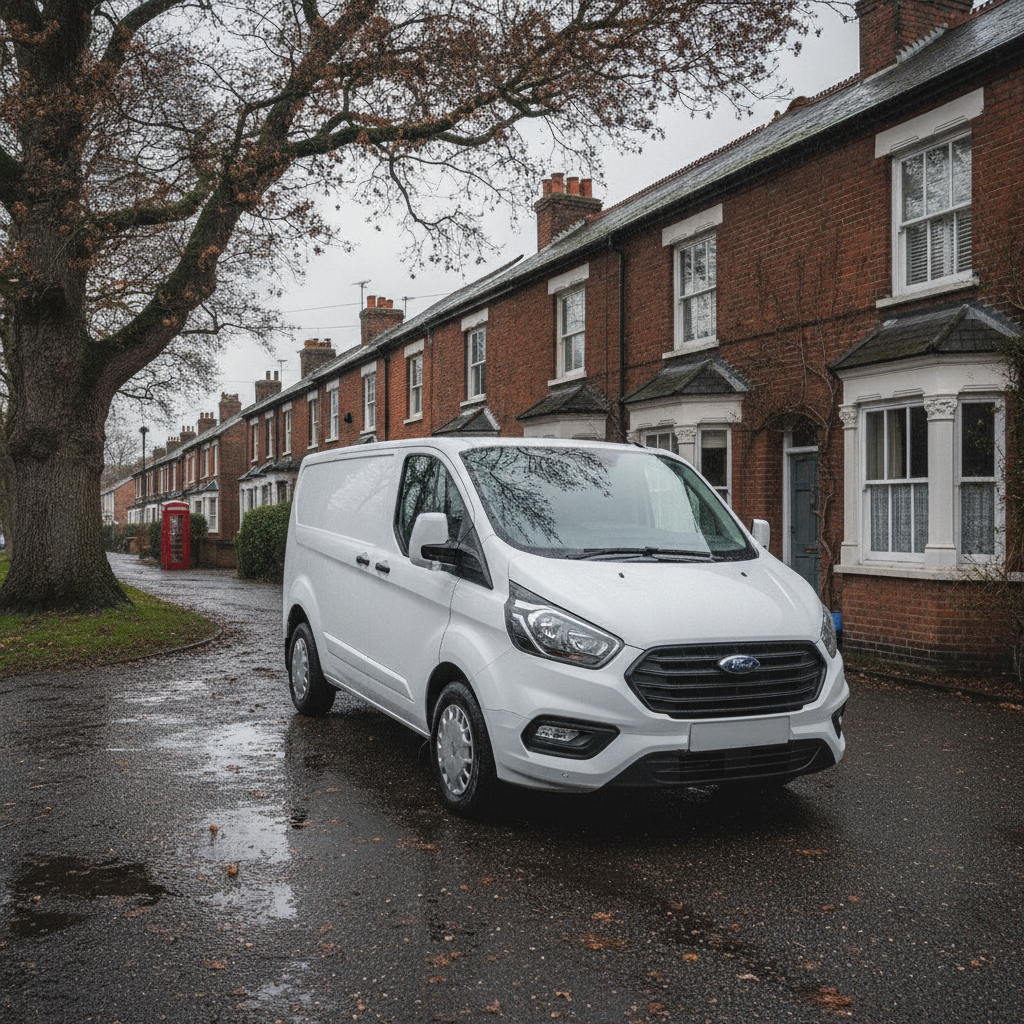
Ford Transit Custom: The Benchmark Medium Van Under £10,000
The Ford Transit Custom dominates British roads because it strikes an exceptional balance between driver ergonomics, load volume, and mechanical support. In this price category, the market consists primarily of first-generation models built between 2014 and 2017. These bridge the transition between the older 2.2-litre TDCi engines and the newer 2.0-litre EcoBlue units introduced around mid-2016.
Mechanical Strengths and Daily Practicality
Short-wheelbase (L1) models carry up to three standard Euro pallets, offering roughly six cubic metres of cargo capacity. The load-through bulkhead hatch beneath the passenger bench is standard on most trim levels, allowing tradespeople to slide conduit, copper pipes, or timber planks measuring up to three metres into the cabin without an external rack. Cabin comfort closely mirrors Ford passenger cars, reducing driver fatigue over long working days.
Critical Inspection Areas
Security is the primary operational concern on early Transit Customs. The factory driver-door lock cylinder is notoriously susceptible to physical compromise. Check whether the previous owner has installed an aftermarket rep-lock, high-position deadlocks, or external loom guards. For post-2016 2.0-litre EcoBlue engines, verify strict adherence to oil service schedules using the exact manufacturer-specified oil grade. These engines use a belt-in-oil (wet belt) timing system; degraded oil degrades the rubber belt, which can block the oil strainer and cause sudden engine seizure.
Volkswagen Caddy: Compact City Reliability Under £10,000
For plumbers, mobile locksmiths, auto electricians, and urban delivery drivers, the Volkswagen Caddy represents a durable, car-derived workhorse. This budget tier easily secures a clean third-generation facelift or an early fourth-generation (Mk4) Caddy, typically powered by the dependable 2.0-litre TDI diesel engine.
Mechanical Strengths and Daily Practicality
The Caddy benefits from high-grade interior plastics that withstand heavy site wear, alongside solid residual values that protect your capital investment over time. Fuel efficiency on steady runs frequently clears fifty miles per gallon. For operators requiring extra floor space without the footprint of a medium van, the longer Caddy Maxi adds roughly an extra cubic metre of cargo capacity and an elongated load floor.
Critical Inspection Areas
Examine the maintenance history for dual-mass flywheel replacements, particularly on vans used for stop-start urban driving. Listen for metallic rattling or vibration when idling in neutral that disappears when you depress the clutch pedal. Short-distance runs also clog diesel particulate filters (DPFs) and exhaust gas recirculation (EGR) valves. Take any prospective purchase on a sustained dual-carriageway test drive to confirm the DPF regenerates correctly without throwing limp-mode warning lights.
Vauxhall Vivaro and Renault Trafic: High-Capacity Value Under £10,000
Sharing a common platform engineered under a joint venture, the second-generation Renault Trafic and British-built Vauxhall Vivaro (produced until roughly 2019) represent some of the most practical medium vans available at this pricing tier. Buyers can realistically target 2015 to 2018 examples with moderate mileage on the clock.
Mechanical Strengths and Daily Practicality
These vans feature a squared-off, boxy cargo area that maximizes usable width between the wheel arches. Like the Transit Custom, they incorporate an under-seat load-through flap that accommodates pipes or ladders up to 3.75 metres on standard-wheelbase models, and over four metres on long-wheelbase variants. The 1.6-litre diesel engine comes in single-turbo and BiTurbo configurations, delivering impressive pulling power under load while maintaining modest fuel consumption.
Critical Inspection Areas
While the BiTurbo engines deliver superior torque, single-turbo units tend to carry lower long-term maintenance costs and simpler exhaust layouts. Pay close attention to gear selection during your test drive; the six-speed manual gearbox can suffer from worn bearings and sloppy selector linkages over time. Check underneath for signs of coolant leaks around the auxiliary water pump and examine the front suspension ball joints for play, which is a common advisory item on annual MOT tests.
Citroën Berlingo and Peugeot Partner: Practical Light Utility Under £10,000
The previous-generation Berlingo and Partner platform remains one of the most cost-effective light commercials in the UK. Operating within this budget bracket allows buyers to target newer, late-plate Euro 6 examples (roughly 2016 to 2019) with significantly lower mileage than equivalent medium-sized vans.
Mechanical Strengths and Daily Practicality
Powered by the ubiquitous 1.6-litre BlueHDi diesel engine, these vehicles deliver exceptional fuel economy and cheap, universally available replacement parts. The modular Multi-Flex passenger bench folds flat against the floor to accommodate longer items through the bulkhead, while allowing two passengers alongside the driver for short journeys to site.
Critical Inspection Areas
The primary vulnerability on 1.6 BlueHDi variants involves the emissions control system. The integrated AdBlue tank and pump assembly is prone to internal electronic failure and chemical crystallization. Ensure the instrument cluster lights up and clears the UREA warning light properly on ignition. Any lingering emissions alerts or countdown warnings on the digital display indicate pending, expensive tank replacements.
Pre-Purchase Checks for Working Commercials Under £10,000
- Clean Air Zone and ULEZ Compliance: To enter Clean Air Zones in Birmingham, Bristol, Bath, Sheffield, Newcastle, or London's Ultra Low Emission Zone without paying daily penalty charges, diesel vans must meet Euro 6 emissions standards. These were introduced universally for light commercials around September 2016. Always verify the emissions standard on the vehicle's V5C registration document or check the registration mark on the official GOV.UK Clean Air Zone portal before purchasing.
- Payload Ratings and Weight Plates: Never assume two identical-looking vans carry the same weight. Inspect the gross vehicle weight (GVW) plate on the door pillar or under the bonnet. Subtract the unladen kerb weight to establish your legal payload. Overloading breaches UK road traffic regulations, invalidates insurance coverage, and incurs severe roadside fines from the Driver and Vehicle Standards Agency (DVSA).
- Structural Corrosion and Sills: Inspect the structural chassis rails, floor pan seams, and inner sills beneath plastic trim steps. Work vans subjected to salty coastal air, winter motorway grit, or damp site conditions can rust prematurely beneath secondary underbody coatings.
- Fleet Service Records: Ex-fleet commercial vehicles often come with high mileages but benefit from scheduled, documented maintenance carried out by commercial workshops. A complete digital or stamped service history is far more valuable than a low-mileage van with no paper trail.
Commercial Funding and Acquisition Under £10,000
Deciding how to pay for a commercial vehicle depends on your business cash flow, tax accounting, and operational model. While purchasing outright preserves cash flow from ongoing debt obligations, financing a commercial purchase allows tradespeople to preserve emergency working capital for materials, sub-contractors, or tool upgrades.
Operators frequently look at commercial hire purchase or lease options via third-party lenders to spread capital costs over a multi-year term. If you plan to spread the purchase cost across affordable monthly schedules, reviewing your options for van finance can clarify the differences between ownership-led finance agreements and non-ownership leasing paths. Note that Vansales does not lend money, arrange credit, or sell vehicles directly; it operates as an informational marketplace to help trade buyers locate independent vehicle stock and compare market standards.
Before committing to any commercial vehicle, always verify whether the asking price includes VAT or falls under the second-hand margin scheme. Performing a full vehicle history check to ensure the van is free from outstanding finance, unrecorded write-off markers, or mileage discrepancies will secure an asset that works reliably for your business every working day.