Buying a used Volkswagen Caddy
Volkswagen Caddy Overview: The Benchmark Small Work Van
The Volkswagen Caddy has long stood as the gold standard within the UK compact van market. Where many competitors treat small commercial vehicles as stripped-back, utilitarian tools, Volkswagen engineered the Caddy by borrowing heavily from its acclaimed passenger car stable. Utilising structural and mechanical foundations shared with the Volkswagen Golf and Touran, the Caddy delivers level-headed road manners, excellent interior ergonomics, and exceptional structural rigidity that few light commercial vehicles can rival.
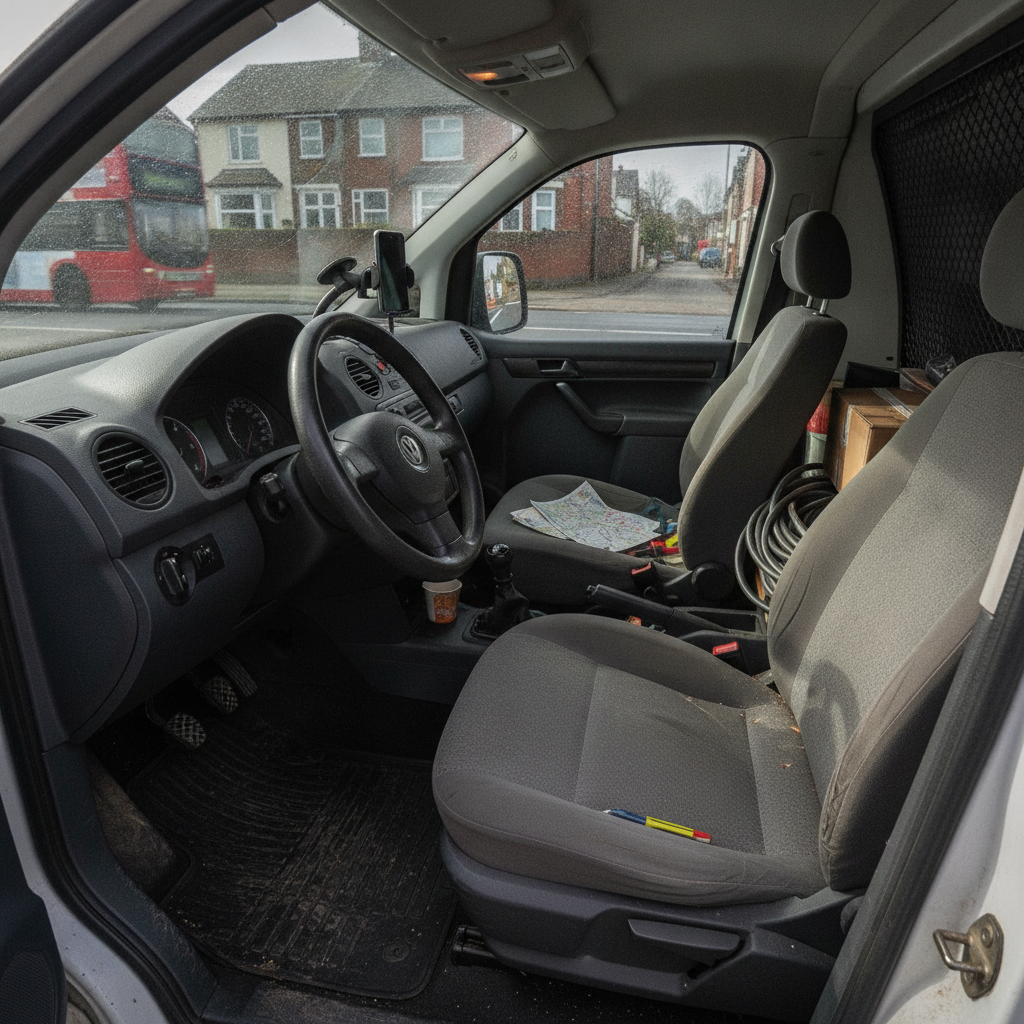
For UK sole traders, fleet managers, and independent tradespeople, the Caddy represents a calculated investment. It bridges the gap between commercial resilience and everyday driving comfort. The cabin is free from hollow road roar, the switchgear is robust, and the driving position provides car-like adjustability that prevents back fatigue across long shifts behind the wheel. Combined with class-leading residual values on the pre-owned market, a well-maintained used Caddy offers lower overall cost of ownership over its working life compared to cheaper, less durable rivals.
Over the past two decades, the model has evolved through three key generations on UK roads: the robust Mk3 (produced from 2004 through to the comprehensive 2010 facelift and continuing to 2015), the thoroughly updated Mk4 (2015 to 2020), and the MQB-based Caddy Cargo Mk5 (launched in late 2020). Each generation shares a unified ethos: superior fit and finish, hard-wearing interior materials, and an expansive range of efficient diesel and petrol powertrains tailored to everyday British commercial use.
Specifications, Load Dimensions, and Body Styles
Selecting the right used Volkswagen Caddy requires understanding the distinct footprints, load capacities, and chassis variants distributed across the UK dealer and auction networks. The Caddy is fundamentally offered in two primary wheelbases: the standard short-wheelbase (SWB) panel van and the extended Caddy Maxi.
Load Volumes and Dimensions
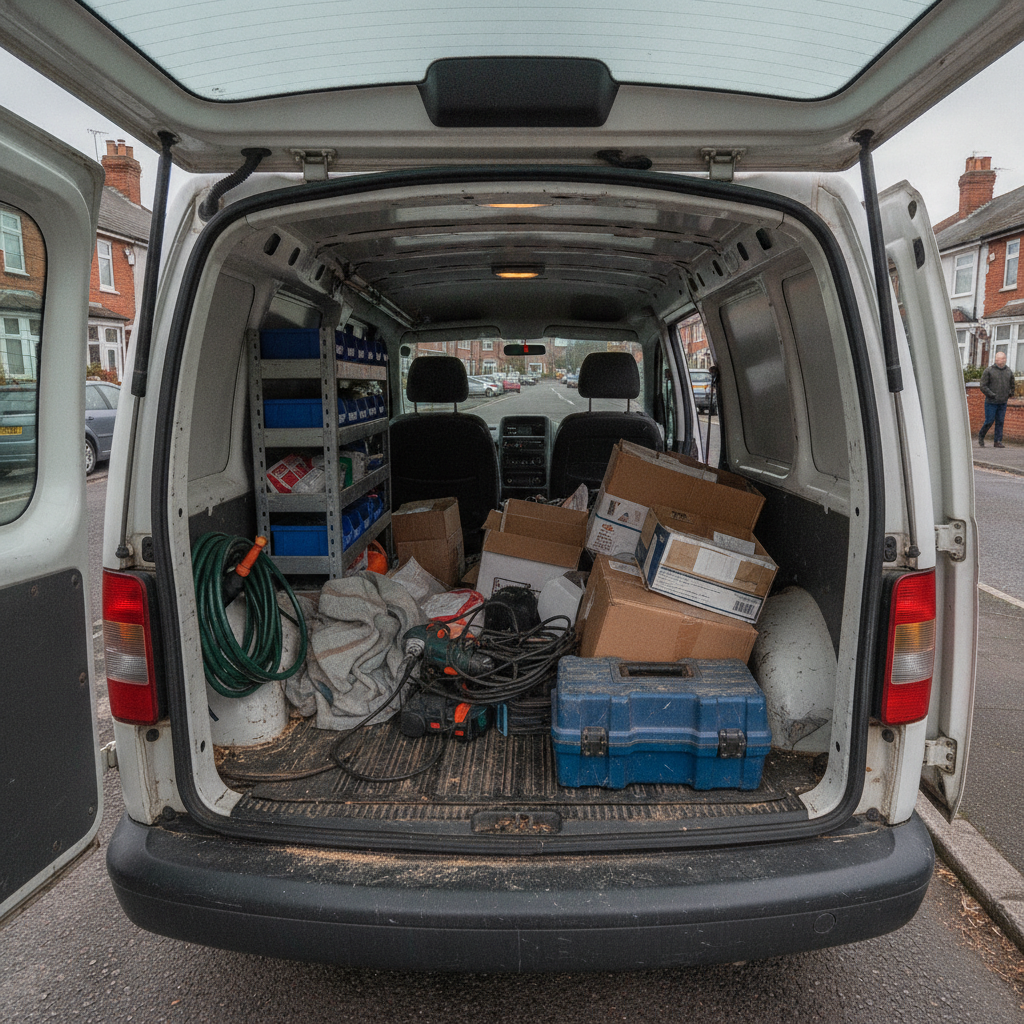
- Standard Wheelbase (SWB): Features an overall vehicle length of roughly 4.4 metres. In Mk3 and Mk4 generations, this yields an internal load floor length of 1,779mm, a maximum load width of 1,556mm (narrowing to 1,170mm between the rear wheel arches), and a load height of 1,244mm. Usable cargo capacity stands at 3.2 cubic metres, capable of holding a single standard Europallet loaded through the asymmetric rear wing doors.
- Caddy Maxi: Extends overall length by 470mm, providing a cavernous 2,249mm of cargo floor length. This configuration expands load volume to 4.2 cubic metres (or 3.7 cubic metres in the latest Mk5 generation), comfortably accommodating up to two Europallets or eight-by-four sheet materials cut into manageable widths.
- Caddy Cargo (Mk5 onwards): Redesigned suspension geometries widen the distance between the rear wheel arches to 1,230mm, allowing a Europallet to be loaded sideways even in the standard wheelbase model.
Payload Capacities and Towing
Payload limits fluctuate based on trim, chassis reinforcements, and powertrain selections. Standard Caddy models typically carry certified payloads between 550kg and 730kg. Specific high-payload variants within the Mk4 lineup were uprated to handle upwards of 800kg. The longer Caddy Maxi generally delivers official gross payloads from 650kg to 850kg, making it one of the most capable haulers in the small van class. Braked towing capacities generally range from 1,300kg to 1,500kg when paired with the punchier two-litre diesel engines, allowing small plant trailers or cement mixers to be towed without chassis strain.
Body Configurations and Trim Levels
The used market yields several body styles beyond the traditional two-seat blind-side panel van:
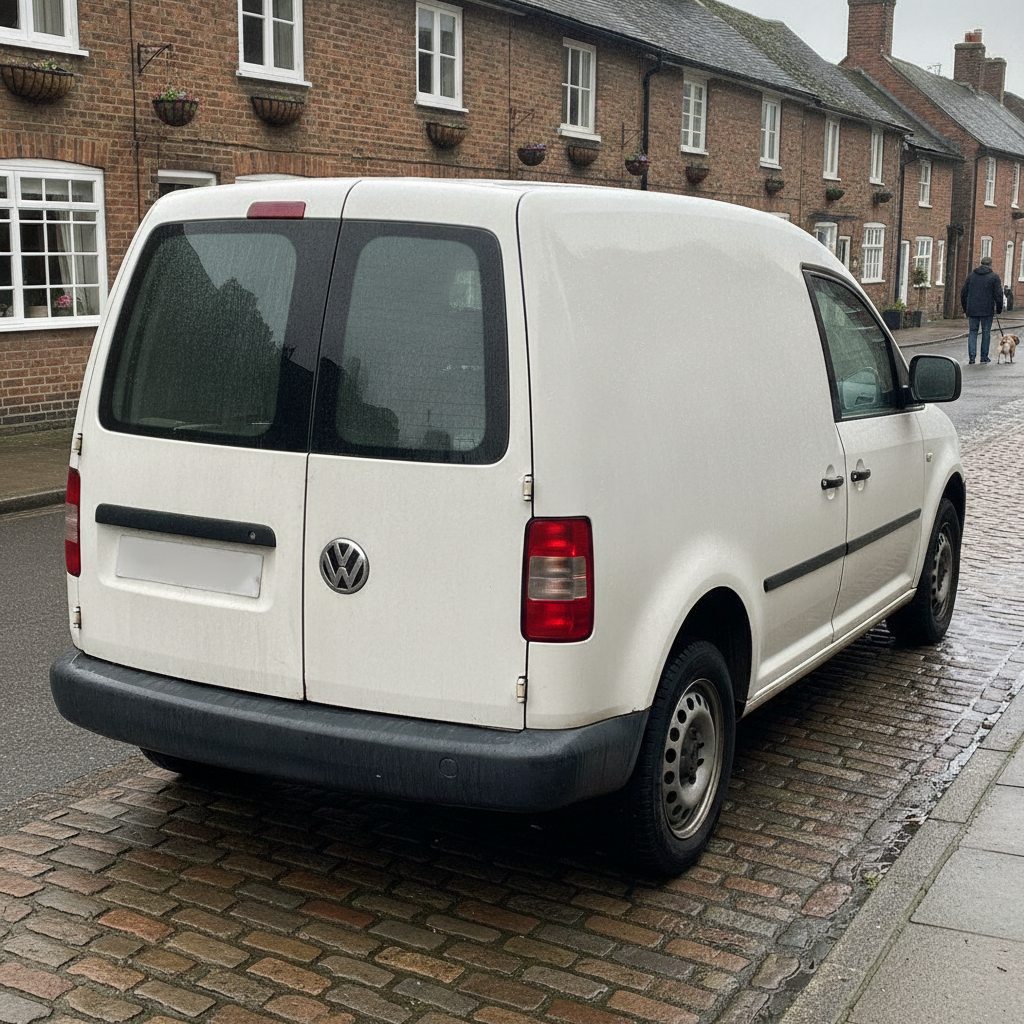
- Panel Van: The quintessential commercial configuration, typically fitted with a solid or glazed bulkhead, a nearside sliding side door, and asymmetric rear wing doors opening to 180 degrees.
- Caddy Kombi: Features a removable second-row three-seat bench and glazed sliding doors, delivering five seats without losing practical rear cargo space for tools or materials.
- Caddy Life: A fully passenger-focused multi-purpose vehicle with full interior trim, rear air vents, and up to seven seats in Maxi configuration, popular among private hire operators and dual-purpose family-business owners.
- Trim Tiers: Traditional VW trim hierarchies apply across Mk3 and Mk4 models. Startline represents the functional entry tier (steel wheels, electric windows, basic media). Trendline introduces cruise control, body-coloured bumpers, and improved seat adjustability. Range-topping Highline models add alloy wheels, climatic air conditioning, leather steering wheel trim, heated windscreens, and rear parking sensors.
Engine Lineup and Drivetrain Capabilities
Powering the Volkswagen Caddy is an array of four-cylinder internal combustion engines designed around long-distance hauling and urban stop-start duties. Understanding the engine lineage is crucial when browsing used stock.
The 1.6-Litre TDI (EA189)
Prevalent in Mk3 facelift models built between 2010 and 2015, the 1.6-litre common-rail turbo diesel arrived in two states of tune: 75PS and 102PS. While capable of impressive fuel return on motorway runs, it relies on older generation piezoelectric injection technology and does not meet Euro 6 emissions targets without emissions modifications. It is paired almost exclusively with a five-speed manual gearbox or a seven-speed dual-clutch automatic.
The 2.0-Litre TDI (EA189 and EA288)
The definitive engine for heavy load carrying and highway performance. Prior to 2015, the 2.0 TDI appeared in Euro 5 guise producing 110PS or 140PS. From late 2015 onward (coinciding with the Mk4 launch), the engine migrated to the modern EA288 Euro 6 platform utilising AdBlue selective catalytic reduction. Outputs were recalibrated to 75PS, 102PS, and a range-topping 150PS. The 102PS version represents the sweet spot for balance between real-world fuel economy and pulling power under full payload, while the 150PS variant is paired with a six-speed manual or wet-clutch six-speed DSG gearbox for effortless distance work.
TSI Petrol Options
With clean air zones spreading across UK city centres, petrol Caddy models have seen surging demand. The Mk4 generation introduced the three-cylinder 1.0 TSI (102PS) and four-cylinder 1.2 TSI (84PS) and 1.4 TSI (125PS) turbocharged petrol units. In the latest Mk5, a 1.5 TSI Evo unit producing 114PS features cylinder deactivation to save fuel. Petrol variants eliminate diesel particulate filter regeneration concerns, making them prime selections for short-drop inner-city runs and multi-stop urban engineers.
Manual vs DSG Transmissions
Manual gearboxes are dependable five-speed units on lower-output variants, while higher-power versions gain a long-legged six-speed manual. The direct-shift automatic (DSG) transmission provides instant, clutchless gear shifting, massively reducing driver strain in heavy traffic. However, pre-owned buyers must identify whether the vehicle employs the dry-clutch seven-speed DSG (found on smaller engines) or the oil-immersed wet-clutch six- or seven-speed DSG (fitted to higher-torque two-litre units), as each holds unique maintenance demands.
Who Buys the Used Caddy and Why? Commercial Applications
The Caddy is seldom bought as a general-purpose rough-service van for heavy aggregates; rather, it attracts skilled trades and professional operations where reliability, prestige, and security reign supreme.
- Electricians and Telecoms Engineers: The Caddy provides the ideal footprint for modular internal metal racking systems. Cable rolls, test equipment, and power tools can be organised neatly without requiring a high-roof van that cannot clear height-restriction barriers in multi-storey car parks.
- Plumbers and Heating Technicians: With the Caddy Maxi able to fit standard lengths of copper pipe and unvented cylinders beneath its load floor, heating engineers obtain complete weather protection and security while benefiting from car-like manoeuvrability on suburban driveways.
- Locksmiths and Auto Technicians: Highly sensitive diagnostic tools and key-cutting machinery demand dry, dust-sealed, rattle-free environments. The Caddy’s tight panel tolerances and solid bulkheads prevent damp ingress and provide a quiet mobile workshop.
- Local Delivery Couriers: The combination of an effortless DSG gearbox, twin rear doors that open wide for rapid offloading, and a tight kerb-to-kerb turning circle makes the SWB Caddy a formidable asset for dense suburban delivery routes.
- Sole Trader Image: In competitive markets, showing up on a client’s premises in a clean, high-spec Volkswagen Caddy signals professionalism and stability. It projects a premium business image that cheaper budget alternatives struggle to match.
Used Inspection Checklist: What to Look for on the Forecourt
Purchasing any commercial vehicle requires cold, systematic analysis. Vans lead tough lives at the hands of varied operators, and deferred maintenance will erode your profit margins quickly if overlooked.
1. Cambelt and Water Pump Intervals
On both EA189 and EA288 four-cylinder TDI engines, the timing belt is a critical consumable component. Volkswagen historically advised replacement intervals at every five years or around eighty thousand miles (whichever arrives first), though newer internal service revisions place the onus on visual condition inspections. If the seller cannot produce documented paper evidence of a cambelt and tensioner overhaul, factor this immediate service cost into your purchasing calculation. Water pump impellers are prone to failing on high-mileage diesels; ensure the pump was renewed at the same time as the timing belt.
2. Diesel Particulate Filter (DPF) and EGR Valve Health
Due to the Caddy's popularity among short-distance couriers and inner-city trades, the exhaust aftertreatment hardware requires careful scrutiny. Connect a basic onboard diagnostics scanner if possible, checking for pending trouble codes related to soot accumulation or exhaust differential pressure sensors. On the test drive, ensure the diesel particulate filter completes passive cleanings without bringing on the amber spiral glow plug or DPF warning lights. Exhaust Gas Recirculation (EGR) valves and their associated coolers can clog with carbon deposits, leading to rough idling, stuttering under acceleration at two thousand rpm, or drop into limp-home mode.
3. Clutch, Dual-Mass Flywheel, and DSG Fluid History
Manual diesel Caddys feature a dual-mass flywheel (DMF) designed to dampen low-end engine vibrations. With the engine idling in neutral, listen for metallic chattering or rhythmic rattling noises from the passenger-side wheel arch. Depress the clutch pedal slowly; if the noise disappears or the pedal vibrates heavily under your foot, the dual-mass flywheel has developed play and is nearing failure. For vehicles equipped with DSG automatics, verify that transmission fluid and filter renewals have taken place every forty thousand miles. Hesitation when selecting reverse or juddering away from a standing start points to mechatronic unit failure or worn clutch packs.
4. Rear Suspension and Axle Alignment
Unlike modern passenger cars that employ independent multi-link rear setups, the Mk3 and Mk4 Caddy use an ultra-durable rigid rear axle supported by leaf springs. Inspect the single or twin leaf springs carefully with a torch for longitudinal cracks, snapped ends, or degraded rubber bump stops—classic indicators that previous owners consistently exceeded maximum gross vehicle weights. A van sitting visibly low at the rear when unladen suggests tired, sagging springs that will compromise braking stability and tire wear.
5. Load Bed and Sliding Door Runners
Pull back the rubber floor mat or ply lining to inspect the painted metal floor for severe corrosion, moisture traps, or deep structural gouges caused by unsecured cargo. Test the nearside and offside sliding doors repeatedly. The nylon guide rollers in the lower running track wear out over heavy usage, causing the door to drop out of alignment, scrape the sill paint, and jam against the central locking actuators.
Known Faults and Model Years to Approach with Caution
While the Caddy sits at the higher end of commercial reliability tables, certain engine iterations and production years present notable systemic weaknesses that prospective buyers should navigate carefully.
The 1.6 TDI Injector Dilemma (2010 to 2015)
Mk3 facelift models housing the 1.6 TDI engine frequently suffer from sudden failures of their Siemens VDO piezoelectric fuel injectors. When an internal piezo crystal cracks or short-circuits, the engine immediately shuts down and drops into limp mode, showing an flashing glow plug light. Replacing an entire set of four injectors alongside revised fuel mapping represents a substantial workshop bill. If shopping for a 1.6 TDI, search for an example that has already had its injectors replaced with updated revision parts, or bypass this engine entirely in favour of the robust 2.0 TDI.
The 'Dieselgate' EA189 Emissions Fix
Between 2016 and 2018, many older Euro 5 Caddys (both 1.6 and 2.0 TDI) received the manufacturer emissions software recall. In numerous cases, this updated engine map increased the frequency of DPF regenerations and placed elevated mechanical stress on the EGR cooler and flow valve. Check the service documentation to see if the vehicle underwent this software update, and test drive thoroughly to ensure throttle response remains smooth and free from stuttering.
Dry-Clutch Seven-Speed DSG (DQ200)
The DQ200 gearbox, utilised alongside smaller displacement petrol engines and early 1.6 TDI units, uses dry clutches that are vulnerable to premature friction wear in urban, stop-and-go driving. The mechatronic control modules on early variants were also prone to electrical failures due to internal fluid degradation. The heavier-duty six-speed wet-clutch DSG (DQ250) bolted to two-litre engines possesses a vastly superior track record for long-term commercial longevity, provided its oil service schedules are honoured.
Used Volkswagen Caddy Price Brackets
Used Volkswagen Caddy values hold firmer than nearly any other small van in the UK sector. Pricing fluctuates across age, verified mileage, cosmetic condition, and service records.
High-Mileage Workhorses: Under £5,000
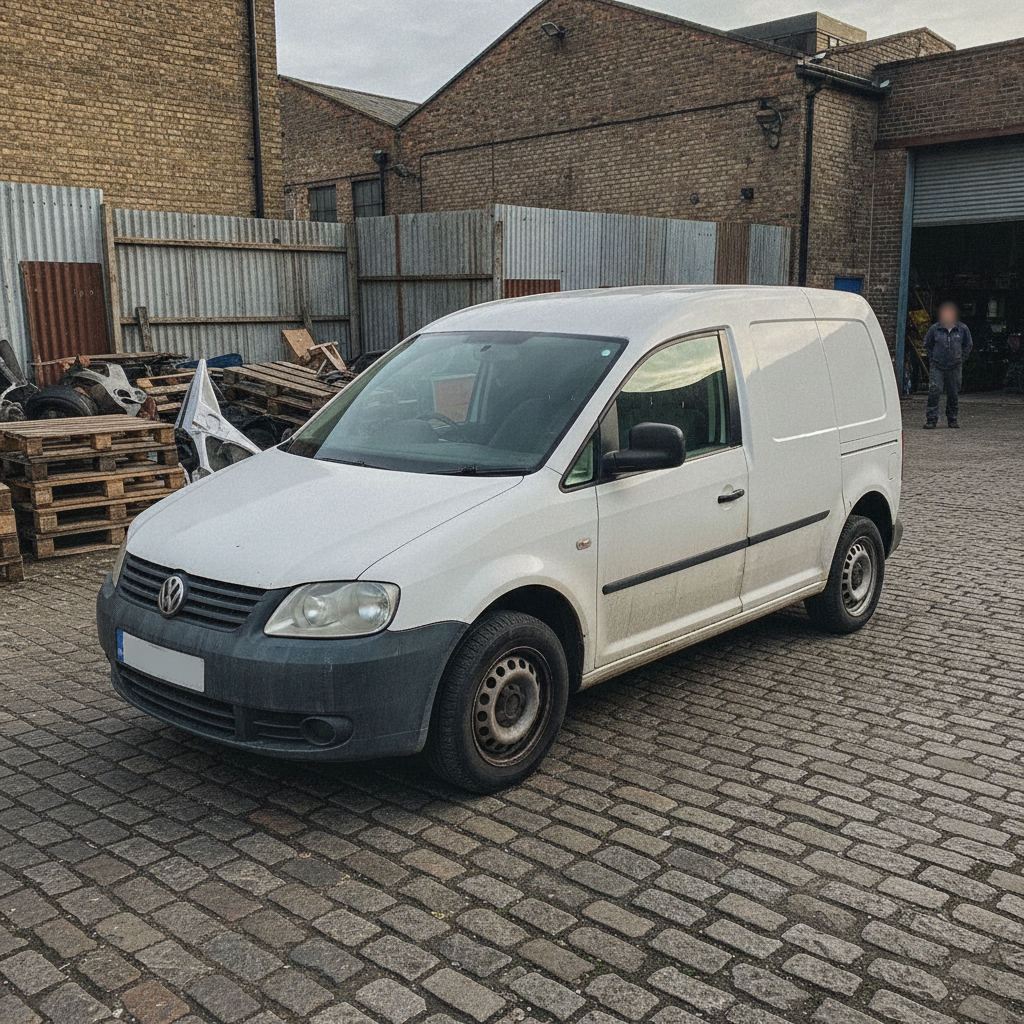
At this entry boundary, expect predominantly late Mk3 models dating between 2008 and 2013, with odometer readings running from one hundred and twenty thousand to beyond one hundred and eighty thousand miles. Many will show body scuffs, unpainted plastic bumper fading, and work-worn cargo bays. Mechanically sound examples with verified timing belt replacements and dry oil pans can still serve as reliable trade starters, but reserve funds for immediate suspension bushing, clutch, or wheel bearing replacements.
Mid-Range Dependable Runners: £5,000 to £10,000
This bracket captures late-plate Mk3 facelifts (2013 to 2015) and tidy, early-generation Mk4 models (2015 to 2017). Mileages sit between seventy thousand and one hundred and ten thousand miles. Vehicles in this price bracket often include Startline or Trendline trims, with some well-kept Highline units emerging. Look closely for Euro 6 compliance within this price bracket if you operate near urban clean air zones; 2015 and 2016 model years sit directly on the transition line between Euro 5 and Euro 6 standards.
Low-Mileage and High-Spec Mk4 Models: £10,000 to £16,000
Covering vehicles from 2017 up to late 2020, this represents the sweet spot for professional tradespeople seeking clean, presentable vans with fifty thousand miles or fewer. Expect well-appointed Highline variants with factory alloy wheels, touchscreen navigation, rear parking sensors, and multifunction steering wheels. These models carry complete main-dealer or specialist service histories and satisfy full Euro 6 compliance across London and regional UK clean air charging corridors.
Late-Plate Mk4 and Modern Caddy Cargo Mk5: £16,000 to £24,000+
This upper tier secures delivery-mileage Mk4s or the current Mk5 Caddy Cargo (late 2020 onward). These models incorporate full digital cockpits, advanced lane-keep assist systems, LED lighting packages, and refined multi-link coil rear suspension. Remaining manufacturer warranty balances, pristine load compartments, and modern smartphone connectivity make this tier ideal for fleets and operators requiring maximum uptime and modern safety credentials.
Real-World Running Costs: Keeping Your Business Profitable
A successful commercial vehicle must perform on paper as efficiently as it carries cargo on the road. The Volkswagen Caddy maintains competitive running costs, but proper planning prevents cash-flow surprises.
Fuel Efficiency Expectations
- 2.0 TDI (102PS / 150PS): Delivers exceptional motorway range. Expect forty-eight to fifty-four miles per gallon during long-distance highway cruising at sensible speeds. When driven fully laden around stop-start suburban job sites, realistic consumption settles between thirty-eight and forty-three miles per gallon.
- 1.6 TDI: Capable of returning fifty miles per gallon on steady routes, though hard driving under heavy cargo loads will cause this smaller engine to work harder, reducing figures down to the low forties.
- TSI Petrol Units: The 1.0 and 1.4 TSI petrol variants average thirty-six to forty-two miles per gallon under mixed driving conditions, which will decline toward the low thirties on heavy town runs.
Insurance Groups and Vehicle Excise Duty (VED)
The Volkswagen Caddy falls into standard light commercial vehicle insurance brackets, typically between Insurance Groups 5 and 12 depending on trim, horsepower rating, and payload rating. Commercial policies for sole traders are influenced directly by goods-in-transit limits and carriage of own tools coverage. Standard commercial vehicle flat-rate road tax applies to panel van models registered as N1 light commercial vehicles, providing predictable annual taxation overheads.
Routine Servicing and Maintenance Schedules
Volkswagen offers two distinct servicing schedules: Fixed (ten thousand miles or one year, optimal for stop-start urban use) and Flexible (up to eighteen thousand miles or two years, guided by internal oil-degradation sensors for distance motorway drivers). Commercial work demands conservative scheduling; changing engine oil and filters every ten thousand miles is the single most effective way to protect turbocharger bearings and DPF systems from premature degradation.
Funding Your Purchase: Commercial Finance Paths
Acquiring a used Volkswagen Caddy rarely requires drawing down all your liquid capital reserves. Structuring vehicle acquisition through tailored commercial funding preserves cash flow to purchase materials, cover business overheads, and manage customer credit periods.
Hire Purchase and Commercial Loans
For independent contractors intending to retain the vehicle for five or more years, Hire Purchase provides a clear route to outright ownership. After clearing an initial deposit—often equivalent to the recoverable VAT portion—monthly payments cover the remaining balance plus interest over terms running from twelve to sixty months. Once the final fee is cleared, the vehicle becomes a capital business asset appearing directly on your balance sheet, enabling full writing-down allowances against your taxable profits. Explore competitive commercial terms via tailored van finance solutions structured around seasonal trade revenues.
Contract Hire and Leasing
If you prefer driving late-model vehicles under active warranty coverage without bearing residual depreciation risks, explore our current range of flexible van lease deals. Business contract hire structures your overheads into steady, predictable operating costs that can be offset against corporation tax, allowing you to return and upgrade the vehicle at the end of the contracted term.
Final Verdict: Is a Used VW Caddy the Right Choice?
A used Volkswagen Caddy demands a minor price premium over French and domestic rivals, but it repays that investment daily through mechanical refinement, structural durability, and high trade-in valuations when it is time to upgrade. By verifying cambelt provenance, inspecting exhaust aftertreatment components, securing a healthy two-litre powertrain, and picking the right chassis wheelbase for your tools, you secure a reliable, professional mobile workshop engineered to drive your business forward for years to come.