Buying a used Toyota Hilux
Toyota Hilux Overview: The Benchmark for UK Commercial Pickups
If you ask any fleet manager, civil engineer, or agricultural contractor to name the most durable commercial workhorse on UK roads, the Toyota Hilux will almost certainly top the list. First launched globally in 1968, the Hilux has spent more than five decades earning a reputation for mechanical resilience that borderlines on indestructible. While competitors have shifted back and forth between commercial utility and car-like lifestyle aesthetics, the Hilux has consistently prioritized chassis strength, mechanical simplicity, and dependable all-terrain capability.
In the UK used market, buyers typically focus on two distinct iterations: the seventh-generation model, sold from 2005 until early 2016, and the eighth-generation model, introduced in mid-2016 and comprehensively facelifted in late 2020. The eighth-generation platform brought significant torsional rigidity improvements to the boxed ladder-frame chassis, a redesigned rear leaf-suspension geometry, and updated common-rail turbodiesel powertrains engineered to meet tightening European emissions standards. Crucially, it maintained the mechanical architecture that trade buyers rely upon: a heavy-duty live rear axle, selectable four-wheel-drive with a dual-range transfer case, and genuine off-road approach and departure clearances.
Unlike light commercial panel vans that rely on monocoque bodies prone to structural twisting under uneven load distributions, the Hilux uses high-tensile steel cross-members riveted and welded across a full-length perimeter frame. This makes it impervious to the stresses of cross-axle articulation on construction sites, rutted farm tracks, and quarry roads. For sole traders, small business owners, and corporate fleet operators searching for a used commercial vehicle, a pre-owned Hilux represents minimal depreciation risk combined with unmatched mechanical durability.
Body Styles, Load Dimensions, and Carrying Capacities
Choosing the correct body configuration on the used market dictates both daily working practicality and business tax exposure. Toyota has traditionally offered the Hilux in three body formats:
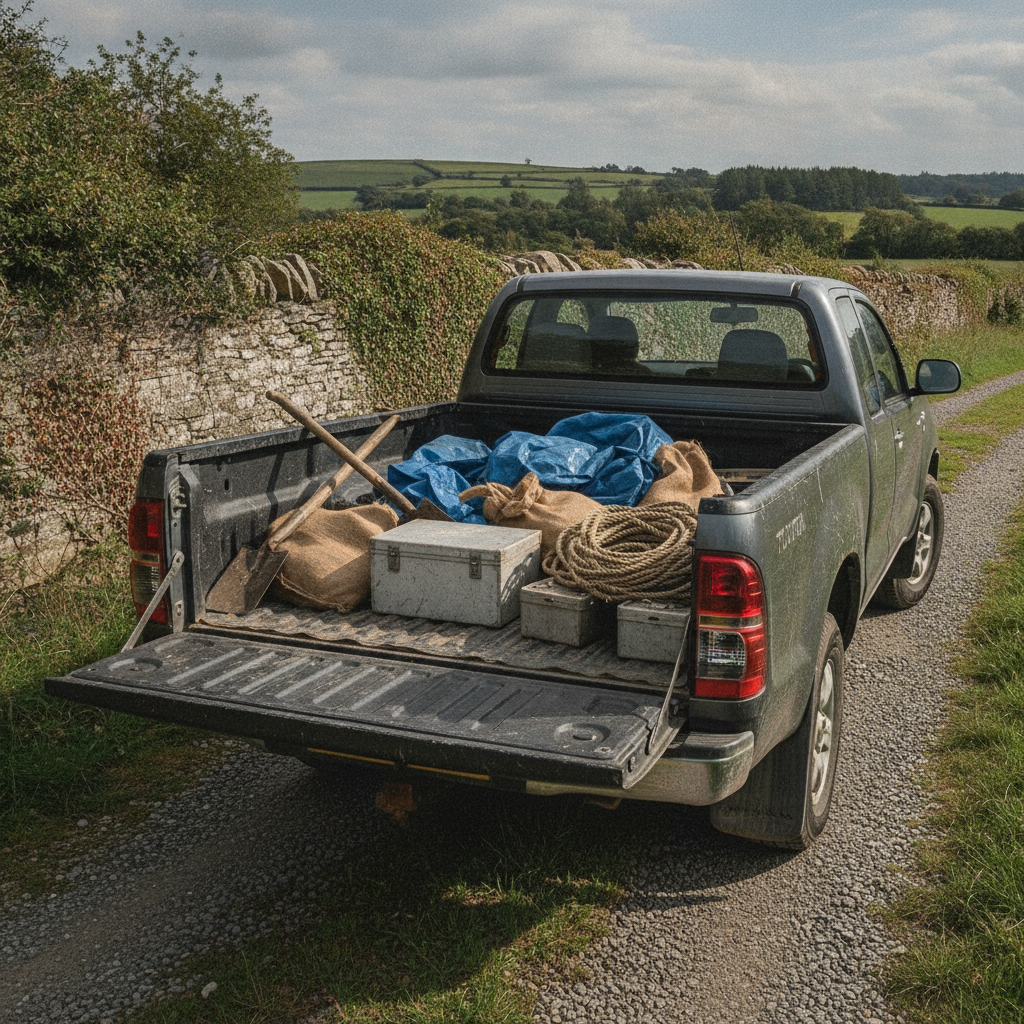
- Single Cab: A two-door, strict two-seater designed almost exclusively for fleet utility, highway maintenance, and municipal contracts. It features the longest load bed measuring roughly 2,315mm in length and 1,575mm in width, with 1,105mm between the wheel arches. Single-cab variants boast the highest gross payloads in the range, frequently exceeding 1,100kg depending on trim, but they are relatively rare on the second-hand market.
- Extra Cab: A four-door configuration featuring rear-hinged suicide doors and two folding jump seats behind the front row. The load bed measures approximately 1,808mm long, striking a functional compromise for tradespeople who need secure, internal, lockable storage for high-value power tools while retaining a substantial cargo box out back. Payloads routinely hover around 1,085kg.
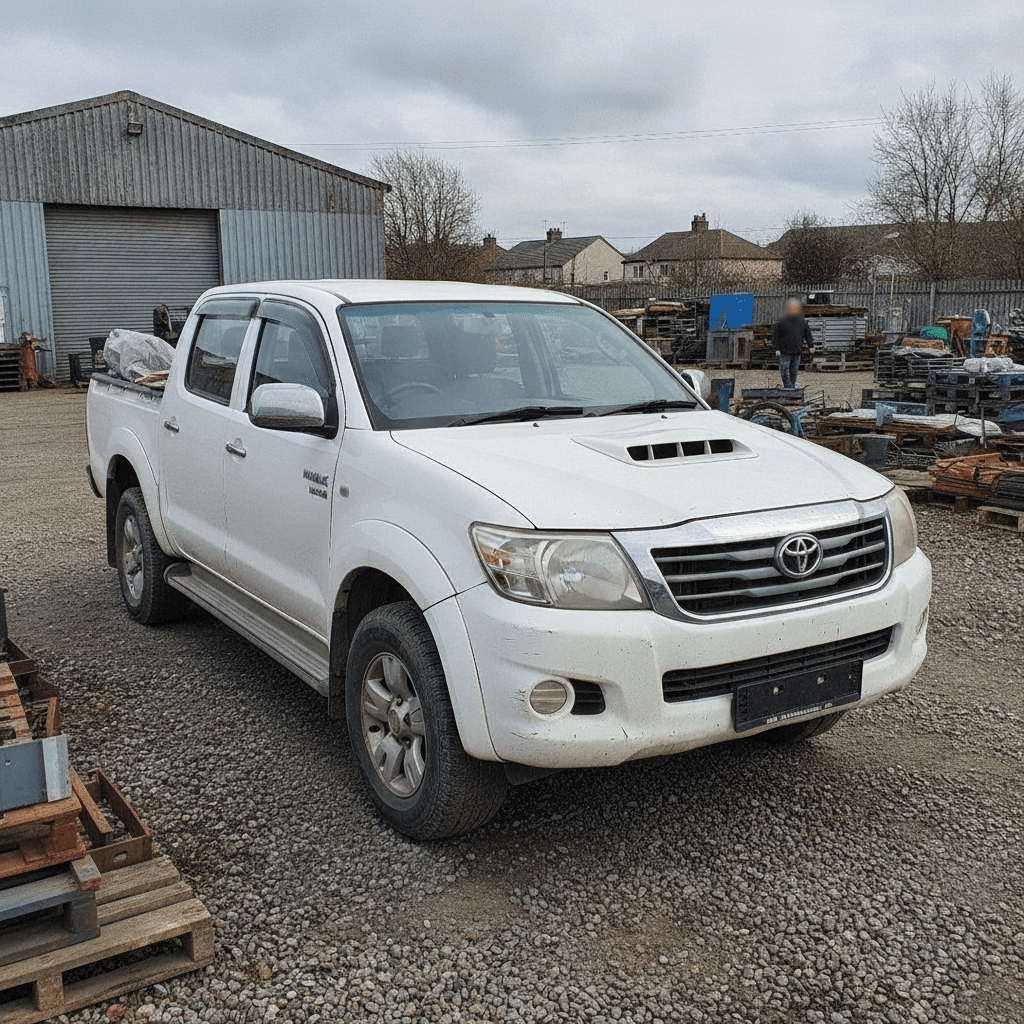
- Double Cab: By far the most common layout on the UK used market, offering a five-seater cabin with four standard front-hinged doors. The rear bed length shrinks to 1,525mm, with a uniform width of 1,540mm and 1,105mm between the rear arches. Despite the reduced bed length, double cabs handle Euro-pallets loaded crosswise and retain gross payloads safely above the one-tonne mark, ranging between 1,010kg and 1,055kg.
Towing capacity is an area where buyers must verify specifications based on registration dates. While late seventh-generation trucks were often limited to 2,800kg or 3,000kg, all eighth-generation models introduced from 2016 onward feature an uprated 3,500kg braked towing capacity alongside a 750kg unbraked rating. Combined with gross train weights reaching up to 6,000kg on specific variants, the vehicle handles three-axle plant trailers, livestock trailers, and fully laden mobile workshops with complete legal compliance.
Engine Options and Transmission Reliability
Understanding what sits beneath the bonnet is critical when evaluating a used Hilux, as drivetrain changes over the years dictate towing power, motorway cruising refinement, and emission compliance.
The 2.4-Litre D-4D (2GD-FTV)
Introduced in 2016 to meet Euro 6 emissions regulations, this four-cylinder 2,393cc turbodiesel engine produces 150 horsepower and 400Nm of torque from 1,600rpm to 2,000rpm. Utilising variable-nozzle turbocharging (VNT) and a solenoid-type common-rail fuel injection system, this unit replaced the venerable 2.5-litre and 3.0-litre units from the seventh generation. While it requires working the gearbox harder when hauling near its gross train weight, it is exceptionally durable, returning sensible fuel efficiency and proven long-term dependability across high-mileage fleet duties.
The 2.8-Litre D-4D (1GD-FTV)
Introduced alongside the late 2020 facelift, this 2,755cc unit answered calls from trade operators for more pulling power, boosting output to 204 horsepower and an impressive 500Nm of torque when paired with the automatic transmission (420Nm with the manual). The 2.8-litre engine transforms long-distance towing, dropping cabin decibel levels at 70mph and offering effortless overtaking performance when fully loaded. It is predominantly found on higher-tier Invincible, Invincible X, and GR Sport trims.
Transmissions and Four-Wheel-Drive Hardware
Both powerplants were paired with either a six-speed manual gearbox or a six-speed torque-converter automatic transmission. The manual gearbox features Toyota's Intelligent Manual Transmission (i-MT) system on higher trims, which rev-matches on downshifts to eliminate driveline snatch—a welcome feature when descending steep declines with an excavator in tow. The automatic unit is smooth, robust, and highly recommended if your working day involves dense stop-start traffic or low-speed manoeuvring on rough sites.
The four-wheel-drive system is a traditional part-time setup controlled via a dashboard rotary dial. Drivers can toggle between two-wheel drive high (2H) for dry asphalt, four-wheel drive high (4H) for slippery roads or gravel, and four-wheel drive low (4L) for severe terrain. Almost all UK-spec double cabs also incorporate a driver-selectable locking rear differential, providing positive mechanical lock across the rear axle when traction is severely compromised.
Who Buys a Used Hilux and Why: Core Trade Applications
The customer base for a pre-owned Toyota Hilux spans virtually every sector where tarmac ends and severe duty begins:
- Groundworkers and Civil Engineering Contractors: The sheer strength of the ladder chassis and heavy underbody steel protection allows the Hilux to drop into muddy trenches, work over crushed demolition rubble, and carry wet soil or concrete blocks without body sag.
- Agricultural Operators and Forestry Teams: Farmers pull twin-axle cattle trailers across wet fields where monocoque all-wheel-drive vans simply bog down. Forestry contractors and tree surgeons make extensive use of the selectable low-range transfer box, generous 29-degree approach angle, and 310mm ground clearance to operate heavy winches and reach remote felling coupes.
- Mobile Plant Mechanics and Utility Engineers: Highway maintenance crews and power network operators fit the Hilux load bed with racking, compressor packs, and heavy tooling, relying on its ability to access remote transmission towers or motorway embankments in extreme winter weather.
- Sole Traders and Small Business Owners: For builders, roofers, and landscapers, a double-cab Hilux often serves as both a primary commercial vehicle Monday to Friday and practical family transport on weekends.
Commercial vehicle classification is central to the vehicle's popularity. Because all standard double-cab versions carry a certified payload exceeding 1,000kg, HMRC treats them as light commercial vehicles (LCVs) rather than passenger cars. This allows VAT-registered businesses to reclaim the full VAT on purchase, alongside beneficial fixed-rate Benefit-in-Kind (BIK) company car tax calculations, making it far more tax-efficient than an equivalent luxury four-wheel-drive SUV.
What to Look for When Buying a Used Toyota Hilux
Although the Hilux is engineered to extraordinary mechanical standards, many lead punishing lives in the hands of hard-working crews. A thorough physical inspection is mandatory before committing.
Chassis Rust and Structural Integrity
Rust is the primary adversary of any body-on-frame commercial vehicle. Get underneath the truck with a torch and inspect the boxed chassis rails, particularly around the rear axle mounting points, the fuel tank brackets, and the spare wheel carrier. The cross-members are prone to collecting clay, mud, and road salt thrown up by the tyres. If left unwashed, this debris traps moisture against the metal, rotting the steel from the inside out. Be suspicious of freshly applied, heavy black underseal; disreputable sellers sometimes spray underseal directly over flaky rust to mask severe structural deterioration.
Drivetrain and 4WD Operation
You must verify that the four-wheel-drive system shifts correctly. On a loose surface or damp grass (never engage 4WD on dry tarmac, as this causes catastrophic driveline wind-up), switch from 2H to 4H. The dashboard indicator should illuminate steadily within a couple of seconds without persistent flashing. Next, come to a complete stop, place the gearbox in neutral, and switch to 4L. Listen for smooth solenoid engagement. Test the rear differential lock as well; the dashboard light should turn solid, indicating the differential dog clutch has engaged. Clunking, screeching, or reluctance to disengage indicates neglected transfer case oil or a failed actuator motor.
Suspension and Running Gear
Inspect the multi-leaf rear springs. Check for broken leaves, sheared central locating pins, or severe flattening, which point to a truck that has been routinely operated beyond its legal payload limits. Look closely at the rear dampers for hydraulic fluid weeping. At the front, check the upper and lower control arm ball joints, anti-roll bar drop links, and inner tie rods for play, as heavy off-road driving takes a heavy toll on front-end suspension bushings.
Engine Bay and Service Verification
Under the bonnet, check for diesel fuel leaks around the common-rail lines and verify that the coolant is clean and pink (Toyota Super Long Life Coolant). Listen carefully to a cold engine start. Excessive mechanical clatter that persists after the engine warms up can point to fuel injector seat failure or carbon-fouled injectors, a known issue on poorly serviced high-mileage D-4D units. Check the condition of the serpentine drive belt and water pump for signs of squeaking or bearing play.
Common Faults, Recalls, and Model Years to Approach with Caution
No vehicle is completely immune to mechanical issues, and the Hilux has several specific watchpoints across its production run:
- DPF and AdBlue Systems (2016–2018 Models): Early eighth-generation 2.4-litre models suffered from recurring Diesel Particulate Filter blockages if used primarily for low-speed site work or short local runs. The passive regeneration cycle failed to trigger, leaving filters clogged and vehicles in limp-home mode. In late 2018, Toyota revised the software and retrofitted a physical DPF regeneration button on the lower dashboard, allowing drivers to manually initiate a high-idle burn while stationary. Ensure any pre-2019 model has received relevant factory software updates.
- Fifth-Gear Synchromesh (Manual Gearboxes): On hard-worked manual models, particularly those carrying heavy loads or towing frequently, the fifth-gear synchromesh can wear prematurely. During your test drive, verify that shifts between fourth, fifth, and sixth gear remain clean without crunching or resistance.
- Brake Booster Recalls: Certain 2018 and 2019 Hilux models were subject to a manufacturer recall regarding faulty internal resin components in the brake booster pump, which could lead to reduced braking assistance. Verify via the DVSA recall database or a Toyota main dealer that this safety rectification work was executed.
- Tailgate and Bed Hinge Corrosion: Examine the rear tailgate cables and hinges. Heavy drops from mini-diggers loading aggregate can bend the tailgate brackets, breaking the protective paint layer and accelerating seam corrosion. Inspect beneath any plastic bedliner, as trapped water often causes hidden floor perforations.
UK Pricing Tiers for Used Hilux Models
Due to unmatched residual strength, the Hilux commands premium prices compared to equivalent rivals like the Nissan Navara, Mitsubishi L200, or Ford Ranger. Used inventory generally splits into three core price categories.
Entry-Level Workhorses: £7,000 to £12,000
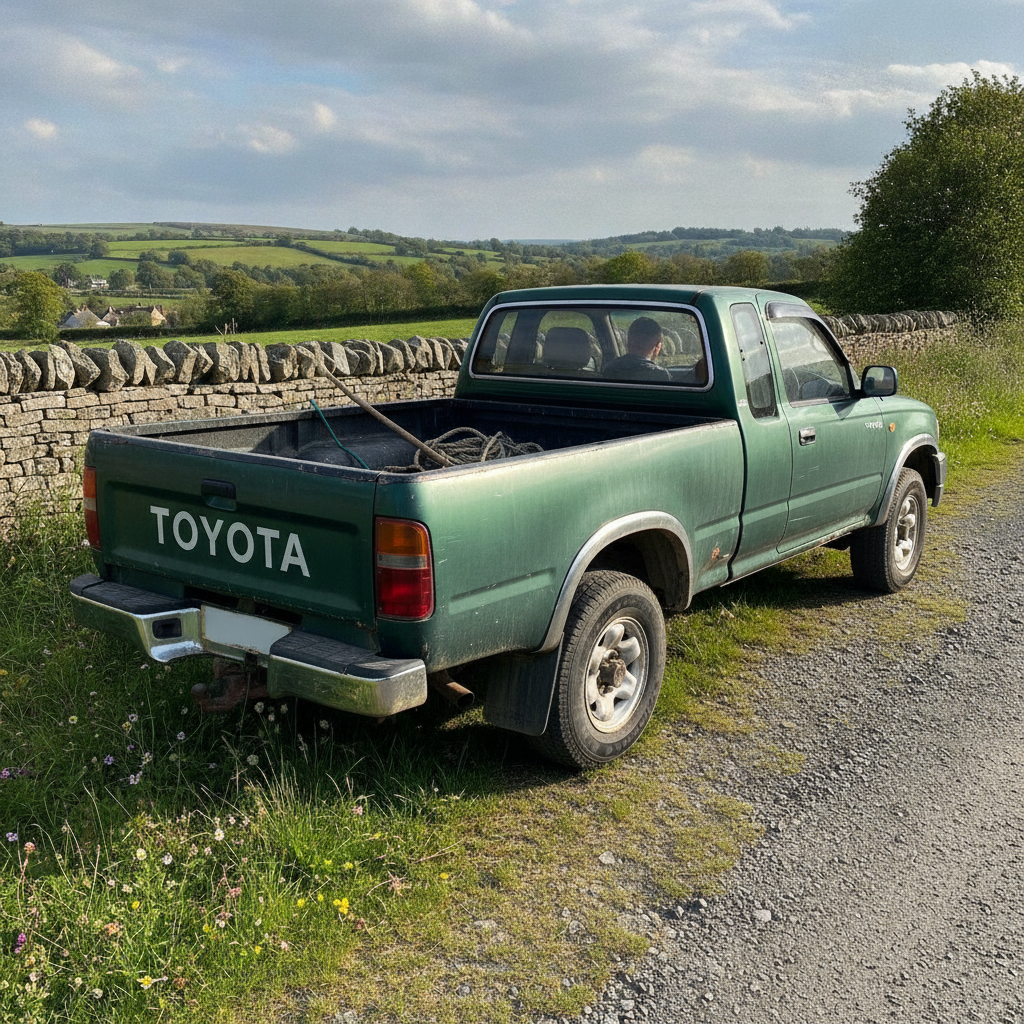
In this bracket, expect late seventh-generation trucks or very early, high-mileage eighth-generation Active models. Mileage typically ranges from 120,000 to over 180,000 miles. These vehicles have spent their lives on building sites, forestry contracts, or farms, meaning cosmetic scrapes, dented beds, and worn cabin plastics are standard. Prioritise mechanical condition, chassis cleanliness, and verifiable service records over visual perfection. If maintained correctly, these engines will comfortably cross 250,000 miles.
Mid-Range Fleet and Owner-Operator Trucks: £13,000 to £21,000
This category represents the sweet spot for balance between condition and outlay, covering 2016 to 2020 eighth-generation models with mileages between 50,000 and 100,000 miles. You will encounter well-maintained Active and mid-spec Icon trims, along with earlier Invincible models. These vehicles frequently feature full service histories, clean interiors with reversing cameras and touchscreen infotainment, tow bars, and fitted roller shutters or hardtops. They represent dependable, ready-to-work assets for small business operators.
Late-Plate and High-Spec Trucks: £22,000 to £35,000
This upper tier encompasses post-2020 facelift models, primarily carrying the potent 2.8-litre engine. Expect Invincible, Invincible X, and GR Sport trims with under 40,000 miles on the odometer. Many of these vehicles were used as executive transport or light-duty recreational vehicles rather than industrial plant trucks. They feature premium leather cabins, adaptive cruise control, LED headlights, and 360-degree cameras. They also benefit from the remainder of Toyota’s manufacturer warranty programme.
True Running Costs: Fuel, Insurance, Tax, and Servicing
Calculating the true cost of ownership is essential before expanding your fleet or swapping out an older van.
Real-World Fuel Economy
Official WLTP figures often paint an optimistic picture. In actual working conditions, a manual 2.4-litre Hilux carrying a moderate payload typically returns between 30mpg and 34mpg on mixed roads, dipping to 25mpg to 27mpg when hooked to a heavy commercial trailer. The punchier 2.8-litre engine returns remarkably similar figures, yielding roughly 28mpg to 32mpg unladen; its extra torque means the engine is stressed far less at motorway speeds, offsetting the larger displacement.
Road Tax (VED) and Benefit-in-Kind
Because the Hilux is homologated as a light commercial vehicle, road tax is charged at the flat-rate commercial VED rate rather than the CO2-graduated rates applied to standard passenger cars. For business users running a company vehicle, the fixed Benefit-in-Kind rate for commercial vehicles provides substantial personal tax savings compared to operating a large diesel SUV, although drivers must confirm that any fitted accessories do not drag the payload rating below 1,000kg, which risks losing LCV status.
Servicing Schedules and Toyota Relax Warranty
The standard service interval for the Hilux is every 10,000 miles or 12 months, whichever arrives first. Routine minor servicing alternates between oil and filter changes, with major intervals incorporating fuel filter replacements, brake fluid renewals, and front/rear differential and transfer case oil changes.
One of the strongest arguments for buying a used Hilux is the Toyota Relax warranty initiative. Vehicles up to 10 years old or with fewer than 100,000 miles receive an automatic 12-month or 10,000-mile rolling manufacturer-backed warranty every time the vehicle is serviced within the franchised Toyota dealer network. For a used buyer acquiring a four- or five-year-old pickup, this provides dealer-level mechanical security usually reserved for brand-new commercial purchases.
Commercial Vehicle Finance and Acquisition Routes
Funding a used commercial pickup requires a structure that protects business cash flow while maximising tax allowances. Most commercial buyers avoid outright cash purchases in favour of structured financing.
Hire Purchase (HP) remains the most popular avenue for sole traders and contractors. With an HP agreement, you pay an initial deposit (often equivalent to the VAT on the purchase price, which can be reclaimed on your next VAT return if registered), followed by fixed monthly payments over two to five years. Once the final payment is cleared, your business owns the vehicle outright with no mileage penalties, making it ideal for operators who keep their vehicles until the wheels fall off.
For operations wanting lower monthly outgoings or tax write-offs against operating profits, Finance Lease arrangements offer flexible balloon payments at the end of the term based on anticipated vehicle residual value. You can explore competitive rates and calculate monthly investments through flexible van finance packages tailored directly to commercial trades.
Conversely, if your business requires predictable overheads, fixed renewal cycles every two to four years, and zero exposure to residual disposal risks, exploring business contract hire or dedicated van lease deals could provide a more cost-effective path than purchasing an older, used asset outright.
Final Verdict: Is a Used Hilux the Right Choice for Your Business?
While competitor pickups may boast flashier interior tech or softer rear coil-spring suspension, no vehicle matches the operational durability, off-road dependability, and resale strength of the Toyota Hilux. It is a purpose-built commercial tool designed to absorb daily industrial punishment and retain its value when the time comes to sell.
Provided you conduct a thorough underneath inspection for chassis corrosion, confirm the four-wheel-drive running gear engages smoothly, and verify a complete maintenance history with regular transmission and differential fluid changes, a used Toyota Hilux remains one of the safest commercial investments you can make for your trade business.