
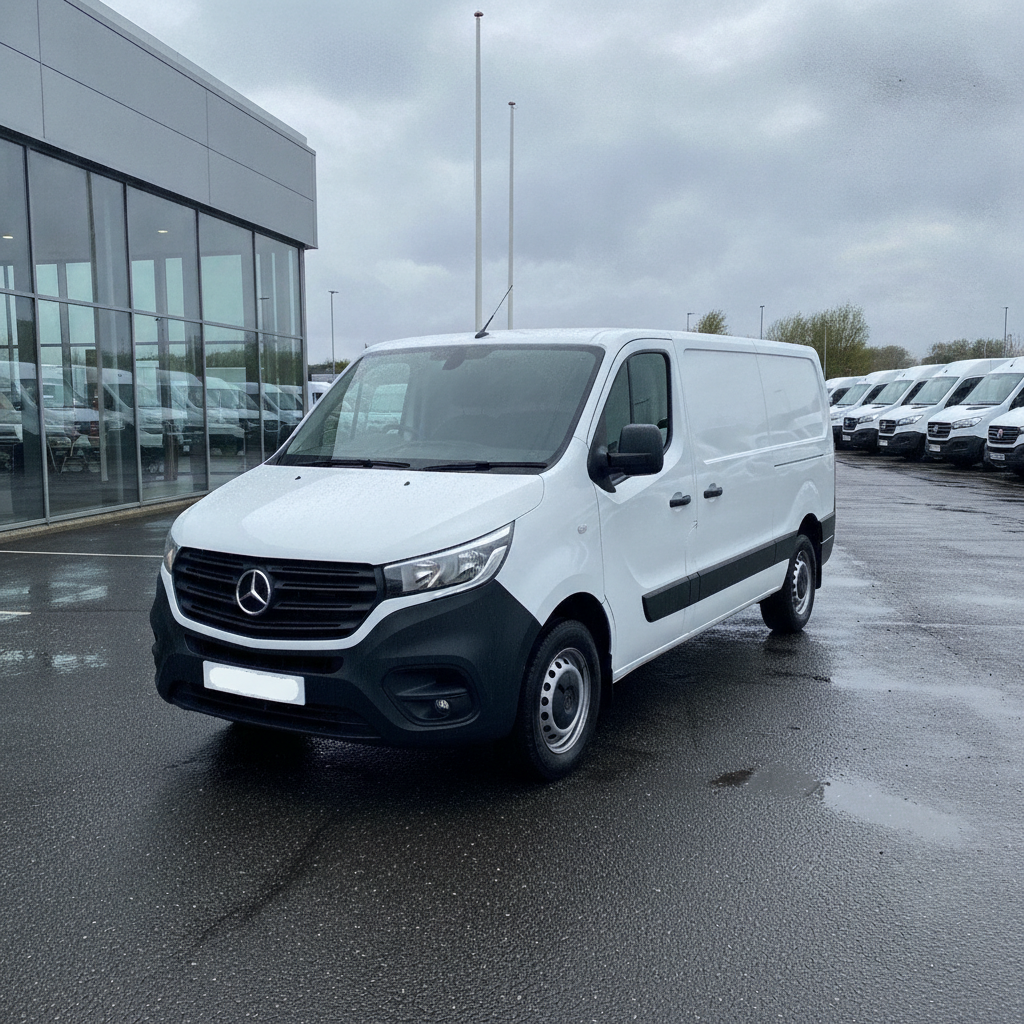
Navigating the Used Van Market Under £15,000
Setting a budget ceiling within this range positions you directly in the most competitive segment of the UK pre-owned commercial vehicle sector. For independent contractors, general builders, electricians, and delivery operators, this financial tier represents the bridge between high-mileage, maintenance-heavy workhorses and modern, reliable fleet vehicles. At this level, buyers do not need to settle for aging Euro 5 engines or stripped-down specifications.
Modern commercial vans operating in UK towns and cities face stringent environmental rules. The primary operational objective when purchasing in this price bracket is securing Euro 6 compliance. Diesel light commercial vehicles registered from September 2016 onward generally meet Euro 6 emissions targets, granting complete exemption from daily charges in the London Ultra Low Emission Zone as well as Clean Air Zones operating in cities like Birmingham, Bristol, Sheffield, and Newcastle. If you operate inside these urban limits, choosing a non-compliant van risks severe daily operational penalties that erode profit margins.
When searching through listings on an online vehicle marketplace, remember that most commercial vehicles carry an ex-VAT trade price. If you are a standard VAT-registered limited company or sole trader, you can reclaim this tax via your regular return. However, if you are not VAT-registered, a twenty percent tax surcharge must be absorbed directly into your capital outlay, meaning you need to filter your search to vehicles advertised with no VAT or price your searches accordingly when reviewing quality used vans across the UK.
Top Medium Work Vans Under £15,000
Ford Transit Custom (2017–2020)
The Ford Transit Custom remains the benchmark against which all mid-sized commercial vehicles in the UK are measured. Inside this budget tier, buyers can find clean examples powered by the 2.0-litre EcoBlue diesel engine. Available in short (L1) and long (L2) wheelbases, as well as low (H1) and high (H2) roof variants, the Transit Custom accommodates three Euro pallets even in standard L1 format, alongside a full side-load door capable of taking standard timber or plasterboard.
Technical checkpoints: The 2.0 EcoBlue engine utilises an internal wet-belt system, where the timing belt runs directly in engine oil. It is essential to inspect the vehicle service book to confirm that oil changes were executed strictly within manufacturer schedules using the correct specification engine oil. Incompatible oil grades degrade the belt rubber, releasing debris that clogs the oil-pickup strainer and causes oil starvation. Additionally, check the driver door lock barrel for signs of forced tampering and assess the sliding side-door guide tracks for excessive roller play.
Renault Trafic and Vauxhall Vivaro (2018–2021)
For sheer square load volume and interior ergonomics, the Renault Trafic Phase 3 (and its mechanically identical counterpart, the pre-Stellantis Vauxhall Vivaro B) offers outstanding utility. Under this price threshold, buyers can source post-2018 models with moderate mileage. Post-2019 variants feature the updated single-variable geometry turbo 2.0-litre dCi engine, which resolved many of the complex sensor faults seen on earlier 1.6-litre twin-turbo units.
Technical checkpoints: These vans feature a load-through bulkhead allowing copper pipe and conduit up to four metres long to extend under the passenger seat. Pay close attention to the feel of the manual gear shift; the six-speed gearbox can suffer synchromesh wear between second and third gears on hard-driven delivery routes. Listen for rattling from the dual-mass flywheel during idle, and inspect the rear trailing arm suspension bushes for play or perishing rubber under heavy tool payloads.
Volkswagen Transporter T6 (2015–2018)
Residual values for the Volkswagen Transporter T6 remain exceptionally strong, meaning that this budget typically secures older models or vehicles showing higher mileages, often over eighty thousand miles. Despite the higher odometer readings, the 2.0-litre TDI EA288 engine has an established reputation for longevity when maintained correctly. Cab quality, switchgear resilience, and robust seat fabric make the T6 an appealing choice for trades wanting a vehicle that serves as a mobile office by day and personal transport by weekend.
Technical checkpoints: Ensure the cambelt and water pump have documented evidence of replacement within recommended mileage and age intervals. Exhaust gas recirculation coolers on earlier Euro 6 engines can develop internal leaks or heavy carbon fouling, resulting in limp-mode warnings under load. Inspect the base of the tailgate or rear barn doors for moisture accumulation around the seal channels.
Top Compact Vans Under £15,000
Citroën Berlingo and Peugeot Partner (2019–2022)
Sole traders, heating engineers, and urban service technicians frequently find medium-sized vans cumbersome for residential calls. Built on the modern EMP2 vehicle platform, the third-generation Citroën Berlingo and Peugeot Partner provide payloads reaching up to one metric tonne, rivaling some vans from the medium class. Powered predominantly by the 1.5-litre BlueHDi diesel engine, these vehicles deliver fuel returns exceeding fifty miles per gallon on mixed driving routes.
Technical checkpoints: The multi-flex passenger bench folds completely flat to create an extended load floor with a bulkhead trap door for lengthy items. Mechanically, the primary issue affecting these engines centers on the AdBlue emission dosing tank; crystallised urea can jam the integrated injector pump, triggering engine restart countdown warnings on the instrument cluster. Check the service history for software updates or tank replacements. Early iterations of the 1.5 BlueHDi engine also featured a seven-millimetre camshaft link chain prone to premature stretch, so listen carefully for metallic ticking from the top of the engine during a cold start.
Volkswagen Caddy (2016–2020)
The fourth-generation Volkswagen Caddy provides a passenger-car driving feel combined with a rigid rear leaf-spring suspension layout designed to handle heavy toolboxes without tail sagging. The 2.0-litre TDI diesel option is smooth, and standard safety systems like Autonomous Emergency Braking became common equipment on UK models from late 2017 onward.
Technical checkpoints: Test the air conditioning compressor, as clutch failures on these units are common. For models fitted with the optional direct-shift automatic gearbox, verify that fluid services have been stamped at correct forty-thousand-mile intervals, and check for judder when pulling away slowly on an incline.
Practical Mechanical Checklist for Trade Buyers
- Suspension Overload Strain: Inspect the rear axle assembly beneath the van. Curved leaf springs that appear flat, inverted, or cracked point directly to chronic overloading by past trade owners. Look at the bump stops; if they show heavy impact marks or crumbling rubber, walk away.
- Ply-Lining Removal: Never inspect a used commercial vehicle without shining a torch behind the plywood lining kits. Unscrupulous sellers use fresh ply to conceal structural impact dents on wheel arches, distorted inner body skins, and cargo floor rust caused by chemical or water spills.
- DPF Regeneration Cycles: Connect an on-board diagnostic scanner to check soot accumulation levels and when the last successful diesel particulate filter regeneration cycle completed. Vans used solely for short urban service calls suffer blocked DPF cores, resulting in poor fuel consumption and eventual turbocharger failure.
- V5C Emission Categories: Confirm the official Euro emissions category listed on section four of the V5C logbook rather than relying on the seller's verbal claims. It must confirm Euro 6 status to verify clean air zone exemptions.
Commercial Funding and Acquisition Advice
Navigating commercial vehicle finance requires realistic accounting for depreciation, running overheads, and potential downtime. Before committing your working capital, investigate the options available across modern commercial funding structures. Many sole traders prefer outright purchase to eliminate ongoing liabilities, while growing businesses often review competitive van finance packages such as Hire Purchase or Finance Lease to preserve vital working cash flow for materials and daily operational costs.
Always seek independent financial advice regarding writing down allowances, corporation tax deductions, and VAT status. As an independent commercial vehicle marketplace, our platform offers informational resources and inventory listings to help tradespeople connect with trusted dealerships and private sellers nationwide, providing the data needed to secure a dependable, compliant work vehicle.