
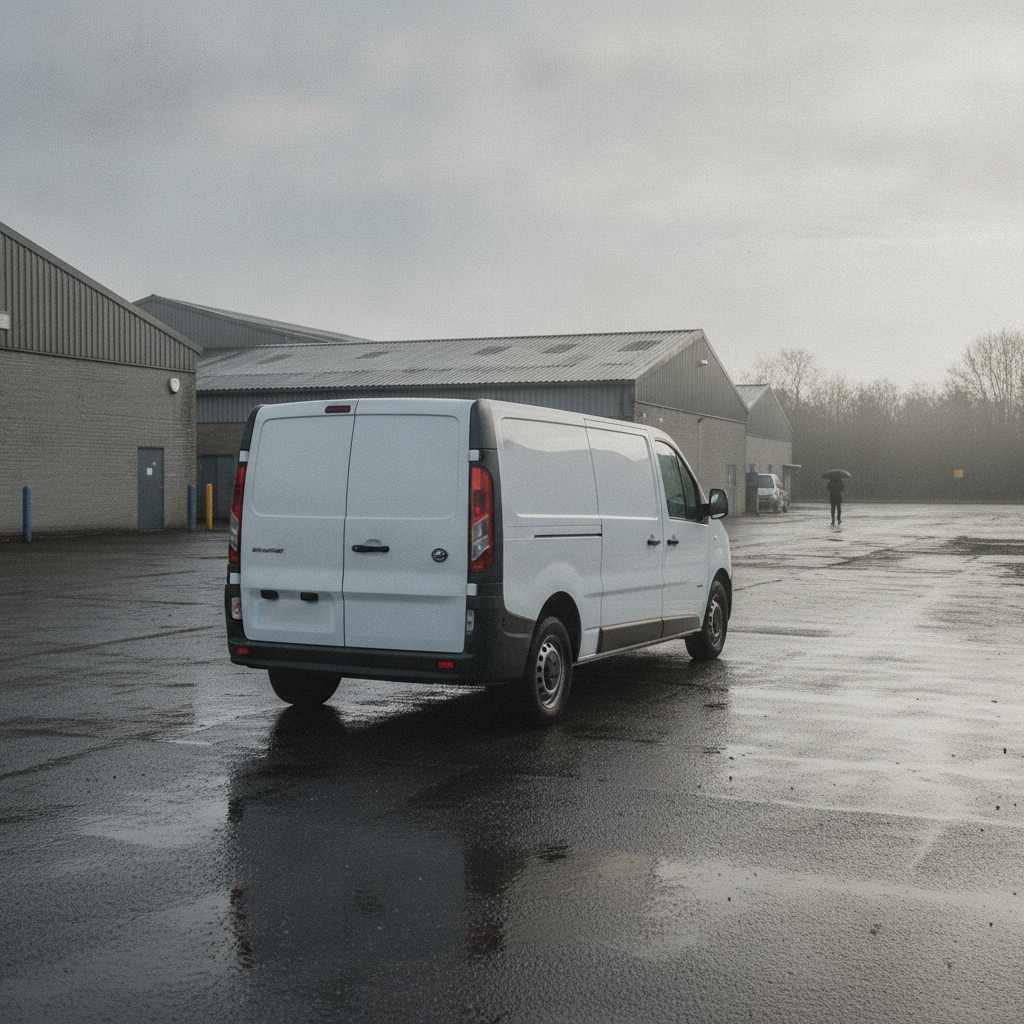
Understanding Payload, Axle Limits, and Vehicle Dimensions
Selecting the correct commercial vehicle begins with strict calculations of what you transport daily. In the UK, confusing gross vehicle weight with payload capacity is a frequent and expensive mistake. Gross Vehicle Weight (GVW)—often stamped on the vehicle identification plate inside the passenger door shut—is the maximum legal operating weight. This figure encompasses the base vehicle, fluids, full tank of fuel, driver, passengers, tools, racking, and materials. Your usable payload is the GVW minus the unladen kerb weight.
Underestimating these figures carries immediate consequences. The Driver and Vehicle Standards Agency (DVSA) and regional police forces conduct routine roadside checks using dynamic weighbridges. Running overweight can invalidate your commercial insurance instantly, incur fixed penalty notices, and lead to vehicle prohibition until the excess load is removed. Furthermore, overloading puts catastrophic stress on rear axle bearings, suspension leaves, and braking assemblies.
- Car-derived and compact vans: Models such as the Ford Transit Connect, Volkswagen Caddy, and Citroën Berlingo typically offer payloads between six hundred and eight hundred kilograms. These suit sole traders who carry light parts, diagnostic equipment, or hand tools, offering passenger-car manoeuvrability and low fuel consumption in tight residential streets.
- Medium panel vans: Vehicles like the Ford Transit Custom, Vauxhall Vivaro, and Volkswagen Transporter represent the core of the UK trade sector. Payloads generally span from nine hundred to roughly fourteen hundred kilograms. Crucially for carpenters, plasterers, and general builders, most medium vans in standard configurations will accommodate eight-by-four-foot plasterboard or plywood sheets flat on the floor or angled securely between the wheel arches.
- Large panel vans: Platforms including the Mercedes-Benz Sprinter, Peugeot Boxer, and standard Ford Transit provide expansive cubic capacity and payloads stretching beyond fifteen hundred kilograms up to three-and-a-half tonnes GVW. These are essential for heavy plant transportation, major plumbing installations, groundworks, and multi-drop courier routes where volumetric space is as crucial as weight capacity.
Emissions Regulations, ULEZ, and Clean Air Zones
Urban compliance dictates where your business can operate without eroding your profit margins. The London Ultra Low Emission Zone (ULEZ) operates continuously across all London boroughs. Similarly, regional Clean Air Zones (CAZ) in cities such as Birmingham, Bristol, Bath, Sheffield, and Newcastle penalise non-compliant commercial vehicles entering designated sectors.
To avoid daily administrative charges, a used diesel van must meet Euro 6 emissions regulations. As a general benchmark, most diesel light commercial vehicles registered from September 2016 onwards meet this standard, though transitional stock exists from that year. Petrol vans must comply with Euro 4 standards, usually applying to vehicles registered from January 2006. If you are uncertain about a specific van's compliance, enter the registration plate into the official Transport for London or government Clean Air Zone vehicle checkers rather than trusting private advert claims. Electric commercial vans offer complete exemption from these urban access charges, though their real-world battery range must align realistically with your daily round-trip mileage.
Commercial Accounting, VAT Rules, and Operating Expenses
Assessing the affordability of a vehicle requires looking well beyond the screen price. Commercial vehicle taxation and purchasing structures differ significantly from standard private motor sales.
- Value Added Tax: Most commercial vehicles offered through trade dealers are listed with VAT added to the final figure. If your trade business is registered for standard VAT accounting, you can typically reclaim this input tax via your routine return, provided the vehicle is used for commercial activities. If you operate below the registration threshold or work under the flat-rate scheme, that twenty percent tax constitutes a permanent addition to your capital outlay. Look out for vans sold under the VAT Margin Scheme or from private non-registered sellers where no tax is added, though these are less common among late-model fleet stock.
- Road Tax (VED): Light commercial vehicles classed as TC39 generally pay a flat annual rate of Vehicle Excise Duty, unlike passenger cars whose rates scale heavily based on list prices and carbon dioxide output. Check the current classification on the vehicle V5C logbook to ensure it has not been improperly classified.
- Benefit-in-Kind (BIK): If your business operates as a limited company and you take a company-owned van home for personal journeys beyond basic commuting, HMRC considers this a taxable perk. Van benefit charges are calculated as fixed flat amounts rather than scaled percentages of list value, making commercial vans considerably more tax-efficient than passenger cars for mixed-use trades.
Mechanical Inspection Checklist for High-Mileage Commercials
Commercial workhorses lead arduous lives. Rushed delivery schedules, heavy loads, and skipped service intervals accelerate wear across critical systems. When inspecting prospective used vans, conduct a thorough, hands-on mechanical evaluation before negotiating terms.
- Engine and emissions hardware: Insist on viewing the van when the engine is stone cold. Feel the bonnet and engine block to verify it has not been warmed up prior to your arrival. Blue smoke on start-up points to turbocharger or valve seal degradation; persistent white smoke suggests coolant burning through head gasket failure; dense black smoke points to fuel injector issues. Ask for service receipts showing Diesel Particulate Filter (DPF) maintenance and Selective Catalytic Reduction (AdBlue) pump replacements, as town driving frequently clogs DPF filters, resulting in expensive regeneration faults.
- Transmission and clutch: On manual gearboxes, check for high biting points and slippage in higher gears under load, which indicate an expiring clutch. Listen for distinct clattering or rattling sounds at idle that vanish when depressing the clutch pedal—a telltale sign of dual-mass flywheel failure. On automated or dual-clutch vans, ensure shifts between first, reverse, and neutral occur without hesitation or violent shuddering.
- Chassis, bodywork, and load area: Remove ply-lining if possible to check wheel arches, floor seams, and rear structural corners for severe denting or moisture retention that breeds chassis rot. Inspect the sills, jacking points, and leaf spring mounting points underneath with a torch. Warped internal bulkheads suggest previous impacts or persistent cargo shifting from violent braking.
- Running gear and tracking: Commercial vans frequently bump over high kerbs during loading. Inspect the front and rear tyres across their tread faces. Scrubbed inner or outer shoulders reveal worn track rod ends, collapsed ball joints, or bent wishbones. Ensure the tyres match the required load rating index specified by the manufacturer; fitting budget passenger-car tyres to a commercial van is illegal and hazardous.
Documentation, Service Audits, and Ownership Verification
Never conclude a vehicle purchase based on verbal assurances. Systematically review documentation to protect your business against fraud, repossession, and safety failures.
V5C Registration Certificate
Ensure the seller holds the genuine multi-page V5C certificate carrying the current DVLA watermark. Compare the seventeen-digit Vehicle Identification Number (VIN) printed on the document with the metal stamp visible on the lower windscreen and the stamped metal plate under the bonnet or driver door step. Discrepancies here can signal vehicle cloning or an unresolved insurance write-off.
MOT History History Analysis
Access the government MOT history portal on your phone during the viewing. Look past the simple pass mark to the advisory notes over consecutive years. Repeated advisories for corroded brake pipes, worn suspension linkages, or steering play indicate an owner who carried out reactive, bare-minimum repairs rather than proactive preventative servicing. Sudden drops or wild jumps in recorded annual mileage highlight mileage tampering (clocking), which remains prevalent among ex-courier panel vans.
Ex-Fleet vs Owner-Operator Records
Large utility and national fleet vans often feature digital maintenance logs detailing every oil change, brake pad replacement, and bulb swap down to the exact day. While these vehicles often show cosmetic scuffs, their mechanical upkeep is generally rigid. Single-owner trade vans might look cleaner outwardly, but you must demand stamped service handbooks or independent garage invoices confirming routine cambelt or wet-belt renewals at the manufacturer's recommended intervals.
Commercial Acquisition Options for Small Fleets
Balancing capital preservation against operational reliability is fundamental when expanding your mobile capability. Outright cash purchases eliminate ongoing liabilities from the balance sheet, but depleting your immediate operational cash flow leaves the business vulnerable to unexpected cash pinches or delayed client invoices.
Consequently, many sole traders and limited companies utilise commercial van finance to spread capital acquisition across manageable monthly operating outlays. Hire Purchase, Finance Lease, and Contract Hire each offer distinct tax treatments concerning asset depreciation, balance sheet liability, and VAT reclamation. Vansales provides an independent commercial vehicle marketplace connecting buyers with independent dealerships nationwide. The platform provides transparent search listings and practical commercial vehicle information, allowing business owners to compare vehicle models, body styles, and payload capacities directly from UK sellers.