Used Citroen Dispatch: What to Check Before You Buy
The Citroen Dispatch sits in the ultra-competitive medium van sector, offering a blend of strong payload ratings, compact exterior dimensions, and car-like handling. Built alongside its platform siblings—the Peugeot Expert, Toyota Proace, and later the Vauxhall Vivaro—the Dispatch is a familiar sight on British building sites and trading estates. For a tradesperson or delivery operator searching for dependable transport, a secondhand Dispatch makes practical commercial sense. However, because these vans are frequently treated as hardworking workhorses from day one, you must carry out a meticulous pre-purchase inspection to avoid inheriting someone else's expensive repair bills.
Generations and Engine Line-Up: What to Look For
While second-generation models (built until 2016) are still circulating as low-cost runarounds, most buyers focus on the third-generation version launched in 2016. Built on the PSA/Stellantis EMP2 platform, this generation transformed the model with superior cab comfort, modern safety tech, and full Euro 6 diesel compliance, making it exempt from daily charging in the London Ultra Low Emission Zone (ULEZ) and provincial Clean Air Zones (CAZ) across the UK.
The third-generation Dispatch launched with two primary engine options:
- 1.6-litre BlueHDi: Available in lower outputs (typically 95hp and 115hp). It offers respectable fuel economy on suburban runs, but can feel underpowered when fully laden or towing.
- 2.0-litre BlueHDi: Offered in 120hp, 150hp, and 180hp outputs. The 2.0-litre is the preferred option for heavy payloads, long motorway hauls, and plant towing duties, providing robust torque through a six-speed manual or automatic gearbox.
- 1.5-litre BlueHDi: Introduced around 2018 to replace the 1.6-litre, producing 100hp or 120hp. It is an efficient, refined unit, but carries specific mechanical maintenance watchpoints that you must inspect closely.
When searching through commercial classifieds and dealer listings for quality used vans, verifying which engine variant best suits your tool weight, ladder loads, and daily mileage is your first essential step.
Body Lengths, Dimensions, and Moduwork Utility
Unlike many medium vans that offer varying roof heights, the standard Dispatch kept its overall height below 1.9 metres on most variants. This design choice allows easy access to standard UK multi-storey car parks and domestic garages. Instead of height options, Citroen offered three chassis lengths:
- XS (Compact): Measuring roughly 4.6 metres long, this ultra-short wheelbase model was designed for tight city deliveries, though it is far rarer on the secondhand market.
- M (Standard): The mainstream choice at roughly 4.95 metres long, offering a practical load floor length of over 2.5 metres.
- XL (Long): Measuring approximately 5.3 metres long, providing maximum cubic capacity for trades needing to haul sheet materials and bulky equipment.
Always inspect the passenger bulkhead. High-spec models feature the "Moduwork" load-through hatch system. This allows the outer passenger seat to fold upward while a flap in the steel bulkhead unlatches, enabling trades to feed copper piping, conduit, or timber lengths of up to 4 metres directly through into the passenger footwell without leaving the rear doors ajar.
Mechanical Checks: 1.5 and 2.0 BlueHDi Weak Spots
Before committing to purchase, you need to execute a strict mechanical audit under the bonnet and underneath the vehicle.
The 1.5 BlueHDi Camshaft Timing Chain
The 1.5-litre BlueHDi unit features a composite timing setup: an external rubber cambelt running the exhaust camshaft, linked to the intake camshaft via an internal chain. Early production versions of this engine were fitted with a 7mm chain that can stretch, rattle, and prematurely snap, resulting in catastrophic engine failure. Listen carefully to the top of the engine during a cold start. A distinct metallic ticking, chattering, or rattling noise indicates chain wear. Manufacturers later revised the design to an 8mm setup; ask the seller for documentation showing whether the timing assembly has been inspected or replaced.
AdBlue Tank and SCR System Faults
Like many Euro 6 diesel commercial vehicles, the Dispatch can suffer from AdBlue (SCR) system errors. The AdBlue reservoir tank houses an integrated pump, heater, and control module. When the urea crystallises or the pump fails, the ECU flags an emissions fault and triggers an engine non-start countdown. Check the dashboard display during the test drive to verify no AdBlue warning lights or engine management lamps are illuminated. Look underneath the rear chassis for any white crusting or crystallisation around the AdBlue tank and injector lines.
Diesel Particulate Filter (DPF) Clogging
Vans used exclusively for short-haul urban drops or site-to-site hops never complete an active DPF regeneration. Connect an OBD2 scanner if possible, or take the van on an extended test drive along a dual carriageway. The engine should pull cleanly throughout the rev range without stuttering, entering limp-home mode, or showing DPF warning prompts.
Dual-Mass Flywheel and Clutch Wear
On manual variants, pay attention to the clutch pedal bite point. A heavy pedal, rattling noise at idle that disappears when depressing the clutch, or violent shuddering when pulling away in first gear indicates an ailing dual-mass flywheel (DMF). Replacing the clutch and flywheel on front-wheel-drive medium vans requires dropping the subframe, representing significant workshop labour time.
Chassis, Suspension, and Bodywork Weak Points
Heavy trade work leaves unmistakable marks on a van's chassis and running gear. Inspect these critical structural and running areas:
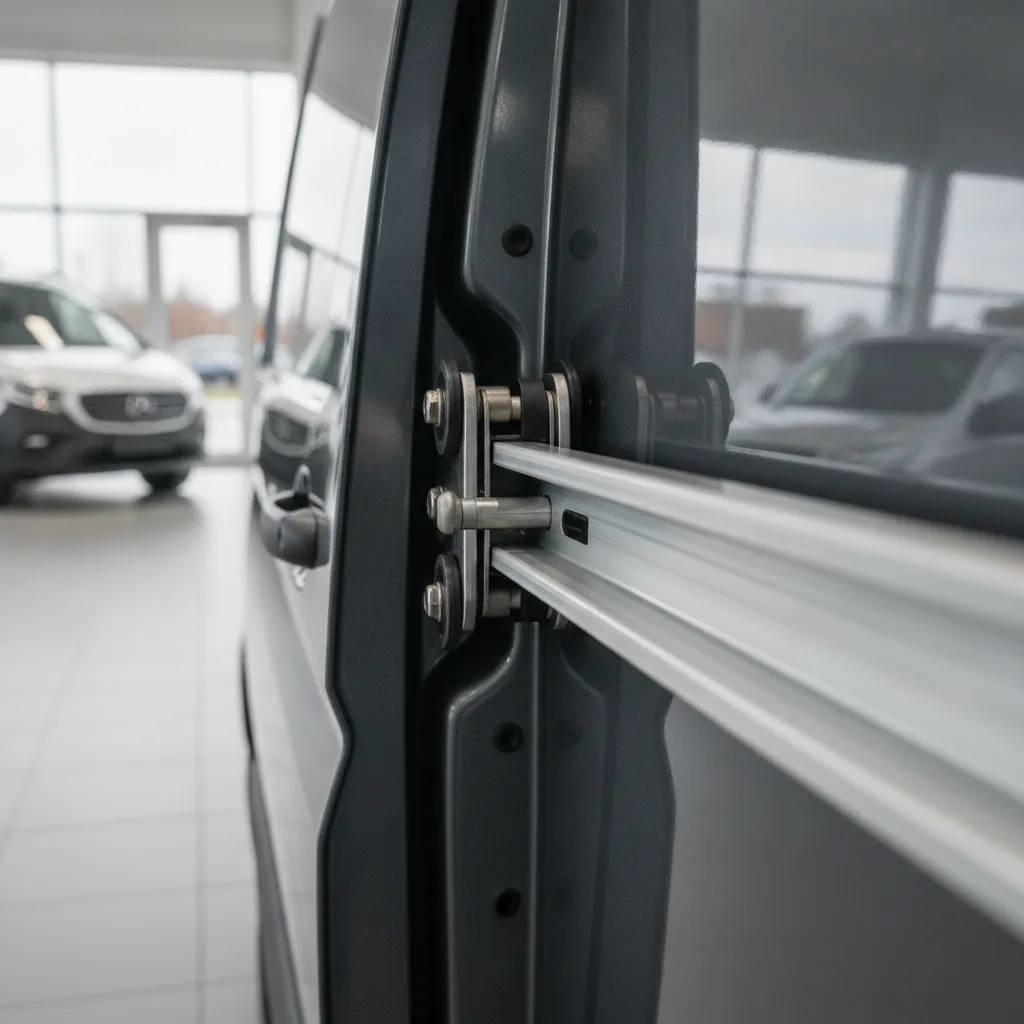
- Sliding Door Rollers: The Dispatch comes standard with twin side sliding doors. Slide both doors back and forth slowly. They should glide smoothly on their tracks without catching, dropping, or requiring force to latch. Worn nylon guide wheels or deformed lower tracks will cause water leaks into the cargo bay.
- Rear Trailing Arm Bushes and Springs: Overloading is common in commercial operations. Check the rear stance of the van on level ground. If the rear sits noticeably low or leans, inspect the rear coil springs for fractures and the trailing arm bushes for split rubber.
- Front Drop Links and Wishbones: Listen for dull thuds or clattering noises over speed bumps and rough roads. Worn front anti-roll bar drop links and lower wishbone bushes are frequent MOT failure items on modern Dispatch vans.
- Sill and Floorpan Damage: Look under the vehicle sills. Careless forklift operators loading pallets through the side doors often dent the sills or puncture the lower bodywork. Ensure the underbody protection remains intact and free from severe rust traps.
Cab Technology and Interior Wear
The cab should be functional, clean, and free of electrical anomalies. Switch on the ignition and test every accessory. The central touchscreen controls the radio, smartphone integration, and heating settings; check that the digitiser screen responds promptly to touch across its entire surface without lagging or resetting.
Test the air conditioning thoroughly. The Dispatch's air conditioning condenser is mounted behind the front grille, leaving it exposed to road debris, stones, and corrosion. If the system fails to blow icy air, the condenser may have sustained a puncture, which requires removing the front bumper assembly to rectify.
Documentation, Service History, and Vehicle Funding
Never rely solely on visual checks; verify the paperwork before agreeing to any purchase. Demand a fully stamped service record or digital printout confirming frequent oil changes. Modern BlueHDi engines demand low-SAPS synthetic oils meeting precise PSA manufacturer specifications to preserve the DPF and timing gear. Skimped oil services are fatal to these engines.
Check the MOT history online via the government portal to verify mileage continuity and review past advisories regarding suspension wear, brake line corrosion, or exhaust emissions. If you are a VAT-registered business or sole trader budgeting your next vehicle acquisition, exploring your commercial van finance options through independent credit providers or commercial brokers can help preserve your day-to-day operating cash flow instead of tying up valuable capital in a depreciating asset. Remember that marketplace platforms help you compare available vehicles, but all finance agreements and vehicle warranties must be confirmed directly with the actual selling dealer or qualified financial lender.
Frequently Asked Questions
What is the most common issue on a used Citroen Dispatch?
The most frequent complaints centre around the AdBlue emissions system, including faulty tank sensors and pump failures, followed closely by premature timing chain wear on early 1.5-litre BlueHDi models. Sliding door roller wear and front suspension drop link knocking are also regular maintenance concerns.
Is the Citroen Dispatch ULEZ compliant?
All third-generation Citroen Dispatch models built from late 2016 onward feature BlueHDi engines certified to Euro 6 emissions standards, making them compliant with the London ULEZ and clean air zones across the UK. Always confirm compliance by entering the vehicle registration number into the official Transport for London or government CAZ vehicle checker.
How often should the timing belt be changed on a Citroen Dispatch?
Manufacturer intervals typically specify timing belt replacement around 100,000 miles or between five to ten years, depending on the engine code and operating conditions. However, trade vehicles subjected to severe operating conditions, stop-start city driving, or short delivery cycles should have their timing assembly and ancillary belts replaced earlier. Consult a trusted mechanic and verify service receipts rather than relying on standard handbook maximums.
Can the Dispatch carry an 8x4 sheet flat on the floor?
Standard M and XL versions can accommodate standard 8ft x 4ft (2,440mm x 1,220mm) sheets flat on the floor between the wheel arches. On the Compact XS version, 8x4 sheets must be loaded diagonally or fed through the Moduwork bulkhead flap if fitted.