The Short Answer
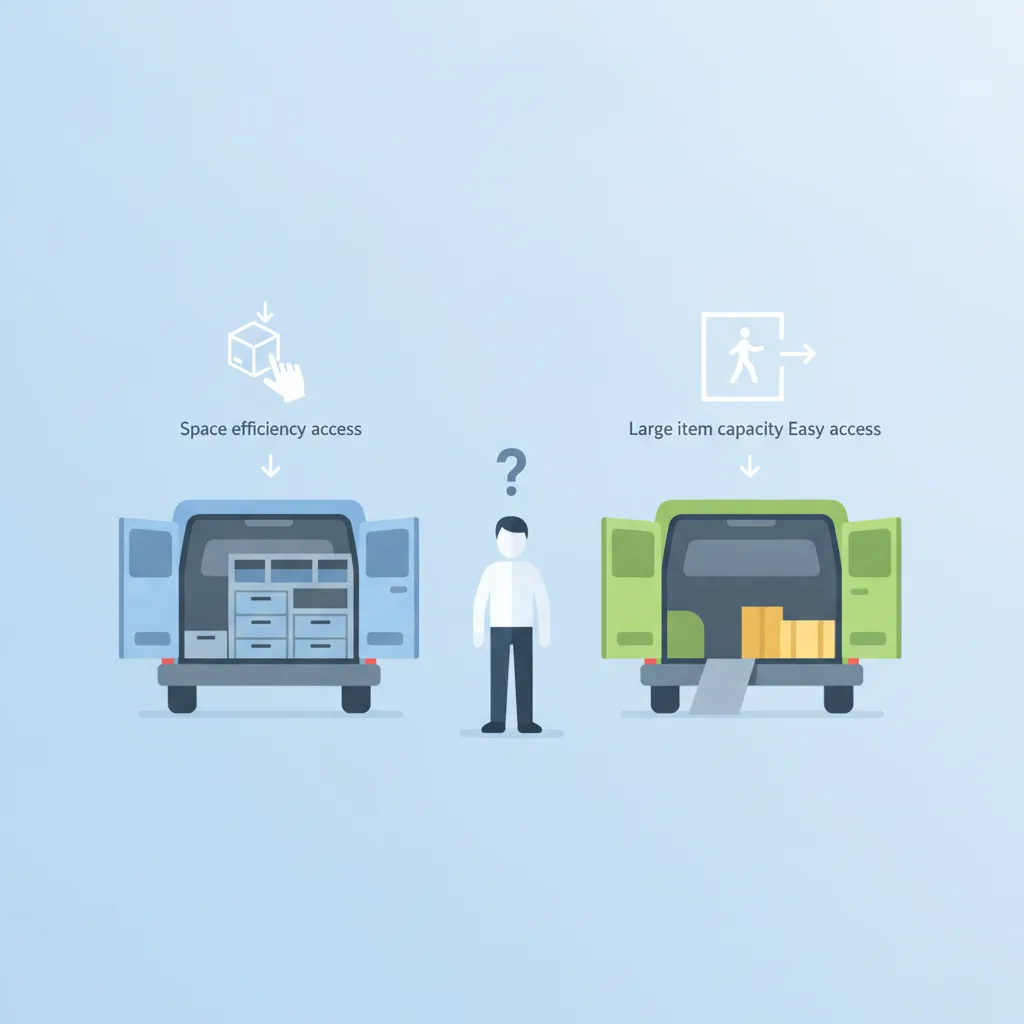
The primary van body types available across the UK light commercial vehicle market are panel vans, crew vans, chassis cabs, dropsides, tippers, Luton vans, and box vans. Each body style addresses specific operational tasks. Selecting the right body style directly determines your daily carrying capacity, working payload, load security, site access, and legal compliance on public highways. A plumber or domestic electrician working in city streets needs a vastly different layout than a groundwork contractor, scaffolder, or regional furniture delivery business.
Main Van Body Types Explained
Commercial vehicles are engineered around distinct chassis and load bed configurations. Understanding how each functions on British job sites ensures you invest in a practical workhorse rather than an operational bottleneck.
Panel Vans
The panel van remains the backbone of British trade fleets. Manufactured with an enclosed steel body integrated with the front cab, it provides weather protection and cargo security. Panel vans are categorised across four standard vehicle lengths (L1 through L4) and three roof heights (H1 through H3). Compact car-derived and small panel vans offer agile handling and multi-storey car park clearance. Medium panel vans represent the multi-trade sweet spot, typically accommodating two standard 1,200mm by 800mm Euro pallets or carrying eight-by-four foot (2,440mm by 1,220mm) plasterboard sheets flat on the floor between the wheel arches. Large panel vans provide stand-up interior height and cargo lengths extending past four metres, serving courier fleets, carpenters, and mobile workshops.
Crew Vans and Double Cabs
A crew van, also known as a double cab or combi, incorporates a second row of passenger seating directly behind the driver and front passenger, separated from the load area by a fixed bulkhead. It carries up to six crew members alongside their tools. While interior cargo length is reduced compared to a standard panel van on the same wheelbase, a crew van eliminates the logistical headaches and fuel costs of running two vehicles to the same contract. Businesses must verify that crew van conversions maintain an appropriate cargo-to-passenger payload balance to satisfy HM Revenue and Customs criteria for commercial vehicle taxation.
Chassis Cabs and Platform Cabs
A chassis cab consists of an enclosed driver cabin mounted to exposed steel ladder chassis rails behind. Platform cabs offer a similar lower-profile bare base. Rather than leaving the factory as a finished load hauler, the chassis cab serves as the structural foundation for bespoke coachwork, including dropsides, tipping beds, Luton bodies, recovery beds, and insulated refrigerated boxes. They are predominantly specified at the 3.5-tonne Gross Vehicle Weight ceiling to maximise usable conversion capacity.
Dropside Vans
Dropsides feature an open, flat load bed fitted with hinged timber or aluminium sideboards and a hinged tailboard that fold down below the deck line. This flatbed profile permits unhindered 360-degree forklift access, making dropsides the primary choice for scaffolders, timber merchants, bricklayers, and civil engineers moving palletised goods, structural piping, or raw building supplies. The flat deck sits above the rear wheels, eliminating internal wheel arch intrusions completely.
Tipper Vans
Built upon a heavy-duty chassis cab, a tipper features an open steel or reinforced composite body equipped with an underfloor hydraulic ram. Standard tippers discharge aggregate, topsoil, hardcore, or green waste backwards through a top- or bottom-hinged rear tailgate. Three-way tippers allow the body to tip to either side as well as the rear, facilitating safe unloading along narrow single-track lanes or congested urban kerbsides without jackknifing the vehicle. Tree surgeons and landscapers often fit high-sided mesh cages to retain loose clippings and branches.
Luton and Box Vans
Luton vans feature an enclosed, square-sided cargo box that extends forward over the cab roof, creating a distinct storage area known as the Luton peak. This design eliminates the curved walls and wheel arch intrusions of a panel van, delivering huge interior cubic volume. When paired with a hydraulic rear tail lift or lightweight pull-out ramp, Luton and square-sided box vans are the industry standard for domestic removal firms, antique dealers, and logistics operators handling bulky, uniform freight.
Curtainsiders and Temperature-Controlled Vans
Curtainsiders replace rigid body panels with tensioned, sliding weatherproof PVC curtains along the sides, allowing rapid pallet loading from the flanks without requiring an open bed. Temperature-controlled refrigerated vans (often called fridge vans) utilise direct-foamed insulation and engine-driven refrigeration units to carry perishable food, floral stock, or pharmaceuticals within strictly regulated temperature brackets.
Critical Measurements and UK Legal Weights
Selecting the correct body type requires balancing load volume against strict legal mass constraints. In the UK, a standard Category B car driving licence permits you to drive commercial vehicles up to a Gross Vehicle Weight (GVW)—also termed Maximum Authorised Mass (MAM)—of 3,500kg.
GVW represents the total allowable weight of the vehicle when fully loaded. Your actual working payload is calculated by subtracting the unladen kerb weight of the empty vehicle from its plated GVW. Complex conversions such as hydraulic tippers, insulated fridge vans, and tail-lift Lutons carry substantial unladen body weight, which substantially reduces the remaining payload capacity. The Driver and Vehicle Standards Agency (DVSA) enforces strict roadside checks with dynamic axle weighbridges. Driving an overloaded commercial vehicle carries immediate fixed penalties, vehicle immobilisation prohibitions, and potential court prosecution.
When assessing load dimensions, measure internal floor length, maximum internal standing height, and the critical width between the rear wheel arches. If your trade relies on carrying standard sheet materials flat, confirm that the wheel arches sit at least 1,220mm apart, or budget for a raised false floor system.
Access, Doors, and Daily Usability
Operational efficiency depends heavily on how you interact with the cargo space dozens of times per day:
- Rear Barn Doors: Twin rear doors that open to 180 or 270 degrees allow forklifts to push pallets flush into the bay. They also enable safe loading in tight roadside parking spaces where a top-hinged door cannot swing open.
- Rear Tailgates: Single-piece upward-lifting tailgates provide a sheltered canopy when working out of the back in wet weather, making them popular with field technicians and mobile mechanics, though they prevent forklift access.
- Side Loading Doors: Twin sliding side doors allow kerbside unloading irrespective of which side of a UK one-way street you park on. Ensure the side aperture is wide enough to take a standard pallet if you load via forklift.
- Tail Lifts: Column lifts or cantilever tail lifts rated at 500kg are common on Luton bodies to eliminate heavy manual lifting, though the mechanism deducts from your total legal carrying weight.
Operating Costs and Practical Considerations
Body styles impact running overheads well beyond routine servicing. Aerodynamic drag plays a massive role in fuel efficiency; a high-roof Luton van or an open dropside carrying scaffolding generates considerably more wind resistance at dual-carriageway speeds than an aerodynamic low-roof panel van. Height restrictions also demand attention: Lutons and H3 panel vans cannot access multi-storey car parks, drive-thrus, or municipal height-restriction barriers.
Ensure any van you consider meets Euro 6 emissions targets (Euro 6b or Euro 6d for diesels) to operate without daily access charges inside London's Ultra Low Emission Zone (ULEZ) and regional Clean Air Zones across Birmingham, Bath, Bristol, Sheffield, and Newcastle. When planning vehicle replacement cycles, many sole traders and fleet managers explore third-party van finance packages through brokers or lenders to spread capital outlays sustainably, while others browse verified used vans to secure robust chassis bodies and conversions without absorbing early vehicle depreciation.
Common Buying Mistakes to Avoid
Tradespeople frequently make the mistake of calculating payload based on the factory brochure figure without factoring in operational additions. The weight of heavy-duty ply lining, steel tool chests, roof racks, tow bars, auxiliary batteries, fuel, and the crew must all be deducted from the official payload rating. Another common misstep is purchasing a long-wheelbase high-roof van for domestic service calls in dense suburban streets, leading to damaged body panels, parking fines, and poor manoeuvrability. Match the body footprint strictly to your access requirements and daily load volumes.
Frequently Asked Questions
Which van body type fits an 8x4 sheet flat?
Most medium-sized panel vans (such as long-wheelbase variants of medium vans) and virtually all large panel vans can carry an eight-by-four foot sheet flat on the load floor. In smaller vans, sheet materials must typically be loaded on their edge using internal racking or transported on a dedicated external roof rack.
Can I drive a 3.5-tonne Luton or Tipper on a standard UK car licence?
Yes. If the vehicle has a plated Gross Vehicle Weight of 3,500kg or less, it falls within the standard UK Category B car driving licence entitlement. However, you must monitor your payload strictly, as heavy bodywork leaves less room for cargo before reaching the legal 3.5-tonne ceiling.
What is the difference between a chassis cab and a platform cab?
A chassis cab features higher, exposed steel ladder frame chassis rails running behind the cab, making it the standard choice for robust conversions like tippers, dropsides, and heavy box bodies. A platform cab has a significantly lower floor base, which simplifies ground-level entry for low-loader delivery vans and horseboxes.
How does the body type affect commercial insurance groups?
Specialist coachbuilt bodies, tippers, and dropsides generally sit in higher commercial insurance groups than mass-production panel vans. Insurers account for elevated repair costs on bespoke coachwork, hydraulic systems, and the increased operational risks associated with construction site work and heavy aggregate haulage.