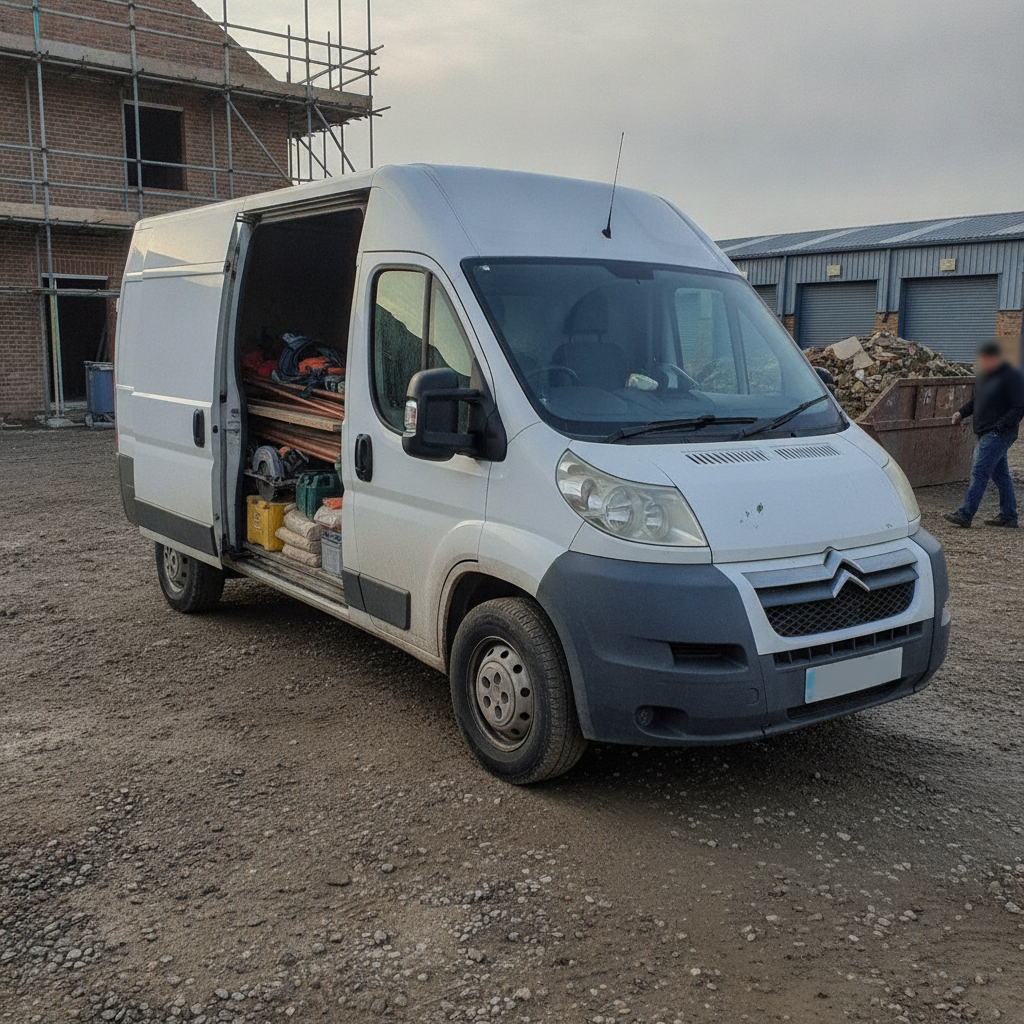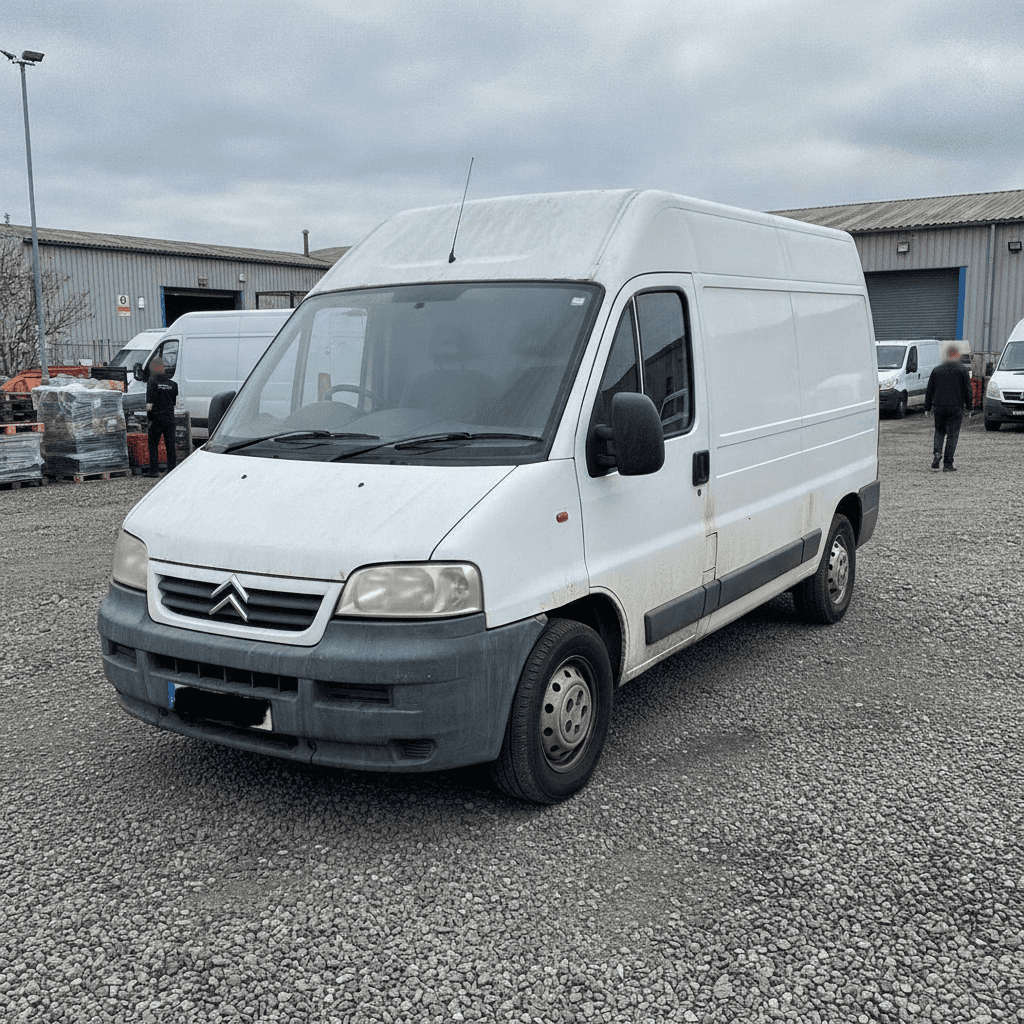
Buying a used Citroen Relay
Citroen Relay Overview: The Heavyweight Load Carrier
If you need maximum load volume and raw payload capacity without moving up into an operator-licensed heavy goods vehicle, a used Citroen Relay is one of the most cost-effective commercial vehicles on the UK market. Produced through the long-standing Sevel South joint venture between PSA (now Stellantis) and Fiat, the Relay shares its core architecture, body panels, and structural engineering with the Peugeot Boxer and Fiat Ducato. This shared ancestry ensures replacement parts are cheap, independent mechanics understand the mechanical platform intimately, and off-the-shelf racking and accessories are readily available nationwide.
The definitive engineering characteristic of the Citroen Relay is its front-wheel-drive layout. By driving the front wheels rather than the rear, Citroen completely eliminated the heavy, space-consuming propshaft, rear differential, and raised rear axle found in rear-wheel-drive competitors like the Mercedes-Benz Sprinter, Iveco Daily, and rear-drive variants of the Ford Transit. This structural choice delivers two massive practical advantages for tradespeople: an exceptionally low rear loading step and an outstanding payload capacity relative to its 3.5-tonne gross vehicle weight.
Furthermore, the Relay features remarkably vertical side walls. Where many modern large vans taper inward toward the roof to improve aerodynamics, the Relay maintains a wide, square cross-section from floor to ceiling. This boxy footprint makes it a favourite for general builders carrying sheet materials, delivery couriers stacking parcel cages, and converters building bespoke campervans.
Citroen Relay Dimensions, Capacities, and Engine Lineup
Understanding the sizing nomenclature and powertrain evolution is essential when browsing used vehicle listings. The Relay panel van is sold across four body lengths (L1, L2, L3, L4) and three roof heights (H1, H2, H3), alongside chassis cab, dropside, tipper, and Luton factory conversions.
Body Configurations and Internal Dimensions
- L1H1: The most compact Relay measures under five metres overall, offering an internal floor length of 2.67 metres, an internal height of 1.66 metres, and a total load volume of 8.0 cubic metres. It offers urban agility comparable to a medium van with the load width of a heavy commercial.
- L2H2: Measuring 5.41 metres externally, this model provides a 3.12-metre load bed and 1.93 metres of internal standing height, yielding 11.5 cubic metres of cargo capacity. It represents a sweet spot between external manoeuvrability and internal storage.
- L3H2: The most popular configuration on British roads spans just under six metres long, with a 3.70-metre internal cargo floor, 1.93 metres of headroom, and a 13.0 cubic metre capacity. This variant swallows standard lengths of pipe, timber, and carpet rolls with ease.
- L4H2 and L4H3: The extra-long variants stretch to 6.36 metres externally, providing a massive 4.07-metre load bed. In H3 specification (2.17 metres internal height), total cargo volume hits an enormous 17.0 cubic metres.
Crucially, every single Relay panel van offers an internal load width of 1.87 metres, with an expansive 1.42 metres between the rear wheel arches. This allows standard eight-by-four-foot sheets of plywood or plasterboard to lie completely flat on the floor, while standard Euro pallets can be loaded straight through the rear doors or the wide side loading door.
Payload Ratings
Gross Vehicle Weights (GVW) are denoted by the badge: Relay 30 (3.0 tonnes), Relay 33 (3.3 tonnes), Relay 35 (3.5 tonnes), and Relay 40 (4.0 tonnes or 4.25 tonnes on heavy chassis). For drivers holding a standard UK Category B car driving licence, the Relay 35 is the target model. Thanks to its lightweight monocoque body and absence of rear driveline gear, a 3.5-tonne Relay L1H1 can haul up to 1,570kg, and even a large L3H2 regularly exceeds 1,400kg. Rival rear-wheel-drive vans often run out of payload at around 1,100kg to 1,200kg in comparable sizes.
Engine Evolution Over the Years
- 2.2-litre HDi (2006–2016): Sourced from the Ford/PSA Puma engine alliance, these Euro 4 and Euro 5 units delivered outputs of 100hp, 120hp, 130hp, and 150hp through a six-speed manual gearbox. They use a timing chain and deliver strong low-end torque, though they are not compliant with modern clean air zones.
- 2.0-litre BlueHDi (2016–2019): Developed directly by PSA (DW10FU), these Euro 6 engines introduced Selective Catalytic Reduction (SCR) requiring AdBlue fluid. Offered in 110hp, 130hp, and 160hp tunes, they feature a timing belt rather than a chain and delivered marked improvements in fuel efficiency and cab refinement.
- 2.2-litre BlueHDi (2019–Present): PSA replaced the 2.0-litre with an updated 2.2-litre unit (DW12) compliant with strict Euro 6d emissions regulations. Available in 120hp, 140hp, and 165hp outputs, this engine restored the displacement tradespeople prefer for hauling heavy weights over undulating motorway networks.
Who Buys a Used Citroen Relay and Why?
The Relay is engineered strictly as an unpretentious tool of the trade. While it lacks the car-like cabin plastics of a Volkswagen Crafter or the badge cachet of a Mercedes-Benz Sprinter, it consistently beats them on carrying utility per pound spent. The core buyer demographics reflect this focused engineering:
- Carpenters, Joiners, and Dryliners: The capability to load eight-by-four-foot boards flat between the wheel arches without snagging side walls makes the Relay unmatched for internal second-fix trades.
- Bulk Couriers and Logistics Contractors: Multi-drop drivers step in and out of the rear cargo hold dozens of times a day. The front-wheel-drive platform provides a loading sill height of barely 530mm from the ground, significantly reducing knee and hip strain over long shifts.
- Removals and Furniture Logistics: The near-vertical side profiles eliminate dead space when stacking moving boxes, wardrobes, and appliances, ensuring maximum cubing-out capability inside an L3H2 or Luton body.
- Motorhome and Campervan Converters: The Relay is the UK's most converted base vehicle. Because the interior cabin width is 1.87 metres, an adult can sleep widthways across the vehicle. This transverse layout frees up immense living space forward of the sleeping area, a feat impossible in narrower vans without installing external fiberglass sleeping pods.
Used Citroen Relay Inspection Checklist: What to Look For
Used commercial vehicles live hard operational lives. When viewing a prospective purchase, carry out these systematic checks to separate dependable fleet-maintained workhorses from neglected trade vans facing imminent mechanical breakdown.
1. Engine Bay and Scuttle Drain Water Ingress
A notorious issue across all Sevel-built vans involves the plastic windscreen scuttle tray beneath the wipers. On older or poorly maintained examples, the drain tubes block with road grime and leaves. Trapped water overflows directly onto the top of the engine, pooling around the fuel injectors and glow plugs. Over time, this leads to heavy galvanic corrosion, seizing injectors firmly into the cylinder head. Inspect the engine cover and injector wells for dried watermarks, active rust, or pools of water. Removing seized injectors on these engines can lead to four-figure cylinder head repair bills.
2. Front Strut Top Mounts and Steering Knock
The front MacPherson struts carry substantial weight. Road dirt thrown up from the front tyres works its way into the upper strut bearings, causing them to dry out and seize. Start the engine, park on level ground, and have an assistant turn the steering wheel from lock to lock while you listen near the front wheel wells. A distinct twanging, groaning, or metallic pinging sound indicates a dry or seized strut top bearing forcing the coil spring to jump along its seat.
3. Clutch, Flywheel, and Reverse Gear Engagement
The manual six-speed transmission handles high torque outputs. During the test drive, shift into fourth or fifth gear at low engine speeds and apply full throttle to ensure the clutch does not slip. At idle, depress and release the clutch pedal listening for metallic rattling or pulsing vibrations through the sole of your foot, which points to a tired dual-mass flywheel. Furthermore, engage reverse gear from a standstill; worn synchromesh rings can cause reverse to crunch or pop out of gear under throttle.
4. Emissions Hardware and AdBlue System Warnings
On Euro 6 BlueHDi models built from late 2016 onward, the SCR exhaust system requires close scrutiny. The integrated AdBlue tank and pump module can experience internal sensor failure or fluid crystallisation around the injector nozzle. If the dashboard shows an engine management light, an emissions fault, or an impending non-start mileage countdown, approach with severe caution. Replacing the complete sealed AdBlue tank and dosing module is a common and expensive repair on second-hand models.
5. Rear Door Alignment and Body Integrity
Check the rear double doors for alignment and stress cracks around the check-strap mounting brackets. Relay rear doors can open to 180 degrees, or 270 degrees with optional folding hinges. Strong wind gusts catch these large doors, bending the hinges or tearing the spot welds on the door frame. Open and close the side sliding door multiple times; it should glide smoothly along its mid-body runner without dragging against the rear quarter panel or dropping down when fully extended.
Citroen Relay Model Years to Avoid or Approach with Caution
While the overall platform is fundamentally dependable, certain years and mechanical setups present higher risks on the used market:
- 2006 to 2011 (Euro 4 Puma 2.2 HDi): Early 2.2-litre models can suffer from oil pump failures leading to sudden bottom-end bearing seizure, along with faulty Denso fuel pressure control valves causing erratic idling and stalling. Only consider these vans if supported by complete, documented service records showing regular oil changes.
- 2016 to early 2018 (Early 2.0 BlueHDi Euro 6): The earliest 2.0-litre Euro 6 vans experienced teething issues with AdBlue tank heaters, failing NOx sensors, and premature timing belt degradation if neglected. If buying an early 2.0 BlueHDi, verify that the timing belt has been renewed well inside the recommended schedule, along with proof of software updates to the engine control unit.
- Heavy Towing Vehicles: Because the Relay is front-wheel drive, towing heavily laden trailers up steep, slick inclines puts severe strain on the front tyres, driveshafts, and clutch plate. If a used van has an aftermarket tow bar fitted, examine the rear leaf springs for flattening and inspect the driveshaft boots for split rubber and grease spray.
Used Citroen Relay Price Bands in the UK
Used Relay values reflect the vehicle's age, mileage, Euro emission standard, and whether the van has been worked by a sole trader or run as part of a high-mileage national delivery fleet.
Under £5,000: High-Mileage Clearance and Project Vans
In this baseline price band, you will find high-mileage Euro 4 and Euro 5 models, generally registered between 2008 and 2015. Expect odometers displaying well north of 140,000 miles, with noticeable cosmetic dents, worn cab seats, and tired suspension bushings. These vans are unsuitable for London, Birmingham, or other Clean Air Zones due to Euro 5 status, but they remain viable runabouts for rural builders or entry-level DIY camper conversions requiring cheap interior volume.
£5,000 to £10,000: Solid Mid-Life Fleet Workhorses
This bracket spans late-plate Euro 5 vans from 2015 and 2016, alongside the earliest 2.0 BlueHDi Euro 6 models from 2016 to 2018 with mileage between 80,000 and 130,000 miles. Vans in this category frequently come from medium-sized trade fleets with full service histories. They represent honest, functional tools for builders operating inside urban clean air sectors, provided you budget for preventative maintenance on suspension consumables and the emissions hardware.
£10,000 to £16,000: Clean, Fully Compliant Vans Ready for Daily Work
This range secures clean 2.0 BlueHDi and 2.2 BlueHDi models registered between 2018 and 2021 with mileage figures sitting comfortably between 40,000 and 80,000 miles. You can expect higher-tier Enterprise trim levels featuring air conditioning, rear parking sensors, cruise control, and a factory touchscreen with smartphone mirror link. The cargo bays in this bracket generally show light wear, often with factory ply-lining kits protecting the side panels.
£16,000 to £25,000+: Late-Plate, Low-Mileage and Pre-Converted Stock
The top tier covers late-registration 2.2 BlueHDi models from 2022 onward, including delivery-mileage pre-registered vans, ex-demonstrators, and ready-to-work factory conversions like tippers, dropsides, and high-volume Lutons. Vehicles in this price bracket will still carry remainder factory warranties, deliver maximum operational reliability, and feature the latest driver assistance and telematics hardware.
Citroen Relay Real-World Running Costs
Controlling ongoing expenditure is critical for maintaining commercial margins. The Relay performs admirably across the major running cost categories:
Fuel Economy
The front-wheel-drive design pays dividends at the fuel pump. The older 2.2 HDi models return around 30mpg to 34mpg under normal trade use. The modern 2.0 BlueHDi and 2.2 BlueHDi units perform even better: in mixed driving conditions, an unladen L2H2 easily approaches 38mpg on motorway runs. When driven fully laden or on stop-start urban courier delivery routes, expect real-world consumption to settle in the 29mpg to 33mpg corridor. Consumption of AdBlue on Euro 6 engines typically averages one litre per 500 to 700 miles, depending on payload weight and driving aggression.
Insurance Group Ratings
Citroen Relay insurance ratings range from Group 34 up to Group 43 depending on the engine output, body length, and gross vehicle weight. The common 35 L3H2 140hp sits around Group 37. To keep your annual fleet or commercial vehicle premiums manageable, look for Enterprise specification vans fitted from the factory with an approved alarm system, deadlocks, and rear parking distance sensors.
Servicing Schedules and Maintenance Costs
Citroen officially specifies optimistic service intervals of up to two years or 30,000 miles on modern BlueHDi engines. For a working vehicle carrying heavy payloads or idling frequently on site, following these extended intervals is false economy. Engine oil degrades, soot levels build up, and timing belts suffer accelerated wear. The consensus among independent commercial technicians is to change engine oil and all filters every 12 months or 10,000 to 12,000 miles.
Unlike rear-wheel-drive vans that require differential fluid changes and propshaft bearing maintenance, the Relay requires only straightforward front transaxle fluid servicing. Parts pricing is among the lowest in the large van segment, thanks to full component interchangeability with the Peugeot Boxer and extensive aftermarket supply chains across the UK.
Financing a Used Citroen Relay for Your Business
Managing capital reserves is essential for growing firms. When acquiring a used Citroen Relay, purchasing outright with cash draws down cash flow that might be better deployed for equipment purchases, hiring staff, or carrying project materials. Most UK businesses acquire their vans through commercial lending arrangements.
Hire Purchase (HP) spreads the total cost across fixed monthly terms, typically spanning two to five years. Once all monthly instalments and any option-to-purchase fees are completed, your business owns the van outright. HP lets you claim capital allowances on the purchase, and VAT-registered companies can generally reclaim the full VAT element on the purchase price upfront.
If you prefer low capital outlays, fixed operational budgeting, and regular updates to your commercial fleet every few years, explore professional van lease deals that allow you to hand the vehicle back without taking on depreciation risks. Alternatively, tailored commercial van finance facilities, such as Finance Lease agreements, provide flexible balloon payments at the end of the term, keeping your monthly commitments substantially lower than standard hire purchase.
Final Verdict: Is a Used Citroen Relay Right for You?
The Citroen Relay avoids unnecessary gimmicks to focus squarely on the attributes that matter most to working trades: industry-leading payload capacity, a massive internal width that swallows eight-by-four-foot materials flat, a low loading sill that protects your back, and affordable off-the-shelf parts supply. If you demand a luxury cabin or require a rear-wheel-drive platform for extreme heavy-trailer towing on muddy terrain, you will need to look elsewhere. But if your daily business relies on maximum cargo volume, immense weight-hauling capability, and low running costs, a thoroughly inspected, well-maintained used Citroen Relay remains one of the smartest investments on the UK commercial vehicle market.