Which versions, generations, and engines to consider
The Peugeot Boxer shares its platform with the Citroën Relay and Fiat Ducato, produced at the Sevel plant. For commercial buyers, modern emissions compliance makes engine choice the primary factor when narrowing down choices. If you need to access Clean Air Zones (CAZ) in cities such as Birmingham, Bristol, or London's Ultra Low Emission Zone (ULEZ), you should prioritise Euro 6 models introduced from late 2016 onwards.
Understanding which engine sits under the bonnet is critical when inspecting a vehicle:
- 2.2 HDi (pre-2016, Euro 5 and earlier): Uses the older Ford-PSA Puma unit. While capable of high mileages, it is prone to timing chain stretch, injector seizing, and oil pump failures if servicing was delayed. These models are now subject to daily charges in UK clean air zones.
- 2.0 BlueHDi (2016–2019, Euro 6): A downsized PSA unit featuring Selective Catalytic Reduction (SCR) requiring AdBlue. This engine offers significantly better fuel economy and cleaner emissions, but requires strict adherence to timing belt intervals and high-grade low-SAPS engine oil.
- 2.2 BlueHDi (2019 onwards, Euro 6d): Replaced the 2.0-litre unit with updated power outputs typically rated at 120 bhp, 140 bhp, and 165 bhp. This engine resolved several early sensor teething issues seen on the 2.0-litre models and provides stronger low-end torque for heavy hauling.
When searching for reliable work vehicles, comparing inspected stock across used vans helps you evaluate whether an older Euro 5 workhorse or a cleaner Euro 6 model best suits your operational territory.
Body lengths, roof heights, and payload limits
The Boxer is widely favoured by couriers, builders, and conversion companies due to its square cargo bay and class-leading load width. The space between the rear wheel arches measures 1,422 mm, which easily accommodates standard UK building supplies and allows an 8x4 sheet to lie flat on the floor.
Peugeot identifies body sizes using standard L and H codes:
- L1 (Short Wheelbase): Overall length of 4,963 mm. Ideal for urban trades needing standard parking bay compatibility.
- L2 (Medium Wheelbase): Overall length of 5,413 mm. A balance between cargo volume and street manoeuvrability.
- L3 (Long Wheelbase): Overall length of 5,998 mm. The most common choice for multi-drop delivery and general construction trades.
- L4 (Extra-Long Wheelbase): Overall length of 6,363 mm with an extended rear overhang. Best suited for high-volume, lower-density cargo.
- H1, H2, and H3: Roof heights offering internal standing heights ranging from 1,662 mm (H1) up to 2,172 mm (H3).
Gross Vehicle Weight (GVW) ratings are designated as 330, 333, 335, and 435 (representing 3.0 tonnes up to 4.0 tonnes). The front-wheel-drive configuration eliminates a heavy rear propshaft, giving a 3.5-tonne (335) Boxer one of the highest payload capacities in its class, frequently exceeding 1,400 kg depending on trim. Always check the weight plate stamped inside the passenger door shut to confirm exact plated capacities before purchasing.
Mechanical checks: engine, transmission, and running gear
The Boxer's mechanical layout has specific quirks that every prospective buyer should examine thoroughly before making an offer.
The windscreen scuttle drain issue
One of the most persistent design faults across this platform involves the two-piece plastic scuttle tray beneath the windscreen. The central join and side drainage holes frequently clog with road grime and leaves. When blocked, rainwater channels directly over the engine block, pooling around the fuel injectors and alternator. Over time, this leads to seized injectors, rusted glow plugs, and premature alternator failure. Open the bonnet, inspect the top of the cylinder head with a torch, and look for signs of standing water, corrosion, or white chalky oxidation around the fuel rail.
Gearbox and clutch wear
All modern Boxers use a six-speed manual gearbox. During your test drive, pay close attention to shifting into second gear and reverse. Worn synchroniser rings cause notchiness or crunching on rapid downshifts. Listen for rattling from the dual-mass flywheel at idle, which should change pitch or disappear when you depress the clutch pedal. A high bite point or heavy pedal resistance indicates the clutch assembly is near the end of its working life.
Emissions hardware and sensors
On Euro 6 BlueHDi models, ask the seller about the history of the AdBlue system. The tank units, integrated heaters, and level sensors are known failure points. Turn the ignition on and ensure no "AdBlue system fault" or "No restart in XXX miles" warning messages appear on the central instrument cluster. Connect a basic OBD2 diagnostic scanner if possible to look for pending fault codes relating to exhaust gas recirculation (EGR) valves or differential pressure sensors on the diesel particulate filter (DPF).
Suspension and steering gear
Due to the Boxer's high payload potential, suspension components take heavy punishment on UK roads:
- Top strut mounts: Turn the steering wheel from lock to lock while stationary with the engine running. Any groaning, twanging, or binding sensations point to seized front suspension top mounts.
- Rear leaf springs: Inspect the rear axle setup. Single-leaf or twin-leaf setups should show a clear upward arch. If the spring is sitting completely flat or inverted towards the chassis stops, the vehicle has been systematically overloaded. Check closely for cracked or fractured leaves near the mounting eyelets.
Exterior, chassis, and bodywork inspection
Commercial panel vans take heavy cosmetic abuse, but you must differentiate between harmless site scrapes and structural or functional issues:
- Sliding side door operation: The sliding side door uses top, middle, and bottom runner bearings. The door should glide smoothly without catching or dropping out of alignment. If the door scrapes the lower sill or requires slamming to latch, the bottom roller carriage or central guide track is worn.
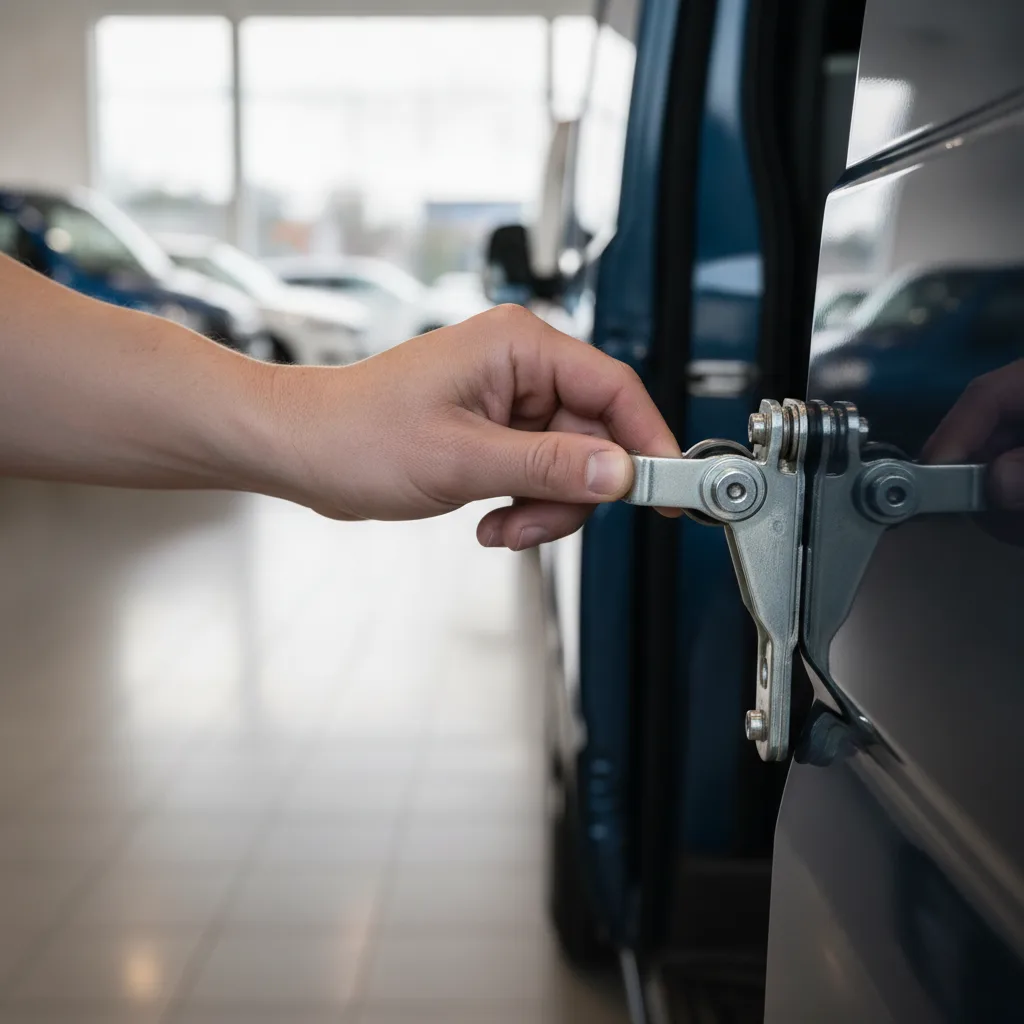
- Rear door hinges and check straps: Swing the rear doors open to 90 degrees and unclip them to 180 (or 270) degrees if fitted. Check the metal skin around the hinge bolt mountings on the D-pillars. Heavy winds can catch these doors and tear the thin sheet metal around the hinge anchors.
- Underbody sill integrity: Inspect the structural sills directly behind the front wheels and ahead of the rear arches. Forklift tines on industrial sites and improperly positioned trolley jacks regularly crush these sills, leading to MOT structural failures.
Cab interior, paperwork, and history checks
A well-kept cab is usually a strong indicator of how the mechanicals were treated by the previous driver. Check that every window switch, mirror adjuster, heater blower speed, and central locking solenoid functions properly. The wiring loom running through the rubber bellows between the A-pillar and driver door can fracture internally, causing intermittent electrical faults.
Review the V5C logbook to confirm the vehicle identification number (VIN) matches the chassis stamping at the base of the windscreen and on the inner wheel arch. Check the MOT history online via the DVLA database to cross-reference previous mileage readings and examine historical failure notices for rust, suspension play, or emissions test failures. Ensure the service book contains evidence of regular oil changes; the BlueHDi engines are sensitive to oil degradation, and skipping intervals leads directly to turbocharger bearing starvation.
For sole traders and fleet managers looking to finance their purchase, reviewing commercial van finance options can assist in budgeting repayments alongside maintenance allocations.
Frequently asked questions
What is the most reliable Peugeot Boxer engine to buy used?
The 2.2 BlueHDi engine manufactured from late 2019 onwards is widely regarded as the most durable Euro 6 option in the Boxer line-up. It eliminated the wet-belt and injector teething issues found on some earlier 2.0-litre units and features a robust timing chain configuration with proven durability under high commercial mileage.
How do I check if a Peugeot Boxer has been overloaded?
Inspect the rear suspension bump stops and leaf springs. If the rubber bump stops show heavy contact marks or are split, the van has frequently bottomed out. Additionally, check for bowing on the internal load floor ribs and examine the rear tyre sidewalls for uneven shoulder wear, which occurs when the rear axle is consistently driven beyond its gross weight rating.
Does the Peugeot Boxer have a timing belt or a timing chain?
It depends strictly on the engine model. Older 2.2 HDi units (pre-2016) use a timing chain. The 2.0 BlueHDi engines (2016–2019) utilise a timing belt that requires replacement according to manufacturer intervals or mileage limits. The later 2.2 BlueHDi (from 2019 onwards) returned to a timing chain setup. Always verify the specific engine code in the service handbook to confirm the required maintenance schedule.
Are replacement body parts interchangeable with the Fiat Ducato and Citroën Relay?
Yes. Doors, wings, glass, load bay panels, and suspension components are almost entirely interchangeable between the Peugeot Boxer, Citroën Relay, and Fiat Ducato across matching generations. However, note that newer Fiat Ducatos frequently use Fiat's proprietary Multijet engines rather than PSA engines, so engine, gearbox, and sensor components may differ between the brands.