Used Volkswagen Transporter: What to Check Before You Buy
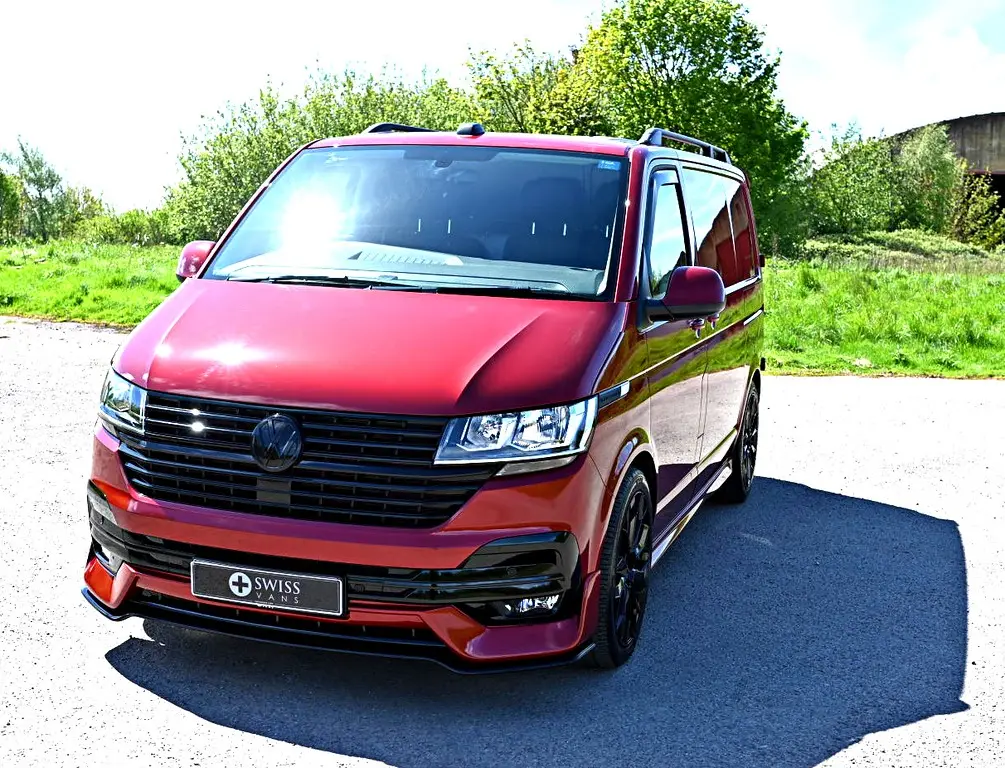
The Volkswagen Transporter is an industry benchmark for UK sole traders, delivery fleets, and building contractors. Its strong residual values, cab refinement, and broad model ecosystem make it an attractive working asset. However, that popularity cuts both ways. The used market contains an enormous variety of working vehicles, ranging from impeccably maintained fleet vans to heavily overloaded site workhorses and poorly executed camper conversions.
Before committing to a purchase, small business owners must look past cosmetic polish and alloy wheels. Transporters carry specific mechanical vulnerabilities across their different generations that can lead to expensive downtime if overlooked. Sifting through commercial vehicle platforms for used vans requires a structured inspection process to ensure your investment stays on the road earning money rather than sitting in a workshop.
Generations Compared: T5, T5.1, T6, and T6.1
Selecting the right Transporter generation is fundamentally about balancing your operational budget against emissions compliance and mechanical layout:
- Transporter T5 (2003–2009): Powered by 1.9-litre TDI four-cylinder or 2.5-litre TDI five-cylinder pump-duse engines. The 1.9-litre is reliable but underpowered when fully loaded; the 2.5-litre offers strong torque but suffers from expensive camshaft wear and water pump seal failures. These are Euro 3 or Euro 4 vans and will incur daily charges in UK Clean Air Zones (CAZ) and the London Low Emission Zone (ULEZ).
- Transporter T5.1 (2010–2015): Introduced the common-rail 2.0-litre TDI unit and refreshed front styling. Engines range from 84PS single-turbo variants up to the 180PS BiTDI. The majority meet Euro 5 standards, meaning they remain subject to urban emissions penalties in major UK cities.
- Transporter T6 (2015–2019): Brought Euro 6 compliance to the range using AdBlue selective catalytic reduction (SCR) technology, making them fully compliant with London ULEZ and provincial Clean Air Zones. The cab received improved sound insulation and updated driver-assistance features.
- Transporter T6.1 (2019–2024): Swapped hydraulic power steering for an electromechanical setup, allowing lane-keep assist and crosswind mitigation. It also introduced updated digital dashboards and infotainment setups, alongside subtly revised Euro 6d-TEMP diesel engines.
Engine and Mechanical Checks: 2.0 TDI and BiTDI Pitfalls
The common-rail 2.0-litre TDI is the workhorse of modern Transporters, but prospective buyers must assess its maintenance history with forensic detail.
The BiTDI Oil Consumption Issue (CFCA Engine Code)
If you are looking at a 180PS twin-turbo model from the T5.1 era (and early 204PS T6 variants), proceed with caution. The exhaust gas recirculation (EGR) cooler on early models degraded internally, allowing abrasive aluminium oxide particles into the combustion chambers. This scores the cylinder liners, leading to catastrophic oil burning. If an owner tops up the oil every few hundred miles, the engine is likely failing. The only lasting remedy is a replacement factory engine block paired with the revised revision-D EGR cooler. Always review workshop paperwork for documented oil consumption tests or proof of a genuine VW replacement engine.
Cambelt and Water Pump Replacement
Most single-turbo 2.0-litre engines use a conventional toothed rubber cambelt. Volkswagen UK historically recommended changing this belt every four to five years or between 80,000 and 120,000 miles, though factory service intervals have seen revisions. If the seller cannot produce an itemised invoice showing a recent timing belt, tensioner, and water pump replacement, factor this into your immediate maintenance schedule.
Emissions Systems: DPF and EGR
Transporters used for local multi-drop delivery often run into diesel particulate filter (DPF) blockages. During your test drive, look for warning lights on the dashboard. Use an OBD-II diagnostic scanner to check DPF soot loading levels and ensure passive regeneration is completing correctly. Ensure the AdBlue filler neck and pump assembly are free from white crusting on Euro 6 vans, as replacement AdBlue heaters and sensor units are known failure points.
Gearboxes: Manual Dual-Mass Flywheels and DSG Care
On manual Transporters, listen for metallic chattering or vibration through the clutch pedal at idle, which indicates a failing dual-mass flywheel (DMF). For direct-shift dual-clutch (DSG) models, shifts between first, second, and reverse must be seamless. Any hesitation, jerking, or clunking points to mechatronic unit degradation or neglected gearbox oil changes. The wet-clutch DSG requires a fluid and filter change at strict 40,000-mile intervals; insist on seeing stamped proof in the service book.
Chassis, Suspension, and Payload (T28 vs T30 vs T32)
Transporters carry chassis weight designations that directly impact legal operation, payload allowances, and annual MOT testing:
- T28: Gross Vehicle Weight (GVW) of 2,800kg. Suitable for light trade work, couriers, and painters carrying low-density stock.
- T30: GVW of 3,000kg. The standard multi-purpose choice for joiners, plumbers, and general trade tasks.
- T32: GVW of 3,200kg. Offers the highest payload capacity, making it popular for plant-towing contractors and groundwork teams. Note: Because its gross design weight exceeds 3,000kg, a T32 panel van requires a Class 7 MOT test rather than the standard Class 4 test required for passenger cars and lighter commercial vans.
When inspecting the underside, examine the rear coil springs. Heavy site loads and broken ground cause the tapered bottom coils of Transporter springs to fracture. Inspect the front suspension top mounts and anti-roll bar drop links by driving over speed bumps; knocks or creaks mean rubber bushings are worn and require replacement.
Bodywork, Load Area, and Commercial Wear
A Transporter's exterior tells the story of its working life. Scrutinise these commercial high-wear points:
- Sliding Door Tracks: The lower roller wheel of the side-loading door carries the door's full weight. Dirt and grit grind away the bearings, causing the door to drop and score the paint along the exterior body recess. Test the door from fully open to closed; it should glide without lifting.
- Tailgate vs Rear Barn Doors: Twin rear wing doors ('barn doors') are preferable for forklift pallet loading and tight urban parking bays. Tailgates provide weather protection for working outdoors, but require substantial clearance behind the van to open. Check tailgate gas struts for sagging.
- Sill and Step Corrosion: Remove plastic step inserts in the cab and side doors if possible to inspect for hidden rust or standing water caused by degraded door seals. Check around the rear number-plate light recess, which is a known corrosion pocket on older T5 and T6 models.
- Cargo Floor Damage: Lift plywood flooring to check the metal floor skin. Severe dents, punctures from dropped tools, or bare metal exposure invite rust and indicate the vehicle has been operated near or beyond its gross weight limits.
Paperwork, MOT History, and Commercial Purchasing
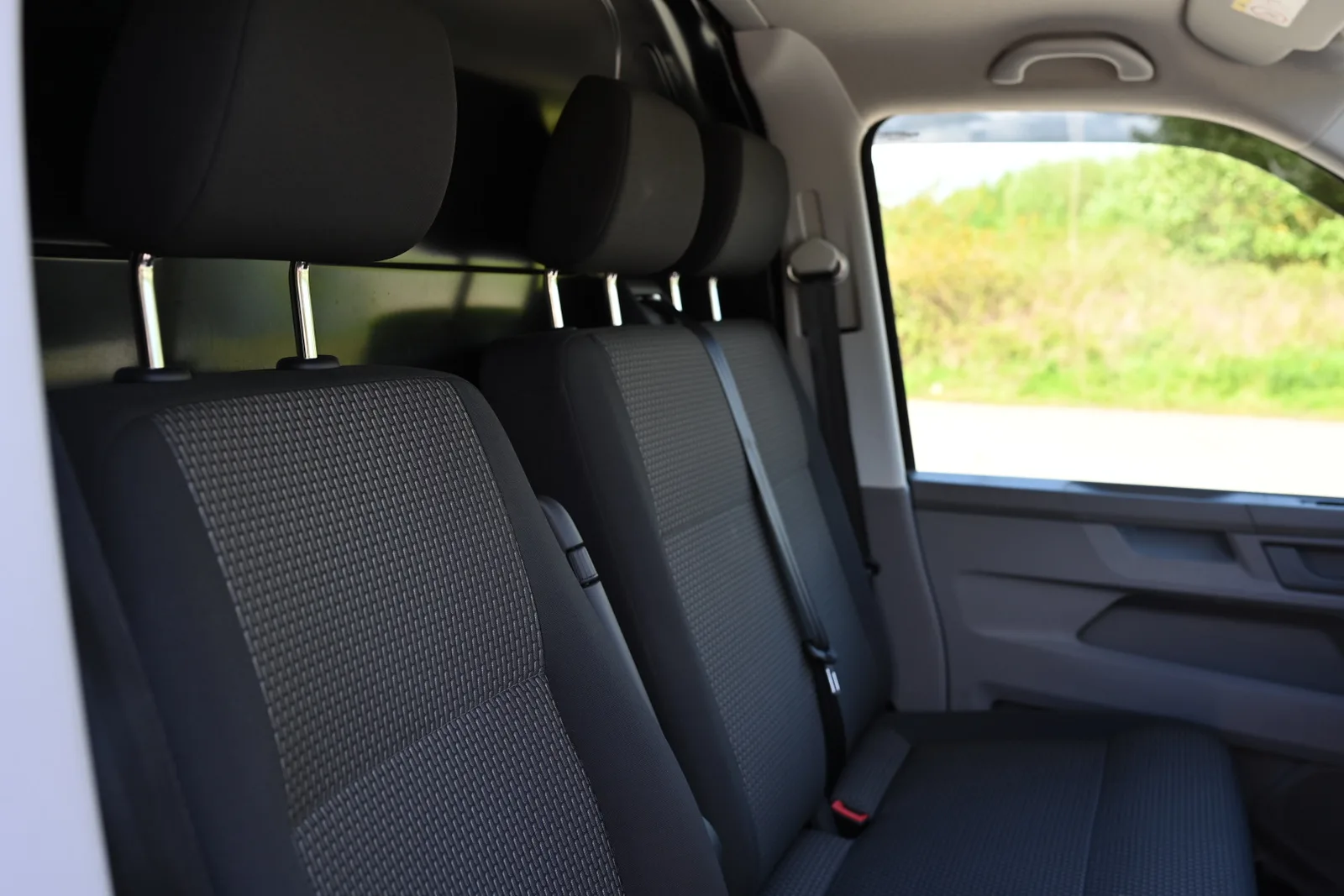
Always inspect the V5C logbook to verify the body type classification. Vans converted from panel vans to Kombis (crew vans with an extra row of seats) must have seat belts and anchorages that meet safety regulations. Check that the vehicle identification number (VIN) on the chassis plate matches the V5C and the engine bay stamping.
Use the DVSA online database to review the full MOT history. Cross-reference recorded mileages from year to year to spot odometer tampering, which is prevalent on high-spec Transporters. Consistent advisories for ball joints, brake pipes, and worn tyres indicate an owner who deferred preventive maintenance. For business operators planning their capital outlay, assessing commercial van finance options can help spread costs while leaving operational cash intact, provided you calculate your ownership horizon accurately.
Frequently Asked Questions
What should you check on a used Volkswagen Transporter?
Check for documented cambelt and water pump changes, inspect the service records for DSG gearbox fluid flushes every 40,000 miles, confirm smooth sliding-door runner action, check the rear suspension coil springs for fractures, and test the DPF and AdBlue systems using an onboard diagnostic scanner.
Is high mileage a problem for a used Transporter?
A high-mileage Transporter that has spent its life on UK motorways with documented service stamps from a specialist or main dealer is often a safer purchase than a low-mileage van used strictly for short, stop-start urban delivery runs, which rapidly clogs DPF systems and wears out clutches.
Should I prioritise a T6 over a T5.1 model?
Yes, especially if you work in or near London or other UK cities with Clean Air Zones. Most T6 models use Euro 6 diesel engines that avoid daily emissions surcharges, whereas Euro 5 T5.1 models are subject to non-compliance penalties in designated clean air zones.
How can I identify a failing dual-mass flywheel on a Transporter?
Start the van from cold and let it idle in neutral. A rhythmic metallic knocking or clattering noise that disappears when you depress the clutch pedal usually indicates a worn dual-mass flywheel. You may also feel excessive vibration through the clutch pedal under light foot pressure.
What is the difference between an MOT Class 4 and Class 7 Transporter?
Transporters designated as T28 and T30 have a Gross Vehicle Weight up to 3,000kg and undergo a standard Class 4 MOT. The heavy-duty T32 variant has a GVW of 3,200kg, which places it into the Class 7 commercial vehicle testing bracket, requiring a testing centre equipped for heavier commercial vehicles.