Which Generations and Engines to Consider
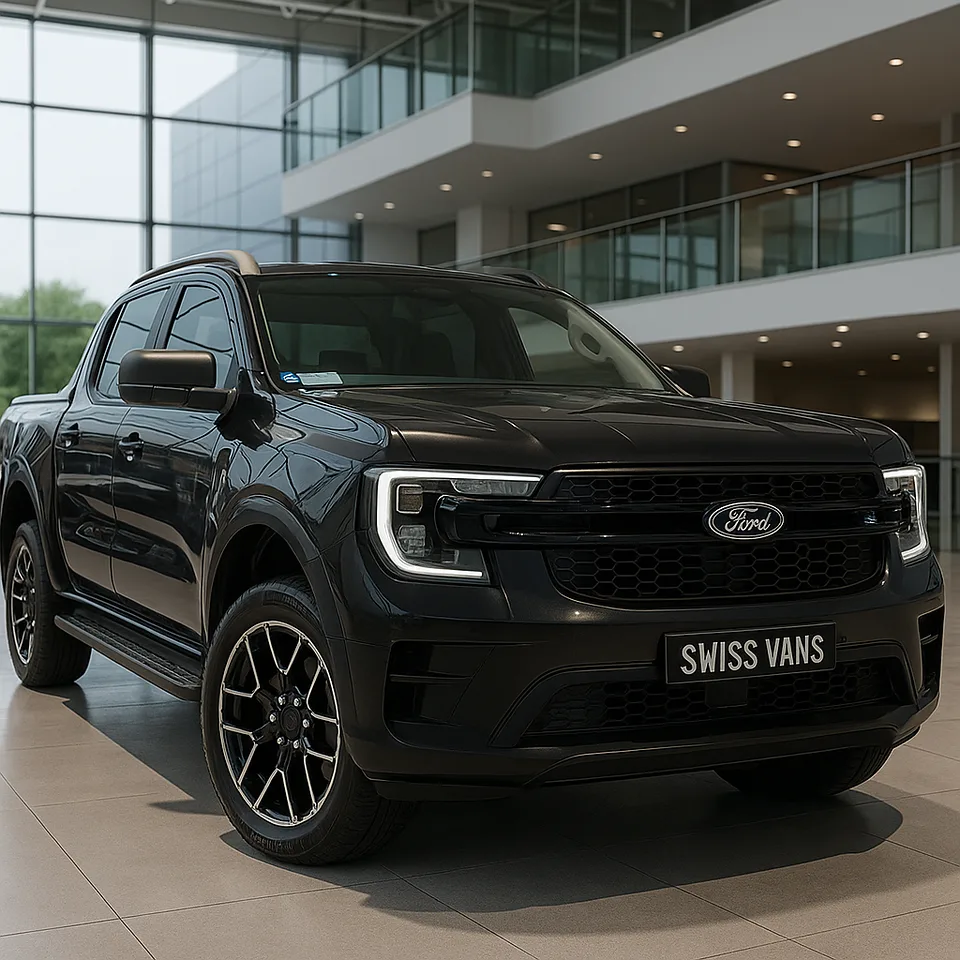
The post-2011 Ford Ranger (codenamed the T6 platform) transformed this pickup from a utilitarian agricultural truck into one of the most capable commercial vehicles on UK roads. For business buyers balancing weekday hauling with family transport, focusing on models produced from 2015 onwards provides the strongest mix of modern cabin refinement, safety tech, and work-ready mechanicals. A major facelift arrived in late 2015 for the 2016 model year, bringing electric power steering and the updated front-end styling, followed by another powertrain revision in 2019 that introduced modern EcoBlue engines.
When scouring the UK market for used vans and pickups, matching the engine to your typical duty cycle is essential:
- 2.2 TDCi Duratorq: Offered in outputs up to 160PS, this four-cylinder diesel is a proven commercial unit. It lacks the outright torque of the larger engines but is simpler to maintain and economical for multi-drop trades.
- 3.2 TDCi Duratorq: A five-cylinder, 200PS powerhouse producing 470Nm of torque. It is an exceptional towing unit designed for dragging plant trailers, diggers, and heavy livestock boxes, though it uses noticeably more fuel around town.
- 2.0 EcoBlue (from 2019): Replaced both Duratorq units. Available as a 170PS single turbo or a 213PS bi-turbo. These engines are quiet, punchy, and mated to either a six-speed manual or a 10-speed automatic. All 2.0 EcoBlue Rangers meet Euro 6 emissions standards, making them compliant with the London ULEZ and clean air zones across Birmingham, Bristol, and other UK cities. Late Euro 6 2.2 and 3.2 TDCi models (from approximately September 2016 onwards) also use AdBlue to achieve Euro 6 compliance, but always confirm the vehicle's V5C or clean air zone portal checker before purchasing.
Body Styles, Payloads, and UK Tax Rules
The Ranger is sold in three primary cab configurations: Single Cab, Super Cab, and Double Cab. While Single and Super Cabs provide longer load beds for carrying scaffolding boards, timber, and sheet materials, the Double Cab accounts for the vast majority of UK sales due to its five-seat versatility. However, UK business owners and sole traders must exercise caution regarding payload specifications.
HM Revenue and Customs enforces a strict 1,000kg (one-tonne) payload threshold for a double-cab pickup to qualify as a commercial vehicle rather than a passenger car for VAT reclamation and Benefit-in-Kind (BIK) taxation. A standard Ranger Double Cab typically sits safely above this threshold from the factory. However, any permanently fitted dealer or aftermarket accessories—such as heavy hardtops, chequer plate lining, or roller shutters—reduce the legal payload by their precise weight. If fitted accessories bring the payload below one tonne, HMRC may deem the vehicle a passenger car, stripping away commercial tax advantages. Furthermore, high-performance variants such as the Ranger Raptor carry a payload rating well below 1,000kg due to their specialist off-road coil-spring suspension, permanently excluding them from commercial vehicle classification. Always inspect the weight plate inside the driver-side door aperture to verify gross vehicle weight (GVW) minus kerb weight.
Chassis, Suspension, and Underbody Checks
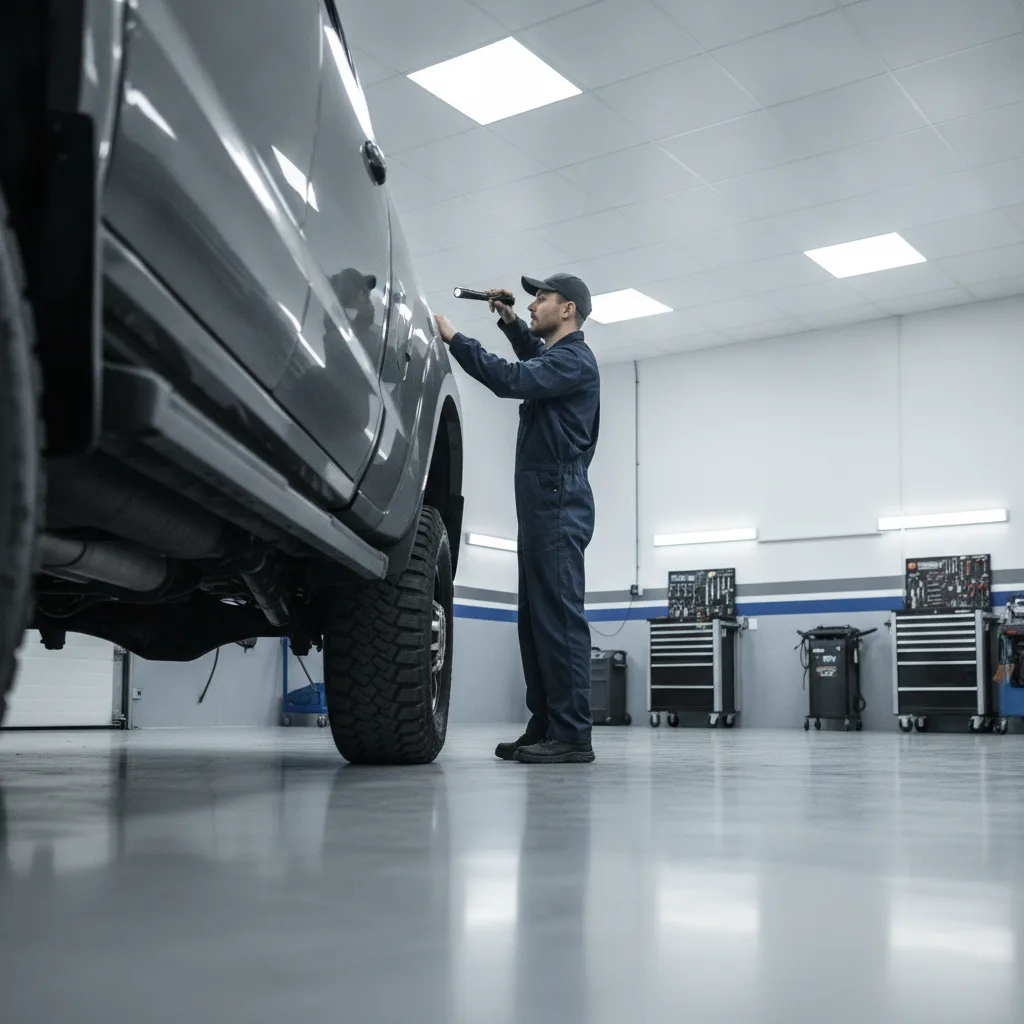
Many Rangers spend their early working lives on construction sites, forestry roads, and agricultural land. A clean topside can easily mask serious structural neglect underneath. Bring a torch and inspect the ladder-frame chassis rails along their entire length.
- Mud traps and corrosion: The box-section chassis rails behind the fuel tank and around the rear spring mountings are notorious for collecting wet mud and road salt. If left unwashed, this creates localized rot. Tap suspicious areas and look for signs of structural flaking or heavy surface corrosion.
- Off-road damage: Check the transfer box casing, front skid plates, and fuel tank guards for deep gouges, dents, or cracked welds. A bent crossmember indicates the truck has bottomed out on rocks or hard terrain.
- Rear suspension: Inspect the rear multi-leaf spring packs. Tradespeople carrying constant maximum payloads frequently crack the bottom leaf. Look for broken leaves, worn shackle bushes, or a truck that sags visibly to one side.
- Front suspension and steering: Test for excessive movement in the lower wishbone ball joints, anti-roll bar drop links, and track rod ends. Heavy off-roading accelerates wear on these components.
Drivetrain and 4WD Transmission Tests
The Ranger uses a selectable part-time four-wheel-drive system controlled via an electronic rotary switch on the centre console. Operating this system incorrectly damages the drivetrain, so testing must be done methodically. Never engage high-range four-wheel drive (4H) or low-range four-wheel drive (4L) on dry, grippy asphalt, as this causes severe drivetrain wind-up and can snap half-shafts or stretch the transfer box chain. Find a patch of loose gravel, wet grass, or mud to test all drive modes.
Switching from 2H to 4H can be performed on the move at moderate speeds; listen for clean engagement of the vacuum-operated front axle disconnect without clunks or dash warning lights. To engage 4L, come to a complete standstill, put the gearbox in neutral, depress the clutch (on manuals), and turn the switch. Low-range should engage within a few seconds, accompanied by a dashboard confirmation icon. If fitted, test the electronic rear differential lock button. If the differential refuses to lock or 4WD indicators flash continuously, you may be facing seized actuator motors or damaged vacuum lines.
On manual gearboxes, check for high clutch bite points, heavy pedal resistance, and shuddering during low-speed hill starts, all of which indicate a worn dual-mass flywheel. On six-speed automatics, watch for delayed 1-2 upshifts when cold and hesitation during kickdown. The 10-speed automatic found on 2.0 EcoBlue models should transition smoothly; jerky shifts often point to outdated transmission software or neglected fluid services.
Engine Health and Common Mechanical Faults
Both TDCi and EcoBlue engines are hard-working units, but each has specific vulnerabilities that demand scrutiny during an inspection:
- The TDCi variable-displacement oil pump: The 2.2 and 3.2 TDCi engines use a variable-vane oil pump that relies on engine vacuum and oil pressure to prime. A well-known issue across the UK trade is the "ten-minute oil drain rule". If an inexperienced garage leaves the sump plug out for longer than 10 to 15 minutes during an oil service, the pump can lose its prime. Upon restarting, the engine runs without oil pressure, leading to catastrophic bearing failure within minutes. Always verify that previous servicing was handled by an experienced commercial specialist.
- EcoBlue wet timing belts: The 2.0 EcoBlue uses an internal timing belt that runs through engine oil. Using the incorrect oil grade causes the belt material to degrade, shedding debris that clogs the oil pickup strainer and starves the engine of lubrication. Review the service invoices carefully to confirm the exact Ford-specified oil was used at every scheduled service interval.
- EGR coolers and cracked pipes: On 3.2 TDCi models, check for sweet-smelling exhaust fumes or unexplained drops in coolant level. The exhaust gas recirculation (EGR) cooler can split internally, allowing coolant to be sucked into the combustion chamber.
- AdBlue systems and DPF: Inspect the instrument cluster for any AdBlue range faults or "engine restart prevented" warnings. Faulty tank heating elements and crystallized injector nozzles are common headaches across Euro 6 diesels subjected to short, cold journeys.
Cab Interior and Load Bed Checks
Lift any plastic bed liner fitted to the load area. Plastic drop-in liners protect against impact but trap moisture and grit underneath, grinding through paint and rotting out the steel bed floor unnoticed. Spray-on polyurethane coatings are superior in this regard. Check the tailgate support cables for corrosion and make sure the torsion spring assists opening and closing smoothly.
Inside the cabin, pull back footwell mats to check for damp carpets. Water can ingress past the scuttle panel grommets or windscreen seals, pooling around sensitive wiring looms and body control modules. Test all switchgear, including the air conditioning and Ford’s SYNC touchscreen systems. Sluggish or unresponsive SYNC 2 and SYNC 3 displays may require software updates or full module replacements.
Paperwork, History, and Next Steps
Before putting down a deposit, thoroughly audit the paperwork. Match the VIN on the base of the windscreen, the chassis rail, and the vehicle registration document (V5C). Confirm the taxation class reads 'Light Goods Vehicle' (TC39) to avoid paying standard passenger car road fund licence rates.
Check the MOT history online via the government portal for recurring advisories on brake line corrosion, ball joint wear, or emissions failures. If you are comparing acquiring methods for your fleet, researching tailored commercial van finance options can help structure payments to suit seasonal cash flow while keeping capital inside your trade. A well-inspected Ford Ranger remains one of the most capable, durable tools a business can buy, provided you steer clear of off-road casualties and neglected drivetrains.