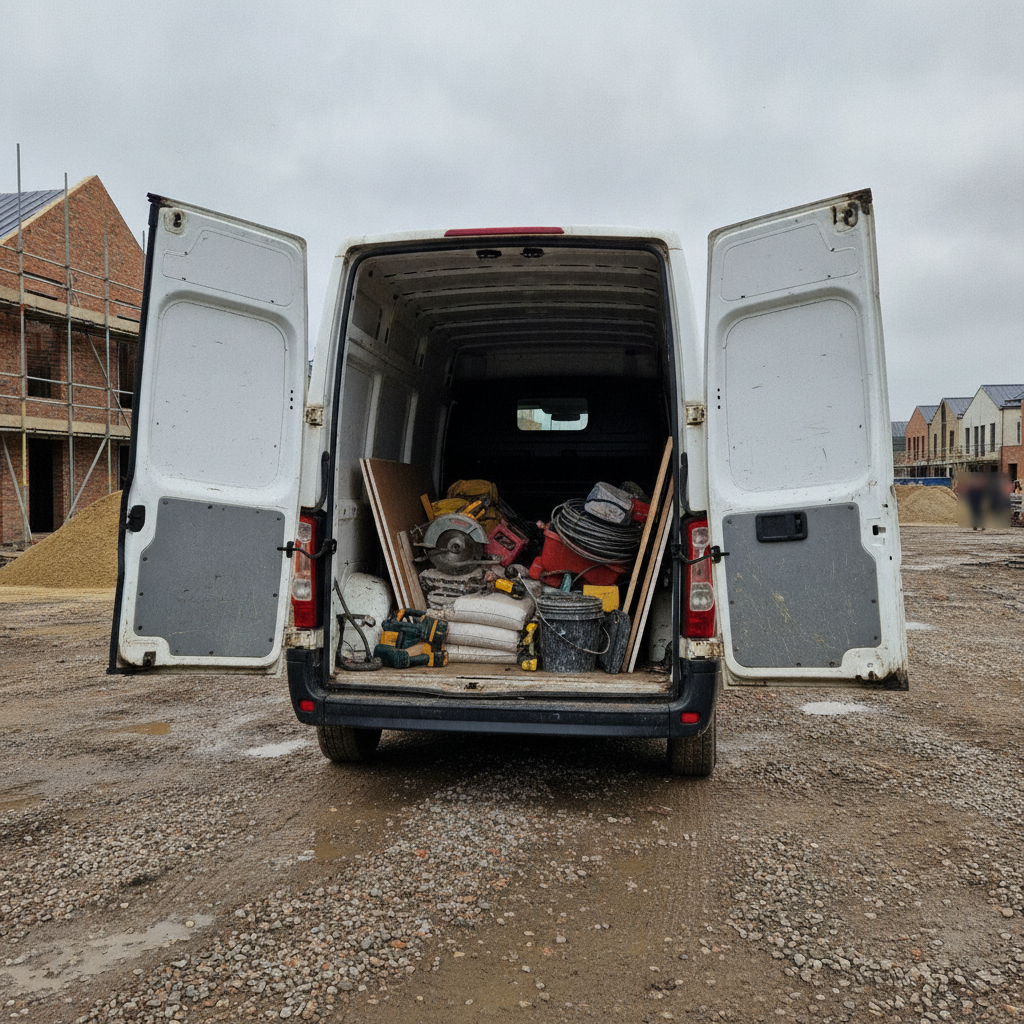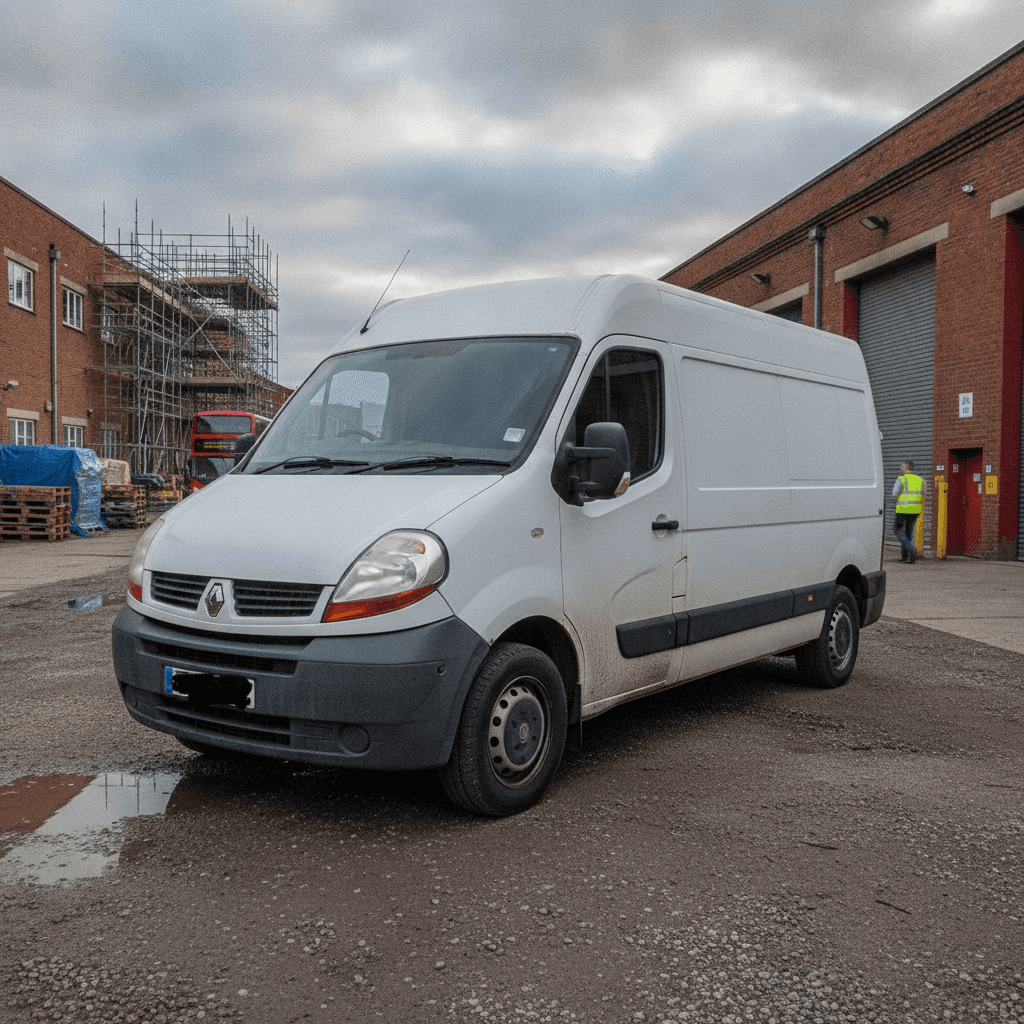
Buying a used Renault Master
Renault Master Overview: The Workhorse of the UK Trade Fleet
For UK sole traders, hauliers, and fleet operators seeking a heavy-duty commercial vehicle that balances sheer volumetric capacity with low operating overheads, a used Renault Master is one of the most practical options on the market. Produced in Batilly, France, the third-generation Master has spent more than a decade proving itself against fierce rivals including the Ford Transit, Mercedes-Benz Sprinter, Volkswagen Crafter, and the Stellantis heavy-van stable encompassing the Vauxhall Movano, Peugeot Boxer, and Citroen Relay. Notably, the third-generation Master shares its underlying core platform with the Nissan NV400 and Interstar, as well as pre-2021 Vauxhall Movanos, making replacement components widely accessible across the UK aftermarket.
What sets the Renault Master apart in the crowded large panel van sector is its uncompromising focus on interior practicality, straightforward mechanicals, and structural flexibility. It is designed ground-up as a hard-wearing commercial tool rather than a luxury passenger vehicle with the seats removed. Available across an extensive spectrum of lengths, roof heights, and driveline layouts, the Master consistently delivers class-competitive payloads and low loading heights. For businesses that need to transport bulk, weight, or specialist plant without taking on excessive running costs, a pre-owned Master represents an exceptionally hard-working asset.
What the Renault Master is Known For
The Renault Master has earned its reputation in the British trade sector through three distinct engineering traits: loading accessibility, practical cab packaging, and proven diesel propulsion.
Front-wheel-drive versions feature some of the lowest sill heights in the 3.5-tonne gross vehicle weight category. By dispensing with a rear propshaft and differential, the load bed sits noticeably closer to the tarmac than equivalent rear-wheel-drive vans. For multi-drop courier drivers, parcel delivery contractors, and removals teams who step in and out of the cargo bay hundreds of times each shift, this ergonomic advantage significantly reduces physical fatigue and accelerates loading cycles.
Inside the cabin, the Master doubles as an effective mobile site office. The central passenger seat back folds flat forward to unveil a swivelling work table engineered specifically to hold a clipboard, invoices, or a laptop, complete with integrated dual cup holders. Deep overhead storage bins, large door pockets capable of holding large water bottles, and a cavernous compartment concealed beneath the dual passenger bench cushion provide ample secure storage for power tools, PPE, and paperwork.
Under the bonnet, the long-running 2.3-litre dCi engine is renowned for its low-down torque characteristics. Developed by the Renault-Nissan Alliance, this four-cylinder unit relies on a durable timing chain rather than a rubber timing belt, providing fleet operators with lower scheduled maintenance overheads throughout the working life of the vehicle.
Body Styles, Dimensions, and Technical Specifications
Selecting the right used Renault Master requires an understanding of the manufacturer sizing system, which categorises models using four body lengths and three roof heights. The lineup spans from nimble urban panel vans to vast high-cube long-wheelbase hauliers.
Dimensions and Load Volumes
- L1H1 (Short Wheelbase, Low Roof): Load length of approximately 2,583mm, internal height of 1,700mm, yielding an eight-cubic-metre cargo capacity. Ideal for inner-city trades needing tight turning circles.
- L2H2 (Medium Wheelbase, Medium Roof): Load length of 3,083mm, internal standing height of 1,894mm, yielding 10.8 cubic metres. A favourite general-purpose configuration for plumbers, electricians, and carpenters.
- L3H2 (Long Wheelbase, Medium Roof): Load length of 3,733mm, internal height of 1,894mm, delivering 13 cubic metres. Capable of accommodating standard eight-by-four sheet materials flat on the deck or swallow up to five standard Euro pallets.
- L3H3 (Long Wheelbase, High Roof): Same footprint as the L3H2 but offering an internal standing height of 2,144mm, expanding volume to 14.8 cubic metres. Suitable for walk-in maintenance workshops and standing trade installations.
- L4H2 and L4H3 (Extra-Long Wheelbase): Extended rear overhang taking the load length to 4,383mm, providing up to 17 cubic metres of internal volume in high-roof specification. Mostly configured with rear-wheel drive.
Payload Capabilities and Drivetrain Configurations
Payload capacity is dictated by the driveline configuration, chassis grade, and fitted equipment. Front-wheel-drive panel vans registered at 3,500kg gross vehicle weight achieve payloads starting around 1,200kg and peaking past 1,600kg on stripped-out L1 and L2 variants. Rear-wheel-drive panel vans carry heavier mechanical running gear, which marginally reduces base payload ratings to between 1,100kg and 1,450kg, but compensates with superior towing capacity, higher axle ratings, and enhanced traction when carrying full design weights.
For specialist logistics, heavy building merchants, and plant transport, Renault offered heavy-duty chassis configurations rated at 4,500kg gross vehicle weight, featuring twin rear wheels on the rear axle and a braked towing limit reaching up to 3,500kg. These heavier variants require an operator licence and tachograph compliance for commercial operation in the UK.
Engine Outputs and Evolution
All third-generation Renault Masters utilise variations of the 2.3-litre dCi four-cylinder diesel engine. Understanding the revisions across different production periods is vital when browsing used stock:
- Euro 5 Generation (2010 to 2014): Powered by single-turbo configurations generating 100bhp, 125bhp, or 150bhp. These units use simple exhaust gas recirculation and particulate filtration without the need for diesel exhaust fluid, though they lack compliance with clean air charging zones.
- First Phase Twin-Turbo (2014 to 2019): Introduction of BiTurbo technology, providing separate small and large turbochargers to eradicate turbo lag. Outputs shifted to 110bhp, 135bhp, and 165bhp, alongside revised 130bhp and 145bhp single-turbo models. Selective Catalytic Reduction requiring AdBlue arrived on models built from mid-2016 onward to achieve Euro 6 emissions targets.
- Late Facelift Generation (2019 to Present): Introduced a restyled vertical front grille, completely redesigned cabin, upgraded electronic safety architecture, and updated twin-turbo engines meeting Euro 6d-Temp and Euro VI standards. Power steps moved to 135bhp, 150bhp, and 180bhp, delivering torque up to 400Nm.
Factory Conversions and Specialized Chassis
Beyond standard all-steel panel vans, the Master is one of the most widely adapted conversion platforms in the UK commercial market. Renault’s Off-The-Shelf programme offered fully approved factory conversions, meaning used buyers frequently encounter:
- Luton Box Vans: High-cube composite or aluminium bodies built on platform and chassis cabs, yielding between 19 and 22 cubic metres of volume. Widely favoured by house removals teams and bulky freight couriers.
- Dropsides and Tippers: Lightweight aluminium or steel side boards fitted to single or double crew cabs, providing rugged transport for scaffolders, civil engineers, and landscape gardeners.
- Low-Loader Luton Vans: Built directly onto the front-wheel-drive platform cab, eliminating the need for a heavy hydraulic tail lift thanks to a ground-level rear loading step.
Trade Uses: Who Buys the Master and Why?
The Renault Master attracts commercial operators who prioritise interior capacity, functional durability, and sensible cost-per-mile ratios over badge prestige.
Couriers and Multi-Drop Distribution
Logistics operators favour the L3H2 front-wheel-drive variant. Its squarer side-wall profile compared to rounded rivals makes shelf and racking installation straightforward. The low rear loading height limits knee and back strain over repeated delivery cycles, while the long cargo floor accommodates bulky parcel cages with ease.
Building, Scaffolding, and Heavy Trades
Construction firms, timber merchants, and groundworkers lean toward twin-rear-wheel L3 and L4 chassis cabs or tippers. Rear-wheel drive provides the vital pushing traction needed on muddy site terrain when fully laden. A stout ladder-frame chassis ensures the vehicle handles heavy structural steel, aggregate, or scaffolding tubes without chassis flex.
Fit-Out Specialists, Joiners, and Carpenters
The internal load length of the Master allows joiners to transport standard sheet timber, worktops, and long internal door blanks flat on the floor beneath a raised false deck. The wide side-loading door aperture allows a standard Euro pallet to be loaded directly via a forklift from the kerbside.
Motorhome and Campervan Converters
The Master has become a prominent foundation for custom camper conversions. Because the internal side walls are substantially straighter than those on the Mercedes-Benz Sprinter, building internal cabinetry, installing fixed transverse double beds, and fitting overhead lockers is significantly easier, making it a cost-effective alternative for private and commercial converters.
What to Look for When Buying a Used Renault Master
Used commercial vehicles live demanding lives. A thorough pre-purchase mechanical and cosmetic inspection is essential to ensure your purchase remains on the road earning money rather than sitting in a workshop racking up repair bills.
Engine Health, Oil Changes, and Timing Chains
The 2.3 dCi engine uses a timing chain designed to last the service life of the engine. However, its longevity depends entirely on strict adherence to oil renewal schedules using the correct low-SAPS specification oil. Ask to see the full service record: vans with missed services or extended oil-drain intervals can suffer from premature chain stretch and worn hydraulic tensioners. On a cold engine start, listen intently for any metallic rattling from the driver side of the engine block. Any noise that fails to vanish within three seconds of ignition indicates tensioner or chain degradation.
Fuel Injector Seizing and Moisture Ingress
A known mechanical design quirk on pre-2019 Master models relates to the scuttle panel drain tubes beneath the windscreen wipers. If these rubber drain tubes become blocked with autumn leaves, rainwater pools directly over the top of the engine cylinder head. Over time, this water sits in the recessed injector wells, causing the copper sealing washers to fail and rusting the diesel injectors solidly into the aluminium head casting. Inspect the injector gallery with a torch. Look for standing water, rust staining, or black tar-like carbon deposits known as black death. Removing seized injectors on these engines often requires hydraulic pullers or cylinder head removal, leading to substantial labour charges.
Manual Gearboxes and Concentric Slave Cylinders
The six-speed manual gearbox fitted across the Master range is fundamentally tough, but high-mileage delivery vans can suffer synchromesh wear on second and third gears. During your test drive, accelerate hard and perform quick shifts between first, second, and third gear; any baulking, crunching, or resistance signals that a gearbox overhaul is imminent.
Pay close attention to the clutch pedal action. The Master employs a hydraulic concentric slave cylinder located inside the gearbox bellhousing. If the pedal feels spongy, does not return promptly to the top of its travel, or if brake fluid levels in the reservoir drop without an external leak at the brake calipers, the slave cylinder is failing. Replacing this small component requires pulling the entire transmission away from the engine, making it a labour-intensive repair.
Quickshift Automated Transmissions
Some used examples are fitted with the Quickshift automated manual transmission. Unlike a conventional torque-converter automatic, this is a standard manual gearbox operated by an electro-hydraulic robot actuator. Ensure gear changes under moderate acceleration are smooth and that the transmission does not drop into neutral unexpectedly when pulling away from junctions. Rebuilding failed hydraulic actuator pumps on these automated units requires specialist diagnostic equipment.
Suspension, Ball Joints, and Subframes
The front suspension carries significant weight over the steering axle. Front wishbone rear bushes, anti-roll bar drop links, and lower suspension ball joints deteriorate rapidly on vans used over broken country lanes or city speed bumps. Listen for sharp clunking or knocking noises during low-speed steering manoeuvres and when crossing uneven surfaces. Check tyre wear patterns across the front tread: uneven wear on the inner or outer shoulders points directly to worn steering tie-rod ends or drifted front wheel alignment.
Sliding Doors and Body Hardware
Cargo doors on commercial vehicles take relentless punishment. Inspect the upper, middle, and lower roller bearings on the side sliding door. The nylon runner wheels frequently flat-spot or disintegrate, leading to the door dropping out of square, scratching the exterior paintwork, and refusing to latch securely into the central locking system. Ensure the 180-degree or optional 270-degree rear barn doors close flush and that the magnetic retaining stops on extended bodies remain intact.
Emissions System: DPF, AdBlue, and EGR Checks
Vans dedicated exclusively to local urban multi-drop duties rarely generate the exhaust gas temperatures required to initiate automatic diesel particulate filter regeneration. Connect an onboard diagnostic scanner or ensure that no warning lights appear on the instrument cluster during an extended test run. Look out for the spanner symbol, antipollution monitor warning, or AdBlue system faults. Rectifying crystalised AdBlue tank pumps, faulty nitrogen oxide sensors, or soot-choked exhaust gas recirculation valves can swiftly erode your operating margins.
Used Renault Master Pricing Across UK Tiers
Used vehicle prices in the UK commercial sector correlate closely with mileage, body condition, emissions bracket, and mechanical provenance. The market divides into distinct price and condition bands.
Entry-Level Workhorses Under £5,000
This bracket comprises older Euro 5 vans built between 2010 and 2014, as well as exceptionally high-mileage early Euro 6 workhorses. Expected odometer readings range between 140,000 and 220,000 miles. Vehicles in this tier commonly exhibit aesthetic battle scars, minor cargo bay panel damage, and partial service histories. These vans suit local trades, site storage units, and rural contractors working beyond urban emissions-charging zones. Detailed inspection of suspension bushes, clutch condition, and tyre life is critical, as deferred maintenance costs can easily overtake the purchase outlay.
Mid-Range Euro 6 Fleet Returns From £6,000 to £11,500
The most populated sector of the used UK market contains 2015 to 2019 Euro 6 models with mileages between 70,000 and 120,000 miles. These vans frequently come from national utility companies, lease fleets, or tier-one parcel couriers, meaning they typically include documented digital service records. Vans within this pricing tier are fully compliant with regional clean air standards. Look for clean, ply-lined cargo areas, fully operational sliding side doors, and single-driver ownership provenance where possible.
Late-Plate Facelift Vans From £12,000 to £19,000
Covering post-2019 facelift models through to nearly-new examples with recorded mileages below 60,000 miles. Vehicles in this category feature the updated front-end styling, modern cabin architecture with Apple CarPlay and Android Auto smartphone integration, and twin-turbo engines meeting Euro 6d-Temp standards. Many examples in this bracket still carry the remainder of original manufacturer warranties or are offered under dealer-approved used commercial programmes.
Specialist Conversions and High-Spec Lutons From £14,000 to £24,000
Low-loader Luton box vans, heavy-duty dropsides, and three-way tippers command sustained residuals regardless of plate year. A clean, crack-free composite Luton body with a fully certified tail lift or a working hydraulic tipper ramp sits at the upper tier of commercial valuations due to the high replacement costs of specialist bodywork.
Running Costs: Fuel, Insurance, Servicing, and Clean Air Zones
Maintaining financial predictability across your commercial vehicle operations requires calculating complete cost of ownership alongside the purchase price.
Real-World Fuel Economy
The 2.3 dCi is a frugal unit relative to the overall volume of the Master. In real-world UK operations:
- Urban Multi-Drop Driving: Expect returns between 28mpg and 32mpg on front-wheel-drive panel vans. Frequent stops and heavy traffic conditions will reduce these figures on twin-rear-wheel models.
- Motorway and A-Road Cruising: A steady 65mph to 70mph cruise in an unladen or moderately loaded L2H2 or L3H2 model typically yields 34mpg to 38mpg.
- Luton and High-Cube Variants: Due to substantial aerodynamic drag, Luton box bodies rarely exceed 25mpg to 28mpg at sustained motorway speeds.
Insurance Group Ratings
The Renault Master sits predominantly across UK commercial vehicle insurance groups 36 through 44, depending on engine power output, gross vehicle weight, and conversion spec. L1H1 panel vans with lower power outputs occupy the lower groups, while powerful twin-turbo L4 models and specialist conversions sit higher. Installing a Thatcham Category 1 alarm, aftermarket deadlocks on the load bay doors, and an approved tracking unit will assist in securing lower insurance premiums from commercial brokers.
Routine Servicing and Maintenance Intervals
While official manufacturer guidance on later Master models quotes flexible service intervals up to two years or 25,000 miles, commercial vehicle specialists strongly advise against running vans to these upper limits. A professional working regime involves renewing engine oil and filters every 10,000 to 12,000 miles, or annually. Replacing the fuel filter and engine air filter every second service prevents fuel rail starvation and safeguards high-pressure injectors. Budgeting for front brake discs and pads every 25,000 to 35,000 miles is sensible for vans operating under heavy loads.
Clean Air Zones and London ULEZ Compliance
For operations within the London Ultra Low Emission Zone or regional Clean Air Zones across Birmingham, Bristol, Sheffield, Bath, Bradford, and Newcastle, emissions compliance is a core daily operating factor. Euro 6 diesel models registered roughly from September 2016 onward avoid daily emissions charges. Operating an older Euro 5 Master inside these charging zones quickly incurs punitive daily surcharges that wipe out the financial benefit of a lower initial purchase price.
Commercial Financing and Acquisition Options
Acquiring a commercial vehicle should preserve working capital while matching cash flow patterns. Depending on the trading structure of your business, several commercial funding pathways are available when sourcing a used Renault Master.
For outright ownership, Hire Purchase spreads the asset cost over an agreed term of two to five years. Once all monthly instalments and the option-to-purchase fee are cleared, legal title transfers entirely to your business. This structure is best suited to tradespeople who plan to run their van for five to ten years, heavily customise the interior with bespoke racking, or add livery without worrying about end-of-contract return condition penalties. You can review available van finance packages to structure deposits and balance balloon payments to match your business revenue.
Finance Lease provides an alternative for VAT-registered firms wanting lower monthly cash outflows. The vehicle remains on the finance company's balance sheet, and you pay an agreed monthly rental with an optional balloon payment scheduled at the end of the term, calculated against the anticipated residual value. This route offers substantial flexibility, as you are not tied to strict mileage penalties, and any equity realised from selling the vehicle to an independent third party at the close of the term returns back to your business.
If you prefer driving late-plate or nearly-new Master models with full manufacturer warranties, low maintenance exposure, and predictable fixed outgoings, you might also compare pre-owned purchasing against structured van lease deals. Contract hire agreements allow you to hand the keys back after two, three, or four years, eliminating any exposure to residual value drops and letting you upgrade seamlessly to newer commercial technology.
Final Checklist: Buying Your Used Renault Master
Before transferring funds or signing a finance agreement on a used Renault Master, run through this concise mechanical and documentation checklist:
- Emissions Status: Check the V5C logbook to verify the Euro status. If you operate within Clean Air Zones, confirm the vehicle is certified Euro 6 with Selective Catalytic Reduction.
- Water Ingress: Remove or peel back the scuttle covers beneath the wipers to verify the drainage channels are clear, and inspect the injector wells for rust or pooling liquid.
- Timing Chain Noise: Conduct a cold engine startup. Listen intently for loose chain rattle or dry friction sounds from the front timing cover area.
- Pedal Travel and Clutch: Depress the clutch pedal slowly to detect uneven resistance, sticking, or failure to return smoothly, which points to a failing concentric slave cylinder.
- Gearbox Selection: Shift across all six gears under load, listening for synchromesh noise between first and third gear.
- Door Mechanics: Test both the side sliding doors and rear barn doors from inside and outside, ensuring rollers glide easily and remote deadlocks fire cleanly.
- Chassis Corrosion and Damage: Check the underside sills, rear suspension spring mounts, and front subframe for heavy salt corrosion, cracks, or forklift impact damage.
Approached with clear mechanical awareness and an understanding of your payload requirements, a used Renault Master remains one of the most cost-effective, dependable, and spacious cargo hauliers available to British trades today.