Buying a used Peugeot Expert
Peugeot Expert Overview: Platform, Refinement, and Commercial Appeal
The third-generation Peugeot Expert, launched in 2016, represents a fundamental shift in how medium commercial vehicles operate on UK roads. Built on the car-derived EMP2 platform shared across the Stellantis group—including the Citroen Dispatch, Vauxhall Vivaro, and Toyota Proace—the Expert was engineered from the wheels up to deliver car-like road manners, exceptional fuel economy, and outstanding payload capability in a remarkably manageable footprint.
For independent tradespeople, multi-drop delivery drivers, and fleet managers across the UK, the Expert solves one of the most persistent operational headaches: height access. By keeping the standard roof height under 1.9 metres, Peugeot engineered a medium-sized panel van capable of navigating modern multi-storey car parks, underground loading bays, residential height barriers, and airport parking facilities without risking roof damage. Despite this low-profile stance, the platform delivers cargo volume and carrying capacity that directly challenges larger, bulkier commercial vehicles.
On the road, the EMP2 chassis transforms the working day. Traditional commercial vehicles often suffer from agricultural leaf-sprung rear suspension setups that skip and shudder when running unladen. The Expert uses an independent wishbone front setup and pseudo-MacPherson struts paired with an oblique wishbone rear axle. This suspension design controls roll, absorbs broken tarmac, and maintains composure whether the cargo bay is empty or loaded to maximum gross vehicle weight.
Body Lengths, Cargo Dimensions, and Payload Capacities
When searching the used market for a Peugeot Expert, understanding the dimensional breakdown is critical to securing the right load bed for your trade. Peugeot offered this generation in three distinct body lengths, although the shortest variant was eventually retired from the brand new lineup:
- Compact (XS): Measuring just 4.60 metres overall, this variant is ideal for congested urban plumbing or maintenance trades. It provides a cargo floor length of 2.16 metres, expanding to 3.32 metres via the load-through hatch, alongside a 4.6-cubic-metre total load capacity.
- Standard (M): Measuring 4.95 metres, this is the most common variant on the UK used market. It delivers a 2.51-metre standard cargo floor length, which extends to 3.67 metres through the bulkhead hatch, offering a load volume of 5.3 cubic metres (expanding to 5.8 cubic metres).
- Long (XL): Measuring 5.30 metres, the Long variant extends the rear overhang while retaining the same 3.27-metre wheelbase. Cargo floor length measures 2.86 metres (over 4.0 metres with the bulkhead opened), resulting in a generous 6.1-cubic-metre capacity that expands to 6.6 cubic metres.
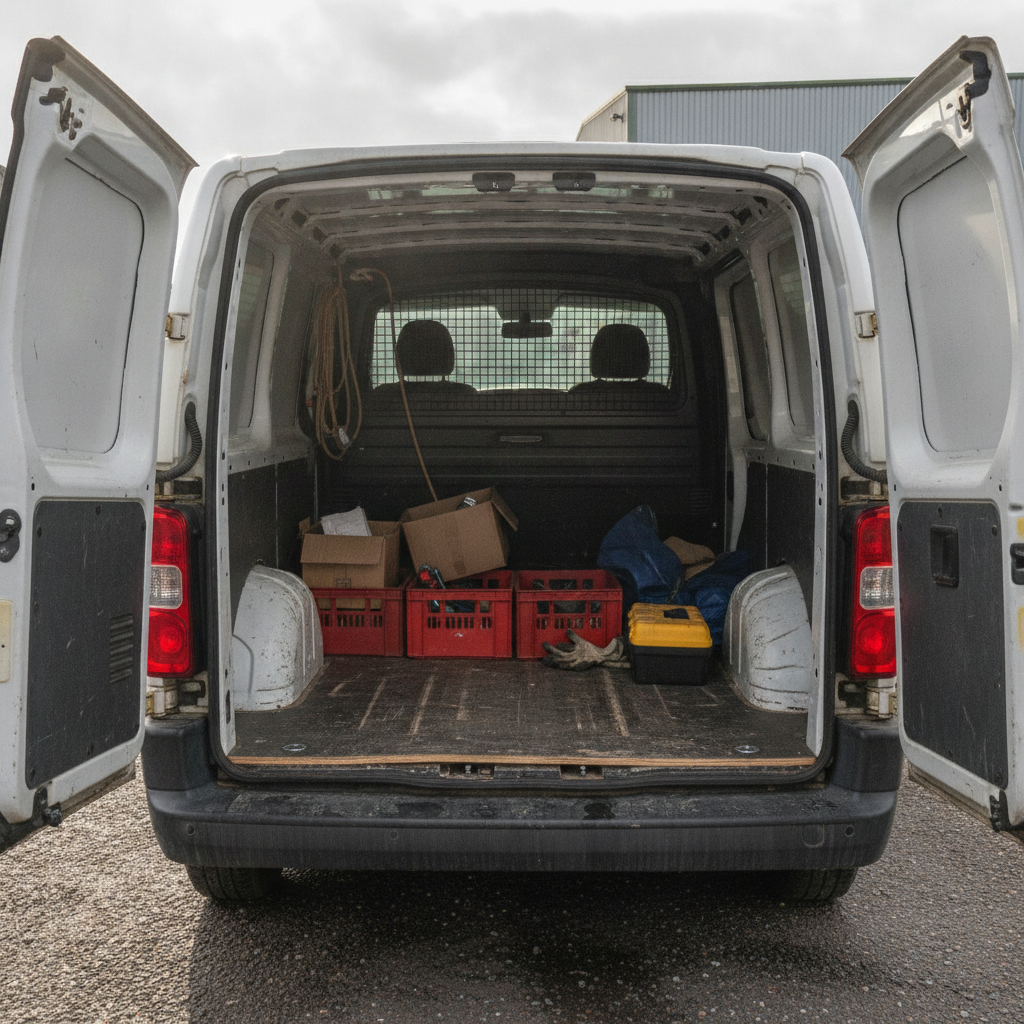
The defining interior feature of modern Expert vans is the Moduwork modular bulkhead system. Fitted as standard on higher trims and optional on base models, Moduwork features an outer passenger seat that folds upward against the backrest to free up a flat floor section, while an access flap in the steel bulkhead unlatches. This allows long, slender building materials—such as four-metre copper pipe lengths, conduit, or three-metre timber lengths—to slide completely inside the cabin, safely enclosed and shielded from weather and opportunistic theft.
Payload capacity is where the Expert sets industry benchmarks. While older medium vans often hovered around the one-tonne threshold, the Expert platform achieves payloads between 1,000kg and up to 1,445kg depending on the exact engine and gross vehicle weight configuration. A Standard length 2.0-litre variant routinely handles two standard 1,200mm by 800mm Euro pallets with substantial weight capacity to spare, making it a compact giant in the commercial sector.
Engine Lineup, Transmissions, and Electric Power
The used market features four main diesel powertrain variations alongside the fully electric e-Expert, all meeting stringent Euro 6 emissions regulations for entry into London's Ultra Low Emission Zone and regional clean air zones across Birmingham, Bristol, and Bath.
1.6-Litre BlueHDi (2016–2018)
Early third-generation vans feature the 1.6-litre BlueHDi diesel engine, supplied in either 95hp or 115hp tunes. The 95hp variant came mated to a five-speed manual gearbox, while the 115hp featured a six-speed manual. While frugal and capable around town, these engines work harder on fully loaded motorway runs and were replaced during the 2018 model-year emissions updates.
1.5-Litre BlueHDi (2018–Present)
Replacing the older 1.6-litre unit, the 1.5-litre four-cylinder diesel brought a sixteen-valve cylinder head and improved thermal efficiency. Offered predominantly with 100hp or 120hp outputs, this engine delivers impressive fuel returns, frequently exceeding forty-five miles per gallon on steady motorway runs. It is coupled to a durable six-speed manual gearbox and is an exceptional choice for multi-drop delivery routes and regional trades.
2.0-Litre BlueHDi (2016–Present)
The heavy-duty workhorse of the lineup is the 2.0-litre BlueHDi engine, available in 120hp, 150hp, and range-topping 180hp states of tune. Delivering up to 400Nm of torque, this engine transforms the Expert into an effortless long-distance cruiser capable of towing braked trailers up to 2,500kg. The 180hp version came exclusively paired with an automatic gearbox—initially the six-speed EAT6 and later the highly responsive eight-speed EAT8 torque-converter unit.
The All-Electric e-Expert (2020–Present)
For operations facing strict zero-emission municipal mandates, the e-Expert provides full commercial functionality without an internal combustion engine. Driven by a 100kW electric motor producing 136hp, it came with either a 50kWh battery offering up to 148 miles of range on the WLTP cycle, or a 75kWh pack delivering up to 205 miles. Because the battery packs sit beneath the load floor, cargo volume and internal dimensions match the diesel models identically.
Who Buys the Used Peugeot Expert and Why?
The Peugeot Expert appeals to a broad demographic of commercial operators who require more carrying capacity than a small van like the Partner, but cannot accept the cumbersome handling and fuel penalties of a full-sized Peugeot Boxer or Ford Transit.
- Plumbing and Heating Engineers: The combination of the sub-1.9-metre roof clearance and the Moduwork load-through hatch makes this vehicle a staple for domestic plumbers. It slips easily onto customer driveways, fits into residential car parks, and transports long copper piping and plastic wastes internally without resorting to external roof racks that increase fuel burn.
- Electrical Contractors: Electricians choose the Expert for its internal racking versatility. The square load space accommodates modular shelving, while twin sliding side doors allow immediate access to toolboxes and component organisers without having to climb into the vehicle.
- Joiners and Shopfitters: Woodworkers routinely need to move full sheet materials. The Expert swallows standard eight-foot by four-foot sheets laid flat between the wheel arches in Standard and Long body lengths, while the high payload allows heavy loads of hardwoods or MDF to be moved legally.
- Courier and Express Freight Drivers: Delivery drivers value the rear step height, low load sill, and car-like ergonomics. The supportive cab seats, excellent visibility, and light steering reduce driver fatigue over eight-to-ten-hour shifts involving dozens of drops.
- Mobile Mechanics and Plant Engineers: The high gross vehicle weight variants carrying over 1,400kg of payload accommodate heavy steel racking, onboard generators, air compressors, and diagnostic equipment without sitting on their bump stops.
Used Buying Checklist: Key Mechanical and Physical Checks
Finding a quality pre-owned van requires looking beyond cosmetic valeting. Commercial vehicles lead demanding lives, and the Expert has specific mechanical areas that warrant thorough inspection before you sign paperwork.
1. Engine Oil Grades and Service Records
Both the 1.5-litre and 2.0-litre BlueHDi engines use sophisticated selective catalytic reduction systems and particulate filters. They demand specific low-ash engine oils (typically 0W-30 or 0W-20 meeting PSA B71 specifications). Check the service book for documented intervals. Missing oil changes or the use of cheap mineral oils causes premature turbocharger failure and ruins wet-running emissions components.
2. Sliding Side Door Operation
The side sliding doors run on three distinct guide tracks. Check the lower guide rail at the base of the door aperture for grit accumulation, paint wear, or metal-on-metal contact. The nylon rollers degrade over time under high-cycle trade use, causing the door to drop out of alignment. A misaligned door will damage the rear quarter paintwork and fail to trigger the central locking sensor.
3. Clutch, Dual-Mass Flywheel, and Automatic Shifts
On manual variants, start the engine from cold and depress the clutch pedal halfway. Listen intently for rhythmic metallic rattling or pedal pulsing, which indicates a failing dual-mass flywheel. Accelerate in third gear from low engine revs up an incline to confirm the clutch plate is not slipping under peak torque. If evaluating an automatic EAT6 or EAT8, shifts must be silky and seamless; hesitation or jerky downshifts point to contaminated fluid or valve body wear.
4. Suspension Components and Front Wishbones
Due to the high payload capacities, chassis components take heavy punishment over urban speed bumps and building site tracks. Listen for dull thuds or metallic knocks over potholes during your test drive. Front anti-roll bar drop links, lower track control arm bushes, and top suspension strut mounts are common wear points on vans with around fifty to eighty thousand miles on the clock.
5. AdBlue Tank and Delivery System
The AdBlue injection system on PSA commercial vehicles is a known weak link. The tank houses an integrated pump and heating element. Crystallisation of the urea fluid can jam the pump or foul the tank pressure sensor, generating dashboard warning lights that display a countdown to a non-start condition. Verify that no emissions warnings are illuminated on the instrument cluster, and ask the seller whether the AdBlue tank assembly has already been replaced under warranty or recall campaigns.
Known Faults, Recalls, and Years to Treat with Caution
While the third-generation Expert is fundamentally sound, specific production windows carry known engineering quirks that you should account for during your search.
The 1.5 BlueHDi Camshaft Chain Issue (2018–2020)
Early iterations of the 1.5-litre engine utilised a 7mm internal timing chain connecting the exhaust and intake camshafts. Over time, inadequate lubrication or stress fractures caused this 7mm chain to stretch, rattle, and eventually snap, destroying the cylinder head. In late 2020, factory production shifted to a reinforced 8mm chain setup with modified camshaft carriers. When inspecting a 2018 to 2020 1.5 BlueHDi, listen for an erratic ticking or scraping sound from the top of the engine near the cambelt cover. Check whether the engine has received the updated 8mm factory chain conversion kit.
AdBlue Tank Crystallisation
Models manufactured between 2016 and 2019 frequently suffered from premature failure of the AdBlue tank cap breather valve. A vacuum could form inside the tank, collapsing the unit or burning out the internal dosing pump. Peugeot issued modified caps with updated pressure valves. Ensure any van you inspect has the updated white-centred or vented filler cap rather than the original solid black version.
Inner Rear Tyre Scrubbing
Check the inner edges of both rear tyres with a tread depth gauge. A number of 2016 to 2018 examples left the factory with slight variations in rear beam alignment. While the front suspension can be tracked, the rear axle geometry is fixed. If the rear tyres are heavily worn on their inner shoulders while the outer tread remains deep, the rear beam may be distorted or require shimming.
Touchscreen and Software Glitches
The central touchscreen controls cab ventilation, radio, Bluetooth, and satellite navigation. Early software builds can suffer from system freezes, slow boot-up times, or intermittent reverse camera displays. Check that the unit operates smoothly and responds to inputs without lagging. Firmware updates applied by main dealers generally resolve these interface stutters.
Used Peugeot Expert Price Tiers: What to Budget
Budget Workhorses: Under £6,000
At this entry tier, you will primarily encounter well-used, higher-mileage examples from the initial 2016 to 2018 production run, generally powered by the 1.6-litre BlueHDi or early 2.0-litre units. Expect recorded mileages exceeding 120,000 miles, accompanied by moderate cosmetic battle scars, scuffed load linings, and tired seat bolsters. Focus strictly on mechanical health, a documented cambelt replacement, and clean emissions testing rather than pristine body panels.
Mid-Range Work Vans: £6,000 to £12,000
This bracket represents the sweet spot for owner-operators and expanding trades. It includes tidy 2017 to 2021 models with mileages sitting between 50,000 and 90,000 miles. You will find plenty of well-specified Professional trim vans featuring air conditioning, cruise control, rear parking sensors, and the Moduwork load-through hatch. Both 1.5-litre and 2.0-litre manual options dominate this tier, offering an ideal balance of remaining working life and manageable capital expenditure.
Late-Plate and High-Spec Vans: £12,000 to £20,000+
At the upper end of the pre-owned spectrum are late-plate, low-mileage models from 2021 onwards, including vans with under 40,000 miles that still carry remaining manufacturer warranty. This price tier secures top-tier Asphalt trims equipped with reversing cameras, navigation, painted bumpers, and the smooth eight-speed automatic gearbox. This tier is also where clean, low-mileage examples of the all-electric e-Expert begin to appear regularly.
Real-World Running Costs: Fuel, Insurance, and Servicing
Operating a used Peugeot Expert is remarkably gentle on small business cash flows, largely due to parts commonality across the wider Peugeot, Citroen, Vauxhall, and Toyota service networks.
- Fuel Economy: In genuine day-to-day trade use, the 1.5-litre BlueHDi routinely returns between 42mpg and 48mpg on combined cycles. The more powerful 2.0-litre unit averages between 38mpg and 44mpg depending on cargo weight and trailer towing, making both engine options significantly more economical than five-cylinder or older rear-wheel-drive alternatives.
- Insurance Groups: Depending on the variant and payload specification, the Expert typically falls between Insurance Groups 33E and 42E. Base models with standard security sit at the lower end, while 180hp automatics and high-payload Long variants sit higher. Adding an aftermarket deadlock system and a Thatcham-approved tracking unit will often reduce commercial premiums considerably.
- Routine Servicing: While the factory service schedule suggests lengthy intervals of up to two years or 25,000 miles, commercial vehicle specialists strongly advise against this for real-world reliability. Adopting an annual or 10,000-to-12,000-mile maintenance schedule using correct low-SAPS engine oil protects the timing components, turbocharger, and DPF, preventing costly downtime.
- Vehicle Excise Duty (Road Tax): As a light commercial vehicle, the Peugeot Expert is taxed at the flat UK standard rate for commercial vehicles, avoiding the punishing emissions brackets associated with passenger cars.
Funding Your Used Peugeot Expert
Acquiring a commercial vehicle requires balancing capital preservation with predictable monthly accounting. Exploring flexible commercial van finance allows you to spread the cost of a pre-owned Expert through Hire Purchase or Finance Lease structures. Hire Purchase lets you claim capital allowances immediately while working toward outright ownership, with the initial VAT payment reclaimable upfront for VAT-registered entities.
Alternatively, if you prefer operating newer vehicles without residual value liabilities, exploring structured van lease deals provides a fixed-cost motoring route with fixed monthly outgoings and straightforward vehicle returns at the close of your term. Whichever route fits your business model, thoroughly inspecting the mechanical condition, confirming service histories, and testing the sliding doors and electrical systems will ensure your used Peugeot Expert remains a dependable asset to your business for years to come.