The short answer: What makes a viable delivery van?
Running a successful delivery operation demands a balance between cargo volume, maximum payload, mechanical durability, and strict emissions compliance. Delivery work places extreme stress on commercial vehicles through constant stop-start driving, high daily mileage, repeated door usage, and frequent idling. The right van must match your typical parcel or freight dimensions without exceeding legal weight limits, while maintaining manageable running costs to protect your operational margins.
Selecting a vehicle requires looking beyond the initial acquisition price. You need to account for daily access requirements in low-emission zones, driver comfort during long shifts, load security, and the availability of replacement parts to minimise mechanical downtime. Whether you are an independent courier taking on multi-drop contracts or a business managing regional business-to-business logistics, matching the chassis to your operational profile is the single most critical decision you will make.
Payload capacity versus load space volume
One of the most frequent operational errors in the courier industry is conflating cubic capacity with weight capacity. A van might provide a huge load volume, but if your parcels are dense or heavy, you may hit the legal gross vehicle weight long before the cargo bay is full.
- Gross Vehicle Weight (GVW): Most standard UK driving licences (Category B) permit driving vehicles up to 3,500kg GVW (also known as Maximum Authorised Mass or MAM). This figure includes the kerb weight of the vehicle, the fuel, the driver, any passengers, and the actual cargo.
- Payload calculations: Always subtract the vehicle's unladen weight, a full tank of fuel, and your own body weight from the plated GVW to determine your true working payload. Adding ply-lining, bulkheads, shelving, and tail lifts will also reduce your legal carrying capacity.
- Volume and floor dimensions: Multi-drop parcel couriers delivering clothing or light consumer goods generally run out of physical space before reaching weight limits, prioritising cubic metres and internal load height. Conversely, freight or print couriers require heavy-duty medium or large vans with payloads often exceeding 1,200kg.
- Pallet dimensions: If carrying palletised freight, measure between the interior wheel arches. A standard UK pallet measures 1,200mm by 1,000mm, while a standard Euro pallet measures 1,200mm by 800mm. A cargo bay that cannot accept pallets flat on the floor severely limits your commercial flexibility.
Selecting the correct van size for your operations
Every commercial van segment serves a distinct logistics requirement. Choosing a size too large increases fuel expenditure and hampers urban parking, while a van that is too small leads to missed delivery windows and restricted load potential.
Small city vans
Vehicles in this class are agile, easy to park, and offer car-like fuel efficiency. They are ideal for dense city-centre parcel drops, medical couriers, and on-demand legal document delivery. While payloads range between 600kg and 1,000kg, load lengths are typically restricted to under two metres, limiting larger cargo.
Medium vans
The medium panel van is the workhorse of the UK courier network. It offers a practical compromise, providing enough room to carry two standard Euro pallets while remaining compact enough to clear most standard domestic driveways and narrow residential streets. Payloads typically span from 900kg to over 1,400kg depending on the exact suspension and drivetrain configuration.
Large panel vans
Long-wheelbase (LWB) and extra-long-wheelbase (XLWB) panel vans cater to pallet distribution, bulky furniture transport, and nationwide multi-drop trunking routes. They deliver substantial load heights allowing couriers to stand upright inside the rear cargo bay, significantly reducing physical fatigue during heavy delivery rounds.
Luton and box vans
For operations delivering bulky or irregular items, Luton vans feature square-walled bodies built over the chassis cab without intrusive wheel arches. When equipped with a hydraulic tail lift, they enable single-person handling of heavy white goods and machinery, though the heavy bodywork and tail lift hardware noticeably reduce the overall legal payload allowance.
Mechanical checks for high-mileage delivery work
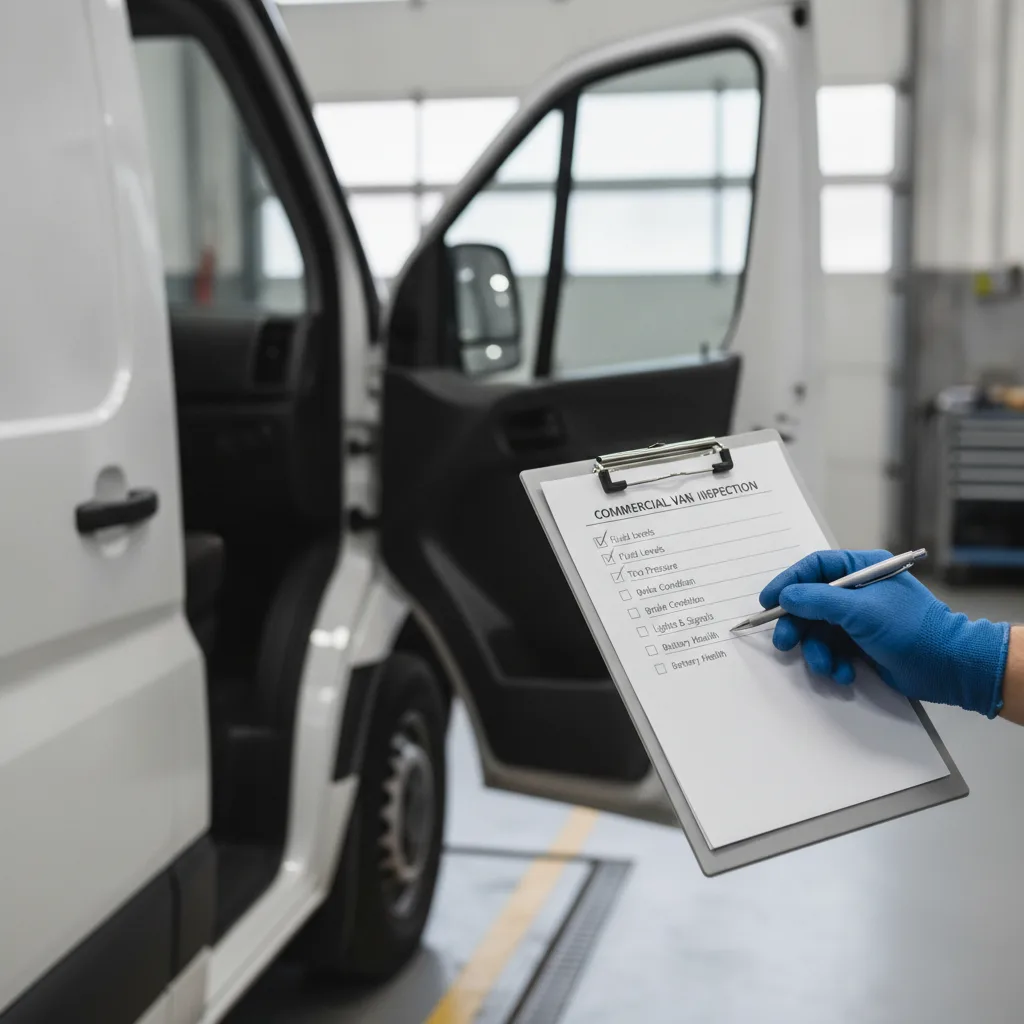
Multi-drop delivery vehicles endure severe mechanical strain compared to motorway-only transport. If you are browsing the market for used vans, conduct a thorough inspection focused on wear-prone components:
- Clutch and dual-mass flywheel: Multi-drop operations involve hundreds of gear shifts per day. Check for clutch slippage, biting point consistency, and any rattling sounds or vibrations through the pedal at idle.
- Diesel Particulate Filter (DPF) and exhaust systems: Constant low-speed urban driving prevents the exhaust system from reaching the temperatures required for passive DPF regeneration. Look for warning lights on the dashboard and confirm the engine runs smoothly without entering limp mode.
- Braking systems and suspension: Frequent stops, kerb climbing, and speed cushions accelerate wear on brake pads, discs, ball joints, and shock absorbers. Inspect tyre sidewalls for gouging and check for uneven tread wear across the front axle.
- Cargo access hardware: Examine side sliding doors and rear barn doors thoroughly. Guide runners, hinges, and slam locks must operate smoothly; a broken roller mechanism will halt your delivery route immediately.
Clean Air Zones and urban access compliance
Urban delivery logistics are heavily influenced by environmental regulations across the UK. London enforces the Ultra Low Emission Zone (ULEZ), while regional cities including Birmingham, Bath, Bristol, Sheffield, and Newcastle operate Clean Air Zones (CAZ) with specific emission thresholds.
To avoid daily access charges, diesel vans must generally meet Euro 6 emissions standards (typically registered from September 2016 onwards), while petrol models must meet Euro 4 standards. You can verify a vehicle's compliance status using the official government Clean Air Zone vehicle checker or the Transport for London (TfL) database before committing to an acquisition.
Electric vans (BEVs) are increasingly popular for urban parcel deliveries due to zero tailpipe emissions, exemptions from clean air and congestion fees, and reduced mechanical complexity. However, prospective buyers must evaluate real-world winter driving range, depot charging access, and public charging network availability against their required daily route lengths.
Commercial compliance and running overheads
Operating a delivery business requires strict adherence to commercial motor regulations. Operating without appropriate documentation risks vehicle impoundment and severe legal penalties.
- Hire and Reward insurance: Standard commercial carriage of own goods policies (such as those used by builders or plumbers) do not cover third-party courier distribution. You must carry specific Courier or Hire and Reward insurance to legally transport goods in exchange for payment.
- Goods in Transit coverage: This policy protects the physical value of customer packages against theft, loss, or transit damage, which is mandatory under most delivery network subcontracting agreements.
- Commercial tyres: Delivery vans must run on commercial-rated tyres (marked with a 'C' on the sidewall) capable of handling continuous maximum axle weights at appropriate pressures.
Small business owners and sole traders seeking to acquire vehicles often explore commercial van finance options to avoid exhausting upfront operational capital. Spreading capital expenditure preserves cash flow buffers for fluctuating fuel costs, unexpected servicing, and mandatory insurance premiums. Always confirm contractual mileage allowances beforehand, as exceeding mileage limits in high-distance courier contracts leads to substantial penalties at the end of a finance term.
Common mistakes when buying delivery vehicles
Rushing the purchase process without analysing your actual delivery contracts frequently leads to financial stress. Avoid these common operational pitfalls:
- Ignoring side-door configurations: A single side door forces you to access goods from only one side, which poses safety hazards and delays on busy one-way streets. Twin side-loading doors improve parcel organisation and route efficiency.
- Overlooking internal security: Delivery vans are prime targets for opportunistic theft. Factory-fitted deadlocks, anti-peel door reinforcement kits, and solid steel bulkheads prevent unauthorised access when leaving the vehicle unattended during deliveries.
- Overloading the vehicle: Roadside enforcement checks by the Driver and Vehicle Standards Agency (DVSA) utilise dynamic weighbridges. Exceeding your van's plated axle weight or overall GVW leads to immediate prohibition notices, heavy fines, and points on your licence.
Frequently asked questions
Can I drive any delivery van on a standard UK car licence?
Yes, provided the Gross Vehicle Weight does not exceed 3,500kg. Standard Category B licence holders can drive vehicles up to this limit. For certain alternatively fuelled vehicles (such as electric vans), standard licence allowances may extend up to 4,250kg to offset battery weight, subject to specific commercial training rules outlined by the DVLA.
Is an automatic or manual transmission better for delivery work?
Automatic gearboxes substantially reduce driver fatigue during intensive stop-start urban delivery cycles and eliminate manual clutch replacements. However, modern manual gearboxes often carry lower repair costs if mechanical issues develop outside of warranty coverage.
What is the difference between payload and gross vehicle weight?
Gross Vehicle Weight is the maximum legally permitted total weight of the vehicle, fluids, driver, passengers, and freight combined. Payload is purely the weight of the items being transported after deducting the unladen weight of the van, fuel, driver, and internal fixtures from the overall GVW.