Used Volkswagen Crafter: What to Check Before You Buy
The Volkswagen Crafter is a popular sight on UK roads, widely favoured by builders, couriers, and fleet operators who need a heavy-duty workhorse. Known for its car-like cab ergonomics, advanced driver safety tech, and vast cargo volume, a used Crafter represents a serious asset for any self-employed tradesperson or growing business. However, because these vans are often deployed on gruelling long-distance courier routes or punishing building sites, finding a reliable used example requires a meticulous, hands-on inspection before committing to a purchase.
Generations and ULEZ Compliance
Before inspecting individual vehicles, you must understand the distinction between the two distinct generations of the Crafter:
- First Generation (2006 to 2016): Built as part of a joint venture with Mercedes-Benz alongside the Sprinter. Early models used five-cylinder 2.5-litre TDI engines before switching to four-cylinder 2.0-litre units around 2011. Most first-generation models are Euro 4 or Euro 5, meaning they will incur daily charges in London’s Ultra Low Emission Zone (ULEZ) and other UK Clean Air Zones (such as Birmingham, Bath, and Bristol).
- Second Generation (2017 onwards): Designed and manufactured entirely in-house by Volkswagen in Poland. This generation introduced a completely re-engineered chassis, the modern EA288 commercial 2.0-litre TDI engine, and standard Euro 6 emissions compliance.
If your daily work takes you into clean air zones, always verify the emissions standard on the vehicle's V5C logbook under section V.9, or run the registration through the official Transport for London or government emissions checkers rather than trusting dealer descriptions alone.
Body Configurations, Drivetrains, and Payload
The Crafter offers an extensive range of configurations, and choosing the incorrect variant can directly impact your day-to-day productivity and legal compliance:
- Drivetrain Layouts: Second-generation Crafters are uniquely available in front-wheel drive (FWD), rear-wheel drive (RWD), and 4MOTION all-wheel drive. FWD models feature a loading lip that sits around 100mm lower than the RWD version, offering slightly higher internal load height and marginally better payload capacity. RWD is preferable for heavy site work and regular trailer towing, while 4MOTION suits rural trades and off-tarmac utility contracts.
- Dimensions: The van comes in Medium Wheelbase (MWB), Long Wheelbase (LWB), and Maxi (long wheelbase with extended rear overhang), paired with standard, high, or super-high roof heights.
- Chassis Plate and Payload: Never guess a van's payload based purely on sales literature. Heavy ply lining, aftermarket shelving, roof racks, and tow bars reduce carrying capacity significantly. Always inspect the manufacturer weight plate, typically found on the passenger-side door shut or inside the engine bay. Note the Gross Vehicle Weight (often 3,500kg on a standard CR35 model) and the Gross Train Weight. Operating an overloaded van risks severe DVSA fines, penalty points, and invalidated commercial insurance.
Engine Bay and Drivetrain Inspection
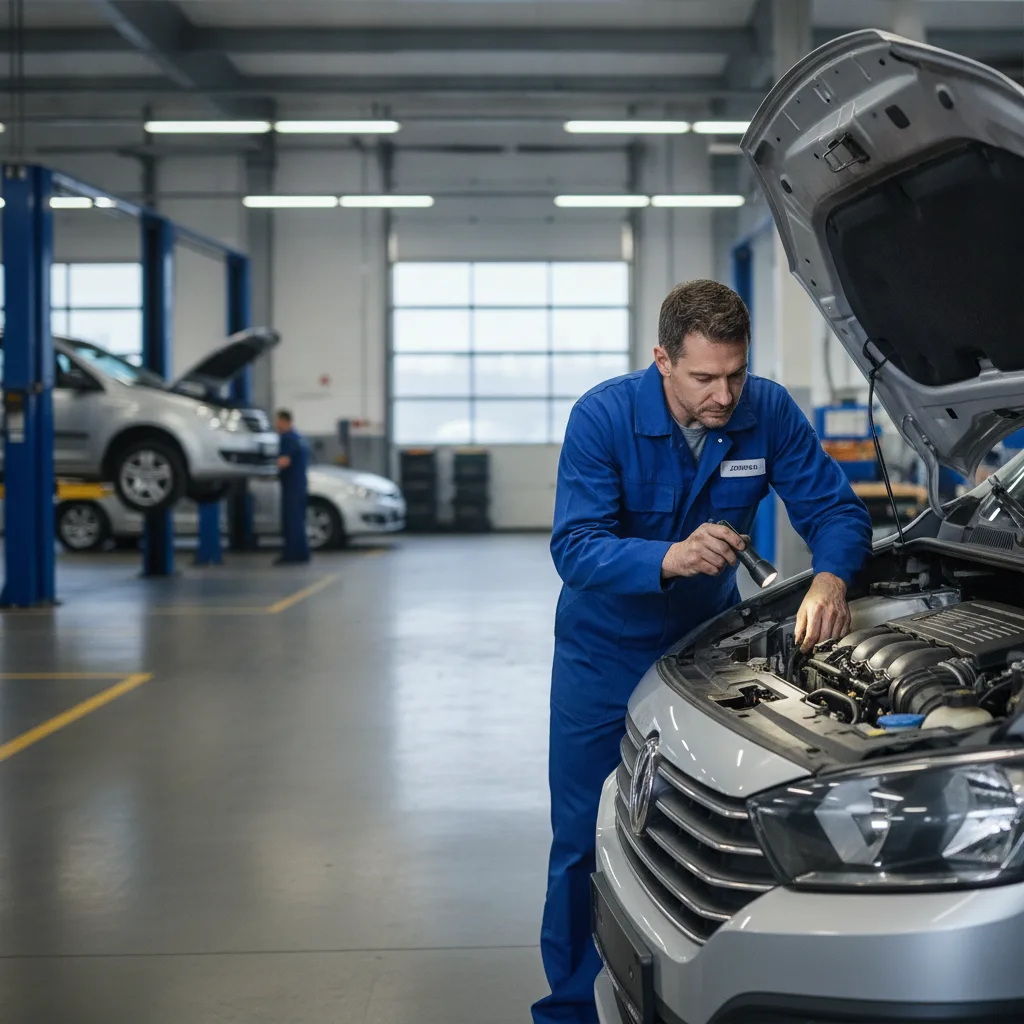
The 2.0-litre TDI engine fitted to modern Crafters comes in single-turbo (typically 102PS or 140PS) and twin-turbo BiTDI (177PS) configurations. Both are hard-working engines, but they require strict maintenance adherence to remain dependable.
Timing Belt and Water Pump
Unlike chain-driven competitors, the Crafter's 2.0 TDI engine relies on a toothed timing belt (cambelt). Recommended replacement intervals vary depending on engine code, production year, and operating conditions; check the original service portfolio or consult an authorised Volkswagen Commercial Service Centre for the exact interval on the specific chassis. If the seller cannot provide verifiable paperwork confirming a required cambelt and water pump change, budget to have this work carried out immediately.
Emissions Equipment: DPF and AdBlue
Euro 6 diesel engines rely on sophisticated exhaust aftertreatment systems, including a Diesel Particulate Filter (DPF) and Selective Catalytic Reduction (SCR) with an AdBlue tank. During your test drive, ensure the engine reaches full operating temperature and verify that no warning lights appear on the instrument cluster. Frequent short journeys in urban traffic often lead to blocked DPFs or crystallised AdBlue dosing valves. Check the AdBlue filler neck (located beneath the fuel flap) for crusty white deposits, which can indicate poor maintenance or leaking seals.
Transmission and Clutch
On manual variants, test the clutch bite point under load. A slipping clutch or severe vibration through the pedal usually points to a failing dual-mass flywheel, which is expensive to replace. If testing the eight-speed automatic gearbox, shifts should be instantaneous and seamless. Any hesitation, shuddering at low speeds, or clunking when shifting between drive and reverse indicates fluid neglect or internal valve issues.
Suspension, Brakes, and Underside Checks
Because Crafters are heavy commercial vehicles, worn running gear is one of the most common reasons for MOT test failure in the UK.
- Rear Leaf Springs: Look at the stance of the van on level ground. If the rear leaf springs appear flat or curve upwards towards the axle, the vehicle has likely endured prolonged overloading. Inspect the spring leaves for hairline fractures and check the rubber bump stops for severe compression wear.
- Front Suspension: Listen closely for knocks or creaks when steering over speed humps or rough surfaces. Crafters are prone to premature wear on front top strut mounts, anti-roll bar drop links, and lower wishbone bushes.
- Braking Components: A fully laden Crafter works its brakes hard. Check the brake discs through the wheel spokes for deep scoring, corrosion ridges, or signs of overheating (blue discoloration).
- Underside Corrosion: While second-generation Crafters feature superior anti-corrosion protection compared to earlier models, always inspect the lower sill seams, exhaust mountings, and rear crossmembers for road-salt damage or impact scrapes from site work.
Cab, Electrics, and Cargo Area
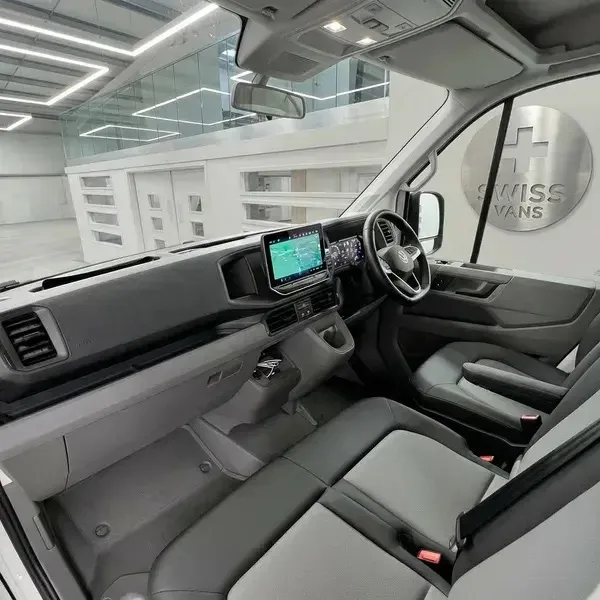
The Crafter's cab is designed for long shifts, but high-mileage work vehicles take a battering inside. Check the driver's seat base and outer bolster for collapsed foam and fabric tears, which often correlate with multi-drop delivery usage.
Test the touchscreen infotainment display thoroughly. Screen freezing, non-responsive touch controls, and faulty steering wheel buttons can be time-consuming to diagnose. Ensure all driver assistance aids—such as Crosswind Assist, Front Assist radar, and parking sensors—are operational with no dashboard error messages.
In the cargo hold, open and close the sliding side door from both inside and outside. The door should glide smoothly along its mid-body track without sagging or requiring excessive force; worn nylon rollers or bent tracks are common. Check the rear barn door hinges for seized pins and stress cracks in the surrounding sheet metal caused by strong winds catching the doors when unlatched.
Sourcing Your Next Commercial Van
Before finalising an agreement on any commercial vehicle, always cross-reference the V5C logbook details, run an online MOT history check to monitor historic mileage trends, and ensure the vehicle has not been registered as an insurance write-off. Browsing a nationwide marketplace of used vans makes it far easier to compare specifications, fleet maintenance backgrounds, and mileage profiles across various dealers.
For independent sole traders and limited companies looking to balance working capital, exploring competitive options for commercial van finance through a dedicated finance broker or lender allows you to acquire a reliable, clean-air compliant vehicle while preserving cash flow for daily operations.
Frequently Asked Questions
What is the most common issue on a used Volkswagen Crafter?
On second-generation models (2017 onwards), the most common faults relate to the exhaust aftertreatment system, including blocked DPFs, faulty NOX sensors, and crystallised AdBlue injectors. On older first-generation models, suspension wear, propshaft centre-bearing failure, and bodywork corrosion are frequently reported.
Are all second-generation Volkswagen Crafters ULEZ compliant?
Yes. All second-generation Volkswagen Crafters launched in 2017 were built with Euro 6 compliant 2.0-litre TDI engines, meaning they meet the minimum emissions standards for the London ULEZ and other UK Clean Air Zones. Always confirm the vehicle's specific Euro status on the V5C logbook before purchase.
How long does a Volkswagen Crafter 2.0 TDI engine last?
When maintained strictly to schedule with the correct specification engine oil, genuine fuel filters, and timely cambelt changes, the Crafter's 2.0 TDI commercial engine can comfortably exceed 250,000 miles. Engines subjected to delayed servicing or chronic overloading will experience premature turbocharger and injector failure.
How can I check if a used Crafter has been overloaded?
Inspect the rear suspension: the leaf springs should have an upward arch; if they are flat or inverted, the van has carried excessive weight. Check the rear cargo floor for bowing, examine the tie-down lashing rings for stretching, and inspect the tyres for uneven inner-edge wear caused by axle deflection.