
Featured
ULEZ ✓Swiss VansBridgend
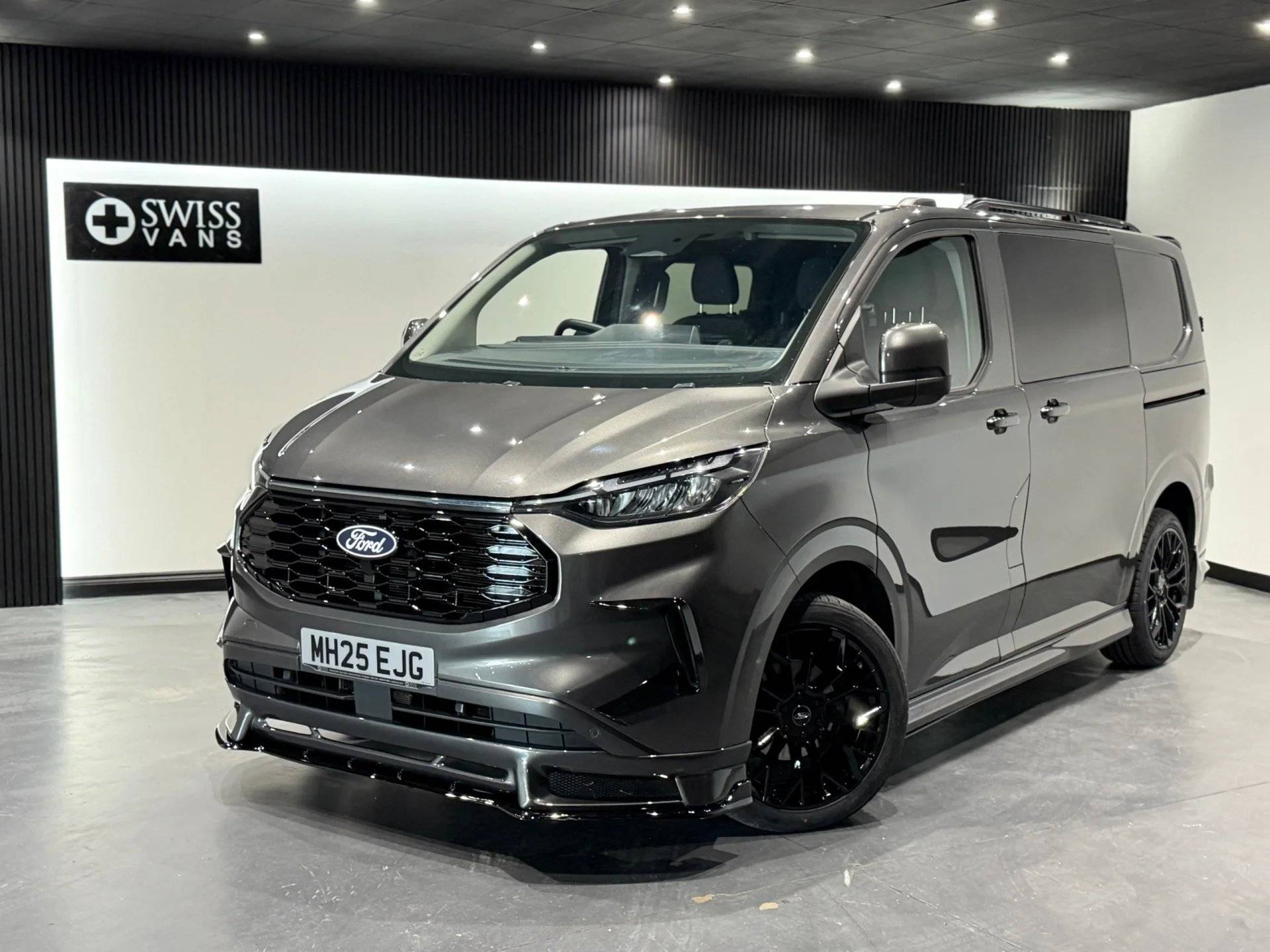
Ford Transit Custom 320 Limitd EcoBlue
2025 · 33,945 mi · Diesel
320LIMITD EBLUE
£29,994+ VAT
Manual
Ford
Pick a model for the buying guide and the Ford vans listed now, or filter all Ford stock on the Ford vans search.
Swiss VansBridgend
2025 · 33,945 mi · Diesel
320LIMITD EBLUE
Swiss VansBridgend
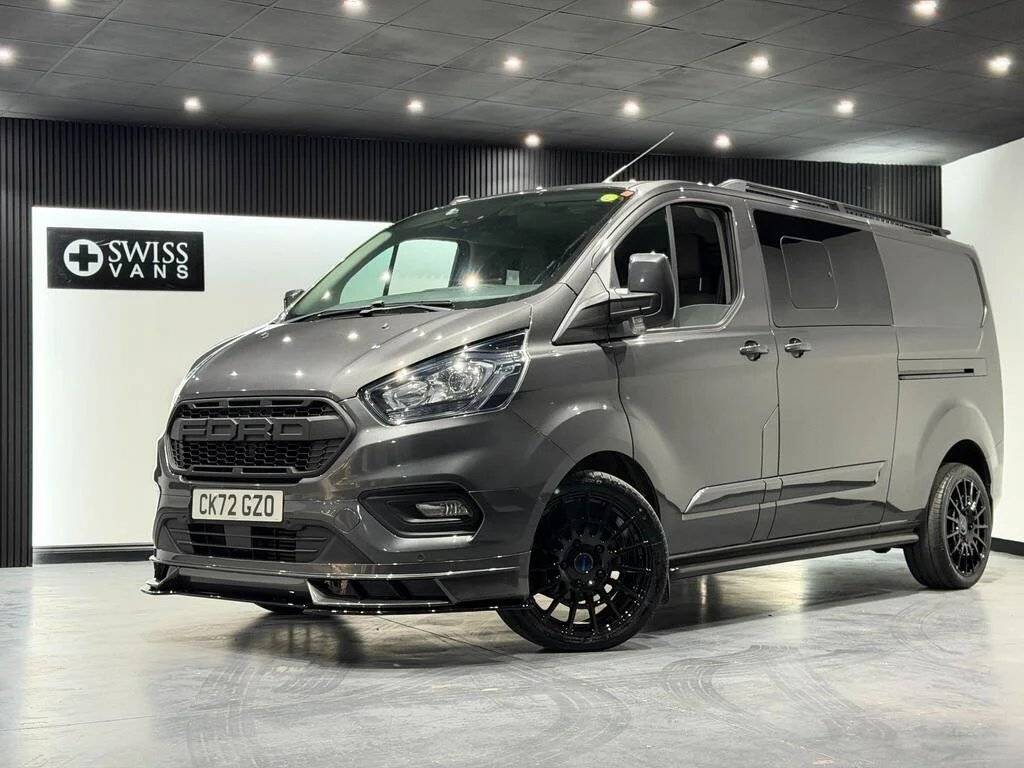
2022 · 44,108 mi · Diesel
320LMTD EBLUE A
Ford has dominated the UK commercial vehicle sector for decades, maintaining its position as the default choice for fleets, sole traders, and independent contractors. When searching for used Ford vans for sale, understanding the hierarchy of the lineup is vital to matching payload, volume, and running costs with your daily trade requirements.
The Ford commercial lineup begins with the Transit Courier, the most compact van in the portfolio. Engineered for urban multi-drop couriers, field technicians, and urban trades who require car-derived driving dynamics with commercial functionality, the Courier provides agile handling and access to height-restricted car parks while offering significantly more cargo utility than a passenger hatchback.
Stepping up in size brings you to the Transit Connect. Positioned in the small van sector alongside rivals like the Volkswagen Caddy and Citroen Berlingo, the Connect is a dedicated compact panel van available in short (L1) and long (L2) wheelbases. The L2 variant is capable of swallowing two standard Euro pallets or full-length work ladders internally when specified with the bulkhead load-through hatch.
The backbone of the UK light commercial vehicle fleet is the Transit Custom. Sitting in the medium one-tonne van class, it consistently ranks as the best-selling vehicle outright in the UK. Available in two wheelbases (L1 and L2) and two roof heights (H1 and H2), the Custom bridges the gap between everyday driveability and serious cargo volume, comfortably hauling standard eight-foot by four-foot building sheets laid flat on the floor.
At the heavy end sits the full-size Transit (Mk8 onwards), often referred to as the two-tonne Transit. Available in front-wheel drive, rear-wheel drive, and all-wheel drive configurations, this chassis covers gross vehicle weights from three tonnes up to five tonnes. It serves as the foundation for high-capacity panel vans, tippers, dropsides, Lutons, and bespoke chassis cab conversions.
While technically a pickup, the Ford Ranger represents another critical commercial asset. Offering a one-tonne payload and a three-and-a-half-tonne towing capacity across its double, single, and super cab variants, it caters to trades working in civil engineering, forestry, utilities, and agricultural sectors demanding off-road capability alongside commercial VAT qualification.
Different trades demand distinct combinations of payload, internal height, turning circles, and towing capacities. Ford's widespread popularity stems from designing specific chassis profiles that cater to distinct trade requirements.
The Transit Custom L2H1 is the standard across these trades. The extended L2 chassis gives a load length along the floor that allows eight-by-four timber sheets, plasterboard, and packs of structural timber to be loaded flat between the wheel arches while keeping the rear doors fully shut. The low roof height ensures access through height barriers at builders' merchants and multi-storey car parks, while factory racking mounting points allow internal shelving for nail guns, chop saws, and toolboxes without puncturing external skins.
Mechanical and electrical contractors regularly split between the Transit Connect L2 and the Transit Custom L1H1. Installers who carry small plant, consumables, copper pipe, and fittings find the Connect perfectly suited for residential driveways and congested suburban roads. The bulkhead hatch allows three-metre lengths of conduit and copper pipe to slide safely under the passenger seat. Meanwhile, commercial electricians and central heating engineers requiring room for unvented hot water cylinders, boilers, and heavy cable drums opt for the Custom to benefit from increased payload ratings and floor space for drawer units.
Heavy trades gravitate exclusively towards the heavy-duty Transit 350 rear-wheel drive chassis. Twin rear-wheel setups provide stability when transporting ballast, steel, or aggregate close to maximum gross vehicle weight limits. Rear-wheel drive gives much better traction on muddy construction sites and wet fields where front-wheel-drive vans quickly bog down under load. Scaffolding firms rely on the dropside and flatbed variants for ease of side-loading tubular steel and scaffold boards.
Final-mile delivery drivers frequently search for mid-spec Transit Custom H2 high-roof or Transit 350 L3H2 models. The high-roof configurations eliminate the need to stoop when moving parcels from internal racking to the side loading door, dramatically reducing physical strain across a multi-drop shift. Twin side-loading doors, when specified, allow rapid access to cargo from either pavement without stepping out into traffic.
Ford commercial vehicles are work tools that often endure demanding use. Before parting with capital, conduct a systematic, hands-on mechanical and structural inspection to ensure you are not inheriting someone else's neglected problem.
Each generation and model of Ford commercial vehicle has unique mechanical characteristics and known problem areas that you must identify during the test drive.
Early Transit Custom models built between 2012 and mid-2016 use the older 2.2-litre TDCi engine. These units are chain-driven, avoiding wet belt concerns, but they suffer from premature fuel injector failure, cracked exhaust gas recirculation (EGR) valve coolers, and occasional piston failures caused by over-fuelling injectors. Listen for sharp diesel knock under load and watch for white or grey smoke on cold start-up.
From late 2016 onwards, the Custom adopted the 2.0-litre EcoBlue unit to comply with Euro 6 emissions regulations. Alongside the wet belt degradation mentioned above, early EcoBlue engines suffered from faulty continental fuel injectors that caused sudden limp-home mode activation. Ensure any recall work has been registered. Additionally, check the AdBlue tank heater and injector system; fault codes relating to the selective catalytic reduction (SCR) system will trigger a non-restart countdown on the dashboard if left unaddressed.
The full-size rear-wheel-drive Transit transfers drive through a long, multi-section propshaft. Inspect the rubber centre support bearings for splitting, degradation, and excessive play. A worn propshaft bearing manifests as a distinct rhythmic thrum or low-frequency cabin boom between forty and fifty miles per hour. Rear differentials can also develop bearing whine if subjected to chronic overloading or neglected differential oil change intervals.
On high-mileage Mk8 panel vans, check the alignment of the heavy sliding side doors. The roller bearings and plastic runners in the middle track wear down, causing the door to drop, scrape the sill paintwork down to bare metal, and fail to latch securely against the weather seals, letting rainwater enter the load area.
Second-generation Transit Connect models powered by the 1.5-litre TDCi or 1.5-litre EcoBlue diesel engine deliver exceptional economy, but watch for oil leaks around the camshaft carrier and vacuum pump. On manual gearboxes, second-gear synchromesh wear is relatively common on vans that have spent their lives as urban delivery vehicles, causing crunching gears on quick downshifts. Listen for clunking from the rear beam axle over rough surfaces, which indicates worn trailing arm bushes.
Used Ford van values vary based on mileage, cosmetic condition, maintenance history, and emissions compliance status. Clean Air Zone and ULEZ regulations heavily dictate the real-world value of pre-Euro 6 versus post-Euro 6 models.
At this entry price point, vehicles will typically be older, higher-mileage workhorses. You will primarily find pre-2014 Transit Mk7 models, high-mileage first-generation Transit Connects, or early Transit Custom models with over one hundred and fifty thousand miles on the odometer. Most diesel vans in this bracket are Euro 5, meaning they will incur daily charges to drive within modern Clean Air Zones. Expect cosmetic blemishes, battle scars, tired load areas, and shorter remaining component life on clutches, starter motors, and alternators. Detailed service documentation is critical here to prove regular oil changes.
This bracket contains the most active segment of the independent used trade market. Here you can source late 2.2-litre TDCi Transit Customs (2014 to 2016) and early 2.0-litre EcoBlue Euro 6 models (2016 to 2019) with mileages ranging between seventy thousand and one hundred and twenty thousand miles. Well-maintained Transit Connect L2 models in higher trims (such as Trend or Limited) sit comfortably within this range. Ensure that any EcoBlue engine within this price band has proof of timely wet belt replacement, as many reach the recommended age or mileage limit while in this tier.
Buyers in this price range can secure post-2018 facelift Transit Customs with revised cabin interiors, larger touchscreen infotainment displays, and improved sound insulation. Mileage on these vehicles should sit well below sixty thousand miles, and most examples will boast full main-dealer or specialist commercial service records. You will also find well-equipped full-size Transit 350 panel vans, tippers, and dropsides suitable for heavy contracting. Specification grades typically include Limited models, bringing air conditioning, heated seats, cruise control, front and rear parking sensors, and alloy wheels as standard equipment.
At the top end of the used market, you will find low-mileage demonstrator vehicles, ex-fleet management returns, and specialist styling editions such as the Transit Custom Trail, Active, or factory-backed MS-RT performance styling conversions. These vans carry remaining manufacturer warranties, feature updated powertrains (including mild-hybrid and plug-in hybrid options), and require minimal mechanical reconditioning before going straight onto site.
Acquiring a commercial vehicle requires balancing cash reserves, tax efficiency, and cash flow predictability. When sourcing your vehicle through an independent marketplace, exploring structured used van finance solutions allows you to spread the capital outlay over fixed terms rather than exhausting your trading capital.
Hire Purchase is the most traditional route to commercial vehicle ownership. Under an HP agreement, you pay an initial deposit, which commonly matches the VAT element of the vehicle's purchase price (which VAT-registered businesses can usually reclaim on their next quarterly return). The remaining balance is divided into equal monthly repayments across a pre-agreed term, typically running between twenty-four and sixty months. Once the final payment and option-to-purchase fee are cleared, legal ownership of the van transfers directly to your business. This option suits trades aiming to run their vehicles for the long term without mileage restrictions.
Finance Lease is widely favoured by VAT-registered tradespeople because it avoids the need to pay the entire purchase VAT upfront. Instead, VAT is charged across each monthly rental payment. Agreements can be tailored with lower monthly outlays by incorporating a larger balloon payment at the end of the term, aligned with the anticipated residual value of the van. When the term concludes, the van is sold to an independent third party; if the sale price exceeds the balloon payment, your business retains the majority of the surplus equity, though you do not become the legal owner of the vehicle.
If you prefer driving newer vehicles every few years without the operational risk of depreciation or used-market valuation swings, exploring current van lease deals provides fixed-cost motoring. Contract hire involves fixed monthly rentals based on an agreed annual mileage allowance. At the end of the term, the vehicle is returned to the leasing company, leaving you free to choose a brand-new van without the hassle of disposal or selling privately.
Vansales is an online commercial vehicle marketplace designed to connect buyers with available stock across the UK; Vansales is not a lender, broker, or credit intermediary, does not arrange finance, and does not sell vehicles directly. All finance arrangements must be discussed directly with regulated financial providers or credit brokers who assess eligibility based on individual trading history and credit profiles.
Before closing the deal and driving your chosen Ford van back to your workshop, execute final administrative verifications to safeguard your business from hidden liabilities.
Related: exploring current van lease deals