
Private seller
ULEZ ✓Vauxhall
Pick a model for the buying guide and the Vauxhall vans listed now, or filter all Vauxhall stock on the Vauxhall vans search.
Vauxhall remains one of the most familiar badges on British roads, with a commercial vehicle heritage deeply intertwined with UK manufacturing. For decades, vans bearing the Griffin emblem have rolled off assembly lines in Luton and Ellesmere Port, establishing a massive presence across fleet operations, public utilities, and independent trades. When browsing the used market, understanding the lineage of Vauxhall commercial vehicles is critical, largely because the brand underwent a fundamental transformation when its parent company transitioned from General Motors to the PSA Group (now Stellantis). This structural shift dramatically changed the mechanical foundations of its core models.
Today, the used Vauxhall van market encompasses four distinct size categories: the compact Corsavan, the small Combo, the medium Vivaro, and the heavy-duty Movano. Older models shared engineering DNA with Renault and Nissan, while models registered from late 2018 and 2019 onward share platforms, engines, and electrical architectures with Peugeot, Citroën, Fiat, and Toyota. For a buyer sourcing a working vehicle, this distinction dictates everything from engine reliability and payload capacity to parts availability and diagnostic troubleshooting.
Whether you require a low-emission runabout for navigating urban clean air zones or a high-roof workhorse capable of carrying heavy building aggregates, Vauxhall offers established alternatives to the dominant Ford Transit family. The extensive UK dealer footprint, combined with massive aftermarket parts supply, ensures that maintaining a used Vauxhall remains straightforward and practical for working tradespeople across England, Scotland, Wales, and Northern Ireland.
Selecting the right used commercial vehicle starts with matching chassis architecture to your daily working routines. Vauxhall has streamlined its offerings over the years, leaving three primary workhorses on the second-hand scene, along with one discontinued car-derived model that remains popular for light duties.
Discontinued as passenger car platforms shifted away from three-door configurations, the Corsavan remains a staple for trades requiring zero bulk cargo capacity. Primarily powered by the durable 1.3-litre CDTi diesel engine, it drives exactly like a standard supermini, making it exceptionally easy to park in congested residential streets. It delivers excellent fuel efficiency and low running costs, though payload is strictly limited to light tool kits, testing equipment, or small parcel delivery.
The small van sector features two clearly defined eras of the Combo. Models sold between 2012 and 2018 (often designated Combo D) were built in partnership with Fiat and shared their platform with the Doblò. These are boxy, utilitarian vehicles renowned for exceptional internal volume relative to their footprint, featuring high rooflines and wide-opening asymmetric rear doors.
From late 2018 onward, the model became the Combo Cargo (Combo E), built on the modern Stellantis EMP2 platform. This newer version brought massive leaps forward in cabin ergonomics, sound deadening, and electronic driver aids. Available in standard (L1) and long (L2) wheelbases, it provides load volumes up to 4.4 cubic metres when fitted with the load-through bulkhead hatch. It has earned significant popularity among mobile technicians who spend long hours behind the wheel.
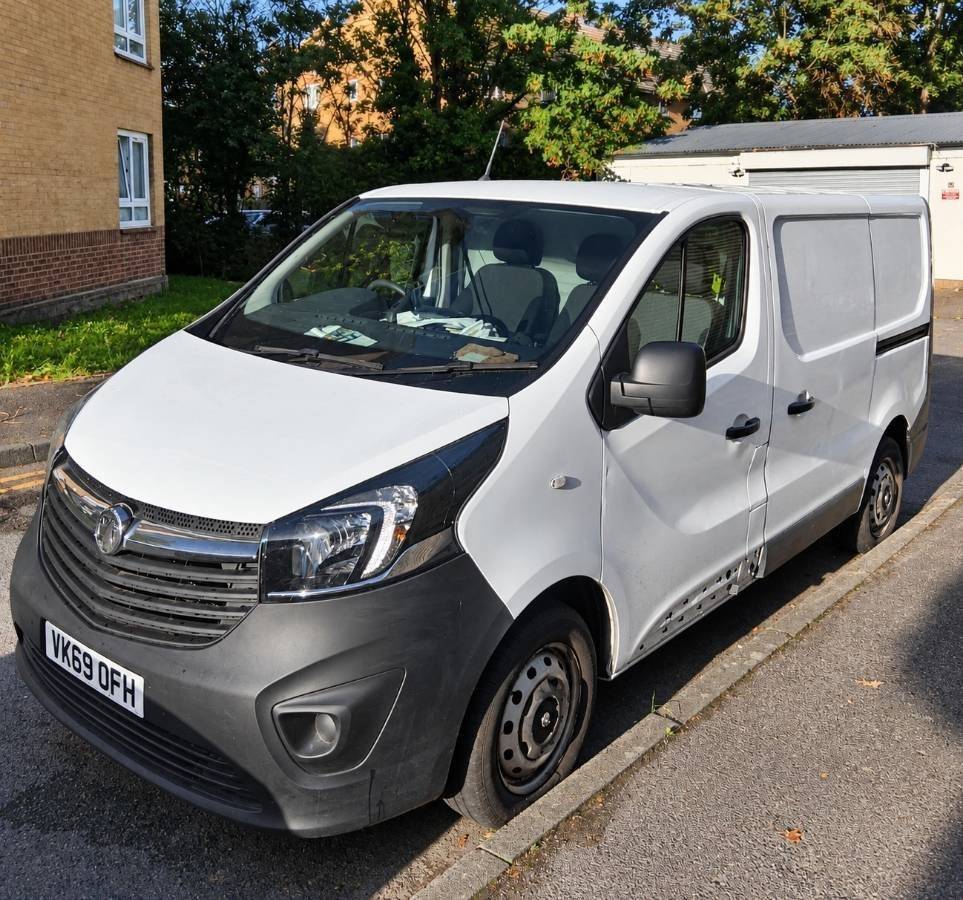
The Vivaro represents the backbone of Vauxhall commercial sales in the UK and serves as the direct competitor to the ubiquitous Ford Transit Custom. On the used market, you will encounter two vastly different generations. The Vivaro B, built in Luton between 2014 and mid-2019, was a joint venture with Renault (sharing its platform with the Trafic). It is prized for its square, practical cargo bay, comfortable ride, and generous internal width.
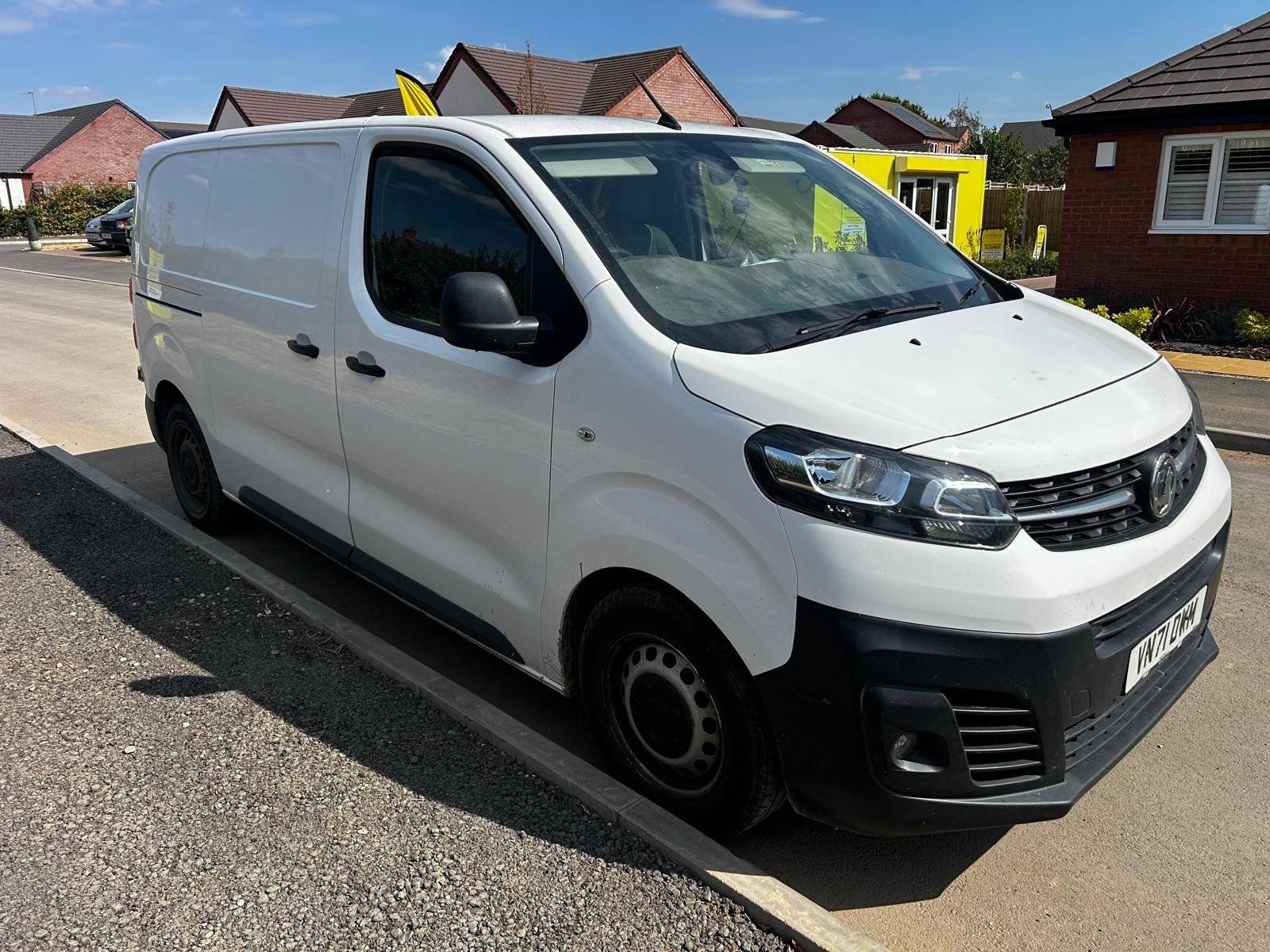
In 2019, Vauxhall launched the British-built Vivaro C on the Stellantis EMP2 platform. Slightly more compact on the outside, it was intentionally engineered with an overall height under 1.9 metres in standard configurations, allowing it to clear standard UK multi-storey car parks and barrier-restricted height restrictions. While the load bay features more pronounced curves than its predecessor, the Vivaro C offers competitive payloads often exceeding 1,400 kilograms on specific variants, setting high benchmarks for the medium class.
For heavy transport, high-cube volume, and bespoke conversions, the Movano provides the heavy-lifting capability. Second-generation models (2010 to 2021) were based on the Renault Master platform, offered in front-wheel drive, rear-wheel drive, and single or twin rear-wheel setups. These vans feature 2.3-litre CDTi powerplants capable of enduring high-mileage trunking routes.
Late 2021 saw the introduction of the Movano C, shifting the model onto the long-running Fiat Ducato and Citroën Relay chassis. This design incorporates a wide cargo bay that easily accommodates standard sheet materials flat between the wheel arches, making it an ideal candidate for dry-lining specialists, multi-drop pallet couriers, and drop-side tipper conversions.
Vauxhall commercial vehicles are rarely bought on emotion; they are selected because the numbers on the balance sheet and the physical dimensions on the job site make commercial sense. Different sectors naturally gravitate toward specific configurations across the range.
Commercial vehicles live hard lives compared to passenger cars. Even clean, low-mileage examples may have carried maxed-out payloads or endured short, stop-start delivery cycles that accelerate mechanical wear. When surveying any potential purchase, work through the following fundamental inspection checkpoints:
Each generation of Vauxhall commercial vehicles carries specific engineering characteristics that can present maintenance issues as mileage accumulates. Understanding these model-specific foibles allows you to isolate manageable repairs from catastrophic failures during an inspection.
The Fiat-derived Combo D relies heavily on the 1.3-litre and 1.6-litre CDTi diesel engines. On the 1.3-litre variant, listen carefully for metallic rattling on a cold start. These engines utilize a timing chain that is notorious for stretching if oil changes have been neglected; severe stretch leads to the chain jumping teeth, resulting in valve-to-piston contact. The 1.6-litre unit uses a conventional timing belt but is prone to EGR valve soot accumulation, causing limp-mode activations and jerky acceleration under partial load. Rear suspension top mounts and coil springs are also prone to early failure under constant payload weight.
The Stellantis-platform Combo is primarily powered by the 1.5-litre BlueHDi diesel engine (badged Turbo D). The primary mechanical issue on early versions of this engine involves the auxiliary timing chain connecting the two camshafts. Early builds featured a seven-millimetre chain system that could stretch and snap without prior warning, destroying the cylinder head. Stellantis later engineered an updated eight-millimetre chain and revised camshaft carrier housing. Check the vehicle history to verify if this update has been carried out. Additionally, inspect the AdBlue tank assembly; integrated pump and heater failures within the tank module are a well-documented issue requiring complete tank replacements.
This Renault-based generation utilizes the 1.6-litre CDTi engine in both single-turbo and twin-turbo (BiTurbo) formats. The BiTurbo variants require meticulous scrutiny. The smaller high-pressure turbo is known to suffer bearing wear, often signaled by a high-pitched siren noise under load or excessive oil residue inside the intercooler hoses. Split boost pipes are frequent, leading to black smoke and severe power loss under acceleration.
The scuttle panel below the windscreen on the Vivaro B can channel rainwater directly onto the top of the engine block. Over time, water pools around the fuel injectors, causing extreme galvanic corrosion. Inspect the injector wells with a torch; if they are rusted solid, future injector extraction can necessitate removing the entire engine or cylinder head. Gearboxes (six-speed manual units) also deserve attention: listen for whine in third and sixth gears, which points to worn mainshaft bearings.
Sharing mechanical components with the Citroën Dispatch and Peugeot Expert, the Vivaro C features either the 1.5-litre or 2.0-litre Turbo D engine. The 2.0-litre is widely regarded as the more durable unit for heavy towing and maximum payloads, suffering fewer catastrophic faults than the smaller displacement alternative. However, both engines are susceptible to AdBlue urea crystallization at the injector tip, triggering engine management warnings.
Electrical gremlins can manifest in the cabin touchscreen systems, power-folding mirrors, and central locking actuators. Check the sliding door contacts on the B-pillar; grime on these brass pins causes the van to erroneously report an open door while driving, disabling the internal alarm sensors.
The large Movano B uses the 2.3-litre CDTi engine, which is generally robust if serviced routinely. The most prevalent mechanical vulnerability is the concentric clutch slave cylinder on manual transmissions. When this fails, hydraulic fluid leaks into the bellhousing, contaminating the clutch friction plate and causing total pedal drop; repairing it requires a full gearbox removal. Front suspension ball joints, track rod ends, and rear hub bearings experience rapid wear on vans regularly operated at maximum payload, manifesting as knocking over surface transitions or highway drone.
Vauxhall vans represent some of the most competitive metal per pound on the UK market. The sheer volume of ex-fleet, ex-utility, and leased stock entering the second-hand ecosystem creates defined pricing categories.
At this entry-level tier, vehicles will generally be older generations showing substantial mileage, cosmetic scratches, panel dings, and heavily worn driver contact points. Expect to find high-mileage Vivaro A and high-mileage early Vivaro B vans, alongside older Combo D variants. Vehicles in this price bracket rarely meet current Clean Air Zone standards, making them better suited for rural trades working outside metropolitan charging corridors. Prioritize mechanical integrity, complete maintenance documentation, and structural chassis condition over cosmetic perfection.
This represents the heart of the budget-conscious independent trade market. Here you will find late-model Combo D vans in clean condition, higher-mileage early Combo Cargo (post-2018) models, and mid-generation Vivaro B vans with moderate mileage. Euro 6 compliance becomes widespread at the higher boundary of this bracket, making it the minimum entry tier for contractors requiring daily access to emission-controlled inner cities. Scrutinize the service history closely, as many vehicles at this price point are exiting their second ownership cycle where maintenance may have been deferred.
Within this bracket, buyers can secure lower-mileage, exceptionally tidy Vivaro C vans, late-registration Movano B panel vans, and nearly new Combo Cargo models. Many vehicles in this range are ex-fleet or single-owner enterprise assets featuring full franchised dealer service histories, ply-lined cargo bays, and clean cabin environments. Features like air conditioning, cruise control, reversing sensors, and Apple CarPlay become common standard equipment at this level. Manufacturer warranties may still be active on vans sitting toward the upper threshold of this range.
The top tier contains late-plate, delivery-mileage, or demonstrator-level stock, including specialized conversions such as Luton bodies with tail-lifts, factory tippers, and fully equipped refrigerated vans. You will also encounter all-electric models like the Vivaro Electric and Combo Electric. These vehicles offer pristine bodywork, minimal mechanical wear, modern active safety systems, and extended manufacturer warranty coverage, providing maximum operational reliability for established business operations.
Purchasing a commercial vehicle involves balancing cash flow with asset ownership. Understanding the fundamental finance structures allows you to secure a replacement vehicle without compromising your working capital.
Hire Purchase is the most traditional method of funding a used van. Under an HP agreement, you pay an initial deposit (frequently equivalent to the VAT element on VAT-qualifying commercial vehicles), followed by fixed monthly payments spread over a term typically ranging from two to five years. Once all monthly payments and the nominal option-to-purchase fee are cleared, you own the van outright. This structure is favoured by trades who intend to run their van for many years after the finance agreement concludes, amortizing the cost over a long operational lifespan.
Finance Lease is widely utilized by VAT-registered businesses and limited companies due to its structural tax efficiencies. Monthly rentals can often be offset against taxable profits as an operational expense. You take operational custody of the vehicle, but you never become the legal owner. Agreements can be established with fully amortized payments, or structured with lower monthly payments and an agreed final balloon payment based on the expected residual value of the van. At the end of the term, the van is typically sold to a third party, with the business retaining the vast majority of any surplus proceeds above the balloon figure, or paying the shortfall if the market value drops.
While commonly associated with new registrations, contract hire solutions are increasingly applied to young used vehicles. These operate purely as rental agreements where you hand the van back at the end of the agreed period without any ownership liabilities or residual value risks, subject to mileage limits and fair wear-and-tear conditions. Those who prefer lower initial outlays on nearly new metal often evaluate van lease deals alongside used purchases to determine which option delivers the lowest total cost of operation.
When searching for your next commercial vehicle, it helps to understand the commercial structure of the platforms you use. Vansales operates exclusively as a vehicle search marketplace and information portal. We do not lend money, arrange consumer credit, operate as an intermediary finance broker, or sell vans directly. Instead, we connect trade buyers with private sellers, independent motor trade dealerships, and franchised retail groups across the UK.
Every commercial vehicle dealership maintains relationships with consumer credit partners and commercial asset finance houses. To understand the exact financial mechanics, credit checks, and documentation necessary for your individual business circumstances, explore our dedicated van finance guidance page. This resource breaks down the steps to prepare your business accounts, assess affordability, and navigate commercial underwriting before committing to a purchase.
A used Vauxhall van remains one of the most pragmatic, accessible choices for British trades. By avoiding the price premiums often carried by other brands, Vauxhall allows contractors to acquire modern, fuel-efficient, and professional transport while keeping capital overheads strictly in check.
Success in the second-hand market comes down to knowing which mechanical era you are buying into. Always differentiate the Renault-engineered Vivaro B and Movano B from the newer Stellantis-based Vivaro C and Movano C. Insist on rigorous maintenance validation, especially regarding timing chain and wet timing belt intervals, AdBlue systems, and boost pipe integrity. When vetted thoroughly, a used Vauxhall represents a dependable, hard-working partner ready to pull its weight for your business every single working day.