Buying a used Mercedes-Benz Vito
Overview of the Used Mercedes-Benz Vito in the UK
The Mercedes-Benz Vito occupies a distinctive space in the UK medium van market. Positioned directly against established commercial workhorses such as the Ford Transit Custom, Volkswagen Transporter, and Vauxhall Vivaro, the Vito offers a blend of commercial durability and passenger-car refinement. For self-employed tradespeople, regional contractors, and small business fleets, purchasing a used Vito is often driven by a need for mechanical resilience paired with the professional image that the three-pointed star brings to customer premises.
Unlike many light commercial vehicles built purely on a shared front-wheel-drive platform, the modern Vito (particularly the third-generation W447 model introduced in late 2014) is engineered around dual powertrain configurations: Front-Wheel Drive (FWD) and Rear-Wheel Drive (RWD). Front-wheel-drive variants were developed to offer an accessible price point, reduced kerb weight, and enhanced fuel economy for urban trades and light courier work. Rear-wheel-drive variants, powered by proprietary Mercedes-Benz diesel engines, are built for heavy-duty haulage, long-distance motorway cruising, and substantial towing tasks.
On UK roads, the Vito is recognized for its composed road manners, superior cabin acoustic insulation, and low driving position. Where conventional panel vans often produce hollow resonance and road noise when driven unladen, the Vito maintains car-like handling and suspension compliance. With an overall vehicle height comfortably below two metres on standard suspension setups, it readily enters multi-storey car parks, underground loading bays, and residential garages, making it a functional choice for trades operating in dense urban environments and clean air zones.
Body Styles, Dimensions, and Load Capacities
When searching for a used Mercedes-Benz Vito, understanding the sizing nomenclature is essential. Unlike competitors that designate sizes through paired length and height codes (such as L1H1, L2H2), the W447 generation Vito comes in a single standard roof height (approximately 1,910mm) and three distinct body lengths:
- Compact (L1): Overall vehicle length of 4,895mm with a 3,200mm wheelbase and a rear cargo floor length of 2,586mm. This variant was later phased out in newer production runs, but remains plentiful on the second-hand market as a nimble urban tool.
- Long (L2): Overall vehicle length of 5,140mm on the same 3,200mm wheelbase, extended by increasing the rear overhang. It provides a cargo floor length of 2,831mm and represents the most balanced configuration for general trades.
- Extra-Long (L3): Overall vehicle length of 5,370mm built on an extended 3,430mm wheelbase, yielding a cargo floor length of 3,061mm. This model easily accommodates eight-by-four-foot sheet materials flat on the floor with the rear doors fully shut.
Body Configurations
The Vito is available in three primary body styles across the used market:
- Panel Van: Designed purely for cargo transport, equipped with a full steel bulkhead, twin sliding side load doors as standard on UK models, and either rear twin doors (opening to 180 degrees) or a top-hinged tailgate. Usable cargo volume ranges from 5.5 cubic metres in the Compact (L1) up to 6.6 cubic metres in the Extra-Long (L3). The width between the rear wheel arches sits at 1,270mm, which accommodates a standard UK pallet or up to three Europallets loaded in tandem on Long and Extra-Long models.
- Crew Van (Mixto): Features a factory-installed three-passenger rear bench seat behind the front row, glazed side doors, and a secondary composite bulkhead dividing the passenger cabin from the load bay. This configuration allows a five- or six-person work team to travel alongside a dedicated, secure cargo space measuring between 3.1 and 4.1 cubic metres depending on the body length.
- Tourer: A dedicated passenger-carrying bus with full interior trim, carpeting, air conditioning, and configurable seating for up to eight or nine occupants (including the driver). Offered in Pro and Select trims, it is widely utilized for executive airport transfers, hotel shuttles, and luxury private hire fleets.
Payload and Towing Ratings
Payload capabilities vary significantly across the Vito range based on the specified Gross Vehicle Weight (GVW), which ranges from 2.8 tonnes (2,800kg) to 3.2 tonnes (3,200kg). Front-wheel-drive 1.6-litre models typically offer payloads ranging from 750kg to roughly 1,000kg. Rear-wheel-drive variants—specifically those rated at 3.05 tonnes or 3.2 tonnes GVW—deliver maximum payloads exceeding 1,200kg, even when fully equipped with racking.
For trades requiring plant or equipment towing, rear-wheel-drive Vitos fitted with the OM651 or OM654 engines boast braked towing capacities of up to 2,000kg as standard, with many factory-ordered units featuring upgraded 2,500kg tow packages. Front-wheel-drive variants generally have lower towing limits, typically between 1,200kg and 2,000kg depending on engine output and gearing.
Engine Options, Gearboxes, and Trim Specifications
Navigating the used market requires clarity on the diverse engine lineups fitted to the Vito over the years, as maintenance requirements, drivetrains, and parts costs differ substantially between them.
1.6-litre and 1.7-litre Turbodiesel (OM622 Engine - FWD)
Found primarily in the 109 CDI (88hp) and 111 CDI (114hp) from 2014 to 2019, this engine is a transverse unit developed in partnership with Renault. It features a chain-driven camshaft and is paired exclusively with a six-speed manual gearbox driving the front wheels. Following the 2019/2020 updates, it was upgraded to a 1.7-litre capacity (OM622) in the 110 CDI (102hp) and 114 CDI FWD (136hp). These engines are economical, light on the front axle, and sufficient for light payload distribution, but lack the torque and towing capacity required for heavy haulage.
2.1-litre Turbodiesel (OM651 Engine - RWD)
The definitive Mercedes commercial engine fitted to the majority of pre-2020 W447 models. Used in the 114 CDI (136hp), 116 CDI (163hp), and twin-turbocharged 119 CDI (190hp), this longitudinal unit is renowned for strong mid-range torque and long-term durability. It was supplied with either a robust six-speed manual gearbox or the smooth 7G-TRONIC Plus torque-converter automatic transmission. All 119 CDI variants come equipped with the automatic gearbox as standard.
2.0-litre Turbodiesel (OM654 Engine - RWD)
Introduced on selected models in late 2019 and rolled out across the entire rear-wheel-drive lineup from mid-2020 onward, the OM654 is an all-aluminium four-cylinder diesel engine. Found in the 114 CDI, 116 CDI, 119 CDI, and the flagship 124 CDI (237hp), it provides dramatic reductions in noise, vibration, and harshness (NVH), along with cleaner tailpipe emissions. It is paired with the advanced 9G-TRONIC nine-speed automatic transmission, delivering lower motorway engine speeds and improved fuel consumption over the older 2.1-litre engine.
Trim Levels
Trim levels evolved over the W447 lifecycle. Pre-2020 models generally adhered to standard specification, Pure, Progressive, and Sport:
- Pure: Base-tier commercial spec featuring steel wheels, unpainted bumpers, plastic steering wheel, and basic Bluetooth audio. Built for fleet and hard site use.
- Progressive: Adds colour-coded bumper accents, cruise control, multi-function steering wheel, driver’s comfort seat with lumbar adjustment, and upgraded interior storage.
- Premium: Introduced on later models, adding full colour-coded exterior styling, 17-inch alloy wheels, air conditioning, reversing camera, and chrome front grille embellishments.
- Sport: Highly sought-after on the UK used market. Adds lowered sports suspension, side steps, bonnet graphics, leather-look seating, larger alloy wheels (17- or 18-inch), satellite navigation, and LED intelligent headlight packages.
Who Buys a Used Vito and Why? (Trade Applications)
The used Vito appeals to a broad range of UK trade professionals and commercial operators due to its combination of payload capability and professional aesthetic:
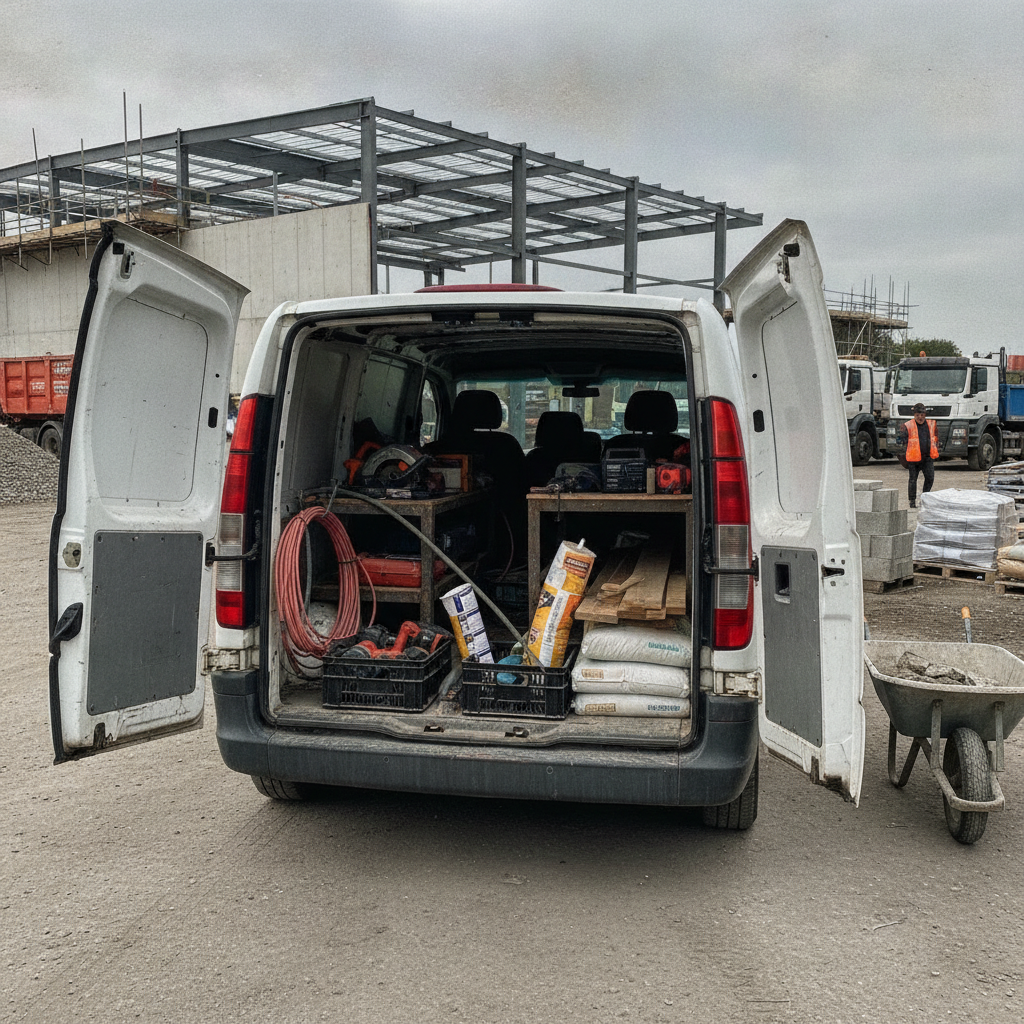
- Specialist Building Contractors and Installers: High-end kitchen fitters, joiners, and renewable energy technicians frequently choose the Vito Long or Extra-Long panel van. The vehicle projects an established, reliable image when parked on domestic driveways, while comfortably carrying raw timber, sheet materials, and heavy site machinery without bottoming out the suspension.
- Heating Engineers, Plumbers, and Electricians: These trades benefit from the standard dual side loading doors, which allow racked storage systems to be accessed from either pavement or roadside without entering the main cargo compartment.
- Towing Contractors and Plant Operators: Operators towing mini-diggers, mobile generators, car transporters, or dynamic tooling setups favour the rear-wheel-drive 116 CDI and 119 CDI variants for their dependable 2,500kg braked towing capacity and stability when fully laden.
- Dual-Purpose Owner-Drivers: The Vito Crew Van is particularly popular among sole traders who need a reliable work vehicle between Monday and Friday, but require a comfortable five- or six-seat family transport vehicle for weekends and outdoor activities. It retains business vehicle tax classifications while eliminating the need to tax and insure a separate family car.
What to Check When Buying a Used Mercedes-Benz Vito
A used commercial vehicle should never be bought on cosmetics alone. Conduct an exhaustive physical inspection across these key areas before agreeing to a purchase:
Digital Service History (Mercedes ASSYST)
Mercedes-Benz commercial vehicles operate an electronic maintenance tracker known as the ASSYST system. This calculates servicing intervals based on actual driving style, engine hours, and load stress (up to 25,000 miles or two years). Verify that the van has a fully documented Digital Service Drive printout. Inspect records for proof that the automatic transmission fluid (ATF) was replaced at recommended intervals (typically at 50,000 to 60,000 miles for the 7G-TRONIC). Neglected gearbox oil changes lead to rough shifting, slipping clutches, and premature valve body failure.
Driveline and Propshaft Alignment
On rear-wheel-drive models, take the vehicle on a varied road test reaching 50 to 70 mph. Pay close attention to any deep, low-frequency cabin vibrations or rumbling coming up through the seat bases between 30 and 50 mph. This indicates wear in the multi-piece propshaft’s centre support bearings or universal joints. Replacing a damaged propshaft assembly requires substantial mechanical labour.
Chassis, Running Gear, and Suspension
Vitos are capable of carrying heavy payloads every day, which places significant wear on chassis components. Check for:
- Rear Coil Springs: The bottom pig-tail coils on the rear suspension are susceptible to fracturing under persistent heavy loads. Use a torch to inspect the lower spring seats.
- Front Suspension Bushes: Listen for distinct clunking or knocking noises when driving over speed cushions or uneven tarmac. Lower wishbone rear bushes, anti-roll bar drop links, and top suspension strut mounts suffer accelerated wear on urban delivery vans.
- Brake Wear: Inspect the inner faces of the brake discs. Rear callipers can stick on their slider pins, causing uneven pad wear, excessive heat build-up, and grooving on the discs.
Bodywork, Doors, and Bulkheads
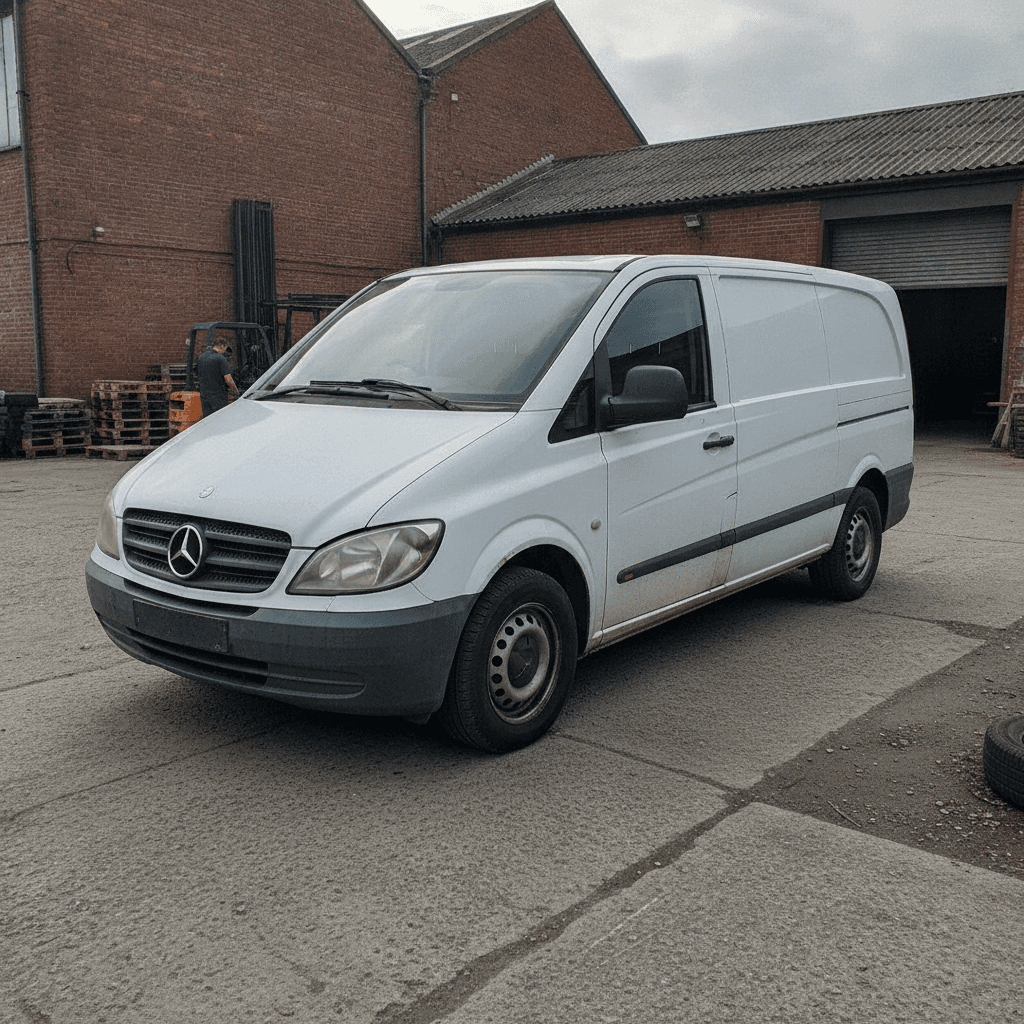
Unlike the second-generation W639 (pre-2014), which suffered from severe rust issues on wheel arches, tailgates, and sills, the W447 features fully galvanised panels with improved anti-corrosion protection. However, check for trade-related physical wear:
- Open and close both side sliding doors. They should glide smoothly along the runner tracks without dropping or catching. Misaligned doors point to damaged lower roller carriages, worn guide pins, or underlying chassis distortion from previous side impacts.
- Check the roof rails for damaged mounting points or water ingress around aftermarket roof rack fixings.
- Inspect the condition of the load floor. Look beneath timber ply linings for signs of untreated chemical spills, deep gouges, or standing water that can lead to corrosion from inside the vehicle.
Common Faults and Years to Avoid
While the Mercedes Vito is fundamentally reliable, certain design quirks and age-related mechanical issues are well-documented across the trade community.
Injector Seal Leaks ("Black Death")
Affecting older OM651 2.1-litre engines, the copper crush washers sealing the fuel injectors to the cylinder head can degrade over time. High-pressure combustion gases escape past the seal, leaving a rock-hard, bituminous carbon deposit around the injector wells. Remove the plastic engine acoustic cover during inspection: look for black tar-like residue and listen for a distinct rhythmic "chuffing" sound with the engine idling. Fixing this requires specialist pullers to extract stuck injectors and re-cut the injector seats.
Timing Chain Stretch (OM651 Engines)
The OM651 engine utilizes a rear-mounted simplex timing chain positioned against the transmission bellhousing. On high-mileage examples, or those subjected to stretched oil-change intervals, the chain links and hydraulic tensioner can wear. Listen for a loud, metallic rattle lasting for several seconds immediately upon a cold start. Replacing the timing chain and guides is an engine-out or gearbox-out procedure, resulting in substantial repair bills.
Emissions Systems (DPF, AdBlue, and NOx Sensors)
All Euro 6 compliant Vitos (standard on late-2015 onwards models) utilize Selective Catalytic Reduction (SCR) requiring AdBlue fluid. Common problems include failure of the pre- and post-catalyst NOx sensors, faulty AdBlue tank heater elements, and crystallised dosing injectors. If an engine management light is present or the dashboard displays an engine start countdown warning, the vehicle requires immediate diagnostic scanning. Vans used exclusively for short-distance town driving will also suffer from clogged Diesel Particulate Filters (DPFs) due to failed passive regeneration cycles.
Electronic Steering Lock (ESL)
A known issue on Mercedes-Benz commercial steering columns is the failure of the small electric motor inside the electronic steering lock module. Symptoms include inserting the electronic key into the ignition switch (EIS) without hearing the familiar mechanical unlocking click, accompanied by an absolute refusal of the engine to crank. Repair requires replacing the steering column module or programming an aftermarket emulator bypass.
Years and Variants to Approach with Caution
Exercise extreme caution when viewing early pre-2008 second-generation (W639) Vitos due to severe structural rust on sills, subframes, inner wings, and door bottoms. Avoid high-mileage, early Euro 6 models (2015–2016) with missing maintenance history, as early AdBlue management systems suffered from frequent software glitches and sensor failures. Additionally, approach very cheap 109 CDI models with caution if your work involves heavy materials or towing; operating a low-powered 1.6-litre van under permanent maximum gross weight accelerates clutch, turbo, and transmission wear.
Typical Used Mercedes-Benz Vito Prices in the UK
Prices on the UK used market vary according to age, mileage, mechanical spec, and whether the vehicle carries Value Added Tax (VAT). Most VAT-registered businesses will need to factor the standard twenty percent tax into commercial purchases, while private buyers and non-registered trades must budget for the full gross figure.
Under £6,000: High-Mileage Workhorses and Older W639s
In this baseline price range, vehicles will either be late second-generation W639 models (2010 to 2014) with moderate mileage, or early third-generation W447 models (2014 to 2016) showing over 150,000 miles. Most will be basic front-wheel-drive 109 CDI panel vans or hard-worked fleet vehicles. At this level, prioritize mechanical health, clean exhaust emissions, and structural integrity over cosmetic condition, and ensure Euro 5 models are not going to penalise your business in Clean Air Zones.
£6,000 to £12,000: Solid Working Vans (Euro 6 Entry)
This bracket provides access to tidy, clean-air-zone-compliant W447 panel vans dating from 2015 to 2019, typically with mileage between 80,000 and 130,000 miles. You will find well-kept 111 CDI front-wheel-drive models, as well as 114 CDI and 116 CDI rear-wheel-drive variants in Long or Extra-Long format. Look for vans with a complete ASSYST electronic service record and evidence of recent suspension and brake maintenance.
£12,000 to £20,000: Low-Mileage Work Vans and Well-Specified Crew Vans
A broad segment containing clean, one-owner corporate returns, 2018 to 2021 plate models, and low-mileage examples (under 60,000 miles). You will find well-equipped Progressive and Premium specifications, factory Crew Vans with factory rear glazing, and rear-wheel-drive models fitted with the 7G-TRONIC or early 9G-TRONIC automatic gearboxes. Vehicles in this tier often retain cosmetic paintwork in excellent condition, with minimal damage to load liners and bulkheads.
£20,000 to £30,000+: Late-Plate Facelift Models, Sport Trims, and Tourers
This premium sector includes nearly-new, post-facelift W447 models (2021 to 2024) powered by the refined OM654 2.0-litre engine and 9G-TRONIC transmission. You will find range-topping Sport models, 119 CDI and 124 CDI flagships, and immaculate Vito Tourer executive passenger buses with leather upholstery and digital infotainment systems. Many will have balance of manufacturer warranty remaining and mileage well under 30,000 miles.
Real-World Running Costs
Budgeting accurately for ongoing operational expenditure ensures your used van remains an asset rather than a drain on working capital.
Fuel Consumption
Real-world fuel economy across the Vito range depends largely on payload weight, speed, and drivetrain layout:
- 1.6L / 1.7L FWD (OM622): Delivers the lowest running costs on urban routes. Expect between 38 and 44 miles per gallon during standard mixed driving, though economy drops when carrying heavy materials on hilly routes.
- 2.1L RWD (OM651): Delivers consistent real-world performance. In 114 CDI and 116 CDI specifications, expect between 34 and 38 miles per gallon on combined cycles, rising to 42 miles per gallon during steady 60 to 70 mph motorway cruising. High-powered 119 CDI variants return around 32 to 36 miles per gallon.
- 2.0L RWD (OM654 with 9G-TRONIC): Offers a noticeable improvement in efficiency due to its broad nine-speed transmission ratios. Expect around 37 to 42 miles per gallon during routine highway journeys.
Insurance Groups
The Mercedes-Benz Vito sits in higher insurance groups than budget competitors, typically falling between Group 30 and Group 42 depending on body style, engine power, and trim. A base 109 CDI panel van sits at the lower end of the rating band, while a high-spec 119 CDI Sport Crew Van or nine-seat Tourer will occupy the top tiers. Fitting Thatcham-approved secondary deadlocks, internal tool vaults, and tracked telematics systems will help reduce these annual premiums.
Vehicle Excise Duty (Road Tax) and Servicing
Standard panel vans registered as N1 light commercial vehicles are taxed at the flat-rate annual commercial VED rate, shielding owners from the tiered luxury car tax applied to passenger vehicles. However, ensure that dual-purpose Vito Crew Vans and Tourers are checked against their V5C logbooks; some Tourer variants are classified as M1 passenger cars, which can incur higher initial tax rates or the luxury vehicle supplement depending on their original list price when new.
Servicing costs can be managed effectively by relying on reputable independent Mercedes-Benz commercial specialists rather than main franchised dealers. Specialist garages have full access to update the online Mercedes Digital Service system without charging premium main-dealer labour rates. Budget for interim oil services every twelve months or 12,500 miles—regardless of what the onboard ASSYST system displays—to safeguard timing chains, valvetrains, and turbo bearings from oil breakdown.
Financing Your Used Mercedes-Benz Vito
For most sole traders and commercial enterprises, funding a used van outright with working cash reserves is counterproductive. Spreading acquisition costs preserves liquid capital for tools, materials, and cash-flow management. When sourcing a pre-owned vehicle, evaluating different commercial van finance packages allows you to tailor your monthly outgoings to your balance sheet.
The most common financing method for used light commercials is Hire Purchase (HP). With an HP agreement, you pay a deposit (often equivalent to the VAT amount on VAT-qualifying vehicles), followed by fixed monthly payments spread over two to five years. Once all payments and the option-to-purchase fee are cleared, your business owns the van outright. This route is best suited to trades aiming to keep the van for the long haul, as you take ownership of the vehicle and its remaining equity.
Alternatively, Finance Lease is favoured by VAT-registered businesses seeking lower fixed monthly commitments. With Finance Lease, you pay an initial rental followed by monthly payments, with a deferred balloon payment scheduled at the end of the term based on the projected trade equity of the van. When the term concludes, you sell the vehicle to an independent third party, clear the balloon payment, and retain any surplus equity to roll into your next commercial vehicle.
If you prefer to operate a vehicle entirely within its manufacturer warranty period without the financial risks of depreciation, component failures, or eventual disposal, it may also be worth exploring brand-new alternatives via contemporary van lease deals. Contract hire allows you to run a modern vehicle over a fixed term with integrated maintenance packages, returning it at the end of the agreement with no residual value obligations.
Final Buying Checklist for Trade Buyers
Before transferring a deposit on a used Mercedes Vito, run through this concise checklist on site:
- Emissions Status: Confirm Euro 6 compliance via the V5C logbook if you operate within London's Ultra Low Emission Zone (ULEZ) or municipal Clean Air Zones across Birmingham, Bath, Bristol, Sheffield, or Newcastle.
- Exhaust Checks: Check underneath the van for signs of AdBlue crystal build-up around the exhaust injector and confirm that no engine management lights or AdBlue refill warnings appear on the dashboard.
- Transmission Test: On automatic models, ensure engagement into Drive and Reverse is instant without clunking or hesitation from the transmission. Gear shifts under acceleration should be smooth and progressive.
- Steering Lock Operation: Insert the key several times to confirm the electronic steering lock releases without delay.
- Cold Start Inspection: Arrange to view the van with a stone-cold engine. Listen for timing chain rattle on start-up, check for fuel injector chuffing, and ensure the exhaust does not emit blue smoke upon hard revving.
A well-maintained used Mercedes-Benz Vito delivers an unmatched mix of durability, refinement, and professional presence. By securing a model with verified digital service history and checking key mechanical wear points during your inspection, you will secure a capable commercial workhorse that serves your business for years to come.