Buying a used Ford Transit Connect
Why the Ford Transit Connect Remains Britain's Benchmark Compact Van
For independent tradespeople, field service engineers, and small fleet operators across the UK, finding a commercial vehicle that balances genuine workhorse capacity with low operational overheads is a critical business decision. The Ford Transit Connect has consistently anchored the light commercial vehicle segment in Britain, serving as the bridge between smaller car-derived city vans and mid-sized commercial workhorses like the Transit Custom. Introduced to provide maximum load utility on a manageable footprint, the Connect earned immediate respect across trade sectors due to its passenger-car road manners, shared running gear with the Ford Focus, and exceptional cargo bay architecture.
Driving through crowded urban high streets, threading through congested housing developments, or reversing into tight driveways can prove stressful in a medium or large panel van. The Transit Connect bypasses these friction points entirely. It offers a compact footprint and responsive electric power steering while delivering cargo capacities, payloads, and internal load lengths that rival the tier above. Whether you operate as an electrician needing organised internal racking, a plumber hauling boiler units and pipework, or a courier running multi-drop delivery routes six days a week, a used Transit Connect delivers commercial durability without the punishing running costs of a full-size van.
Body Styles, Wheelbases, and Critical Dimensions
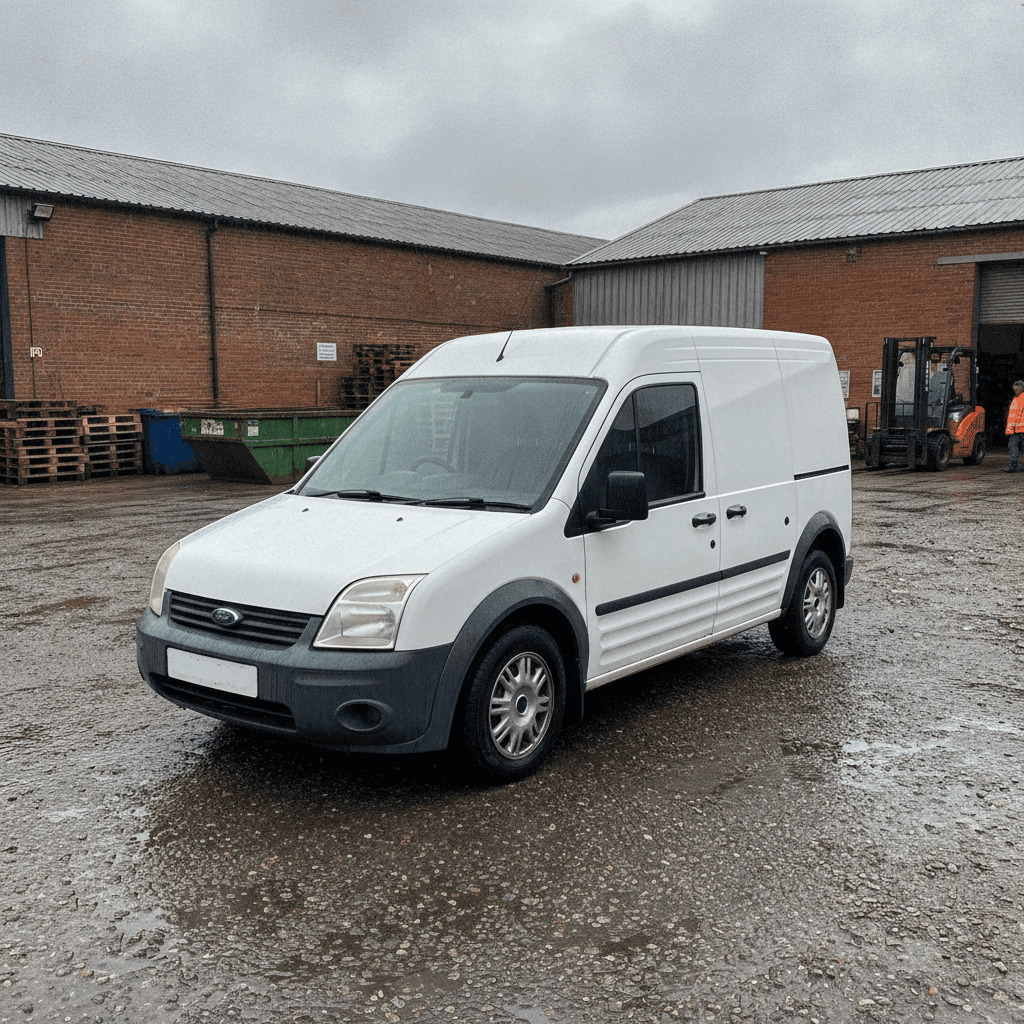
When searching the used market for a second-generation Ford Transit Connect (produced from 2013 onwards, with a substantial mid-cycle facelift in mid-2018), selecting the correct body layout and wheelbase configuration is vital. Ford manufactured the Connect in two distinct lengths alongside two practical body configurations.
Short Wheelbase (L1) Configuration
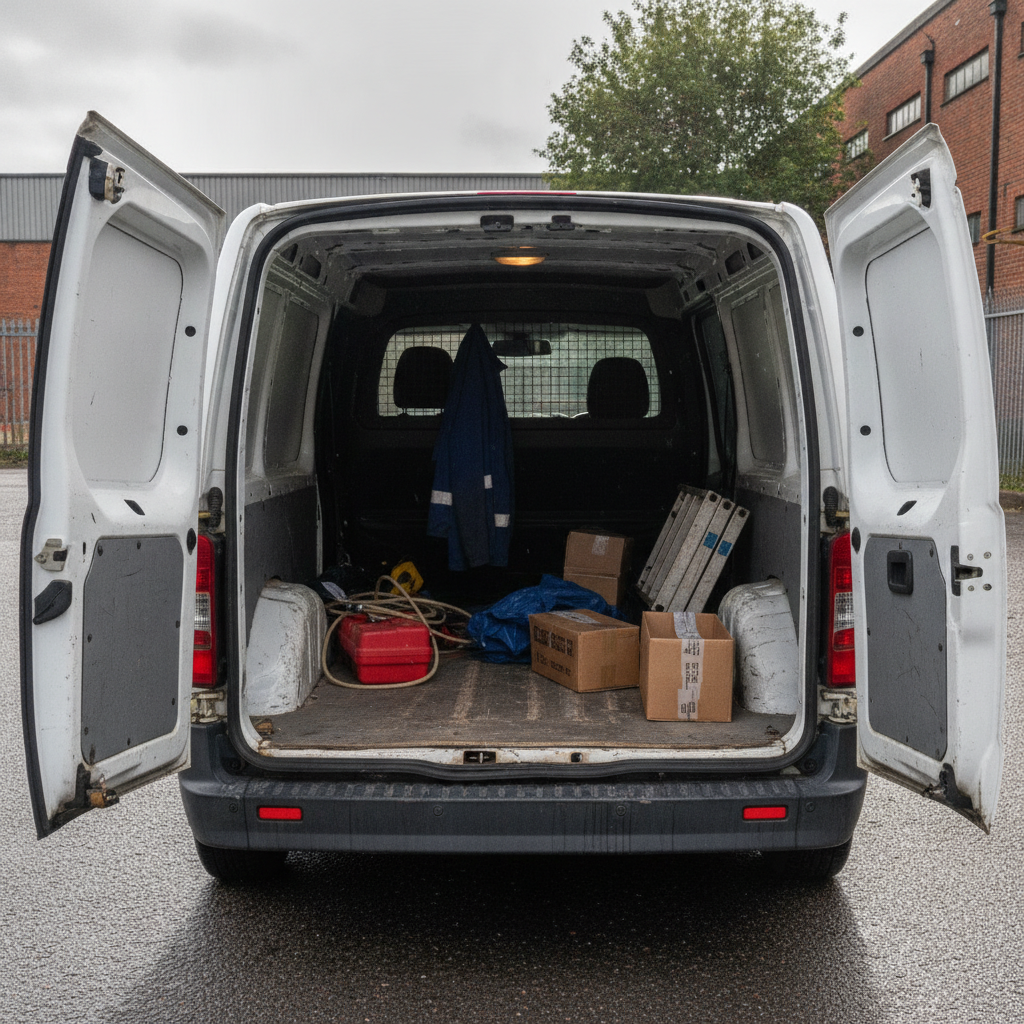
The Short Wheelbase (L1) variant measures 4,425 millimetres in overall length with a wheelbase of 2,662 millimetres. The internal cargo floor provides 1,753 millimetres of usable length from the rear barn doors to the standard full-steel bulkhead. Internal cargo height sits at 1,269 millimetres, while the maximum load width spans 1,538 millimetres, narrowing to 1,226 millimetres between the rear wheel arches. Total load volume for the L1 is 2.9 cubic metres. This is sufficient to load a single standard Euro pallet loaded through the rear doors, with ample overhead space remaining for secondary shelving or toolboxes.
Long Wheelbase (L2) Configuration
For trades requiring substantial carrying volume and floor length, the Long Wheelbase (L2) variant extends overall length to 4,825 millimetres, sitting on a 3,062-millimetre wheelbase. Usable floor length increases dramatically to 2,152 millimetres, generating 3.6 cubic metres of cargo volume. Crucially, the distance between the rear wheel arches remains identical at 1,226 millimetres, but the expanded floor allows the L2 to accommodate two full Euro pallets loaded straight in. Kerb-to-kerb turning circle increases moderately from 11.3 metres on the L1 to 12.2 metres on the L2, making it slightly less nimble in tight mews streets, but the dramatic increase in cargo room makes the L2 the preferred choice for heating engineers, general builders, and dryliners.
The Flexible Load-Through Bulkhead System
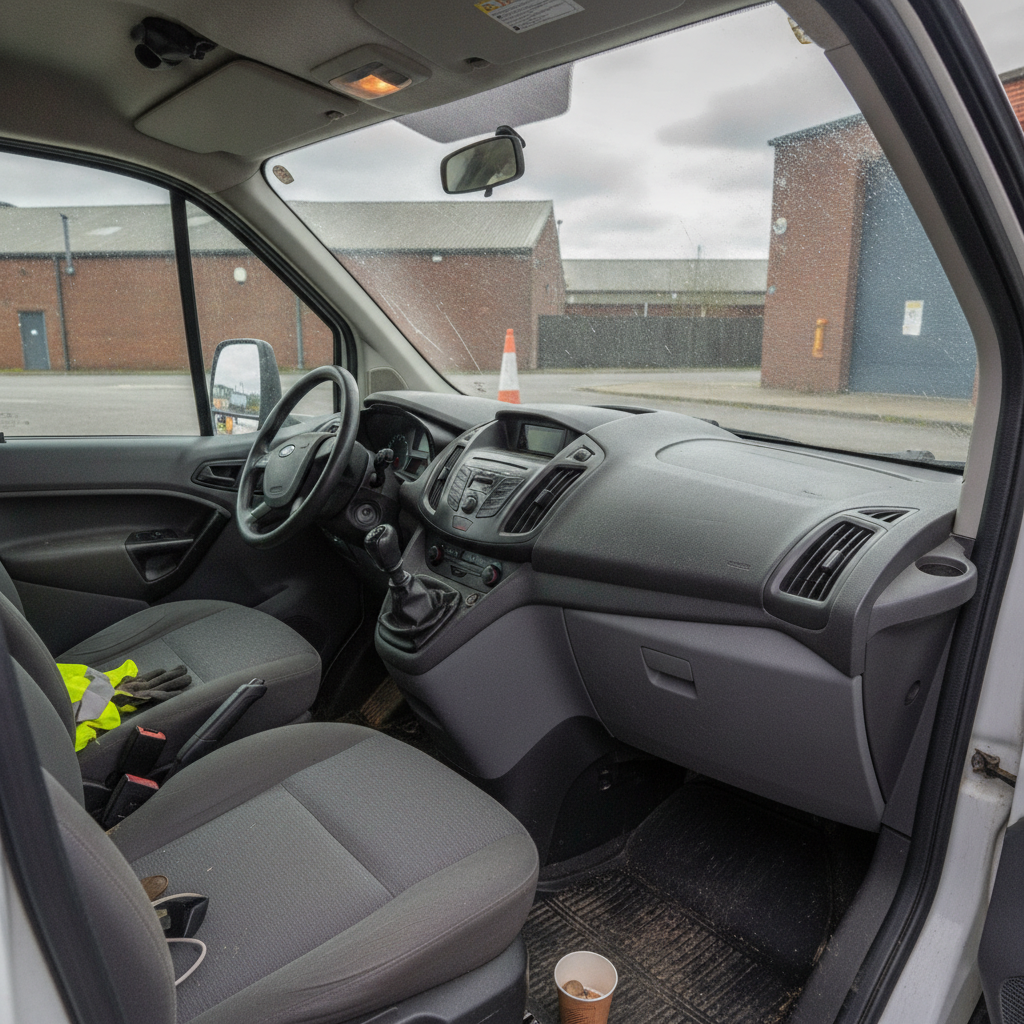
One of the most practical innovations fitted to higher-specification used Connect models—or those equipped with the optional dual front passenger seat—is the folding front passenger seat and opening bulkhead hatch. By folding the outer passenger seat flat and unlatching the lower steel hatch, floor storage length jumps to 3,000 millimetres on L1 models and an exceptional 3,400 millimetres on L2 models. This system enables carpenters, plumbers, and decorators to carry copper tubing, conduit, timber lengths, and three-metre step ladders inside the vehicle, keeping valuable stock and tools shielded from rain and opportunistic theft while doing away with external roof tubes.
Panel Van vs Double-Cab-in-Van (DCiV)
While the traditional two-seat or three-seat panel van represents the bulk of used stock, buyers seeking dual-purpose commercial and domestic utility should look for the Double-Cab-in-Van. The DCiV adds a second row of three seats, incorporating three-point inertia-reel belts and ISOFIX anchorages, accessible through twin sliding side loading doors. Behind the second row sits a movable mesh or solid bulkhead. In the L2 DCiV, folding the rear seats forward produces a flat load bed that retains the working characteristics of a standard panel van during the week, while functioning as a family-friendly five-seater at weekends.
Payload Ratings, Towing Capacities, and Weights
Exceeding vehicle gross vehicle weight (GVW) ratings is a severe offence in the UK, leading to roadside prohibitions, Fixed Penalty Notices, and invalid commercial insurance. Ford addressed varied commercial requirements by offering standard and high-payload options across the Connect model range.
Standard payload configurations on the second-generation van typically range between 570 kilograms and 720 kilograms depending on the engine, transmission, and internal trim level. However, buyers hauling dense components—such as ceramic tiles, mortar, brass fittings, or engineering machinery—should focus on the High Payload variants. These models feature uprated rear suspension packages that elevate gross vehicle weight ratings to over 2,400 kilograms, delivering certified payloads ranging from 880 kilograms up to 982 kilograms on specific L1 configurations, and up to 905 kilograms on L2 derivatives.
For operators needing to tow plant trailers, mobile generators, or site bowsers, braked towing capacities vary across engine outputs. Most 1.5-litre diesel models are rated to tow between 1,200 kilograms and 1,500 kilograms on a standard 50-millimetre tow ball, provided the trailer features functional overrun brakes. Unbraked towing capacity is capped at 750 kilograms across the range.
Engine Line-Up: TDCi, EcoBlue, and Petrol Variants
Navigating the used market requires understanding the mechanical evolution under the bonnet. Over its production cycle, the Transit Connect transitioned through three key engine families, dictating both fuel economy and compliance with urban Clean Air Zones (CAZ) and the London Ultra Low Emission Zone (ULEZ).
1.6-Litre Duratorq TDCi (2013 to Mid-2015)
Early second-generation models relied on Ford’s proven eight-valve 1.6-litre Duratorq TDCi diesel, co-developed with PSA. Output options included 75PS, 95PS, and 115PS iterations. These engines are known for mechanical simplicity and low servicing costs, featuring conventional belt-driven camshafts and straightforward fuel injection systems. However, these units were certified to Euro 5 emissions standards. Unless fitted with costly aftermarket exhaust abatement, Euro 5 diesels do not meet standard ULEZ or provincial Clean Air Zone criteria, subjecting owners to daily charges in London, Birmingham, Bristol, and other controlled zones.
1.5-Litre Duratorq TDCi (Mid-2015 to Mid-2018)
To comply with mandatory Euro 6 legislation, Ford replaced the 1.6-litre unit with a revised 1.5-litre TDCi powerplant generating 75PS, 100PS, or 120PS. Most of these models managed Euro 6 compliance using a Lean NOx Trap (LNT) rather than a fluid-based Selective Catalytic Reduction (SCR) system, meaning owners avoid filling an AdBlue tank. These engines are popular on the used market because they offer genuine Euro 6 compliance without the maintenance overhead of SCR injectors and fluid heaters.
1.5-Litre EcoBlue Diesel (Mid-2018 Onwards)
The major 2018 facelift ushered in the modern 1.5-litre EcoBlue four-cylinder diesel engine, calibrated to 75PS, 100PS, or 120PS. Designed to achieve Euro 6d-Temp and Euro 6d standards, the EcoBlue employs an SCR emissions package with an onboard AdBlue tank. The EcoBlue represents a leap forward in refinement, NVH isolation, and midrange torque delivery, producing up to 300Nm in its 120PS tune. It was paired as standard with a slick six-speed manual gearbox, while a smooth eight-speed torque-converter automatic replaced the older automated manual options.
1.0-Litre EcoBoost Petrol
For trades covering low annual mileages or operating strictly within dense city centres, Ford offered the three-cylinder 1.0-litre EcoBoost turbocharged petrol engine with 100PS. Delivering car-like responsiveness and quick warm-up cycles, it eliminates diesel-related exhaust clogging issues entirely. However, when loaded toward maximum payload, fuel consumption increases noticeably compared to its diesel stablemates.
Which Trades Choose the Transit Connect and Why?
The Transit Connect’s proportion of payload to exterior footprint makes it an exceptionally versatile tool for UK trade businesses.
- Domestic Electricians: The Connect fits into residential driveways without obstructing customer access. Combined with a load-through bulkhead for carrying lengths of mini-trunking and three-metre conduit, it holds everything needed for first- and second-fix contracts without requiring step-up entry into the rear.
- Plumbing and Heating Specialists: An L2 panel van accommodates modern unvented hot water cylinders, boxed combi boilers, and packs of standard radiator panels laid flat across the load bed, leaving the side door clear for tool chest access.
- Multi-Drop Couriers: Delivery operators favour the L1 and L2 variants for their tight turning radius, low load floor height of 599 millimetres, and durable sliding door runners that stand up to constant daily cycling.
- Mobile Mechanics and Locksmiths: The load area provides an ideal foundation for bespoke steel racking modules, key-cutting benches, inverter systems, and compressor storage without overloading the rear axle.
- Painters and Decorators: With the L2 floor length, eight-by-four sheet materials and folding aluminium work platforms fit inside flat or on edge, keeping materials dry and protected from weather damage.
Comprehensive Used Inspection Checklist
When viewing a prospective used Ford Transit Connect, methodical inspection of mechanical assemblies, load gear, and electrical systems will prevent costly downtime.
Engine Bay and Mechanical Checks
Pop the bonnet with the engine stone cold. Pull the dipstick and inspect the engine oil level and condition. On 1.5-litre EcoBlue models, correct oil level is critical; rising oil levels point to aborted DPF regeneration cycles causing diesel fuel dilution in the sump. Inspect coolant expansion tanks for discolouration or oil films, which indicate oil cooler failure or head gasket problems.
Listen for excessive top-end ticking on start-up. A metallic rattle from the right side of the engine bay that fades as oil pressure builds may indicate wear in the auxiliary drive belt, tensioners, or the internal oil pump drive system. Examine the fuel injector seats on 1.5-litre diesel engines; hardened copper injector crush washers can fail, allowing combustion blow-by that produces black, tar-like carbon deposits around the injectors, often accompanied by a distinct exhaust smell inside the cabin.
Transmission Operation
On manual gearboxes, cycle through all ratios during your test drive. Second and third gear synchromesh rings can wear on delivery vans that have experienced aggressive gear changes. The clutch pedal should display smooth resistance throughout its travel. Judder on engagement or a pulsating pedal points to dual-mass flywheel (DMF) degradation.
If testing an automatic variant, determine the transmission type. Pre-facelift models equipped with the six-speed PowerShift dual-clutch transmission require extensive verification. Hesitation pulling away, jerky low-speed shifts, or clutch flare between ratios indicate internal mechanical or mechatronic wear. Facelift post-2018 models feature the vastly more robust eight-speed torque-converter automatic, which should deliver seamless, imperceptible ratio changes under light throttle.
Chassis, Suspension, and Underside
Get beneath the vehicle with a torch to inspect the structural condition. Check the rear leaf spring leaves or coil spring mountings for corrosion or stress fractures. Connects subjected to constant heavy loading can crack rear coil springs near their lower seats. Check the condition of the rear axle bump stops; missing or split bump stops confirm that the vehicle has routinely bottomed out under heavy payloads.
Inspect the front MacPherson strut assemblies. Worn front anti-roll bar drop links and split rubber suspension control arm bushes manifest as distinct knocking or clonking noises when traversing speed humps or broken tarmac. Run your hand across the tread of all four tyres; uneven shoulder wear indicates front tracking misalignment, often caused by heavy impacts with kerbs during inner-city delivery work.
Bodywork and Load Area
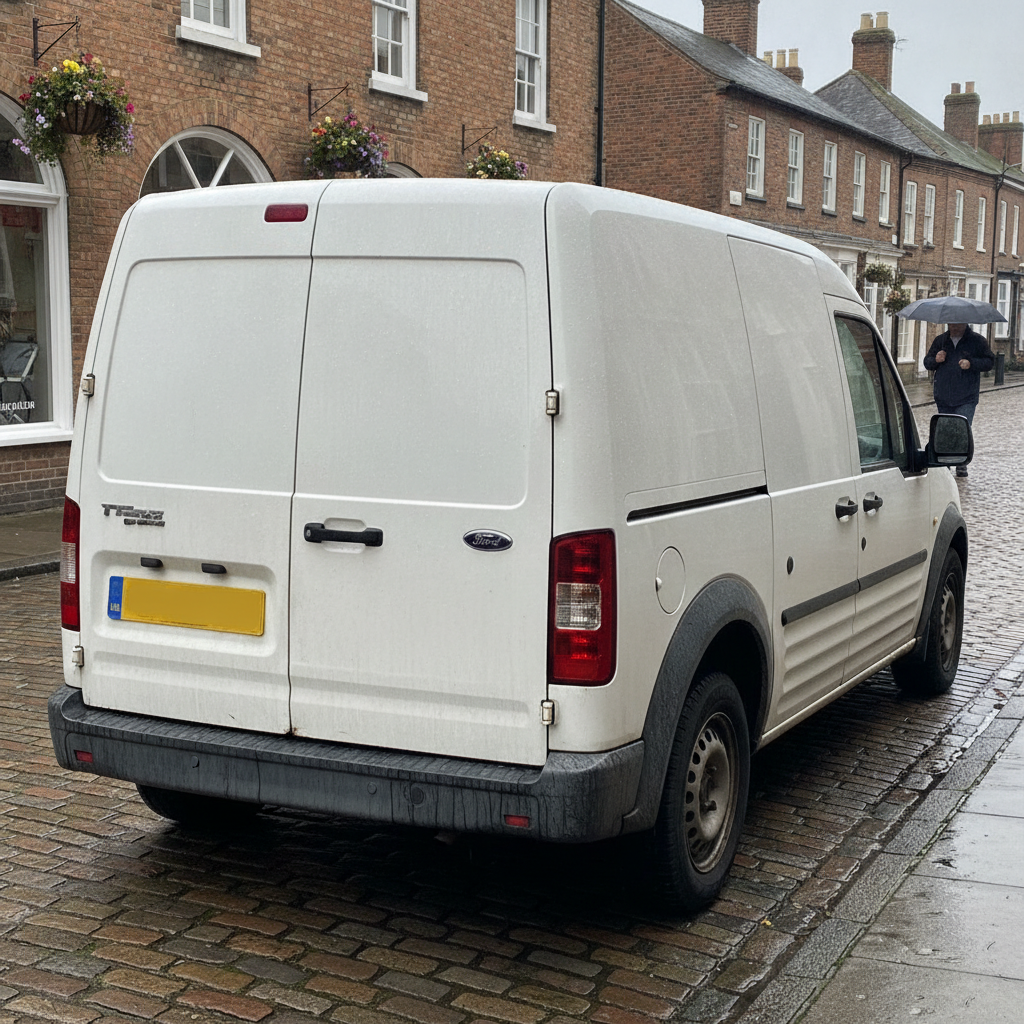
Open and close the sliding side doors and twin rear barn doors repeatedly. Side doors should track smoothly without binding or dropping off the centre rail. Excessive play in the rear sliding door roller bracket will eventually chew through exterior paintwork down to bare steel, introducing corrosion points. Ensure the rear doors open cleanly to their standard 90-degree check positions, and test the manual release latches that allow the doors to swing out to 180 degrees for fork-lift loading.
Remove any rubber cargo mats to inspect the painted metal floor underneath. Moderate scratching is normal on a commercial vehicle, but severe rippling, floor pan distortion, or freshly sprayed underseal may conceal structural impact damage or persistent moisture ingress caused by failing rear light cluster seals.
Known Faults and Reliability Concerns
While second-generation Transit Connects are generally hard-wearing commercial tools, several documented engineering faults require particular vigilance.
1.5 EcoBlue Timing Belt and Oil Pump Drive Belt
The 1.5 EcoBlue diesel engine employs an internal belt system where the oil pump drive belt runs submerged in engine oil. The design demands absolute adherence to Ford’s strict engine oil specification (WSS-M2C950-A). Using incorrect engine oil grades or exceeding standard service intervals causes the chemical additives in modern diesel fuel to degrade the belt’s rubber composition. The belt sheds microscopic rubber particles into the engine oil, which subsequently migrate into the oil pickup strainer. As the mesh screen clogs, the engine suffers from low oil pressure, ultimately leading to turbocharger failure and catastrophic engine seizure. Demand documented proof of timely servicing with the correct oil specification, and treat any instrument cluster low-oil-pressure warning as a critical warning sign.
Diesel Particulate Filter (DPF) and EGR System Choking
Vans used exclusively for short, low-speed urban drop cycles rarely achieve the sustained exhaust temperatures required for passive DPF regeneration. The vehicle attempts active regeneration by injecting supplementary diesel into the cylinders to heat the exhaust matrix. If journeys are terminated mid-cycle, the unburnt diesel washes past the piston rings into the engine sump, diluting the lubricating oil while the DPF continues to collect soot. During your test drive, look for illuminated DPF warning lights, powertrain warning symbols, or messages advising an engine service. Scan the vehicle using an OBD-II diagnostic reader to evaluate soot loading levels and ensure the Exhaust Gas Recirculation (EGR) valve is moving freely without error codes.
AdBlue SCR System Failures (Post-2018 Diesel Models)
Models running the Selective Catalytic Reduction system can suffer from crystallized urea build-up around the AdBlue injector nozzle in the exhaust tract. Furthermore, faults within the integrated AdBlue tank heater assembly or SCR tank fluid level sensors are common across modern Euro 6 commercial vehicles. A failing AdBlue system typically triggers a persistent engine dashboard warning accompanied by an engine restart prevention countdown. Replacing integrated tank sender modules often involves renewing the entire reservoir assembly.
Electrical and Cabin Hardware Glitches
Ensure the Ford SYNC infotainment screen functions reliably. Facelift models fitted with the tablet-style eight-inch central touchscreen occasionally freeze or drop Bluetooth connectivity, typically rectified by updating the software module. Test the electric front windows, particularly the one-touch up/down function, as window regulator cables can fray inside the front door cards. Check that the heating fan blows cleanly across all four blower resistor speeds, as thermal fuses on the heater blower motor resistor pack frequently burn out.
Production Years to Approach with Caution
Not every production year of the Transit Connect offers the same ownership proposition. Some model years carry elevated risk profiles depending on your operational base.
- 2013 to 2015 (Euro 5 Diesel Models): While mechanically sound and equipped with the robust 1.6 TDCi engine, these vehicles are non-compliant with standard Clean Air Zones and London's ULEZ. Unless you operate strictly in rural areas with no plans to work within regional city centres, buying a Euro 5 model could leave you exposed to costly daily access charges.
- 2014 to 2017 (PowerShift Automatic Models): Automatic transmissions from these production years demand extreme caution. The dry dual-clutch system struggled with the stop-start rigours of commercial applications, resulting in clutch chatter, judder, and costly mechatronic failures. Opt for a manual transmission from this era, or stretch your budget to a 2018-or-later model with the torque-converter automatic.
- Early 2018 to 2019 (High-Mileage EcoBlue Models Without Documented History): The transition period to the 1.5 EcoBlue engine caught many private buyers and independent garages off-guard regarding oil specifications. Any early EcoBlue with high mileage that lacks itemised main dealer or specialist service invoices detailing correct oil grades presents an elevated risk of oil pump belt degradation.
Used Ford Transit Connect Pricing Tiers
Values on the UK used market vary according to mileage, cosmetic condition, wheelbase, and trim specification (Base, Trend, Limited, Sport, and Active). When planning your purchase, expect to navigate distinct price brackets based on vehicle condition and age.
Budget Workhorses: Under £5,000
At this entry-level tier, buyers will find early second-generation vans dating from 2013 to 2015, typically powered by the Euro 5 1.6 TDCi engine. Odometer readings will usually sit between 110,000 and 175,000 miles. These vans frequently show cosmetic battle scars, scuffed bumpers, and unlined cargo bays showing paint wear. Vehicles in this bracket suit local rural trades where clean air zones are not a factor, but buyers should set aside immediate funds to cover replacement items like clutches, suspension bushes, and fresh timing belt kits.
The Sweet Spot for Sole Traders: £5,000 to £10,000
This bracket offers the widest selection for small businesses. It encompasses late 1.6 TDCi models as well as mid-generation 1.5 TDCi Euro 6 vans from 2016 through to early 2019 facelift models. Mileages generally range between 60,000 and 100,000 miles. Trend and Limited specifications become common here, delivering useful equipment like air conditioning, rear parking sensors, heated driver seats, and the load-through bulkhead. Vans in this tier strike an ideal balance between capital outlay and reliable working life, giving full ULEZ compliance without heavy depreciation.
Late-Plate, Low-Mileage Vans: £10,000 to £16,000
Vehicles in this price tier cover 2019 to 2022 models powered by the modern 1.5 EcoBlue diesel engine, typically displaying odometers between 20,000 and 50,000 miles. The majority will represent one-owner ex-lease or light fleet vehicles with fully stamped digital service histories, clean bodywork, and ply-lined rear load areas. High-spec Limited models dominate this range, boasting cruise control, alloy wheels, automatic wipers, and Ford SYNC 3 infotainment with Apple CarPlay and Android Auto.
Range-Topping Active, Sport, and Delivery-Mileage Examples: Over £16,000
Occupying the top tier of the used market are late 2022 to 2024 models, nearly new dealer demonstrators, and distinct high-spec editions like the Sport and Active. The Sport trim features body-coloured styling kits, signature racing stripes, larger alloy wheels, and partial-leather seat upholstery. The Active trim adds an increased ride height, rugged exterior wheel-arch cladding, and on some variants, a mechanical limited-slip differential engineered in collaboration with Quaife to supply traction across muddy job sites. These vehicles deliver maximum professional presentation for forward-facing businesses.
Real-World Running Costs: Fuel, Insurance, and Servicing
Keeping vehicle overheads predictable allows trades to price jobs competitively while protecting operational margins. The Transit Connect consistently ranks as one of the most cost-effective vans to run in the UK commercial market.
Fuel Consumption
In actual trade usage loaded to half-capacity, the 1.5 TDCi and 1.5 EcoBlue diesel engines return exceptional fuel efficiency. Expect real-world fuel returns between 48 and 54 miles per gallon during steady dual-carriageway and motorway cruising. Mixed urban running with frequent stop-start driving will see consumption settle between 40 and 46 miles per gallon. The 1.0 EcoBoost petrol model returns roughly 32 to 38 miles per gallon under real-world working conditions, proving cost-effective only for trades covering fewer than 7,000 miles annually.
Insurance Group Ratings
Insurance groupings for the Transit Connect are competitive, sitting lower than those of equivalent mid-sized panel vans. Depending on body length, engine power output, and factory security equipment, second-generation Connect models span from Insurance Group 4E up to Group 12E on the standard 1-to-50 scale. Base 75PS models land in the lowest brackets, while high-spec 120PS Limited and Sport editions occupy the upper end. Fitting aftermarket Thatcham-approved deadlocks to the rear barn and side doors, alongside an active GPS tracking system, will noticeably lower commercial fleet premiums.
Routine Servicing and Maintenance Schedules
Ford officially states flexible service intervals of up to two years or 20,000 miles for the EcoBlue engine. However, trade specialists and mechanical technicians strongly advise against adhering to this maximum window for working vehicles. To preserve the timing belt, oil pump belt, and turbocharger bearings, oil and filter replacements should be completed every 10,000 miles or 12 months—whichever arrives first. Replacement consumable parts—such as brake discs, pads, shock absorbers, and track rod ends—are universally available at competitive trade prices from national motor factors, avoiding the inflated maintenance costs associated with premium German van brands.
Commercial Van Finance and Acquisition Strategies
Funding a used commercial vehicle requires evaluating capital preservation against monthly operating cash flows. UK businesses have several flexible acquisition routes available when securing a Transit Connect.
For sole traders looking to take outright ownership of the vehicle upon completion of all repayments, choosing flexible van finance options like Hire Purchase (HP) provides an optimal route. With Hire Purchase, the VAT registered business can normally reclaim the entirety of the VAT element of the vehicle purchase price on their next quarterly VAT return (provided the vehicle is used for business purposes), while spreading the remaining capital balance over terms ranging from 24 to 60 months. Capital allowances, including the Annual Investment Allowance (AIA), can also be used against taxable business profits, providing meaningful year-end corporation tax relief.
Alternatively, if you prefer operating newer vehicles without balance-sheet liabilities, lower your upfront commitments, or wish to cycle into fresh commercial machinery every two to four years, exploring modern van lease deals through Finance Lease or Contract Hire presents an attractive alternative. Finance lease structures allow small businesses to manage cash flow through fixed monthly outgoings, incorporating residual balloon payments at the end of the term to significantly lower monthly outlay. Monthly rentals can typically be offset directly against trading profits as an allowable business operating expense.
Final Buying Verdict
The Ford Transit Connect continues to lead the UK compact commercial sector for clear reasons. It pairs practical ergonomics with impressive road composure, manageable exterior dimensions, and cargo configurations that handle real trade abuse. Securing a dependable used model comes down to avoiding early non-compliant diesels if you require urban access, passing on early dual-clutch automatics, and verifying that post-2018 EcoBlue diesels have received meticulous oil servicing with correct manufacturer-certified lubricants.
Prioritise a Long Wheelbase (L2) variant equipped with the load-through bulkhead if carrying length is a frequent demand of your trade, and aim for a well-maintained Trend or Limited trim to gain modern safety, navigation, and driver comfort features. By carrying out a structured pre-purchase inspection and confirming an authentic service pedigree, your used Ford Transit Connect will provide years of dependable, cost-effective service as the practical foundation of your daily business operations.