Buying used wheelchair accessible vans
Wheelchair Accessible Van Architecture
A Wheelchair Accessible Van (WAV) is a passenger-carrying light commercial vehicle or multi-purpose vehicle that has undergone extensive structural modification. These alterations allow a passenger or driver to enter, travel in, and exit the vehicle while seated in their wheelchair. Unlike standard passenger minibuses that rely on detachable clip-in ramps or step-up passenger entries, an engineered WAV incorporates an altered floor pan, a dedicated access system, and certified tie-downs that turn the wheelchair into an integrated passenger seat.
The manufacturing process of a certified WAV involves substantial re-engineering of the base commercial platform. A professional specialist converter cuts away the standard floor pan from the rear axle line to just behind the front seats. They fabricate a dropped steel or composite floor tray that sits inches lower to the road surface. This lowering process serves two vital purposes: it provides the critical interior vertical clearance required for a seated adult passenger without needing an awkward high-roof shell, and it significantly reduces the angle of the loading ramp to prevent tipping or physical strain.
Because the original floor is removed, converters also redesign or reroute key underbody vehicle assemblies. The vehicle exhaust system is routinely replaced with custom stainless steel pipework bent around the dropped floor pan. Factory fuel tanks are replaced with purpose-moulded composite tanks designed to fit narrow side voids. In many configurations, the rear suspension arrangement is fitted with heavy-duty uprated coil springs, assistive air sleeves, or adjusted torsion bars to compensate for altered center-of-gravity shifts and preserve road clearance when loaded to full gross vehicle capacity.
All road-legal UK conversions must adhere to strict type approval standards, including European Community Whole Vehicle Type Approval (ECWVTA) or the UK National Small Series Type Approval (NSSTA). These certifications ensure the lowered floor chassis cuts have not compromised vehicle torsional rigidity, and that the passenger restraint anchors comply with standard pull-test force thresholds. When looking through used vans on the secondary commercial market, understanding these structural alterations is critical to evaluating vehicle integrity and long-term operating costs.
Commercial Operators and Trades Using WAVs
While privately owned WAVs transport family members, the pre-owned commercial market is dominated by trade buyers, logistics specialists, and community services that rely on accessible transport platforms to conduct daily operations. These professional operators place high demands on reliability, passenger comfort, and regulatory compliance.
- Private Hire and Hackney Taxi Operators: Accessible transport is a core licensing requirement for many UK local authorities. Taxi drivers and private hire operators invest in compact and mid-sized WAVs to meet municipal accessibility quotas, allowing them to accept local council mobility contracts alongside standard fares.
- Non-Emergency Patient Transport Services (NEPTS): Private medical logistics companies and NHS contractors require reliable multi-passenger accessible platforms. These vehicles run continuous urban routes transferring non-ambulatory patients between residential homes, clinics, and regional hospital trusts.
- Care Homes and Day Centres: Residential care providers, sheltered accommodation facilities, and adult day centres run dedicated vehicles to transport residents to appointments, community activities, and medical facilities without relying on expensive private ambulances.
- Special Educational Needs (SEN) Transport Providers: Commercial school-run operators contracted by county councils operate medium and long-wheelbase WAVs fitted with flexible seating layouts. These multi-seat configurations can handle combinations of seated pupils and tied-down wheelchairs simultaneously.
- Specialist Delivery and Mobility Equipment Fitters: Field engineers who repair, service, and supply powered wheelchairs, bariatric chairs, and mobility scooters frequently purchase used WAVs. The dropped floor and heavy-duty ramps make loading heavy machinery straightforward without the physical hazard of high-lift tail lifts.
Top Makes and Base Platforms
Base vehicle selection dictates mechanical dependability, spare parts availability, and running expenses. The UK second-hand market features a proven selection of commercial vehicle platforms adapted by major conversion specialists.
Volkswagen Caddy Maxi
The Volkswagen Caddy Maxi is widely regarded as the benchmark platform for compact accessible transport. Its elongated wheelbase gives sufficient interior depth behind the second row of seats to fit a full-sized adult manual chair or powered chair while retaining standard passenger seating. Powered by the familiar 2.0-litre TDI diesel engine, it delivers ample low-end torque for urban climbs with a heavy passenger load. Buyers should look for versions equipped with the robust DSG automatic transmission, which ensures smooth acceleration without the forward-and-back pitching of a manual clutch that can cause discomfort to wheelchair passengers.
Peugeot Partner, Rifter, and Citroën Berlingo
Stellantis platforms dominate fleet accessible fleets across Britain due to low operational running costs and modular designs. Pre-2018 vehicles feature the 1.6-litre BlueHDi, while newer iterations are fitted with the 1.5-litre BlueHDi powertrain. These vehicles are lightweight, return high fuel efficiency during urban stop-start driving, and are compact enough to park easily in standard domestic parking spaces. Many of these vehicles were converted by major UK specialists such as Allied Mobility and GowringsVersa, ensuring that replacement body panels, ramp components, and conversion trim clips remain readily accessible through specialist channels.
Ford Tourneo Custom and Transit Custom
For operators requiring capacity for multiple wheelchair users, larger powerchairs, or combinations of ambulatory passengers and equipment, the Ford Tourneo Custom is the market leader. Powered by the 2.0-litre EcoBlue diesel engine, this medium-sized van platform provides substantial interior cabin width, rear air conditioning systems, and higher gross vehicle weights. Converted Tourneo Customs typically replace the manual folding ramp with an electro-hydraulic inboard or cassette tail lift, accommodating larger payloads and bariatric equipment that exceed manual ramp weight thresholds.
Mercedes-Benz Vito
The Mercedes-Benz Vito is the vehicle of choice for premium executive chauffeur services, private healthcare operators, and high-mileage taxi contractors. Fitted with rear-wheel-drive or front-wheel-drive drivetrains and smooth automatic gearboxes, the Vito delivers exceptional passenger comfort over uneven surfaces. Its galvanised construction offers high resistance to structural chassis corrosion around cut floor boundaries, making it an excellent investment for operators who retain vehicles over long duty cycles.
Conversion Types and Mechanical Hardware
When reviewing vehicle options, buyers will encounter distinct mechanical conversions engineered for specific passenger access profiles and operational demands.
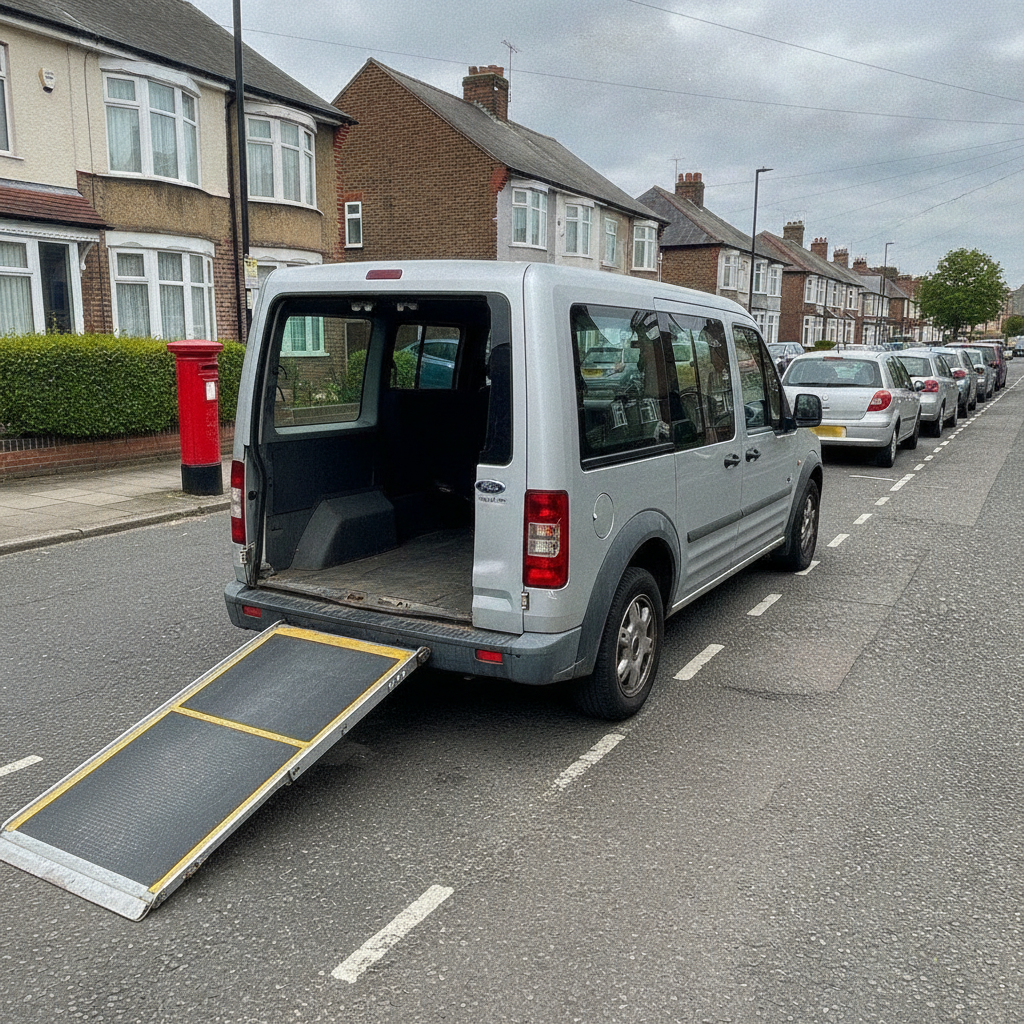
- Rear-Entry Lowered Floor with Manual Ramp: The most widespread and mechanically reliable format. A manual ramp, constructed from anodised aluminium with gas-strut counterbalancing, deploys outward from the rear door aperture. Because it has no electrical motors or hydraulic pumps, this access system has minimal mechanical failure points and functions reliably in all weather conditions.
- Underfloor or Inboard Electro-Hydraulic Tail Lifts: Common on medium and heavy commercial platforms such as the Tourneo Custom, VW Transporter, or Renault Master. Hydraulic systems raise and lower heavy powerchairs at the touch of a button. They require periodic hydraulic fluid changes, electrical busbar cleaning, and statutory safety lift inspections under LOLER regulations if operated commercially.
- Passenger-Upfront Configurations: A technically complex conversion where the lowered floor tray extends fully into the front passenger area alongside the driver. The passenger travels in the front row rather than in the rear compartment, offering an inclusive journey experience. These require precise floor cuts and custom dashboard integrations.
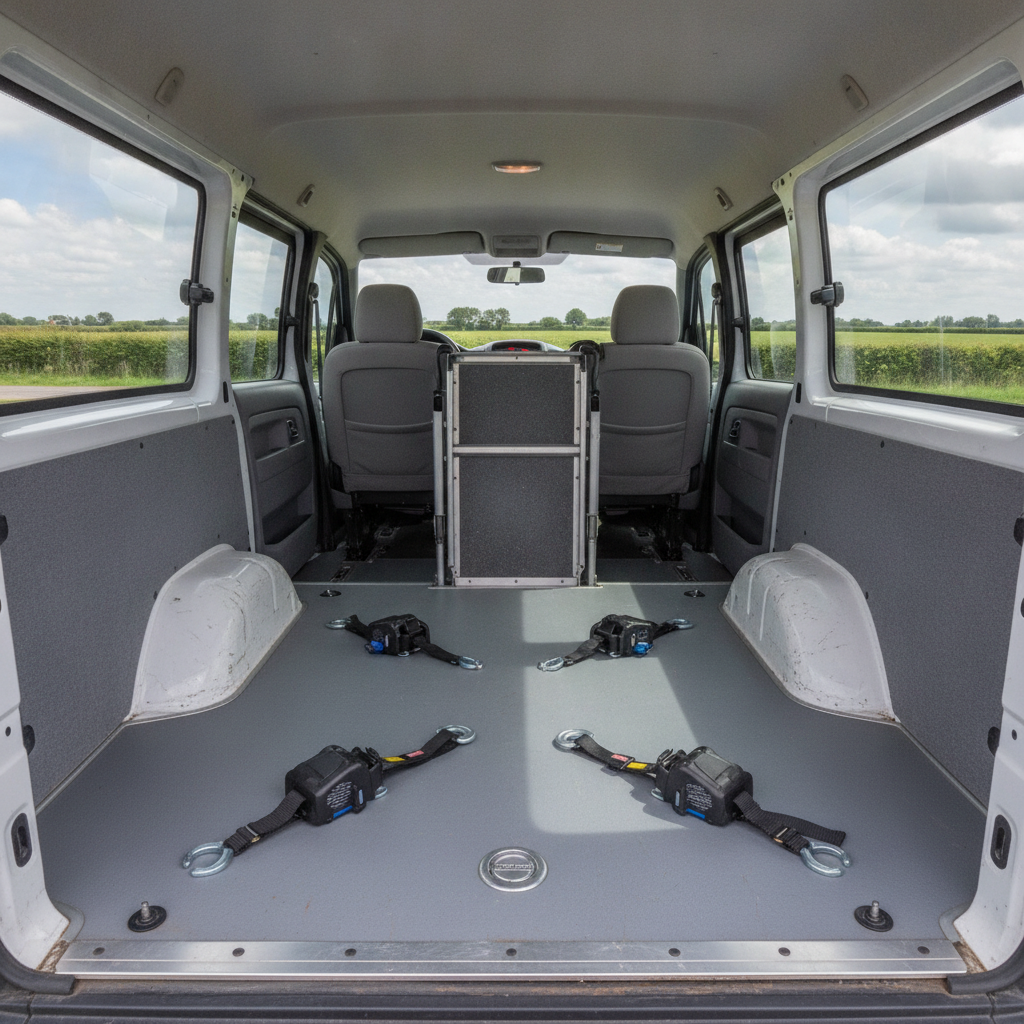
- Restraint and Tracking Systems: The wheelchair must be secured using certified 4-point systems, typically manufactured by specialist firms such as Q'Straint or Unwin. These utilise surface-mounted or flush floor tracks that anchor front electric tensioner belts and rear self-tensioning ratchets. The seated passenger requires an independent, inertia-reel three-point lap-and-diagonal seatbelt anchored to reinforced vehicle pillars.
- Assisted Electric Winches: Many commercial WAVs feature an internal front-mounted electric pulling winch with a wander lead or wireless remote. The winch cables attach to the wheelchair frame, pulling the passenger smoothly up the ramp incline with zero pushing effort required from the vehicle operator.
Used WAV Mechanical and Conversion Inspection Guide
Assessing a used accessible conversion requires evaluating both the standard vehicle mechanical components and the bespoke engineering work carried out by the converter. A clean external vehicle appearance can mask conversion defects underneath the chassis.
Chassis Cuts and Underside Corrosion
Inspect the underside of the vehicle on a ramp or pit. Focus your inspection on the welded boundaries where the original vehicle floor pan was cut away to accommodate the dropped floor tray. Converters must weld new structural flanges and apply rust-inhibiting sealants. Check for peeling underseal, stress fractures around corner joints, and galvanic corrosion where different metals meet. Pay particular attention to the drop-down sections around the rear suspension mountings; road salt and water spray can accumulate behind conversion trim panels, causing unseen corrosion.
Fuel Tank and Rerouted Exhaust Clearances
Because the original underfloor path is blocked by the dropped floor, check the path of the replacement exhaust pipe. Ensure there is adequate thermal clearance between hot exhaust sections and the fuel lines, composite fuel tank, or brake cables. Shake the exhaust system by hand when cold to verify that hanger rubbers are secure and that the pipe does not strike the floor tray edge under lateral load. Check the fuel tank neck and breather lines for chafing against custom conversion brackets.
Ramp Wear, Hinges, and Gas Struts
Manually open and close the boarding ramp half a dozen times. The ramp should fold and deploy cleanly without twisting, binding, or scraping against the rear door surrounds. Inspect the bottom hinge pins for elongated play or rust. Counterbalancing gas struts must hold the ramp securely in its stowed position without rattling, and should provide enough lift assistance to raise the ramp with one hand. Check that the floor-latching catches grip firmly to prevent interior road noise when driving empty.
Electrical Winches and Hydraulic Systems
If the vehicle is fitted with a loading winch, unwind the webbing straps completely. Examine the full length of the strap for frays, cuts, heat damage, or chemical staining. Test the emergency release clutch, and power the winch under load to confirm the motor pulls smoothly without cutting out or displaying voltage drop across vehicle dash displays. For hydraulic tail lifts, inspect the pump reservoir for fluid clarity and check the ram seals for weeping hydraulic oil.
Short-Run Engine Wear and Emissions Hardware
Many pre-owned WAVs have surprisingly low odometer readings. While low mileage may appear attractive, these vehicles often spent their working lives completing three-mile medical transfer journeys where the engine rarely reached operating temperature. This operational cycle leads to severe soot accumulation within modern Diesel Particulate Filters (DPF), stuck Exhaust Gas Recirculation (EGR) valves, and oil dilution caused by incomplete active regenerations. Inspect the service history for frequent oil changes, take the vehicle on an extended dual-carriageway test drive, and verify that the emissions system performs clean regenerations without warning lights.
Restraint Track Verification and Legal Documentation
Inspect the interior floor tracks. Clean out any accumulated dirt or debris and insert all four tie-down lock-boxes into the floor runners. They must lock cleanly without rocking or slipping forward. Confirm that the three-point upper diagonal seatbelt reel operates smoothly and latches firmly into its stalk. Review the vehicle paperwork carefully: confirm the V5C reflects any body type changes, review the conversion company's original build certificate, verify the Safe Working Load (SWL) placards on the ramp, and check for relevant commercial passenger safety inspect certificates.
Used WAV Valuation Tiers: £3,000 to £8,000
Vehicles located within this entry-level price range typically represent older conversions based on previous-generation light commercials, such as early Renault Kangoos, Fiat Doblos, and higher-mileage Peugeot Partner Tepees. These vehicles usually feature manual five-speed gearboxes and simple fold-out floor ramps. At this valuation level, buyers should prioritise structural chassis condition over cosmetic perfection. Scrutinise the lower rear arches, spring shackles, and dropped floor seams for rust, and check that the diesel engine operates without heavy injector knock or blue oil smoke on cold start-up.
Used WAV Valuation Tiers: £8,000 to £18,000
The mid-range pricing tier contains the highest volume of reliable, trade-ready accessible vehicles. Buyers will find late-model Citroën Berlingos, Peugeot Rifters, Ford Tourneo Connects, and previous-generation Volkswagen Caddy Maxis. Vehicles in this price bracket regularly feature Euro 6 compliant diesel engines, refined automatic transmissions, and lower overall mileage. They are often direct releases from local authority fleets or long-term mobility providers, meaning they come with full maintenance documentation, intact interior conversions, certified electric winches, and serviceable bodywork.
Used WAV Valuation Tiers: £18,000 to £35,000+
The premium valuation tier includes large commercial platforms, such as late-plate Ford Tourneo Customs, Mercedes-Benz Vitos, and Volkswagen Transporters, as well as nearly-new compact WAVs with low mileage. Vehicles in this bracket feature high-specification interior conversions, including multi-chair configurations, electro-hydraulic tail lifts, automated sliding doors, and leather executive passenger seating. When purchasing at this level, verify that complex conversion accessories such as hydraulic pumps, automated rear tailgates, and climate control installations carry full operational documentation and warranty status.
Commercial Financing and Funding Considerations
When funding the acquisition of an accessible vehicle for trade use, commercial buyers often review multiple payment structures to match their cash-flow profiles.
Hire Purchase allows an operator to spread the capital cost of the vehicle over an agreed operational period, with full vehicle ownership transferring to the business upon payment of the final option fee. This route is popular for businesses that intend to retain a converted van over many years to offset conversion depreciation. Conversely, Finance Lease agreements offer lower fixed commitments by deferring a portion of the vehicle value to a balloon payment at the end of the term, helping operators align monthly overheads with ongoing council or commercial transport contracts.
Taxation and VAT treatment for accessible vehicles is specialised. Registered commercial transport operators, taxi businesses, and private hire drivers generally pay standard VAT on pre-owned commercial platforms unless operating under specific commercial exemptions. However, vehicles converted specifically to transport wheelchair users may qualify for zero-rated VAT relief under HMRC Notice 701/7 when purchased by eligible charities, community transport groups, or qualifying private individuals. Commercial buyers should consult their professional accountant to determine applicable VAT relief and assess how capital allowances apply to converted vehicles.
For businesses exploring structured commercial purchase routes, reviewing current van finance options can provide clarity on cash-flow planning. Remember that Vansales operates strictly as an independent information portal and vehicle marketplace. Vansales does not act as a lender, does not broker finance products, and does not sell vehicles directly. All vehicle descriptions, conversion specifications, structural integrity, and transactional terms must be independently verified between the commercial buyer and the selling dealership.