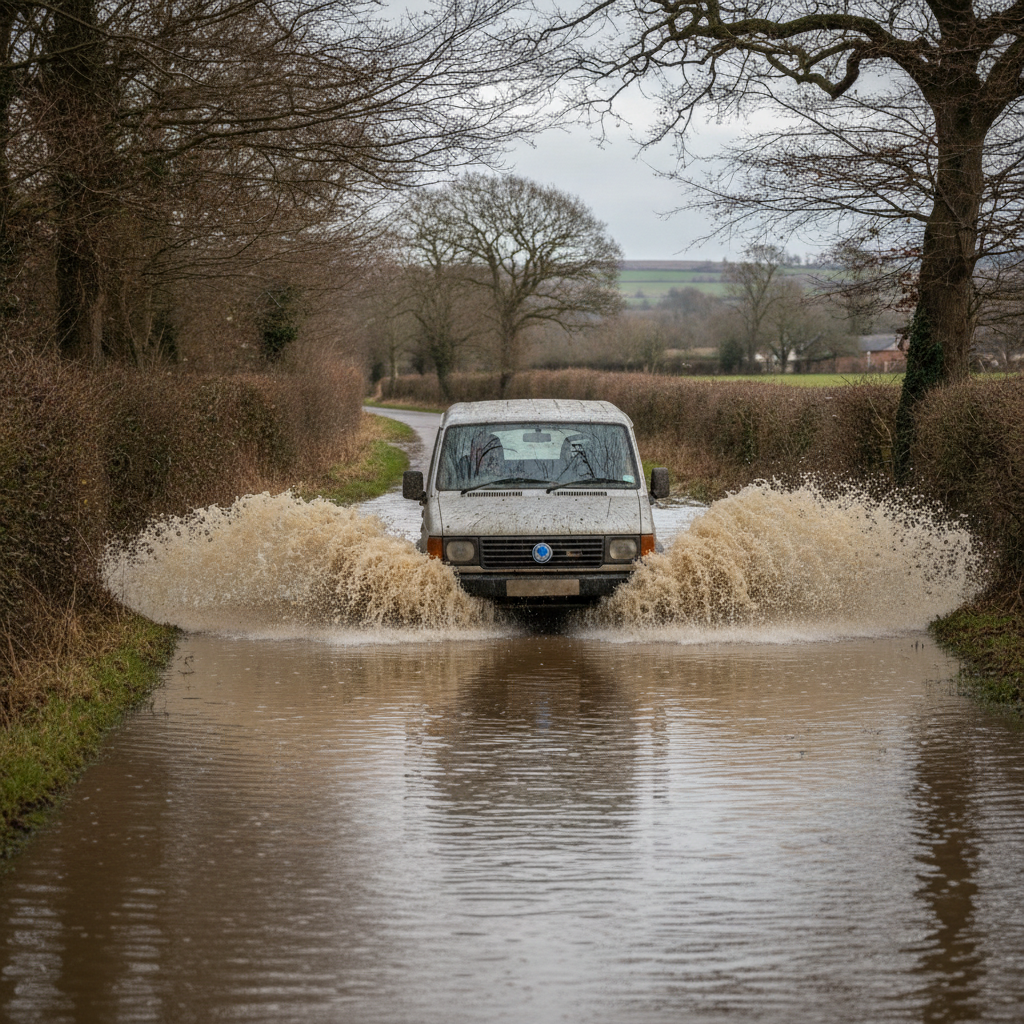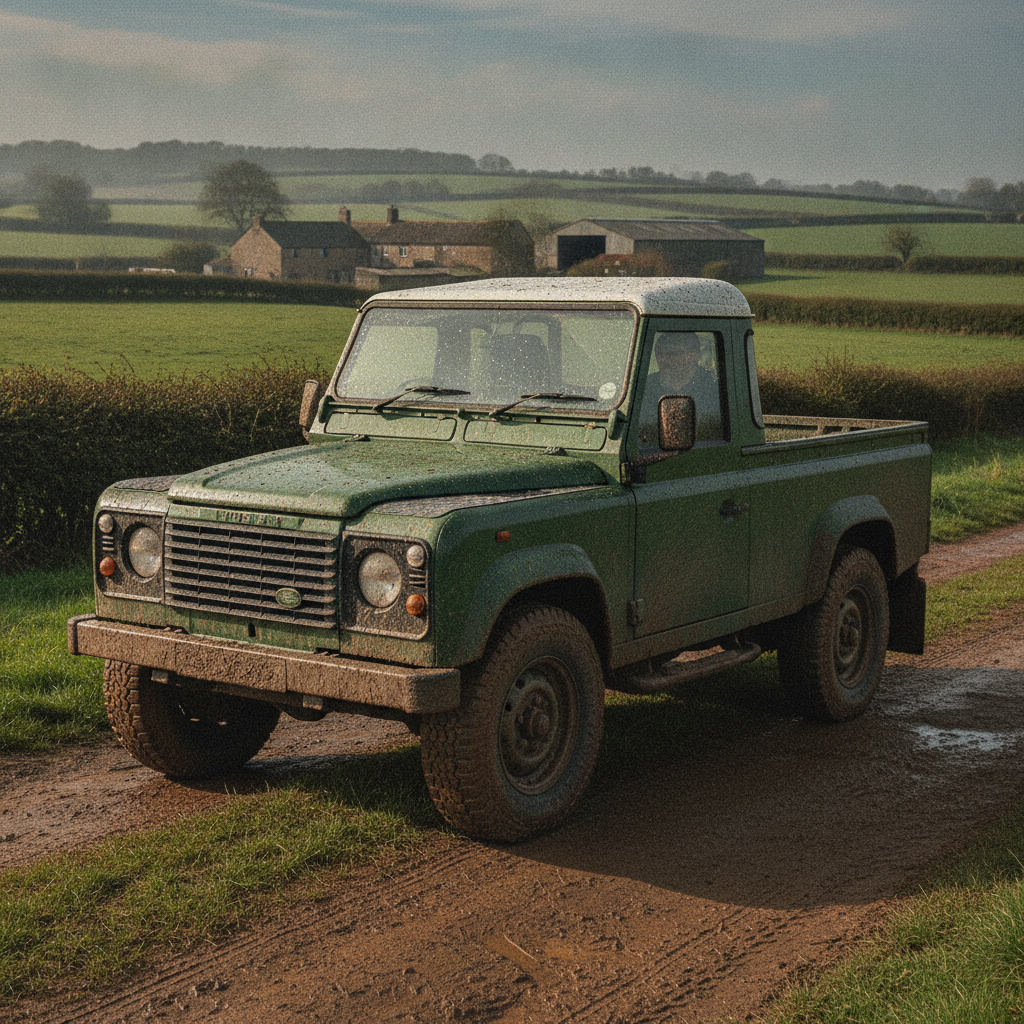
Buying used 4x4 vans
Understanding 4x4 Commercial Van Drivetrains
Standard rear-wheel-drive and front-wheel-drive commercial panel vans provide dependable service on well-surfaced motorways, residential streets, and paved industrial estates. However, their limitations become immediately apparent the moment a front wheel loses traction on wet turf, or an unladen rear axle spins fruitlessly on a muddy building site slope. Searching for all-wheel-drive commercial vehicles means paying for uninterrupted traction, structural clearance, and off-tarmac capability without sacrificing the covered volume, security, and internal racking of an enclosed panel van.
Many tradespeople consider double-cab pickup trucks as an alternative, but pickups present notable operational compromises. A standard commercial pickup bed offers limited weather-tight volume, sits high off the ground, and forces tools to be stored in aftermarket bed boxes or beneath hardtops where security can be vulnerable to hand tools. A true four-wheel-drive panel van preserves up to four metres of secure, internal load bed length, allows tradespeople to stand fully upright inside the cargo area, and maintains a high payload capacity while carrying heavy generators, welders, and hand tools directly over rough ground.
Before assessing individual vehicles when browsing used vans on the market, it is essential to understand the mechanical differences between the primary four-wheel-drive systems found across UK commercial vehicle fleets:
- Selectable Four-Wheel Drive: Commonly seen on older Mercedes-Benz Sprinters, this layout operates in rear-wheel drive under normal driving conditions to reduce fuel consumption and tyre scrubbing. When the driver presses an instrument-panel switch, a transfer box mechanically engages the front axle to split drive torque. Many of these vehicles also feature an optional low-range reduction box, drastically lowering gear ratios to crawl out of deep clay, steep riverbanks, or quarry washouts without burning out the clutch.
- On-Demand All-Wheel Drive: Found extensively in the Volkswagen Transporter and Crafter 4Motion ranges, as well as modern Ford Transit AWD models. These systems utilise electronically managed multi-plate wet clutches or active transfer units. Under benign conditions, nearly all engine torque flows to the primary driven wheels. The moment front or rear speed sensors detect slip, the internal clutch packs compress in milliseconds, sending controlled torque to the axle with the most grip. These systems require zero driver intervention, run quietly at motorway speeds, and behave like regular front- or rear-drive vans until road conditions deteriorate.
- Specialist Mechanical Conversions: Companies such as Dangel in France engineer specialist all-wheel-drive conversions for Stellantis models, including the Citroën Relay, Peugeot Boxer, and Vauxhall Movano. These conversions typically add an intermediate propshaft, a central viscous coupling, raised suspension, and underbody protection plates. While exceptionally capable in deep ruts, replacement driveline components must often be sourced through specialist suppliers rather than standard motor factors.
Trades and Commercial Sectors That Require 4x4 Vans
Four-wheel-drive vans represent a distinct commercial investment. The added weight of differentials, transfer cases, and half-shafts reduces overall payload by anywhere between one hundred and two hundred kilograms, while fuel economy drops marginally compared to standard two-wheel-drive counterparts. For standard urban delivery routes, these compromises make little financial sense. For specific professional trades, however, an all-wheel-drive drivetrain is the difference between completing a contract and waiting for an expensive off-road recovery tractor.
- Arborists and Forestry Teams: Tree surgeons routinely work on waterlogged verges, soft domestic lawns, and untreated woodland tracks. Carrying heavy chainsaws, climbing gear, rigging equipment, and towing a commercial wood chipper weighing upwards of two tonnes will instantly strand a conventional rear-wheel-drive van. An all-wheel-drive chassis provides the tractive effort needed to haul heavy plant out of wet forest clearings.
- Civil Engineering and Groundwork Contractors: Before roads, hardstandings, and concrete slabs are poured on major housing developments or infrastructure projects, sites consist of deep, churned mud and rough aggregate. A four-wheel-drive van with elevated ground clearance allows foremen, plant fitters, and site engineers to transport heavy tools and materials right to the trench edge.
- Agricultural Engineers and Mobile Plant Fitters: Tractors, combines, and heavy excavators do not break down conveniently on tarmac. Mobile plant fitters carry hydraulic hose crimpers, heavy tool chests, onboard compressors, and bulk oil drums directly into sodden fields. Being able to access broken machinery in all seasons is central to their business model.
- Utilities, Energy, and Remote Infrastructure: Water authorities, national power grid contractors, and mobile telecommunications engineers maintain remote pylons, pumping stations, and masts located on mountain tracks and farm estates across Scotland, Wales, and rural England. When severe weather hits, these vehicles must navigate unploughed snow, flooded lanes, and rock-strewn access trails to restore essential services.
- Highway Maintenance and Recovery: Operating in freezing winter conditions, gritting support vans, motorway service crews, and incident response teams require dependable all-weather traction to clear blockages and protect vulnerable work zones on treacherous carriageways.
Top Makes and Models to Look For
The UK used market features several proven all-wheel-drive models, ranging from compact, road-biased panel vans to heavy-duty, off-road workhorses.
Mercedes-Benz Sprinter 4x4
The Mercedes-Benz Sprinter 4x4 is widely regarded as the ultimate platform for severe commercial applications and off-grid utility. Earlier models, notably those built prior to the complete rollout of the torque-on-demand 9G-Tronic transmission systems around twenty-twenty-two, utilise a robust selectable system. With the push of a dash button, a transfer box directs thirty-five percent of engine torque to the front axle and sixty-five percent to the rear. Crucially, factory-ordered models often included a selectable low-range transfer gear, reducing the final drive ratio by roughly forty percent for intense off-tarmac hauling.
Factory Sprinter 4x4s leave the assembly line with a noticeable suspension lift, delivering roughly one hundred millimetres of extra clearance at the front and upwards of sixty millimetres at the rear. This provides extraordinary approach, departure, and ramp-over angles for a full-size panel van. Engine choices include the proven four-cylinder OM651 and OM654 turbodiesels, alongside the powerhouse OM642 three-litre V6 diesel, which remains highly sought after for its exceptional low-end torque. Buyers must verify whether the van has the optional rear differential lock, an invaluable mechanical upgrade for axle-twisting conditions.
Volkswagen Transporter 4Motion
For trades requiring a compact footprint capable of fitting into multi-storey car parks, standard domestic driveways, and tight loading bays, the Volkswagen Transporter 4Motion is the market leader. Utilising an electronically controlled Haldex (later BorgWarner) multi-plate clutch pack mounted to the rear differential, the Transporter operates seamlessly in front-wheel drive until wheel slip is detected. Drive is instantly distributed to the rear wheels without any driver intervention.
The system is exceptionally capable on snow, wet grass, loose gravel, and greasy slipways. Many commercial examples were specified from the factory with a mechanical rear differential lock, operated by a simple push-button beside the steering wheel. When engaged, this locks both rear wheels together at the same speed, preventing cross-axle spin when traversing uneven dips. The Transporter retains the road-holding, comfort, and driving dynamics of a premium passenger car, making it the preferred choice for sole traders who balance daily contracting with personal family use.
Volkswagen Crafter and MAN TGE 4Motion
The current-generation Volkswagen Crafter and its mechanical twin, the MAN TGE, provide heavy commercial space with modern automotive control. Unlike the older Crafter (which was a joint build with Mercedes-Benz and used rear-wheel-drive platforms), post-twenty-sixteen Crafters use Volkswagen's proprietary architecture. Transverse-engine versions utilise a Haldex all-wheel-drive arrangement, while heavy-duty variants feature longitudinal engines mated to an active all-wheel-drive system. These vehicles provide cavernous load bays, standing room for tall operatives, sophisticated driver-assistance systems, and an optional mechanical rear axle lock, making them ideal for heavy utility operations.
Ford Transit AWD
The Ford Transit AWD brings four-wheel traction to the UK's most popular commercial vehicle platform. Available on rear-wheel-drive-based Transit chassis cabs and panel vans, the intelligent all-wheel-drive system incorporates an electro-hydraulic clutch and front differential assembly. Drivers can leave the system in normal mode to let the onboard electronic control unit manage front-axle engagement, or manually select mud and snow modes to preemptively split torque between front and rear axles.
The primary advantage of the Transit AWD is running cost management. Parts availability across the UK dealer and aftermarket network is unmatched, meaning components like brake discs, control arms, and filters are significantly cheaper than German counterparts. While it lacks the extreme ground clearance and rock-crawling capabilities of a lifted Sprinter, the Transit AWD effortlessly tackles muddy construction sites, slippery boat ramps, and untreated winter hills.
Mechanical Inspection Checklist for Used 4x4 Vans
Four-wheel-drive systems introduce intricate mechanical and electrical systems to a commercial vehicle. Prop shafts, universal joints, transfer cases, driven front hubs, and electronic actuators all endure severe punishment, particularly if previous owners treated the van like a tracked excavator. When viewing used commercial stock, conduct these rigorous physical checks before negotiating:
- Differential and Haldex Fluid Logs: The Haldex coupling on Volkswagen 4Motion vehicles requires regular oil changes, typically within intervals between twenty thousand and forty thousand miles, depending on the exact generation. Crucially, the small gauze strainer on the electric pre-charge pump must be cleaned or replaced during this service. If previous owners skipped this maintenance, the pump burns out, leaving the van as a heavy front-wheel-drive vehicle without triggering a fault light on the instrument binnacle. Always demand physical service invoices showing that rear differential and Haldex fluids were renewed on schedule.
- Driveline Binding and CV Joint Health: Locate an empty, dry tarmac car park during the test drive. Bring the vehicle to a slow crawl, turn the steering wheel to full lock, and slowly accelerate. The van should track cleanly without severe chattering, violent clunking, or aggressive driveline binding. Clicking noises at full lock point to worn outer constant velocity (CV) joints, while violent bucking suggests a central transfer box or differential lock is stuck in full engagement.
- High-Speed Propshaft Vibrations: Commercial 4x4 vans employ multi-piece propshafts with centre support bearings to transmit drive to both axles. Accelerate firmly through the gears up to fifty and seventy miles per hour on an open dual carriageway. Distinct low-frequency booming, floorpan drumming, or high-frequency vibrations under load usually indicate failing universal joints, worn carrier bearings, or a propshaft that has lost its balance weights through off-road stone impacts.
- Underbody and Chassis Trauma: Get entirely underneath the vehicle with a high-powered torch. Inspect the front crossmembers, steering racks, transfer cases, and fuel tanks. Look for severe denting, structural scrapes, gouges, or cracked aluminium castings that prove the vehicle was bottomed out on sharp rocks or concrete footings. Beware of heavy encrustations of dry mud packed inside the chassis rails; mud retains moisture, quietly rotting structural steelwork from the inside out.
- Clutch and Dual-Mass Flywheel Stress: Reversing heavily laden trailers uphill or rocking a stuck van out of deep clay subjects the clutch and dual-mass flywheel (DMF) to extreme thermal stress. Listen carefully at idle with the clutch pedal released for uneven, metallic rattling noises from the bellhousing. Press the clutch pedal down; if the rattle disappears, the DMF has developed excessive rotational play. On the test drive, drop into fourth gear at low engine revolutions and apply full throttle; slipping revs indicate an imminent clutch replacement.
- Mismatched Tyre Circumferences: All-wheel-drive drivetrains are exceptionally sensitive to tyre rolling circumferences. If a previous owner replaced only one worn tyre, leaving the other three partially worn, or fitted different tyre brands with differing tread depths across the same axle, the slight rotational speed discrepancy forces the differentials and transfer clutches to slip constantly. Over time, this generates excessive heat, prematurely destroying central viscous couplings, transfer cases, and electronic clutch packs. Check that all four tyres share identical dimensions, load ratings, and uniform tread wear.
Used 4x4 Van Price Expectations
Due to relentless demand from civil engineering firms, utility suppliers, and private individuals building all-terrain camper conversions, all-wheel-drive commercial vehicles hold their residual values substantially better than two-wheel-drive panel vans. When assessing stock, ensure you verify whether advertised prices include or exclude commercial Value Added Tax.
Entry-Level Workhorses: Sub-£10,000
Vehicles positioned within this entry price tier are almost exclusively older, high-mileage machines. Expect to see early Volkswagen Transporter T5 4Motion models or retired utility company Ford Transits with recorded mileages well north of one hundred and fifty thousand miles. At this level, cosmetic imperfections, interior wear, minor panel scrapes, and light surface rust on chassis components are common. Prospective buyers must budget an immediate contingency fund to address worn suspension bushings, tired shock absorbers, leaking differential seals, and timing belt or water pump replacements.
Mid-Tier Professional Stock: £10,000 to £25,000
This mid-tier bracket represents the working sweet spot for independent tradespeople and established businesses seeking reliable everyday functionality. Within this range, you will encounter clean Volkswagen Transporter T5.1 and earlier T6 models, solid Ford Transit AWD panel vans, and well-maintained Mercedes-Benz Sprinter 4x4 models with mileages generally falling between seventy thousand and one hundred and thirty thousand miles. Vehicles at this valuation should feature continuous, documented maintenance records, fresh MOT certificates, straight bodywork, and clean cabin interiors that reflect careful ownership rather than severe site abuse.
Late-Plate and Heavy-Duty Specialist: £25,000 to £45,000+
The top end of the used four-wheel-drive market consists of late-plate, low-mileage commercial vehicles. Here, you will find modern Volkswagen Transporter T6.1 4Motions, current-shape Volkswagen Crafter and MAN TGE 4Motion models, and pristine Mercedes-Benz Sprinter 4x4s with low recorded mileage. Many vans in this tier still benefit from the remainder of original manufacturer warranties or verified dealer network protection. They frequently boast high factory specifications, including automatic transmissions, LED headlights, heated windscreens, factory rear differential locks, and advanced driver-assistance systems. These vehicles serve as front-line operational tools for premium contracting firms or pristine donor bases for bespoke expedition motorhomes.
Commercial Vehicle Finance Options Explained
Purchasing an all-wheel-drive van outright requires a significant capital outlay that can deplete operational cash flow. Many sole traders, limited companies, and partnerships choose to fund their commercial vehicles using structured finance. Choosing the correct funding product depends entirely on how your business handles accounting, depreciation, VAT recovery, and fleet renewal cycles.
Understanding the standard commercial finance structures helps you evaluate quotes from lenders and brokers across the UK market:
- Hire Purchase (HP): A straightforward, traditional method to secure eventual vehicle ownership. The business pays an initial deposit, which commonly equals the full VAT amount on VAT-qualifying vans. The remaining balance, along with agreed interest, is repaid in fixed monthly instalments over a term typically ranging from two to five years. Once all instalments and the nominal option-to-purchase fee are cleared, legal ownership of the van transfers directly to your business. This method allows businesses to claim writing-down allowances against taxable profits, though the vehicle sits on your balance sheet as a depreciating asset.
- Finance Lease: An extremely popular option for commercial fleet managers and VAT-registered contractors who wish to keep their options open. Under a finance lease, your business hires the van for an agreed period, making fixed monthly rental payments. You do not automatically take legal ownership at the end of the term. Instead, finance leases frequently incorporate a final balloon payment structured around the anticipated residual value of the van. When the lease concludes, the vehicle can be sold to an independent third party; if the sale proceeds exceed the balloon figure, your business retains the majority of the surplus equity. If you want to continue running the van, you can often pay a small annual fee, known as a peppercorn rental, to extend operation.
- Lease Purchase: Similar to a hire purchase agreement, lease purchase is structured with the distinct intention of vehicle ownership at contract completion. However, it incorporates a balloon payment at the very end of the repayment schedule, calculated based on the van's age and mileage. This backloaded structure lowers the intermediate monthly repayments, freeing up vital working capital during the operating term. Your business must prepare for and settle the balloon sum at the end of the agreement.
- Contract Hire: Often referred to as pure operating leasing, contract hire suits businesses seeking predictable running costs without any exposure to vehicle depreciation or residual value risks. The business pays an initial rental followed by fixed monthly payments throughout the term. When the contract expires, the van is returned to the leasing company, subject to standard fair wear and tear guidelines and contracted mileage limits. Contract hire payments can frequently be offset against corporate taxable profits, and VAT-registered companies can reclaim a portion or all of the VAT charged on rentals, depending on business use.
When assessing how to structure your next purchase, exploring specialist van finance paths can help align monthly overheads with your company's revenue stream. Remember that commercial vehicle finance products depend heavily on trading history, credit profiles, annual accounts, and the specific age and mileage of the van in question. It is always wise to consult a qualified chartered accountant to determine which financing model offers the greatest tax efficiency for your business structure.
Notice: Vansales is an informational resource and commercial vehicle marketplace platform. Vansales is not a lender, does not provide credit brokerage services, does not arrange consumer or commercial finance, and does not sell vehicles directly. All financial decisions should be evaluated independently alongside accredited commercial finance specialists.
Final Buying Recommendations
Securing a capable used all-wheel-drive commercial van delivers immense peace of mind when the British weather turns hostile and job sites descend into deep slurry. The essential rule when inspecting used stock is to prioritise proven mechanical driveline maintenance over cosmetic polish. A spotless panel van with neglected differential oils, a burned-out Haldex pump, or a notched, vibrating propshaft will rapidly erase any initial savings through catastrophic workshop bills.
Demand documented evidence of transfer box and axle servicing, check thoroughly beneath the vehicle for concealed impact trauma and trapped mud, insist on a comprehensive cold-start test drive that includes tight low-speed turns, and choose the drivetrain specification that directly matches the physical realities of your daily commercial trade.