Buying a used Volkswagen Amarok
Overview of the Volkswagen Amarok in the UK Used Market
The Volkswagen Amarok holds a unique position in the UK commercial vehicle sector. Introduced to British tradespeople in 2011, it was engineered to challenge the established Japanese pick-up hierarchy dominated by the Toyota Hilux, Mitsubishi L200, and Ford Ranger. While competitors focused almost exclusively on basic utilitarian durability, Volkswagen approached the market from an executive angle. The Amarok brought passenger-car refinement, precise road handling, and cabin ergonomics derived from Volkswagen's SUV line-up, all mounted to a heavy-duty ladder-frame chassis capable of serious commercial work.
In the used market, the Amarok represents a dual-purpose tool for small business owners. It functions as a resilient mobile workshop and material hauler Monday through Friday, yet provides the comfort, refinement, and badge presence of a premium family vehicle on weekends. The original first-generation Amarok ran until late 2020 in the UK, undergoing a substantial mid-cycle revision in 2016 that retired the four-cylinder engines in favour of a muscular 3.0-litre V6 TDI. It is this generation that accounts for the vast majority of vehicles on the UK second-hand market today.
For UK buyers, the Amarok represents genuine mechanical substance. Its wide-track chassis provides stable road manners on twisting B-roads and under heavy crosswinds on motorway corridors. Unlike many contemporary pick-up trucks with rear leaf suspension that deliver a punishing, unsettled ride when unladen, the Amarok was engineered with balanced spring rates that remain comfortable whether you have half a tonne of ballast in the bed or are running completely empty.
Body Styles, Dimensions, and Load Bed Capacities
When searching through used listings, you must evaluate the dimensional constraints and payload capabilities of the vehicle to ensure it meets your operational requirements and satisfies HM Revenue and Customs criteria for commercial status.
Body Configurations and Practical Dimensions
The UK market received the Amarok almost exclusively in a four-door Double Cab configuration. While single-cab models were produced early in the production cycle globally, finding a UK-registered single cab is exceptionally rare. The Double Cab seats five adults comfortably, providing genuine legroom and headroom in the rear seats rather than the cramped, bolt-upright jump seats seen in some extended-cab rivals.
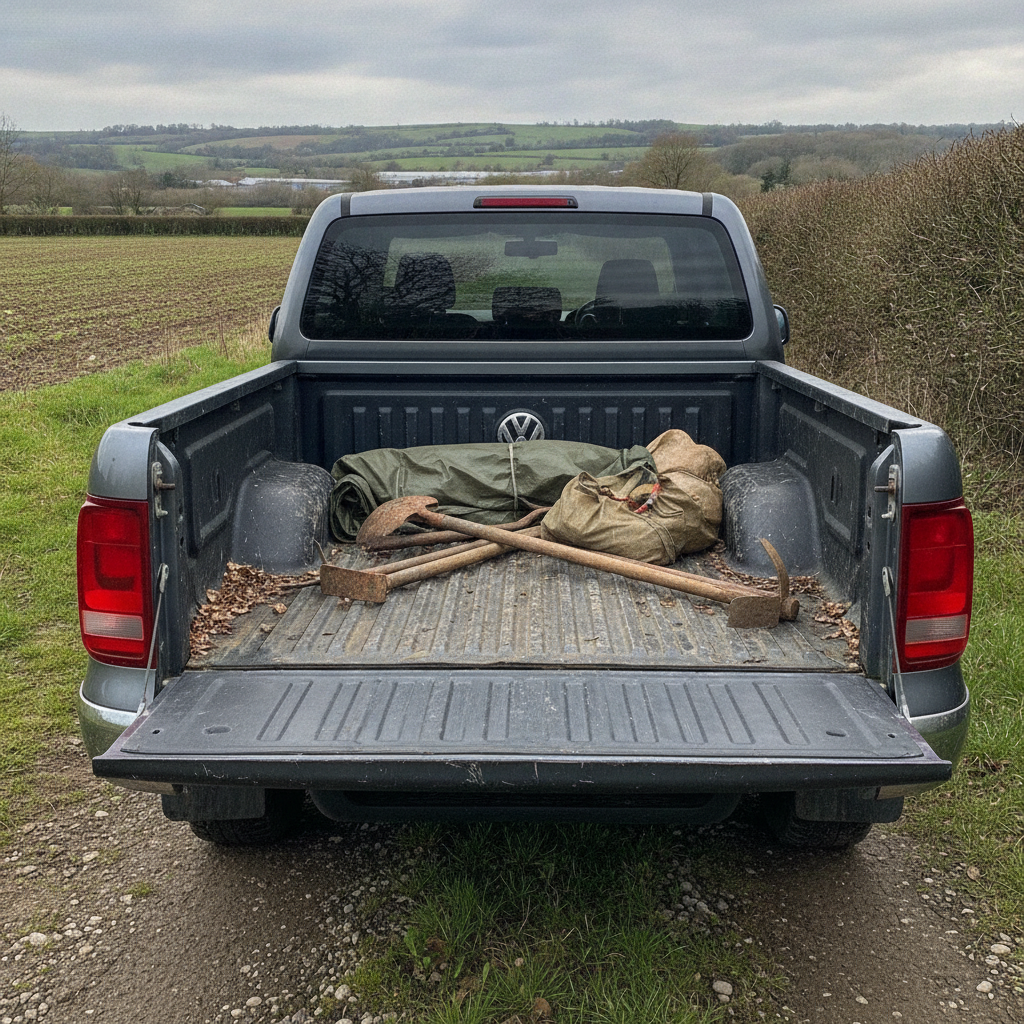
The standout feature of the Amarok load bed is its physical width. The distance between the rear wheel arches measures 1,222 mm, which allows a standard 1,200 mm by 800 mm Euro pallet to be loaded sideways directly between the arches. Total cargo bed length sits at 1,555 mm, with a maximum width of 1,620 mm and a side wall depth of 508 mm. The load sill height rests at approximately 780 mm from ground level, keeping loading ergonomics manageable when lifting heavy site equipment by hand.
Payload Ratings and the One-Tonne VAT Rule
Payload capacity is a critical operational and tax factor for commercial operators. To qualify as a light commercial vehicle for VAT reclamation and benefit-in-kind taxation in the UK, a double-cab pick-up must have an official payload capacity of at least 1,000 kg. Early 2.0-litre models and core 3.0 V6 Highline or Trendline models generally offer payloads ranging from 1,030 kg to 1,114 kg, comfortably meeting this threshold.
However, used buyers must exercise caution when inspecting top-tier trim levels, particularly the Aventura variants fitted with factory hardtops, styling bars, large twenty-inch alloy wheels, and extensive interior luxury equipment. These factory options add kerb weight, which pushes the homologated payload of certain high-spec variants below the critical 1,000 kg threshold. If your business is VAT-registered and intends to reclaim the purchase tax, you must check the vehicle plate inside the door shut to verify that the payload rating exceeds 1,000 kg.
Towing Capacities Across Production Runs
Towing capabilities vary depending on the production year and engine configuration:
- Early 2.0 TDI models (2011 to 2012): Typically homologated for a maximum braked towing limit of 2,800 kg or 3,000 kg.
- Late 2.0 BiTDI models (2012 to 2016): Uprated to pull a 3,200 kg braked trailer with heavy-duty rear leaf spring setups.
- 3.0 V6 TDI models (2016 to 2020): Fully rated to tow the industry-standard maximum braked trailer weight of 3,500 kg, alongside a gross train weight of up to 6,000 kg.
Engine Options and Drivetrain Hardware
Selecting the correct powertrain is crucial when browsing used Amaroks, as performance, long-term reliability, and emissions compliance differ significantly between model eras.
The Four-Cylinder Era: 2.0 TDI and 2.0 BiTDI (2011 to 2016)
Early Amaroks featured the familiar 2.0-litre common-rail direct-injection diesel engine found elsewhere in the Volkswagen Transporter and passenger line-ups:
- Single-turbo 2.0 TDI: Produced 122 PS early on, subsequently upgraded to 140 PS. These workhorse engines are robust and economical, paired with a six-speed manual gearbox and selectable four-wheel-drive with low range.
- Twin-turbo 2.0 BiTDI: Produced 163 PS at launch, upgraded to 180 PS in late 2012. These variants provided muscular mid-range torque through a sequential turbocharger arrangement. From 2012 onwards, this engine could be paired with an eight-speed ZF torque-converter automatic transmission driving a permanent four-wheel-drive system.
The Six-Cylinder Transformation: 3.0 V6 TDI (2016 to 2020)
In late 2016, Volkswagen took the radical step of ditching the four-cylinder engines completely, installing a modified version of the 3.0-litre turbocharged V6 diesel engine previously found in the Audi Q7 and Porsche Cayenne. This engine met Euro 6 emissions regulations using an AdBlue selective catalytic reduction system:
- 163 PS tune: Offered briefly in entry-level commercial Trendline specifications with a manual gearbox.
- 204 PS tune: Developing 500 Nm of torque, this was a popular mid-spec fleet and business choice providing exceptional towing performance and motorway pace.
- 224 PS tune: Available from late 2016 to 2018, delivering 550 Nm of torque with an automatic overboost function pushing power to 245 PS under full throttle.
- 258 PS tune: Introduced in 2018 to top the range, producing 580 Nm of torque, with overboost providing 272 PS for overtaking.
4MOTION Four-Wheel-Drive Configurations
The Amarok came with two distinct four-wheel-drive configurations:
- Selectable 4MOTION: Found on most manual gearbox models. This system drives the rear wheels on tarmac and requires the driver to manually engage high-range or low-range all-wheel drive via dashboard buttons for slippery conditions. It features a rigid mechanical connection without a centre differential.
- Permanent 4MOTION: Fitted to almost all eight-speed automatic variants. This system uses a mechanical Torsen centre differential to distribute power automatically with a default 40:60 front-to-rear split. It can be driven in all-wheel-drive mode on dry roads indefinitely without driveline wind-up, making it ideal for towing heavy plant trailers in changing UK weather conditions. An electronic or mechanical rear differential lock was also optional across both drivetrains.
Trade Uses: Who Buys a Used Amarok and Why?
The Amarok attracts commercial buyers who need heavy-duty transport capabilities without the spartan interior and punishing road ride of a conventional commercial pick-up.
Building Contractors and Groundworkers
Construction business owners choose the Amarok because it fits standard pallets of bricks, mortar bags, or plasterboard sheets flat into the rear bed. The 3.5-tonne towing limit on V6 models allows trades to pull plant trailers loaded with mini-diggers, tracked dumpers, and mobile cement mixers directly onto unpaved sites without losing traction.
Agricultural Workers, Forestry, and Arborists
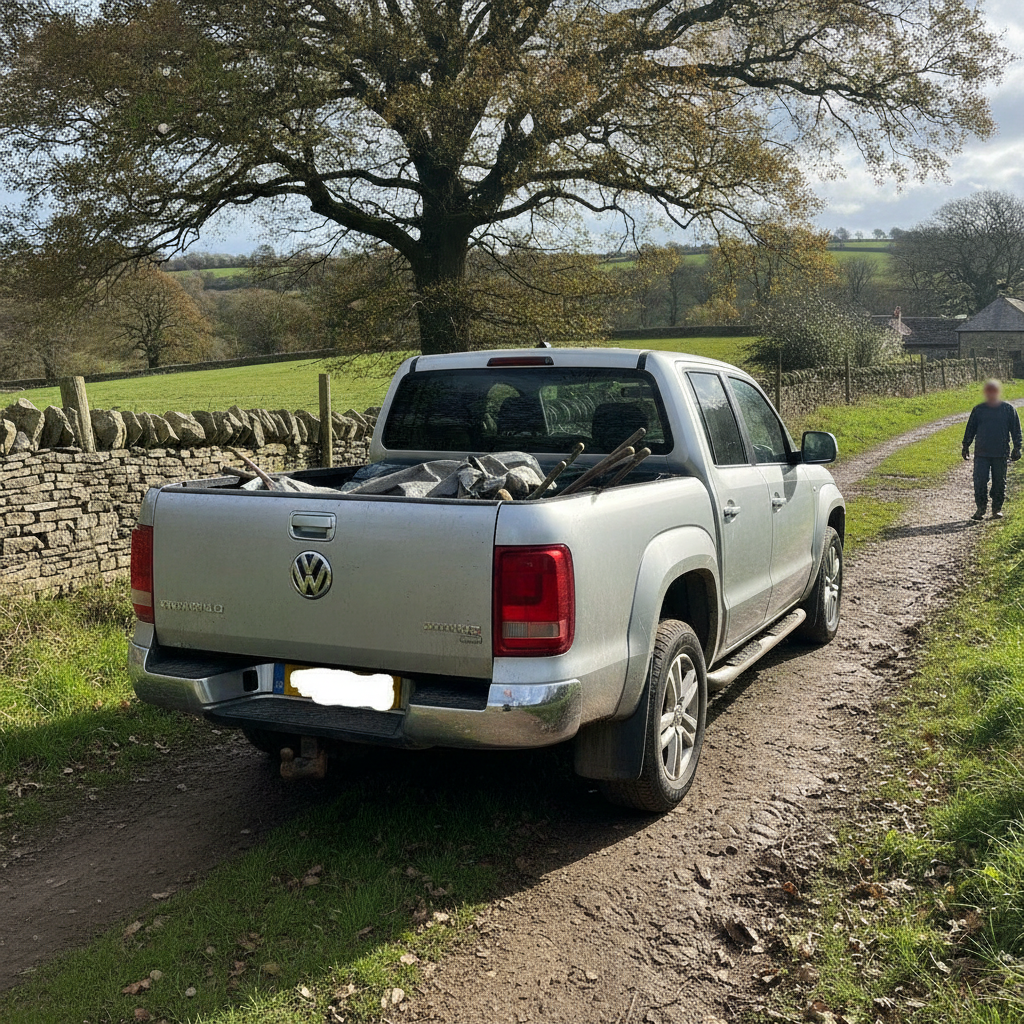
Tree surgeons and forestry workers rely on the heavy-duty ladder-frame architecture, practical ground clearance of up to 192 mm, and wading depth of 500 mm. The combination of permanent all-wheel drive and an optional mechanical rear differential lock allows the Amarok to navigate sodden fields, timber tracks, and steep muddy inclines without wheel slip.
Specialist Mobile Engineers and Surveyors
Highways contractors, civil engineering consultants, and telecom engineers spend hours cruising the UK motorway network. The refined eight-speed ZF transmission keeps cruising revs remarkably low at legal motorway speeds, drastically reducing driver fatigue during long cross-country commutes between infrastructure projects.
Common Faults and Used Buying Checklist
While the Amarok is constructed to high industrial standards, several persistent mechanical and structural issues affect used examples. Use this checklist during your inspection to avoid buying a money pit.
Engine Checks: 2.0-Litre BiTDI Pitfalls
Early 2.0 BiTDI engines manufactured between 2011 and 2015 can be vulnerable to exhaust gas recirculation cooler failure. The internal aluminium matrix inside the cooler can corrode, flaking fine abrasive particles back through the inlet manifold and into the cylinders. This acts as a grinding paste, scoring the cylinder walls and causing catastrophic engine wear. Signs include heavy oil consumption, smoke on hard acceleration, and a sooty exhaust tip. Check the service history for evidence of a revised EGR cooler replacement or complete engine replacement under manufacturer goodwill.
Additionally, inspect the auxiliary belt system on four-cylinder engines. If the auxiliary belt tensioner or idler pulley fails, the belt can strip and slip inside the lower cambelt cover, causing the timing belt to snap and resulting in severe valve-to-piston impact damage. The auxiliary drive system must be renewed at the same interval as the cambelt.
Engine Checks: 3.0-Litre V6 TDI Pitfalls
The 3.0 V6 TDI engine is exceptionally strong, but it features several specific leak paths:
- Oil Leaks in the Engine V: Look deep into the centre of the engine V using a bright inspection torch. The oil cooler seals and oil filter housing can degrade over time, leading to oil and coolant pooling beneath the intake manifolds. Rectifying this requires several hours of labour to dismantle the upper induction hardware.
- AdBlue and DPF Systems: Like all Euro 6 diesels, V6 Amaroks driven exclusively on short, low-speed journeys can suffer from soot-laden DPFs and crystallised AdBlue injector tips. Look for warning lights on the dashboard and ensure the vehicle reaches full operating temperature during your road test.
- Glow Plug Pressure Sensors: The V6 utilises smart glow plugs with integrated combustion pressure sensors. If these fail, the glow plug coil light will flash on the dashboard, placing the vehicle into limp-home mode.
Chassis, Running Gear, and Transmission Inspections
UK road salt and off-road work take a heavy toll on underbody metalwork. Put on overalls and crawl beneath the vehicle to inspect:
- Chassis Rail Corrosion: Check the ladder frame, especially around the rear suspension mounts and cross-members where mud and moisture sit trapped against the steel. Surface rust is normal, but structural flaking and perforation require costly fabrication work to pass an MOT.
- Rear Leaf Springs: Inspect the rear multi-leaf packs for cracked, broken, or shifted spring leaves. Amaroks carrying heavy constant loads often fracture the secondary helper springs. Check the rubber shackle bushes for excessive play or perishing.
- Prop Shaft Centre Support Bearing: Listen for vibrations and thumping through the cabin floor under hard acceleration from a standstill. The rubber carrier surrounding the prop shaft centre bearing degrades, leading to driveline shudder.
- ZF Eight-Speed Gearbox Maintenance: Volkswagen originally claimed the automatic transmission fluid was sealed for life. Specialist driveline engineers and the gearbox manufacturer recommend draining and refilling the fluid and replacing the integrated pan filter every sixty thousand to eighty thousand miles. If the gearbox jerks, hesitates when dropping cogs, or clunks when engaging reverse, budget for an immediate transmission fluid service.
Cabin Electrics and Body Hardware
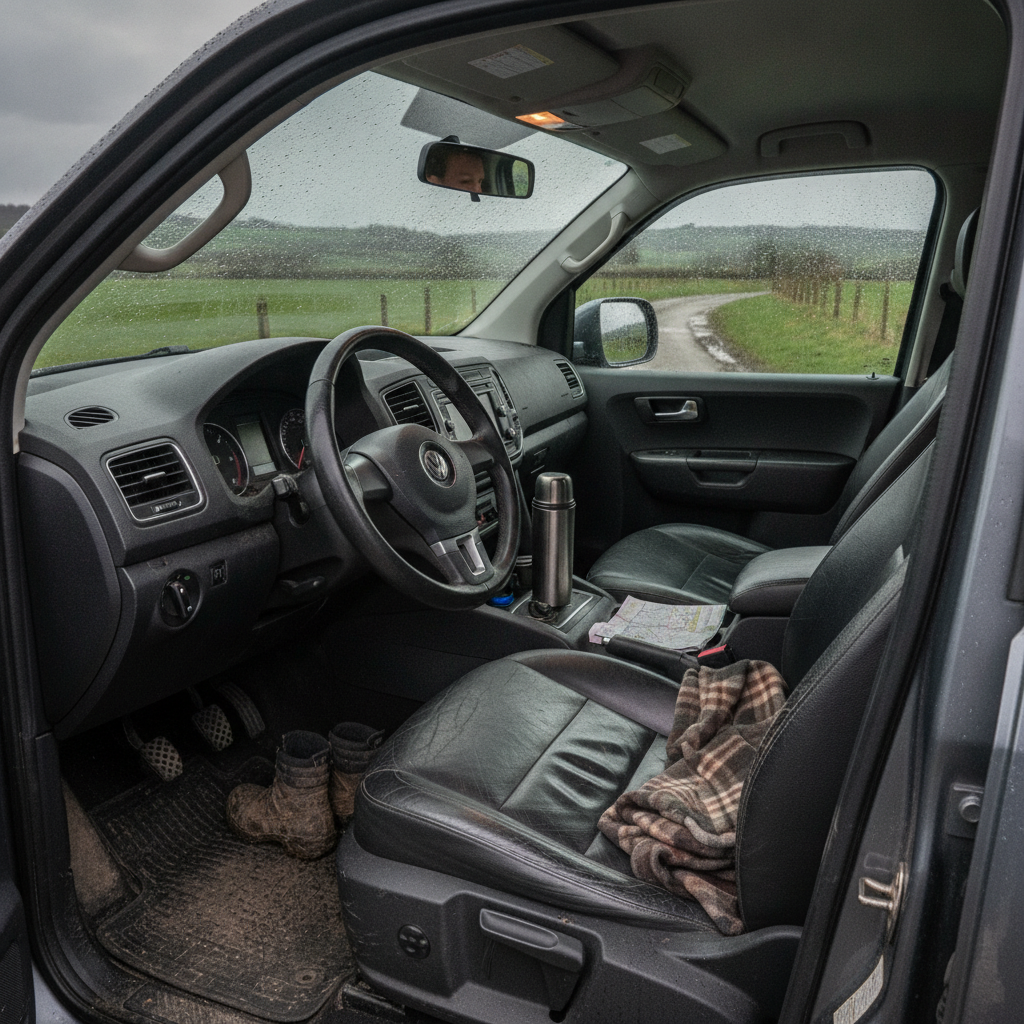
Examine the tailgate operation. The torsion spring can weaken, making the tailgate heavy to lift. Remove load bed liners if possible; loose plastic bed liners collect grit and moisture beneath them, which vibrates against the painted bed and causes unseen floor rust. Inside the cabin, cycle all four electric windows, test the air conditioning, and confirm the central infotainment touchscreen responds promptly to touch inputs.
Years and Specifications to Avoid
Certain Amarok configurations present elevated financial or practical risks:
- 2011 to 2014 2.0 BiTDI Models Without Service Records: Avoid early twin-turbo models unless there is documented proof of engine replacement or fitment of the revised Type D EGR cooler. High oil consumption on these models often signals impending terminal failure.
- Low-Spec 140 PS Single-Turbo Manuals for Heavy Towing: While mechanically dependable, the 140 PS engine struggles when mated to a trailer loaded close to maximum capacity. Overtaking and hill-starts become laborious.
- High-Spec Aventura Models for VAT-Registered Businesses: Certain Aventura configurations with large wheels and factory options do not meet the 1,000 kg payload rule. Purchasing one through a business expecting to reclaim purchase tax or pay light commercial benefit-in-kind rates could trigger an unwelcome tax reassessment from HMRC.
Used Volkswagen Amarok Pricing Guide
Values in the pre-owned market depend on age, engine variant, service records, and whether the vehicle has endured hard trade duty or light private use.
Entry-Level Workhorses: Under £10,000
At this entry tier, expect first-generation 2.0 TDI or 2.0 BiTDI models dating from 2011 to 2015 with odometers reading between one hundred thousand and one hundred and sixty thousand miles. These vehicles are primarily Startline or Trendline workhorses that have served on building sites, utility networks, or farms. Expect visible cosmetic scars, scratched load bays, scuffed alloy wheels, and minimal service stamps. Inspect the chassis carefully for heavy towing stress and verify whether the timing belt, water pump, and EGR components have been renewed.
Solid Mid-Range Runners: £10,000 to £18,000
This mid-market bracket contains late-plate 2.0 BiTDI Highline models from 2015 and 2016, along with early 3.0 V6 TDI models from 2016 to 2018. Mileage typically falls between seventy thousand and one hundred and ten thousand miles. Vehicles in this category often feature the eight-speed automatic gearbox, full leather upholstery, satellite navigation, and durable bed liners or lockable tonneau covers. These examples strike an effective balance between mechanical longevity, commercial capability, and passenger comfort.
Late-Plate, High-Power V6 Models: £18,000 to £30,000+
Representing the peak of first-generation Amarok ownership, this upper bracket covers 2018 to late 2020 3.0 V6 models producing 204 PS, 224 PS, or 258 PS. Trims include Highline, Black Edition, and Aventura. Mileage on these vehicles is generally modest, often sitting well below sixty thousand miles with comprehensive main-dealer or specialist service histories. Many have seen light trade duty or served as director transports, retaining clean bodywork, pristine leather interiors, and modern driver assistance packages.
Running Costs: Fuel, Insurance, and Maintenance
Calculating the true cost of ownership is essential before committing to a purchase.
Fuel Consumption Realities
Official fuel consumption figures do not accurately reflect day-to-day trade use:
- 2.0 TDI and BiTDI: Capable of delivering thirty to thirty-four miles per gallon during careful mixed driving. Stop-start city traffic and heavy towing drop returns into the mid-twenties.
- 3.0 V6 TDI: Returns between twenty-five and twenty-eight miles per gallon during mixed urban and site driving. On steady motorway journeys running unladen, the V6 settles into its long eighth gear, comfortably delivering thirty to thirty-two miles per gallon. Heavy trailer work pulls fuel economy down toward the low twenties.
Road Tax (VED) and Benefit-in-Kind
Because the Amarok is categorised as a light commercial vehicle (provided its payload rating exceeds the qualifying limit), it incurs the standard flat-rate Light Commercial Vehicle annual road tax rather than emissions-based graduated passenger car rates. For sole traders and limited company directors who use the vehicle for personal journeys, company car benefit-in-kind taxation is based on the flat commercial vehicle rate rather than standard carbon-dioxide percentage calculations, offering substantial tax advantages over conventional premium SUVs.
Insurance Groups
The Amarok falls into higher commercial insurance groups compared to small panel vans. Four-cylinder models generally occupy Groups 35 to 39, while high-output 3.0 V6 variants sit between Groups 40 and 43. Insurance costs will reflect driver trade category, operating location, trailer use, and security modifications. Fitting a Thatcham-approved tracker and steering wheel lock can lower annual premiums.
Routine Servicing Schedules and Parts
Volkswagen offers flexible or fixed service schedules. For hard-working trade vehicles, stick to a fixed schedule of ten thousand miles or twelve months, whichever comes first:
- 2.0-Litre Timing Belts: The four-cylinder engines use a rubber timing belt that requires replacement every five years or eighty thousand miles, alongside a fresh water pump and auxiliary drive belt kit.
- 3.0 V6 Timing Chains: The V6 features a rear-mounted timing chain arrangement. While designed for the lifetime of the engine, maintaining frequent oil changes with VW-approved low-ash synthetic oil is vital to prevent chain tensioner wear and guide deterioration.
- Braking Components: With a kerb weight exceeding two tonnes and a heavy towing rating, the Amarok works through front brake pads and discs quickly. Expect to replace front pads every twenty-five thousand miles if routinely pulling trailers.
Financing Your Used Amarok
Navigating how you fund your vehicle purchase impacts your cash flow and annual tax liabilities.
Hire Purchase and Finance Lease
The majority of independent tradespeople and small contractors acquire used commercial vehicles via structured finance packages. Traditional Hire Purchase allows your business to spread the cost over two to five years with an initial deposit. You own the vehicle outright once the final payment is settled. If you are VAT-registered, you can typically reclaim the input VAT on the purchase price up front on your next quarterly VAT return, provided the vehicle meets qualifying payload rules. Discover competitive packages and compare business underwriting criteria through our commercial van finance options.
Finance Lease is another widespread commercial arrangement where you pay fixed monthly rentals without the vehicle appearing directly on your balance sheet as a depreciating asset. At the end of the term, the vehicle is sold to a third party, and a predetermined percentage of the sale proceeds is returned to your business, with any shortfall settled if the vehicle fails to meet the agreed balloon value.
Buying Used vs New Generation Leasing
When assessing a used Amarok requiring a substantial capital outlay, calculate whether a pre-owned vehicle provides the best return on investment compared to modern alternatives. Older vehicles offer lower initial depreciation, but they also bring escalating maintenance risks, MOT requirements, and impending emissions zone charges in urban centres. For businesses demanding absolute operational reliability with fixed monthly overheads and full manufacturer warranty protection, explore our latest van lease deals to evaluate whether leasing a newer commercial model aligns better with your monthly operational budget.
Summary: Final Verdict for Business Buyers
A well-maintained used Volkswagen Amarok remains one of the finest commercial vehicles available on British roads. If your working week demands serious payload capacity, true 3.5-tonne towing performance, and constant four-wheel drive, the 3.0 V6 models manufactured from 2017 to 2020 stand unmatched in the pick-up sector for mechanical poise, engine torque, and driving refinement.
Prioritise examples with documented service records that show timely gearbox and differential fluid changes. Verify the vehicle payload on the build plate before buying, look for signs of off-road underside damage, and avoid poorly maintained early four-cylinder twin-turbo variants. Handled with basic mechanical diligence, a used Amarok is an asset that elevates your business image while hauling your equipment through the most challenging working conditions.